

Online courses directory (1116)

Analytic Combinatorics teaches a calculus that enables precise quantitative predictions of large combinatorial structures. This course introduces the symbolic method to derive functional relations among ordinary, exponential, and multivariate generating functions, and methods in complex analysis for deriving accurate asymptotics from the GF equations.

This course teaches a calculus that enables precise quantitative predictions of large combinatorial structures. Part I covers generating functions and real asymptotics and then introduces the symbolic method in the context of applications in the analysis of algorithms and basic structures such as permutations, trees, strings, words, and mappings.

This course teaches a calculus that enables precise quantitative predictions of large combinatorial structures.

If chemistry is the science of stuff, then analytical chemistry answers the question: what is it? And how much of it do you have? This course teaches how to do this with instrumental analysis!

What does the future hold for global markets? How are societies and cultures evolving? Who will be global powers of the 21st century? Take this class and find out how global trends are transforming business and society.

Using publicly available data from NASA of actual satellite observations of astronomical x-ray sources, we explore some of the mysteries of the cosmos, including neutron stars, black holes, quasars and supernovae.

In this anatomy course you will explore the organs involved in our food digestion and discover the common causes of abdominal and pelvic pain. The latest graphics and animations will help us to find new insights and understanding of the part of the body, that has been the focus of anatomical research for centuries and presently arouses renewed scientific interest.

This course provides a general introduction to the history of ancient Egypt, based on six key items selected from the collections of The Manchester Museum.

This Capstone MOOC gives Signature Track students who passed all previous MOOCs in the MoCCA Specialization “with Distinction” an opportunity to integrate and demonstrate the knowledge they've acquired across the three earlier content area MOOCs.

This course will help you understand the remarkable behaviors of wild animals from an evolutionary perspective. [Image: Peacock spider. Photo by Jürgen Otto, Manakin bird footage (Ex-Riddle of the Sexes) reproduced with permission, courtesy of BBC Worldwide Ltd]

Animal welfare has been described as a complex, multi-faceted public policy issue which includes important scientific, ethical, and other dimensions. Improving our understanding of animal welfare, involves the fascinating study of animal behavior as well as the challenge of accessing the emotions of animals. This is the second time we have run this course, and we have revised some of the content and assessments in line with the great feedback we gained from our first run through. We have also added some subtitles to the videos for the Spanish and Mandarin speakers who wish to participate. Talk about this course using the hashtag #EdAniWelf

Internet Enduring Material Sponsored by: Stanford University School of Medicine // Presented by: The Division of Infectious Diseases in the Department of Medicine at Stanford University School of Medicine

This course addresses the modeling and analysis of static equilibrium problems with an emphasis on real world engineering systems and problem solving.

This course provides theoretical and practical training on the increasingly popular logistic regression model, which has become the standard analytical method for use with a binary response variable.
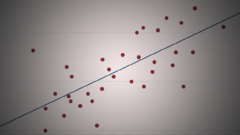
Regression modeling is the standard method for analysis of continuous response data. This course provides theoretical and practical training in statistical modeling with particular emphasis on linear and multiple regression.

In this class you will learn how to conduct a functional behavior assessment (FBA) and apply principles of behavior in the public school classroom in order to promote positive classroom behavior and intervene effectively when faced with challenging behavior.

This course will help you understand how the U.S. university application and admission process works for international students and non-native English speakers applying to undergraduate (i.e., bachelor's degree) programs.

L'objectif du cours est de permettre une compréhension pluridisciplinaire du dopage. Ce cours est une opportunité d'observer comment diverses disciplines abordent un même objet, selon différents angles et de manière complémentaire. Il s'agit également de donner des repères permettant d'appréhender le dopage dans sa complexité.

Admit it — you wanted to be an archaeologist when you grew up... This course builds on that enthusiasm, while radically expanding your notions about just what archaeology is and just what archaeologists do.

Art can be a powerful catalyst for building skills and understanding a range of subjects. Intended for primary and secondary teachers of all disciplines, Art & Activity builds upon the inquiry-based approaches of Art and Inquiry: Museum Teaching Strategies for Your Classroom, while delving into activity-based strategies that will make your students empowered participants.
Add to calendar

Trusted paper writing service WriteMyPaper.Today will write the papers of any difficulty.