

Online courses directory (801)

Cryptography plays a vital role in modern digital communication systems. Cryptographic methods allow the encryption and decryption of messages sent across digital communication networks. In this free online course the learner is first introduced to ancient ciphers and how they were used. The vital role of randomness in cryptographic methods is then explained and the learner is taken through step-by-step examples. The role of key scientists such as John von Neuman is also explained. This course will be of great interest to all learners who would like to learn more about cryptography and the vital role it plays in today's digital communication networks.<br />

Probability and Statistics is one of two strands introduced in the first phase of the new Project Maths Course in the Irish curriculum. This topic covers up to half of the new Paper 2 in the Leaving Certificate Paper. Statistics are used in real life to make sense of the information around us and how it affects us. Statistics looks at the data handling cycle and analysis of the data collected. This involves posing a question, collecting data on that question, presenting that data, analysing the data (using measures of spread and centre) and interpreting the results. In answering questions, it is essential that you can contextualise and justify your findings. Probability is concerned with the likelihood of an event(s) happening. The information can be used to make informed decisions. The use of probability is commonly utilised in the world of finance, insurance and sport among others. Probability can also be used to infer the fairness of an event or series of events. It can be evaluated using a diagram or a rule-based approach. A combination of Probability and Statistics can be used to prove/disprove a given conjecture or statement (Hypothesis Testing (HL only)). This Strand attempts to merge the mathematical aspects of Probability and Statistics with its real-life application. It is an interesting topic that is very accessible to all students.<br />

Probability and Statistics is one of two strands introduced in the first phase of the new Project Maths Course. This topic covers up to half of the new Paper 2 in the Leaving Certificate Paper in the Irish curriculum. Statistics are used in real life to make sense of the information around us and how it affects us. Statistics looks at the data handling cycle and analysis of the data collected. This involves posing a question, collecting data on that question, presenting that data, analysing the data (using measures of spread and centre) and interpreting the results. In answering questions, it is essential that you can contextualise and justify your findings. Probability is concerned with the likelihood of an event(s) happening. The information can be used to make informed decisions. The use of probability is commonly utilised in the world of finance, insurance and sport among others. Probability can also be used to infer the fairness of an event or series of events. It can be evaluated using a diagram or a rule-based approach. This Strand attempts to merge the mathematical aspects of Probability and Statistics with its real-life application. It is an interesting topic that is very accessible to all students. <br />

The Big Bang theory has revolutionized our understanding of how the Universe was formed. It presents the scientific proof that shows how the Universe expanded from an infinitely small point around 13.7 billion years ago. In this free online course the learner will discover how scientists calculated when the Big Bang happened and how the Universe expanded after the Big Bang. The formation of the first atoms is discussed and how they are responsible for the cosmic background radiation that is found throughout the Universe. This free online course will be of great interest to students of astronomy and physics and to all learners who would like to learn more about the Big Bang theory and what it has to say about the formation of the Universe. <br />

Geometry and Trigonometry is the second of two strands introduced in the first phase of the new Project Maths Course. This topic covers up to a third of the new Paper 2 in the Leaving Certificate Paper in the Irish curriculum. Synthetic Geometry and Co-ordinate Geometry are used in real life to help us understand the dimensions and transformations of shapes and figures (lines, triangles, polygons and circles). Synthetic geometry studies shapes by means of axioms and theorems. Co-ordinate geometry studies lines and circles by reference to a fixed set of co-ordinates. Trigonometry is concerned with ‘real life’ measurements of length, angles and circular measure in both two and three dimensions. The use of trigonometry is commonly utilised in the areas of quantity surveying, building and construction, and architecture. This strand is without doubt the most applicable area of the Leaving Certificate mathematics syllabus and allows students gain experience of realistic solutions to real-world problems.<br />

Geometry and Trigonometry is the second of two strands introduced in the first phase of the new Project Maths Course. This topic covers up to a third of the new Paper 2 in the Leaving Certificate Paper in the Irish curriculum. Synthetic Geometry and Co-ordinate Geometry are used in real life to help us understand the dimensions and transformations of shapes and figures (lines, triangles, polygons and circles). Synthetic geometry studies shapes by means of axioms and theorems. Co-ordinate geometry studies lines and circles by reference to a fixed set of co-ordinates. Trigonometry is concerned with ‘real life’ measurements of length, angles and circular measure in both two and three dimensions. The use of trigonometry is commonly utilised in the areas of quantity surveying, building and construction, and architecture. This strand is without doubt the most applicable area of the Leaving Certificate mathematics syllabus and allows students gain experience of realistic solutions to real-world problems.<br />

The concepts of number and number patterns are the basic building blocks of arithmetic and algebra. Furthermore, we cannot escape the use of numbers in our everyday lives. We use clocks and watches to count through the hours and minutes of our day. We count out money to pay our bills and often take a flutter on the lottery by choosing six numbers. The application of Arithmetic and Geometric series in finance is investigated through loan repayments and investments. The use of AER (annual equivelant rate) and APR (annual percentage rate) when calculating repayments is investigated. Students are then introduced to the concept of a complex number and shown how to add, subtract, multiply and divide complex numbers. Complex numbers are used to represent the flow of current in a circuit and are also used in most areas of electronics. We use numbers to measure the perimeter and area of various shapes (triangles, rectangles, hexagons and circles) and we also use numbers to work out the volumes of solids such as cylinders, cones, spheres and hemi-spheres.<br />

The concepts of number and number patterns are the basic building blocks of arithmetic and algebra. Furthermore, we cannot escape the use of numbers in our everyday lives. We use clocks and watches to count through the hours and minutes of our day. We count out money to pay our bills and often take a flutter on the lottery by choosing six numbers.<br />The application of Arithmetic and Geometric series in finance is investigated through loan repayments and investments. The use of AER (annual equivelant rate) and APR (annual percentage rate) when calculating repayments is investigated. Students are then introduced to the concept of a complex number and shown how to add, subtract, multiply and divide complex numbers. Complex numbers are used to represent the flow of current in a circuit and are also used in most areas of electronics. We use numbers to measure the perimeter and area of various shapes (triangles, rectangles, hexagons and circles) and we also use numbers to work out the volumes of solids such as cylinders, cones, spheres and hemi-spheres.<br />

Algebra is the lifeblood and the natural language of Mathematics and provides a perfect link between number, geometry, trigonometry and functions. It would be impossible to formulate and solve real-world problems without algebraic notation. Students are first introduced to representing numbers with letters and then they are taught how to convert problems into algebraic equations which can be solved by means of well-known techniques. Students are taught how to solve simultaneous, quadratic and cubic equations and then extend their knowledge to the solution of inequalities. Searching for roots by trial and error and the use of synthetic division is also covered in this strand.<br />

Algebra is the lifeblood and the natural language of Mathematics and provides a perfect link between number, geometry, trigonometry and functions. It would be impossible to formulate and solve real-world problems without algebraic notation. Students are first introduced to representing numbers with letters and then they are taught how to convert problems into algebraic equations which can be solved by means of well-known techniques. Students are taught how to solve simultaneous, quadratic and cubic equations and then extend their knowledge to the solution of inequalities. Searching for roots by trial and error and the use of synthetic division is also covered in this strand.<br />

Functions was the final strand to be introduced in phase 3 of the new Project Maths Course. This topic provides an essential link between Algebra and Number and introduces the students to applications of calculus in the real world. Functions and Differentiation are used in real life to help us understand rates of increase and decrease. For example, students will solve problems involving the maximum speed reached by a car and the rate of increase in the size of a raindrop as it falls to the ground. Integration is introduced as ‘anti-differentiation’ and students are given excellent examples to reinforce this theory. Applications of integration to find areas under curves and between curves are clearly demonstrated. Finally, the concept of numerical integration is introduced through the use of the ‘Trapezoidal Rule’. <br />

Functions was the final strand to be introduced in phase 3 of the new Project Maths Course. This topic provides an essential link between Algebra and Number and introduces the students to applications of calculus in the real world. Use of differentiation to find the slope of a tangent to a curve at a specified point is introduced. This is then extended to the study of increasing and decreasing functions. Functions and Differentiation are used in real life to help us understand rates of increase and decrease. For example, students will solve problems involving the maximum speed reached by a car and the highest point reached by a firework or rocket. Finally, the concept of numerical integration is introduced through the use of the ‘Trapezoidal Rule’ to find areas under specific curves. <br />
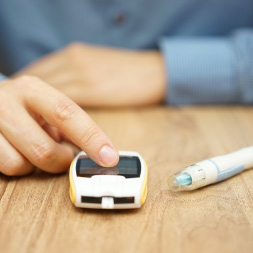
ALISON Global Health Initiative is a series of free online courses created to raise public awareness and understanding of common diseases that affect millions of people worldwide. In this first course important aspects of the disease diabetes are covered in detail. The course begins by defining what diabetes is, and lists the three types of diabetes and important facts and statistics about the disease. It then goes on to describe aspects such as symptoms and risk factors that are associated with the disease and how diabetes can be diagnosed and prevented. Finally, the course describes how a patient can live with diabetes and how family, friends and colleagues can cope with and support a person with diabetes. The information in this course will be of great interest to all learners, especially those who have been diagnosed with diabetes, and who would like to know more about the disease, its treatment and coping with it. It will also be of great interest to all healthcare professionals who would like access to easy to understand facts and information about diabetes that they can share with their patients.

In order to attract tourists, any organisation or business in the tourist industry must create successful marketing and promotion campaigns. The tourist industry is one of the most important in the world, worth up to one trillion dollars annually, so successful marketing and promotion campaigns have the potential to generate huge revenue. This free online course will explain how tourist destinations and tourism businesses can successfully market themselves. The first section of the course explains the main challenges of promoting tourism and how they may be overcome. The following section explains how to identify the target audience of tourism campaigns as well as which methods of advertising are best suited for tourism. The following section explains the customer buying process and how it can be used to determine the objectives for a tourism promotional campaign. The final section explains how an effective marketing campaign can instil brand loyalty in customers and encourage repeat purchases. This course will be of great interest to marketers that wish to learn how to create campaigns for the tourism industry. It will also be of great interest to tourism board employees and owners of tourism businesses that wish to attract more tourists to a location.

Carpentry is an age-old trade yet today there is a still a high demand worldwide for skilled carpenters. Continuously evolving to incorporate newer and improved building materials and tools, the trade offers a carpenter many opportunities for professional growth. A modern-day carpenter's work goes well beyond working on residential projects. Today, the commercial and construction sectors have opened up a whole new area that requires trained and skilled carpenters. This free online course will introduce the learner to the flourishing trade of carpentry. The course explains the different types of building materials, fasteners, adhesives, and tools (hand and power tools) used by carpenters, especially those working in the construction industry. The course also outlines the safety guidelines and procedures, and will introduce the learner to some general terms associated with the trade. This course will be of great interest to construction professionals who want to learn about modern carpentry practices and procedures. It will also be of interest to all learners who would like to develop a career in carpentry. <br />

Starting a new course can be daunting as we can often doubt our ability and skills in learning. Fortunately, learning can be improved by the development of new personal study skills and practices. This free online course gives you the opportunity to understand how to learn effectively, teaches the fundamental skills necessary to improve your learning and performance and helps you to achieve both academic and personal success. The topics covered include key skills in learning, good academic practise and how to find information. You will also focus on developing your reading and thinking skills which are vital in any course of study. This course is ideal for preparing prospective students for life as a student and for life-long learners working in businesses and organisations.<br />

The tourist industry is one of the most important in the world, worth up to one trillion dollars annually. This free online course explains how travel and tourist activities from past times led to the creation of the modern tourist industry. The course describes how tourism developed up to the present day and how advancements in transportation and accommodation in the recent past have helped to create the contemporary tourist industry. The course also describes the practical considerations of tourism and how tourism can be marketed effectively. This course will be of great interest to owners of a tourism focused business and people working in the tourist industry, and who would like to learn how the modern day tourist industry developed. It is also suitable for anyone who wishes to learn more about the history of travel. <br />

Risk and reward are two important elements of investment. An investor expects that the more risk that is taken with an investment the higher the reward should be. In this free online course the learner will be introduced to the role of risk and reward in investment and the different types of risk and reward that are available depending on the type of investment. The course also compares investment with consumption and how investment during property bubbles can actually destroy wealth. This online course will be of great interest to professionals in the areas of finance and investments, and to all learners who would like to learn more about the risks and rewards of investments.<br />

تغطي هذه الدورة التفاعلية المجانية موضوع ريادة الأعمال، وهي مستلهمة من كتاب: "حساء الحجارة – الوصفة السرية لعمل شيء من لا شيء". وستأخذك هذه الدورة في رحلة شائقة لتتعرّف على المكونات الست والعشرين اللازمة لأي ريادي ناجح. ولا تقدّم لك هذه الدورة مجرّد لمحة مختصرة من الكتاب، بل تقدّم لك تصورًا شاملًا لأبرز خصائص وسمات الريادي أو المؤسس الناجح.

ALISON Global Health Initiative è una piattaforma che fornisce una serie di corsi gratuiti online creati per sensibilizzare l'opinione pubblica e aumentare la comprensione delle malattie più comuni che colpiscono milioni di persone in tutto il mondo. In questo primo corso sono trattati nel dettaglio i piu’ importanti aspetti del diabete. Il corso inizia con la definizione di che cos’e’ il diabete, elenca i tre tipi di diabete, i meccanismi si cui agisce e tratta la diffusione mondiale della malattia. Si passa quindi a descrivere i sintomi e fattori di rischio che sono associati alla malattia e come il diabete può essere diagnosticato e prevenuto. Infine, il corso descrive come un paziente puo’ convivere con il diabete e come la famiglia, i familiari, gli amici e i colleghi possono affrontare e sostenere una persona con diabete. Le informazioni contenute in questo corso saranno di grande interesse per tutti gli studenti, in particolare quelli che hanno ricevuto una diagnosi, e che vorrebbero saperne di più sulla malattia, il suo trattamento e come si affronta questa malattia. Sarà anche di grande interesse per tutti gli operatori sanitari che desiderano accedere a informazioni sul diabete di facile comprensione da poter condividere con i loro pazienti.<br />
Add to calendar

Trusted paper writing service WriteMyPaper.Today will write the papers of any difficulty.