

Online courses directory (801)

The free online course Applied Psychology - Understanding Consumer Attitudes introduces learners to the importance of understanding consumer attitudes for creating effective marketing strategies. For a marketer, consumer attitudes reflect a consistent favorable or unfavorable feeling that a consumer has after evaluating a product/service offering, brand, price etc. By understanding the dynamics behind consumer attitudes marketers can design marketing strategies that positively influence consumers towards the product/service offering, brand, price etc. The course starts by introducing you to the nature and functions of attitudes in general and how researchers have described four structural models of attitudes. Attitudes cannot be directly measured so the course then describes the techniques and procedures of accurately measuring consumer attitudes using qualitative and quantitative methods. You will then learn how attitudes are formed and what factors influence attitudes enough to change them. You will learn about the two main theories that have been developed to explain how and why attitudes change, and you will learn how marketers can use this information to design marketing strategies that positively influence consumers' attitudes. This course will be of great interest to all marketing and business professionals working in marketing, and all learners who are interested in a career in the area of marketing.<br />

The free online course Applied Psychology - Matching Marketing Strategies to Consumer Personalities introduces learners to the psychological aspects of consumer personality and why consumers generally buy those products/brands whose 'brand personality' matches their own. Psychological research has shown that a consumer's decision about whether or not to buy a particular brand as well as the timing and place of purchase, the amount purchased, its usage and disposal, are all based on the consumer's personality. Because of this it is of great importance that marketers understand the psychological aspects of consumer personality so that they can devise appropriate marketing strategies to introduce the right product/brand to the right consumer. The course first introduces you to the nature of personality in general and you will learn about the differences between personality types and personality traits. You will also review aspects of self-concept and self-image and see how these help shape each consumer's personality. Finally, the course introduces theories of personality developed by psychologists and you'll learn how marketers can adapt these theories during the design, development and implementation of marketing strategies. This free online course will be of great interest to all marketing professionals who would like to learn more about consumer personality and why understanding this aspect of consumer behavior will help marketers design more effective and efficient marketing strategies. <br />

The free online course Diploma in Applied Psychology - Consumer Behavior introduces the psychological processes behind the behavior of consumers and how they make their decisions. This course begins by reviewing the nature and scope of consumer behavior, and how it evolved from other disciplines such as psychology and sociology into its own distinct field of study. You will learn about the application of consumer behavior and how studying it helps marketers formulate appropriate marketing strategies for consumers and their environment. The course then describes in detail both General Models and Specific Models of consumer behavior which attempt to explain how and why consumers behave as they do, and what factors may impact the buying decision process. The course then introduces you to the nature and functions of attitudes in general and how researchers have described four structural models of attitudes. You will also learn how attitudes are formed and what factors influence attitudes enough to change them. You will learn about the two main theories that have been developed to explain how and why attitudes change, and you will learn how marketers can use this information to design marketing strategies that positively influence consumers' attitudes. Finally, the course introduces you to the nature of personality in general and you will learn about the differences between personality types and personality traits. You will also review aspects of self-concept and self-image and see how these help shape each consumer's personality. The course introduces theories of personality developed by psychologists and you'll learn how marketers can adapt these theories during the design, development and implementation of marketing strategies. This free online Diploma course will be of great interest to marketers and business professionals working in the area of consumer marketing who would like to learn more about the psychology of consumer behavior.<br />

The free online Advanced Diploma in Workforce Re-entry Skills is a comprehensive e-learning course that will help you develop the key skills needed by people re-entering the modern workforce, and studying this course will give you the confidence to apply for work positions that are of interest to you. The course first introduces you to the skills needed as part of your job search and career planning. You will learn how to organize and plan an appropriate job search based on your skills and qualifications. You will also learn how to write up a suitable cover letter and résumé when applying for a job. Employers expect all employees to have certain basic skills, in particular, basic IT skills. In this course will you will learn how to improve your touch typing skills and you will learn how to use Microsoft Word 2010 to create documents. You will also be introduced to Microsoft Excel 2010 where you will learn how to create basic spreadsheets and manipulate numbers within them. Having a good knowledge and understanding of customer service is important in any business or organisation and this course brings you through the key skills in customer service so that you will be able to handle customer inquiries or complaints in a friendly, efficient and professional manner. The food service industry is a very important employer for people wanting to re-enter the workforce and this course will give you a comprehensive knowledge and understanding of the health and safety issues related to food service which you can use when applying for positions within the food service industry. This free Advanced Diploma course will be of great interest to all learners who would like to gain the necessary skills to re-enter the modern workforce and gain meaningful and long-term employment. <br />

The free online course Introduction to Modern Human Resource Management will introduce learners to practices and procedures used in modern human resources (HRM) departments. The course outlines the processes HR professionals go through to ensure they have the right employees at the right time to make sure the company is both productive and profitable. The course first introduces you to the seven main roles that HRM plays in business and why, in a constantly changing world, the HRM function is key to success. You will also learn about the array of skills needed to deal with a variety of HR situations and the challenges facing HRM today. Strategic planning is necessary to tie company objectives with HRM objectives and the course covers the steps in the development, writing and implementation of strategic plans, and how those plans should be developed. The course also introduces you to the employment cycle: from recruitment and selection, to job analysis and performance appraisals. Finally, the course introduces the concept of diversity and multiculturalism, discusses the diversity aspect of business, and why multiculturalism is so important to ensuring a healthy organization. This free course will be of great interest to all HRM professionals who would like to learn more about modern human resource practices and procedures, and to all learners who are interested in HRM as a career.<br />

The free online course in Modern Human Resource Management - Recruitment and Selection Process describes in detail the process HR professionals or managers go through as they define and prepare job specifications and employment compensation packages to attract the right candidates to fill job positions. The course also describes the processes involved in the planning and conducting of professional interviews. The course first introduces you to the main points in the recruitment process as it relates to HRM, the laws related to the employment cycle and the different recruitment strategies such as recruiting from a variety of sources to ensure diversity. The development of a job analysis, job description, and job specifications are also discussed as well as the factors involved in advertising a job to help maintain a multicultural work environment. Next, you will learn about the steps involved in the selection process such as criteria development, application and résumé review, test administration as well as the major categories of employment tests. Different interview styles and techniques are reviewed, as well as how to choose the right type of interview for the job and the formal and legal steps involved in making an official job offer. Finally, the course introduces you to the concepts involved in compensation planning and development such as providing the basic salary, holiday pay, health benefits and retirement packages. The differing types of pay systems and the internal and external factors that affect them are also discussed as well as the main types of employment compensation packages common in US firms. This free course will be of great interest to all HRM professionals and managers who would like to learn more about modern human resource selection and recruitment procedures, and to all learners who are interested in HRM as a career.<br />

The free online course Modern Human Resource Management - Training and Induction describes in detail the process HR professionals or managers go through as they prepare and implement employee training, development, retention and communication processes. The course first introduces the main points in the employee retention and motivation process as it relates to HRM, as well as the costs and reasons associated with employee turnover. You will gain an understanding of motivational theories and the application of them in the development of retention plans. You will also learn about applying specific retention strategies to include in HR plans, while keeping the company budget in mind. Next, the course introduces the steps involved in training an employee. You will learn about the goals of orientation, the benefits of in-house versus external training, and how to design an effective training program. Different delivery methods such as using web based or classroom training and the types of training are also covered. Finally, you will learn about the different types of management and communication styles and strategies that are used to communicate successfully with employees. You will learn how to interpret and evaluate employee communication, utilising emotional intelligence, verbal and non-verbal methods and active listening. This free course will be of great interest to all HRM professionals and managers who would like to learn more about modern human resource training and induction procedures, and to all learners who are interested in HRM as a career.<br />

The free online course in Modern Human Resource Management – Appraisal and Performance introduces very important aspects of HR management, such as understanding employee rights, how to manage employee performance, how to implement performance evaluation systems and how to complete and conduct employee assessments. The course also reviews workplace health and safety law, the health concerns that can affect employees at work, and the hazards associated with the workplace. The course begins by introducing the main examples of organisational performance issues and the processes used to handle these types of employee problems. You will gain an understanding of how to investigate performance issues and the options that are available for dealing with employee problems and disciplinary intervention. Employee rights are then discussed in relation to job protection, employee privacy, unionization and the process of collective bargaining. Next, you will learn about the steps involved in designing a performance appraisal and the reasons why a systematic performance evaluation system should be implemented. You will also learn about the goals of performance evaluation. Finally, the course introduces you to workplace safety laws, how they apply to specific industries, such as IT, the service industry, and construction. You will learn how to develop safety standards, while making sure safety and health laws are followed. How to track and record workplace accidents and illnesses is also covered. You will also learn how to interpret and evaluate the different types of employee stress, the different types of office-related injuries, such as carpal tunnel syndrome, and the implementation of contemporary issues surrounding employee health and safety. This free course will be of great interest to all HRM professionals and managers who would like to learn more about modern human resource appraisal and performance procedures, and to all learners who are interested in HRM as a career.<br />

The free online course Diploma in Modern Human Resource Management describes the principles and practices used by HR professionals and managers in the areas of recruitment, selection, training and employee motivation strategies. It also describes methods used to both successfully communicate with and also evaluate and interpret communication from employees. The course first introduces you to the seven main roles that HRM plays in business. You will learn about key concepts such as strategic planning, the employment cycle and multiculturalism, and why the HRM function is key to success. The course then introduces you to the main points in the recruitment process and how to develop a job analysis, a job description, and job specifications. Next, you will learn about the steps involved in the selection process such as criteria development, application and résumé review, test administration as well as the major categories of employment tests. Different interview styles and techniques are reviewed, as well as how to choose the right type of interview for the job and the formal and legal steps involved in making an official job offer. The course introduces you to the concepts involved in compensation planning and development such as providing the basic salary, holiday pay, health benefits and retirement packages. You will also learn about applying specific retention strategies to include in HR plans, while keeping the company budget in mind. Next, the course introduces the steps involved in training an employee. You will learn about the goals of orientation, the benefits of in-house versus external training, and how to design an effective training program. The course then describes the main points in the employee retention and motivation and you will gain an understanding of motivational theories and the application of them in the development of retention plans. You will learn about the different types of management and communication styles and strategies that are used to communicate successfully with employees. Next, you will learn about the steps involved in designing a performance appraisal and the reasons why a systematic performance evaluation system should be implemented. You will also learn about the goals of performance evaluation. Finally, the course introduces you to workplace safety laws, how they apply to specific industries, such as IT, the service industry, and construction. This free Diploma course will be of great interest to all HRM professionals who would like to learn more about modern human resource practices and procedures. The course will also be of great benefit to managers, supervisors and anyone who may have to take on HRM responsibilities as part of their duties within any business or organization.<br />

The free online course Introduction to Risk Management is designed to expand your knowledge and understanding of managing risk. Risk management has become a central aspect of modern business operations and is used to identify, assess, and prioritize risks within a business. Resources can then be applied to minimize and control the impact those risks will have on business operations. Modern businesses need competent people to manage risks and because of this risk management experts are now in high demand. The course begins by emphasizing how ambiguous a term "risk" is. By presenting a wide range of definitions of the term, and a variety of scenarios that pose risk, the course will help you understand risk from a wide variety of perspectives. The course then presents and defines a range of terms commonly used by risk professionals. Next, you will learn about the manner in which risk is managed by risk professionals. By discussing the variety of methods used by professionals to mitigate risk, the course emphasizes how unique a field risk management is. The course also presents a variety of case studies based on real life events that posed significant risk, helping you to equate the theory of risk management with real life scenarios. This free course will be of great interest to professionals working in the area of risk management or those who wish to gain an insight into the industry. The course will also be of interest to small business owners who wish to learn more about mitigating the risks that they face on a daily basis.<br />

The free online course Risk Management - Insuring against Risk explains why businesses take out insurance to mitigate the risks they face through their business operations and activities. The course begins by providing an introduction to the insurance industry. You will be introduced to the most common phrases and terms used in the insurance industry, and you will learn about the processes that insurers go through when deciding whether or not to insure an exposure. You will also learn about the various types of insurances and insurers that exist and how they differ from each other. The course then explains about the internal operations of insurance companies. You will see how an insurance company is two businesses within one, accepting the risks faced by their customers and investing the premiums which they receive. By reviewing how both sides of an insurance business operates you will learn how insurance companies invest the premiums from their customers in order to offer them coverage should they ever need it. The course also presents a variety of case studies based on real life events that show how insurance companies operate, helping you to equate the theory of risk management with real life scenarios. The course concludes by examining the basic requirements and characteristics of insurance contracts. This free course will be of great interest to professionals working in the area of risk management who would like to gain a better understanding of how to insure against risk. The course will also be of interest to learners who have ever purchased insurance and would like to learn more about how their premiums are calculated. <br />

The free online course Risk Management - Managing Property and Liability Risk is the third in a series of Risk Management courses and this course is designed to expand your knowledge and understanding of the risks that property owners are faced with, and the various forms of liability which exist today. The course begins by describing the range of risks that property owners face, and you will learn about the most common actions taken by risk professionals to mitigate such risks. In the technological world which we now inhabit, property risk is no longer confined to the physical homes that we inhabit and the items which we possess. We now face a much wider range of risks from the use of computers and the Internet. Through the use of case-studies, you will learn about companies who have fallen victim to such risks, and you will then learn about the most effective means of mitigating the risks that we face online. You will also learn about the risks that global corporations face when conducting business across multiple borders and the means by which they mitigate such risks. The course continues by discussing liability. By examining the nature of liability from a wide range of perspectives, you will gain a greater understanding of how liability is defined and determined. You will examine the major sources of liability that exist within society and the manner by which risk professionals aim to mitigate them. This free online course will be of great interest to professionals working in the area of risk management who would like a greater understanding of managing property and liability risk. The course will also be of interest to small business or property owners who wish to learn more about identifying and mitigating the risks and liabilities that they face on a daily basis.<br />

The free online course Risk Management - Managing Life Cycle Risks examines the risks that individuals face as they progress through their lives and the best ways that risk professionals recommend mitigating such risks. When one thinks of the field of risk management, risk exposures such as property, automobiles and business premises come to mind. People often forget the one risk that everyone faces: our own mortality. This course begins by presenting the risks that all individuals face throughout the life cycle, including mortality, longevity and ill-health and disability. You will learn about each of these risks in detail and examine the ways that these risks can be mitigated. You will then examine the current trends across the globe and how they are influencing the life cycle risks that we all face. The course then examines the most common coverage for life cycle risks in developed countries: Social Security. By using the American Social Security system as an example, you will learn how many countries across the world have systems in place to protect their citizens against life cycle risks. You will study aspects of the American system, such as eligibility, types of benefits and where the finance comes from. You will then examine the issues and global trends in Social Security. The course concludes by examining life insurance. You will learn how life insurance works and the different types of life insurance that can be taken out to mitigate different life cycle risks. This free course will be of great interest to professionals working in the area of risk management who would like to gain an in depth understanding of life cycle risks and the best ways to protect their customers against them. The course will also be of interest to anyone who wishes to learn about the best ways to protect themselves against life cycle risk. <br />

The free online course Diploma in Risk Management covers the key topics of risk management and will provide learners with an in depth knowledge of the field. All successful organisations take risks in order to survive and grow, and now more than ever, they need competent people to manage those risks. Throughout this course you will study the nature of risk management and the tools used by risk professionals to mitigate risk. In section 1 you will study the theory of risk management. You will learn about the various forms of risk that risk professionals protect their customers against and the fundamental tools that they use to do so. You will also learn about the various forms of insurance that offer protection against risk to their customers. You will study the process that insurers follow when deciding whether or not to insure a new customer. In section 2 you will study more specific areas of risk. You will learn about property and liability risk. You will study the various risks that property and liability owners face on a daily basis and the manner in which they mitigate such risks. You will then learn about the three life cycle risks that all individuals face, mortality, longevity, and health and disability. You will study the methods by which these risks can be mitigated. This free online Diploma course will be of great interest to anyone working in the area of risk management, those who wish to gain an insight into the industry, and anyone wanting to pursue a career as a risk manager The course will also be of interest to small business owners who wish to learn more about mitigating the risks that they face on a daily basis.<br />

The free online course Project Management - Project Feasibility and Life Cycle explains what a project is and how the roles and phases within a project are broken down. It also describes the process of evaluating projects in the early stages and the decision making processes used to determine whether or not a project should proceed. The course begins by introducing to you how a project comes into being, starting with an explanation of what a project is and how it results from ideas, responses to problems and planning. It also looks at the role and influence of the key players that will be involved in the project. The course then looks at how feasibility studies are carried out, and in particular reviews how technical, social, political, environmental and financial feasibility studies are explored and assessed. You will also learn about decision making tools covering the financial returns and risks associated with the project which allow management accept or reject a project. You will be shown the various ways of organising the life cycles of projects and what the project manager's job consists of. The final section of the course looks at the issues and challenges specific to software development projects, how these differ from other types of projects and the evolving methods being used in this sector. This free course will be of great interest to professionals working in the area of project management who would like to learn more about project feasibility and project life cycles. The course will also be of interest to learners who may be involved in getting a project approved or who are working on any stage of the project life cycle.<br />
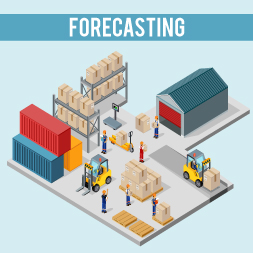
The free online course Applied Operations Management - Introduction to Forecasting shows learners why virtually all operations management decisions are based on a forecast of the future. Forecasts drive strategic operations decisions, such as choice of competitive priorities, changes in processes, and large technology purchases. Forecast decisions also serve as the basis for tactical planning and developing worker schedules. The course begins by introducing forecasting and describes why it is critical to the management of all functional areas within an organization. For example, marketing relies on forecasting to predict demand and future sales, and human resources forecasts future hiring requirements. You will then learn about forecasting methods such as time series forecasting. Time series models assume that information needed to generate a forecast is contained in a time series of data and that the future will follow the same patterns as the past. You will learn about simple mean, moving average, weighted moving average, and exponential smoothing methods. These forecasting methods are explained in detail with worked examples throughout. This free online course will be of great interest to all learners who have certified in ALISON's Diploma in Operations Management as it introduces practical applications of operations management in the area of forecasting. It will also be of great interest to all professionals working in the areas operations management or general management who would like to learn more about forecasting and the methods used to make predictive forecasts. The course will also be of interest to all learners who are interested in operations management as a future career.<br />

In this free online course, Applied Operations Management - Aggregate Planning, you will learn how aggregate planning is used in many businesses to match supply and demand of output over the medium time range of up to approximately 12 months in the future. Aggregate planning allows management to quantify materials and other resources that are to be procured so that the total cost of operations are kept to the minimum over a set period of time. The course begins by introducing the concept of aggregate planning and its use in medium term planning in businesses. You will be introduced to aggregate planning methodologies such as the tabular method and linear programming. You will learn how a tabular approach uses spreadsheets and the values of different variables, such as production by regular workforce and inventory levels can be calculated by using the costs associated with production, overtime, subcontracting, hiring, inventory and backorders. The tabular method is widely used because it is easy to understand and utilize. However, the generated solution may not be optimal and many trials and errors may be needed to find the optimal solution. The course also introduces the linear programming technique and a special type of linear programming known as the Transportation Model, which can be used to obtain aggregate plans that would allow balanced capacity and demand and the minimization of costs. This free online course will be of great interest to all professionals working in the areas operations management or general management who would like to learn more about aggregate planning and the methods used in this important area of operations management. The course will also be of interest to all learners who are interested in operations management as a future career.<br />

The free online course Lean Manufacturing - Line Balancing and Facilities Location is the third course in the Applied Operations Management series. This course introduces the process of line balancing in lean manufacturing, which involves assigning tasks to workstations, so that workstations have approximately equal time requirements. Line balancing is used to minimize idle time and remove potential bottlenecks within a process. The course begins by introducing the concept of line balancing and explains terminology associated with it, such as tasks, task precedence, task times and cycle time. You will then learn about heuristics for working out line balancing problems in lean production, such as the shortest processing time and the longest path in the network. You will also learn about cycle time, the maximum time allowed at each workstation before the work moves on, and how cycle time determines the rate of output. The course then introduces the qualitative factors, such as raw materials, transport, and customer demand in determining the location of facilities. You will then learn about quantitative methods, such as the p-median model, which is used to model many real world situations, such as the location of public or industrial facilities, warehouses and other facilities. This course will be of great interest to professionals working in the area of operations management and lean production who would like to learn more about lean manufacturing, line balancing and facilities location, and to all learners who would like to know more about these important aspects of operations management.<br />

The free online course Inventory Management - Using Inventory Models is the fourth in the Applied Operations Management series of courses. Inventory models help businesses answer the questions: How much material to order? When to order the material? They help firms determine the order quantity that minimizes the total inventory holding costs and ordering costs, as well as the frequency of ordering, to keep goods or services flowing to the customer without interruption or delay. The course begins by introducing the basics of inventory management and introduces concepts such as deterministic demand and probabilistic demand, type of costs such as cost of item, order cost, and holding or carrying cost. Several models are available to help determine how much inventory should be brought in to restock the products or parts, and you will be introduced to inventory models such as the single period inventory model, the multi-period inventory model and the economic order quantity (EOQ) model. These models are explained in detail using worked examples. This free course will be of great interest to professionals working in the area of inventory management, procurement and operations management and who would like to learn more about using inventory models. The course will also be of interest to learners who are interested in a career in procurement or operations management. <br />

The free online course Diploma in Applied Operations Management introduces learners to the practical applications of the theories and concepts that underpin operations management. The course begins by showing learners why virtually all operations management decisions are based on a forecast of the future. Forecasts drive strategic operations decisions, such as choice of competitive priorities, changes in processes, and large technology purchases. Forecast decisions also serve as the basis for tactical planning and developing worker schedules. The course describes why forecasting is critical to the management of all functional areas within an organization and you will learn about forecasting methods such as time series forecasting. These forecasting methods are explained in detail with worked examples throughout. Aggregate planning allows management to quantify materials and other resources that are to be procured so that the total cost of operations are kept to the minimum over a set period of time. You will be introduced to aggregate planning methodologies such as the tabular method and linear programming. The course also introduces the linear programming technique and a special type of linear programming known as the Transportation Model, which can be used to obtain aggregate plans that would allow balanced capacity and demand and the minimization of costs. Line balancing is used to minimize idle time and remove potential bottlenecks within a process. The course introduces the concept of line balancing and explains terminology associated with it, such as tasks, task precedence, task times and cycle time. You will learn about heuristics for working out line balancing problems in lean production, such as the shortest processing time and the longest path in the network. You will also learn about quantitative methods, such as the p-median model, which is used to model many real world situations, such as the location of public or industrial facilities, warehouses and other facilities. Inventory models help firms determine the order quantity that minimizes the total inventory holding costs and ordering costs, as well as the frequency of ordering, to keep goods or services flowing to the customer without interruption or delay. Several models are available to help determine how much inventory should be brought in to restock the products or parts, and you will be introduced to inventory models such as the single period inventory model, the multi-period inventory model and the economic order quantity (EOQ) model. These models are explained in detail using worked examples. This free online course will be of great interest to all learners who have certified in ALISON's Diploma in Operations Management as it introduces practical applications of operations management. It will also be of great interest to all professionals working in the areas operations management or general management who would like to learn more about the practical applications of operations management. The course will also be of interest to all learners who are interested in operations management as a future career.
Add to calendar

Trusted paper writing service WriteMyPaper.Today will write the papers of any difficulty.