

Online courses directory (108)

Lernen Sie, eine mobile Web-App zu designen und entwickeln. Vielleicht sogar ein Echtzeit-Multiplayer-Spiel? Wir zeigen Ihnen den Weg, wie Sie Ihre Idee in den App Store bringen.

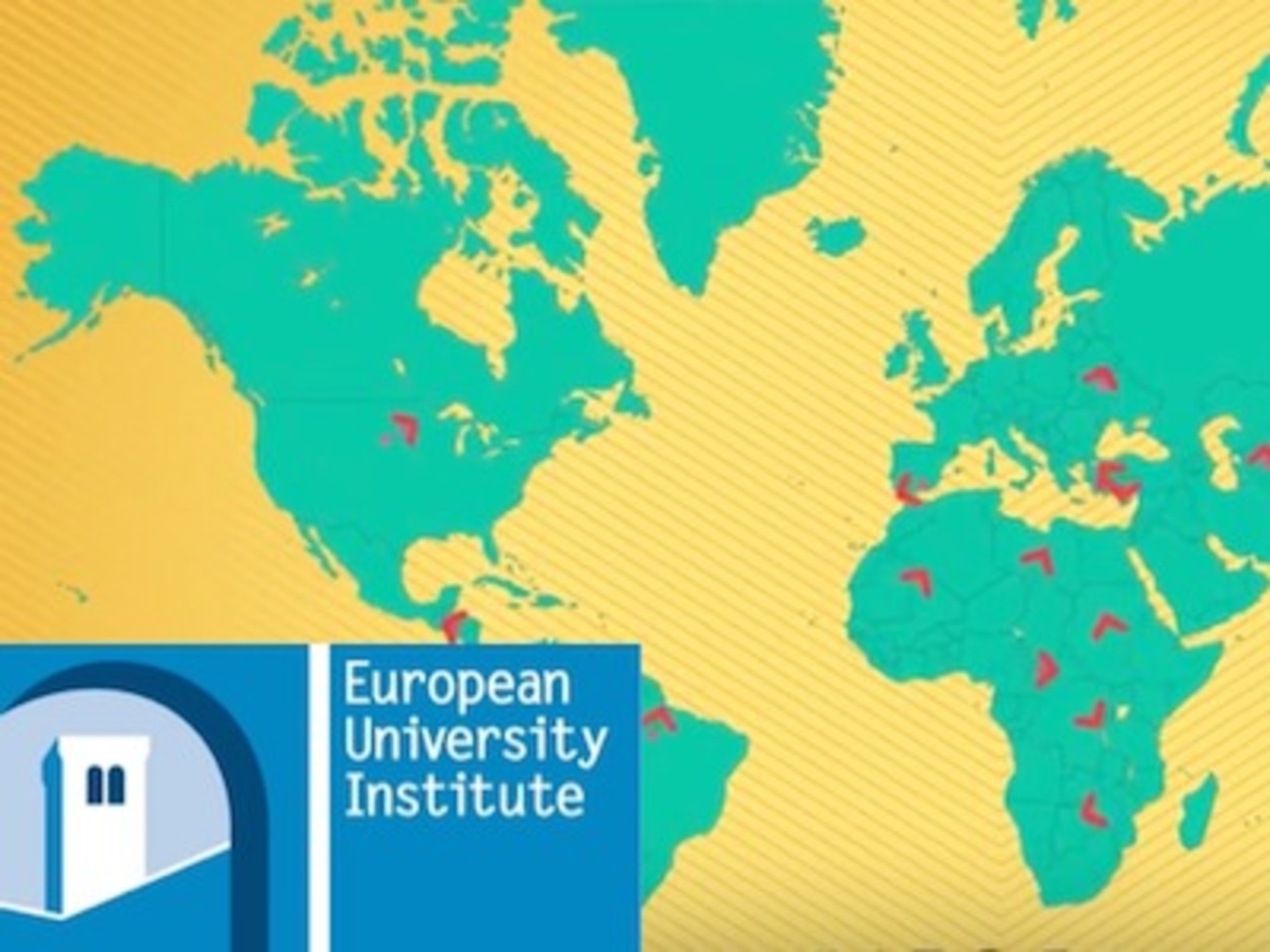
This course provides a general introduction to the conditions of refugees, asylum seekers and irregular migrants worldwide (data, regions, etc.) and an overview of the terminology used. It then analyses specific cases in the most relevant geographical contexts, including the asylum seekers arriving in Europe through the Mediterranean, the undocumented Mexican migrants crossing the US border, the Syrian refugees in Turkey and the Rohingya in Australia. In discussing these cases, we will explore the dilemmas behind humanitarian protection and irregular migration for labour purposes.
The course is based on video lectures, didactic videos and podcast interviews with international experts. Assignments consist of short quizzes for each unit and a journal exercise at the end of the course. Suggestions for further reading will be included in order to achieve a more in-depth understanding.
To learn more about the theories that explain international migration, check out Part 2: Theories
What will I learn?
By the end of the course, students will be able to:
- identify the fundamental terminology and concepts used to discuss about irregular migrants and asylum seekers;
- describe key case studies of irregular migration and asylum seeking in the world;
- discuss possible future scenarios and the social challenges posed by these migrations.
Who is this course for?
This course is meant as a general introduction to migration issues for students and practitioners.
What do I need to know?
Knowledge of English language is essential. Previous knowledge of basic sociological or economic debates can be an advantage, although this is not a compulsory prerequisite. The only other requirement is enthusiasm and interest in the topic.
Course Structure
CHAPTER 1 – INTRODUCTION
Unit 1.1 – What are irregular migration and asylum?
Unit 1.2 – Let us talk about words!
CHAPTER 2 – EUROPE AND THE MIDDLE EAST
Unit 2.1 – Irregular border crossings towards the EU
Unit 2.2 – Refugee status in Europe (podcast with Lilian Tsourdi)
Unit 2.3 – The case of Syrian refugees in Turkey (podcast with Fulya Memisoglu)
CHAPTER 3 – AMERICAS
Unit 3.1 – Irregular Latin-American migrants in US agriculture (podcast with Philip Martin)
Unit 3.2 – Gender and irregular migration in Latin America (podcast with Tanja Bastia)
CHAPTER 4 – ASIA AND OCEANIA
Unit 4.1 – Maritime arrivals in Australia
Unit 4.2 – The case of Rohingya refugees (podcast with Marie McAuliffe)
The course approaches migration as a constant phenomenon in human history and examines its main supporting theories. It illustrates theories about people's individual decisions to migrate and also the factors of migration as a structural feature of our societies. It explains the role social networks and institutions play in making people move to another country, or return to their own. Finally, it includes interviews with international experts that describe how migration theories can help to understand some topical case studies of labour migrations in the world.
The course is based on video lectures, didactic videos and podcast interviews with international experts. Assignments consist of short quizzes for each unit and a journal exercise at the end of the course. Suggestions for further reading will be included in order to achieve a more in-depth understanding.
To learn more about irregular migration and asylum seeking, check out Part 1: Facts
What will I learn?
At the end of the course, students will be able to:
- identify the fundamental terminology used in theoretical debates on migration;
- illustrate the main theoretical approaches that explain the motivations for people to move and settle outside their home countries;
- apply main theories to the interpretation of real case studies.
Who is this course for?
This course is meant as a general introduction to migration issues for students and practitioners.
What do I need to know?
We encourage you to take Part 1: The Facts of this MOOC series. Knowledge of English language is essential. Previous knowledge of basic sociological or economic debates can be an advantage, although this is not a compulsory prerequisite. The only other requirement is enthusiasm and interest in the topic.
Course Structure
CHAPTER 1 – MIGRATION AS A GLOBAL PHENOMENON
Unit 1.1 – Migration in human history
Unit 1.2 – Contemporary trends
CHAPTER 2 - WHY MIGRATION STARTS?
Unit 2.1 – Migration as a choice
Unit 2.2 – Migration as a consequence
CHAPTER 3 – WHY MIGRATION CONTINUES?
Unit 3.1 – The importance of networks
Unit 3.2 – The role of institutions
Unit 3.2 – Return migration (podcast with Jean-Pierre Cassarino)
CHAPTER 4 – EXAMPLES
Unit 5.1 – Migration and development in Africa (podcast with Giorgia Giovannetti)
Unit 5.2 – Care and domestic workers in Italy (podcast with Maurizio Ambrosini)
Unit 5.4 – Indian migrants in Gulf region (podcast with Chinmay Tumbe)

In diesem MOOC lernst du die grundlegenden Inhalte der Wirtschaftsinformatik kennen. Mach dich fit für das digitale Zeitalter und erfahre mehr über die technologischen und wirtschaftlichen Grundlagen moderner digitaler Unternehmenslösungen!
In 25 Videoeinheiten und begleitenden Texten werden Schritt für Schritt folgende Lerninhalte vorgestellt:
- die Bausteine der IT-Infrastruktur
- Grundlagen betrieblicher Anwendungssysteme
- Vorgehens- und Management-Modelle in der Software-Entwicklung
- die Führungsaufgaben des Informationsmanagements
- digitale Geschäftsmodelle und Produkte
Neben klassischen Inhalten und Konzepten der Wirtschaftsinformatik geht der Kurs auch auf aktuelle Entwicklungen ein, wie z.B. Cloud Computing, Electronic Business oder agile Vorgehensmodelle. Die Kursinhalte basieren inhaltlich auf der Vorlesung "Einführung in die Wirtschaftsinformatik" an der Technischen Universität Berlin, die in den letzten Jahren von über 1.000 Studierenden erfolgreich besucht wurde.
An wen richtet sich dieser Kurs?
Der Kurs richtet sich an alle, die Interesse an der Wirtschaftsinformatik haben. Er ist sowohl für Studierende als auch für Praktiker geeignet.
Was muss ich wissen?
Für den Kurs sind keine spezifischen Vorkenntnisse erforderlich.
Was lerne ich?
Nach erfolgreicher Teilnahme an diesem Kurs:
- Kennst du die grundlegenden Inhalte und Ansätze der Wirtschaftsinformatik.
- Weißt du, welche Rolle Informationstechnologien im digitalen Unternehmen spielen.
- Verstehst du die technologischen und wirtschaftlichen Zusammenhänge bei der Gestaltung digitaler Geschäftslösungen.
- Kennst du die Führungs- und Managementaufgaben im Bereich der IT und der Software-Entwicklung.
- Besitzt du die erforderlichen Grundkenntnisse für den Besuch vertiefender Veranstaltungen im Bereich der Wirtschaftsinformatik.
Kursstruktur
Der Kurs besteht aus 6 Kapiteln:
Kapitel 1: Einführung und Grundlagen Kapitel 2: IuK-Infrastruktur - Das digitale Zeitalter - Bedeutung von Informations- und Kommunikationstechnik (IuK) für Unternehmen - Anwendungs- und Informationssysteme - Entwicklung der Wirtschaftsinformatik - Grundlagen - Hardware und Software - IuK-Architekturen & Datenbanken - Cloud Computing - Kommunikationssysteme & Internet Kapitel 3: Inner- und überbetriebliche Informationsverarbeitung Kapitel 4: Gestaltung von Informationssystemen - Anwendungssysteme im Unternehmen - Enterprise Resource Planning Systeme - Customer Relationship Management Systeme - Supply Chain Management Systeme - Electronic Business - Entwurfskonzepte - Traditionelle und Agile Vorgehensmodelle des Software Engineering - Software-Projektmanagement - Change Management Kapitel 5: Informationsmanagement Kapitel 6: Innovationen, Geschäftsmodelle und Produkte - Wertbeitrag und ökonomische Bewertung von IuK - Aufbauorganisation der IT - Outsourcing - Innovation durch IuK - Digitale Geschäftsmodelle - Digitale Produkte
Kursbeschreibung
Wir möchten mit Ihnen das wissenschaftliche Denken, Arbeiten und Schreiben entwickeln.
Der Kurs beginnt philosophisch. Wir werden erörtern, was Wahrheit ist, was Wissenschaft tut und wie sie sich vom Alltagswissen unterscheidet. Danach wird es aber schnell praktisch und wir zeigen Ihnen, wie man vom leeren Blatt zu einer Hausarbeit gelangt. Alle Grundtechniken wissenschaftlichen Arbeitens von Zitation bis Datenerhebung werden hierbei vermittelt oder zumindest einmal eingeführt. Wir sprechen dabei auch über Lerntypen und Arbeitsorganisation.
Ist dieser Kurs etwas für mich?
Der Kurs richtet sich an Schüler, die schon mal ein Gefühl für wissenschaftliche Methoden entwickeln wollen, sowie an Studienanfänger, die ihn ergänzend zu den Angeboten ihres Studiengangs belegen können. Aber auch Master-Studierende, deren Einführungskurse in das Wissenschaftliche Arbeiten schon eine Weile zurückliegen, können ihre Kenntnisse in diesem Kurs auffrischen. Kurz: Er eignet sich für alle, die – aus welchen Gründen auch immer – eine schriftliche Arbeit nach wissenschaftlichen Standards erstellen möchten oder müssen.
Wir richten uns mit dem Kurs aber vor allem an nicht-naturwissenschaftliche Studiengänge.
Was werde ich lernen?
- Warum und wie man Wissenschaft betreiben kann.
- Wie man eine Hausarbeit schreibt (Thema, Recherche, Auswertung, Schreiben)
- Wie man mit der eigenen Arbeitsweise zum Erfolg kommt.
- Wie man richtig zitiert und Quellenangaben macht.
- Wie und warum man Daten sammelt und auswertet, um bestimmte Fragen zu beantworten.
Welches Vorwissen brauche ich?
Sie sollten lesen und schreiben können. Ansonsten ist dies ein Einstiegskurs.
Kursstruktur
0: Organisatorisches
1: Was ist Wissenschaft? Sie werden überrascht sein, wie wenige Menschen dies wissen.
2: Die Sache mit der Wahrheit: Wir versuchen logisch zu beweisen, dass Ihre Realität nicht wirklich existiert und wir nicht mal wissen warum.
3: Arbeitsorganisation und Lerntypen: Falls Arbeit doch real ist: Wie gehen wir damit um?
4: Die Hausarbeit I: Auf zur Jagd: Eine Hausarbeit ist nicht so schwer, wenn man...
5: Die Hausarbeit II: Exzerpieren und filetieren: Texte verstehen ist ganz leicht, wenn man....
6: Die Hausarbeit III: Das Rezept - Schreiben, zitieren und belegen: Schreiben ist ganz leicht, wenn...
7: Der Wahrheit näher kommen I: Methoden der quantitativen empirischen Forschung: Können Sie zählen? Dann können Sie auch forschen. Wir finden heraus, wie die Welt ist.
8: Der Wahrheit näher kommen II: Methoden qualitativer Forschung: Können Sie Fragen stellen? Dann können Sie auch forschen. Wir finden raus, wie die Welt ist.

Rights and dignity at the workplace are fundamental human rights. However, workers’ rights continue to be violated every day - millions of people worldwide are facing exploitative working hours, poverty wages, humiliation and mistreatment at work. There are estimates that today’s world has a higher number of slaves than any other time in history.
This MOOC discusses what Global Workers’ Rights are and which instruments and strategies can be used to implement them. Based on a careful mix of video lectures, readings, online resources and interviews with activists and labour scholars from around the world, you will gain both knowledge and practical skills for furthering workers’ rights worldwide. In some countries, the online learning experience will be complemented with local workshops and the results of the local discussions will be uploaded into the MOOC for a truly global learning experience.
What will I learn
At the end of the course you will understand the history and concept of global workers’ rights and the institutional structure of the International Labour Organization (ILO) as the key player in setting International Labour Standards. You will be able to join the economic debate about labour standards and competitiveness, and understand the concepts behind the fundamental rights of Freedom of Association and Collective Bargaining. You will understand the different approaches for realizing decent work in the informal economy and gain an overview of instruments and initiatives beyond the ILO and trade union strategies in global supply chains. The course also allows you to apply this knowledge to a practical case from your country and gain skills and competencies for using the existing instruments and mechanisms for promoting workers’ rights worldwide.
What do I need to know?
The course requires a working level of English and draws on the fields of political science and law at the level of a Master's programme. However, theoretical concepts are explained in an accessible and well-illustrated way, so it is also possible to participate in the course based on skills and knowledge acquired outside formal education.
Course Structure
Chapter 1: The concept of Global Workers’ Rights
This chapter introduces the concept of Global Workers’ Rights and explains the history and functioning of the International Labour Organization (ILO) as the organization setting International Labour Standards (ILS). The prospects and challenges of the ILO approach to Global Workers’ Rights are debated, and you will learn about the mainstream economic arguments against ILS and how to assess them critically. Participants will be invited to share relevant material on labour rights issues in an interactive world map.
Chapter 2: Introduction to International Labour Standards (ILS)
Which types of International Labour Standards exist and how are they set? Which actors are involved and how are they interlinked? This chapter provides an overview on International Labour Standards and lays the foundation for understanding the standard setting mechanisms at the ILO. The role of trade unions in this process is illustrated through a concrete example of a recent and ground-breaking Convention for one of the most vulnerable groups of workers. In addition, an optional unit invites delegates to the International Labour Conference of the ILO to deepen their knowledge on the functioning of the Conference.
Chapter 3: Supervision of International Labour Standards (ILS)
This chapter aims at enabling you to understand and use the ILO supervisory mechanisms for the protection of workers’ rights. The elaborate process is illustrated in a concise and hands-on way, complemented by practical insights from insiders. At the end of the chapter, the mid-term assignment invites you to apply your newly acquired knowledge to a practical case from your country. The assignment is due at the end of chapter 4. This assignment will allow you to extend your knowledge on the labour rights situation in other countries and to learn from each other.
Chapter 4: Freedom of Association and Collective Bargaining
Freedom of Association and Collective Bargaining are ‘enabling rights’ at the heart of decent work. But what is the legal concept of Freedom of Association under Convention 87 and what makes it fundamental to the implementation of International Labour Standards? This chapter will also provide you with an overview on the current debate on the right to strike and show practical insights on Freedom of Association and Collective Bargaining.
Chapter 5: Access to rights for workers in informal and precarious employment
This chapter focuses on the challenge of realizing rights for workers in informal and precarious employment. We will explore the specific dynamics in the informal economy and innovative approaches for increasing workers’ protection in this challenging field, including examples of successful organising strategies in the informal economy from India, South Africa and Zimbabwe.
Chapter 6: Company responsibility to respect ILS: Norms, Standards, Principles
This chapter discusses key instruments and initiatives beyond the ILO in the struggle for global workers’ rights. What are the main instruments of Corporate Social Responsibility? How can the OECD Guidelines and the UN Guiding Principles on Business and Human Rights be used to promote workers’ rights? And what are legislative approaches to hold companies accountable for workers’ rights violations in global supply chains?
Chapter 7: Trade union strategies for promoting ILS in global supply chains
What are strategies of labour for realizing decent work in global supply chains? This concluding chapter looks at innovative trade union strategies in global supply chains and opens a space for discussion on the role of trade unions in the governance of workers’ rights in a global economy.
Final exam: Multiple-choice-test
Students choosing the certificate track will have one week study time before taking a multiple choice test on the course content.
If you complete the certificate track, you can apply for a GLU scholarship to participate in the 11th Global Labour University Conference, South Africa, 2016 on “The Just Transition and the Role of Labour: Our Ecological, Social, and Economic Future”, September 28 to 30, 2016, Johannesburg, South Africa. We will cast a lot among the applicants to select to MOOC certificate students for a GLU scholarship to participate in the conference (covering travel and accommodation at the Conference). For more information on the Conference keep an eye on http://www.global-labour-university.org.
Line-up of contributors
Prof. Paul Whitehead
- Professor of Practice in Labor Studies and Employment Relations at Penn State University, USA
- Main areas of interest: Trade unions, collective bargaining, labor and employment law, international labor law, international human resources, trade law, and programs for pensions, health care, and social security
Prof. Mark Anner, Ph.D.
- Associate Professor of Labor and Employment Relations, and Political Science at Penn State University, USA
- Main areas of interest: Global Apparel Industry, Labour movements in Latin America, Corporate Social Responsibility, Strikes in Vietnam
Esther Busser
- Deputy Director, Geneva Office of the International Trade Union Confederation (ITUC)
- Main areas of interest: social dialogue, training, research, employment, trade, migration, sectorial activities and policies, multinational enterprises, small and medium enterprises
Prof. Dr. Stefanie Lorenzen
- Professor of Employment and Labour Law at the Berlin School of Economics and Law, Department of Business and Economics, Germany
- Main areas of interest: employment law, co-determination, right to collective bargaining, international and European labour law
Fernando Lopes
- Assistant General Secretary of IndustriALL Global Union
- Main areas of interest: global labour movement, global framework agreements
Dr. Michael Fichter
- Senior Lecturer at the Global Labour University, Germany
- Main areas of interest: global labour relations, trade unions, political economy
Dr. Frank Hoffer
- Economist and Senior Research Officer, Bureau for Workers’ Activities, ILO.
- Main areas of interest: Wages Policies, Social Protection, International Research Cooperation
Victor Hugo Ricco
- Lawyer and Technical officer, Bureau for Workers’ Activities, ILO
- Main areas of interest: International Labour Standards, Informal Economy, Forced labour
Camilo Rubiano
- Trade union rights & national administration officer at Public Services International (PSI)
- Main areas of interest: international labour standards, freedom of association
Prof. Dr. Christoph Scherrer
- Professor for Globalization and Politics, Social Science Department of the University of Kassel, Germany
- Main areas of interest: International Political Economy: Governance of world markets, international labor standards, cross-national transfer of institutions, theories of the International Political Economy
Dr. Ben Scully
- Lecturer at the University of Witwatersrand, South Africa
- Main areas of interest: Precarious Work, Economic Development, Social Welfare in the Global South
Beatriz Vacotto
- Legal specialist and Coordinator of the Wages, Working Time, Maritime and Specific Workers Team, International Labour Standards Department, ILO
- Main areas of interest: Support to trade unions on issues related to International Labour Standards and the ILO supervisory mechanisms.
Jeffrey Vogt
- Legal Director, International Trade Union Confederation (ITUC)
- Main areas of interest: trade and labour standards, freedom of association, precarious work, comparative labour law
Further contributors:
Maria Helena André (Director of the Bureau for Workers’ Activities, ILO)
Zeynep Aklar (Trade union activist with DİSK/Sosyal-İs, Turkey)
Pratik Baviskar (Organiser at the trade union Learn Mahila Kaamgar Sangathan, India)
Magda Biavaschi, Ph.D. (Assistant Professor at University of Campinas, Brazil)
Karen Curtis (Chief of the Freedom of Association Branch, International Labour Standards Department, ILO)
Kirstine Drew (Senior policy advisor to the Trade Union Advisory Council to the OECD)
Eulogia Familia (Vice-President of the National Confederation of Trade Union Unity in the Dominican Republic)
Prof. Jayati Ghosh (Professor of Economics at the Jawaharlal Nehru University, India)
Tandiwe Gross (Associate Expert at the Bureau for Workers’ Activities, ILO)
Renana Jhabvala (National coordinator of the Self-employed Women’s Association, India)
Maité Llanos (Project coordinator at the Global Labour University)
Wisborn Malaya (Secretary General at Zimbabwe Chamber of Informal Economy Associations, Zimbabwe)
Luisa Nxumalo (Organiser at the Congress of South African Trade Unions, South Africa)
Isabel Ortiz (Director of the Social Protection Department, ILO)
Image Copyright (above): ILO/Crozet M

Успешное и эффективное ведение сельского хозяйства требует хорошего менеджмента. Для того, чтобы уметь экономически правильно принимать решения, инженеры-агрономы и фермеры должны обладать отличительными знаниями. На DE и RU языках.

Коротко о курсе
В курсе рассматриваються вопросы, посвященные определению эфективности применения различных видов альтернативных топлив. Определенный интерес представляет обоснование целисообразностивыращивания сельскохозяйственных культур для производства биотоплива. В курсе рассматриваються следующие темы: введение в менеджмент альтернативных топлив в АПК; показатели эффективности использования энергетических ресурсов; эффективность использования альтернативных топливно-энергетических ресурсов; свойства и применение газообразных топлив; эффективное использование биотоплива растительного происхождения; расположение заводов по производству биотоплива.
Навыки приобретенные в ходе курса?
Целями данного курса являются:
1. Дать студентам основные понятия о менеджменте альтернативных топлив в сельском хозяйстве.
2. Познакомить студентов с экономическими и энергетическими методами сравнения и оценки альтернативных моторных топлив.
3. Показать возможность практического применения альтернативных топлив на конкретных примерах.
4. Показать методику определения целесообразности производства биотоплив из сельскохозяйственных культур и определения оптимального расположения заводов по производству биотоплива.
В конце этого курса, каждый студент должен уметь:
1. Пользоваться понятиями и терминологию, которые используются в менеджменте альтернативных топлив в сельском хозяйстве. Анализировать общую тенденцию рынка энергетических ресурсов, роль альтернативных видов топлива (в том числе возобновляемые).
2. Определять стоимость энергии топлив и сравнить различные виды моторных топлива.
3. Выполнять экономическую и энергетическую оценку эффективности использования сельскохозяйственных культур для производства биотоплива.
4. Проводить анализ экономической эффективности использования альтернативных видов топлива сельскохозяйственной техникой.
5. Определять оптимальное расположение заводов по производству биотоплива.
Предварительные знания
Базовые знания в области математики, экономики, мобильных энергетических средств.
Структура курса
Глава 1
1: Введение в менеджмент альтернативных топлив в АПК.
1.1. Предмет дисциплины.
1.2. Общая тенденция рынков энергетических ресурсов.
1.3. Общие тенденции рынка нефти.
1.4. Современное состояние использования энергетических ресурсов в сельском хозяйстве.
1.5. Задачи менеджмента альтернативных топлив
Глава 2
2: Показатели эффективности использования энергетических ресурсов.
2.1. Система показателей эффективности использования энергетических ресурсов.
2.2. Структура потребления топливно-энергетических ресурсов и классификация моторных топлив.
2.3. Показатели использования. Условное топливо, тепловые и технические топливные эквиваленты.
2.4. Показатели наличия
2.5. Показатели результативности.
Глава 3
3: Эффективность использования альтернативных топливно-энергетических ресурсов.
3.1. Методика оценки топлив. Эксплуатационно-потребительские показатели.
3.2. Производственно-технологические показатели.
3.3. Экологические показатели топлив.
3.4. Стоимость энергии топлив.
3.5. Определение целесообразности производства топлив растительного происхождения.
3.6. Оценка эффективности использования альтернативных моторных топлив.
Глава 4
4: Свойства и применение газообразных топлив.
4.1. Историческая справка.
4.2. Эксплуатационно-технические требования к газообразным топливам.
4.3. Физическо-химические свойства сжиженного нефтяного газа.
4.4. Основные свойства природного газа.
4.5. Основные свойства биогаза и тенденции его производства.
4.6. Оценка применения газообразных топлив.
4.7. Опыт использования биогаза как моторного топлива.
4.8. Оценка эффективности применения передвижных автомобильных газовых заправщиков.
4.9. Оценка эффективности применения автомобильных газонаполнительных компрессорных станций.
Глава 5
5: Эффективное использование биотоплива растительного происхождения.
5.1. Производство и использование биотоплива для дизельных двигателей.
5.2. Преимущества и недостатки использования биодизельного топлива.
5.3. Основные физические свойства биотоплив.
5.4. Основные эксплуатационные свойства.
5.5. Адаптация автотракторных двигателей для работы на биотопливах.
5.6. Производство и использование биоэтанола.
5.7. Биоэтанол как моторного топлива для двигателей с искровым воспламенением.
5.8. Применение спиртов в дизельных двигателях.
Глава 6
6: Расположение заводов по производству биотоплива.
6.1. Схемы производства биотоплива.
6.2. Необходимая площадь под энергетическое биосырье.
6.3. Средний радиус перевозок.
6.4. Оптимальное расположение предприятий по производству биотоплив с учетом урожайности растительного биосырья.
6.5. Алгоритм выбора схемы расположения заводов по производству биотоплива.
Как зарегистрироваться на курс:
Нажмите, пожалуйста, сверху на ссылку "ENROL FOR FREE" (на немецком "KOSTENLOS EINSCHREIBEN")

потом введите Ваше имя, фамилию, е-маил и простой пароль
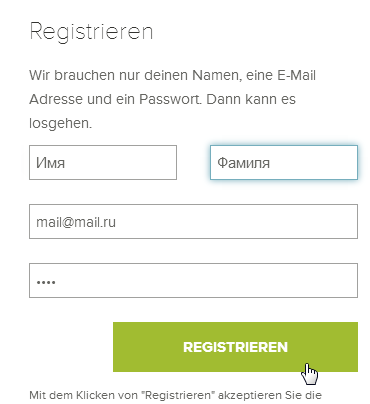
нажмите, пожалуйста, не зеленную кнопку, чтобы получить ссылку для активации

посмотрите, пожалуйста, Ваш почтовой ящик (или спам)

нажмите потом на ссылку "активировать"
Вы зарегистрированы!
Целью курса Международного Аграрного менеджмента является обеспечение теоретическими знаниями для принятия эффективных решений и объяснение изученного материала на конкретных практических примерах в области производства. В данном курсе обсуждаются возможности приобретения долгосрочных средств производства, например, трактора. При этом возникает вопрос о покупке или аренде этого средства производства, в связи с чем будут разъяснены теоретические основы для принятия экономически выгодного решения. Затем теория будет показана на конкретных практических примерах. В итоге полученные результаты будут разъяснены и оценены.
Курс состоит из 5 модулей.
Представленные примеры взяты из реальных сельскохозяйственных предприятий.
В каждом модуле курса отведено время для дискуссий и вопросов в виртуальном чате, к которому имеют доступ все пользователи.
Add to calendar

Trusted paper writing service WriteMyPaper.Today will write the papers of any difficulty.