

Courses tagged with "Aviation" (71)

Each part of the world faces specific vulnerabilities to climate change and has different opportunities to mitigate the effects and build resilience in the 21st century. With the Paris Agreement at COP 21, the global community has signaled its intent to act. Indeed, without climate action, decades of development progress are threatened, meaning that we are at a ‘make it or break it’ point in time. This course presents the most recent scientific evidence, regional impacts and climate action strategies, and some opportunities for you to take action on climate change.

Learn about diverse and integrated markets for primary energy, and the essential considerations driving business leaders and policy makers in development of global energy resources.

What happens when creativity and science come together? The power to design our world is unleashed, providing tools to inform choices about how we live! Geodesign is the glue—it’s a process that deploys creativity to connect information to people, using collaboration to better inform how we design our world.

Are you fascinated by Geosciences and willing to take the challenge of predicting the nature and behavior of the Earth subsurface? This is your course!
In a voyage through the Earth, Geoscience: the Earth and its Resources will explore the Earth interior and the processes forming mountains and sedimentary basins. You will understand how the sediments are formed, transported, deposited and deformed.
You will develop knowledge on the behavior of petroleum and water resources.
The course has an innovative approach focusing on key fundamental processes, exploring their nature and quantitative interactions. It will be shown how this acquired knowledge is used to predict the nature and behavior of the Earth subsurface.
This is your ideal first step as a future Geoscientists or professional to upgrade your knowledge in the domain of Earth Sciences.
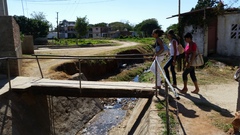
Learn about the best environmental technologies for a sustainable development and how they are managed in various settings around the world.

This course provides an overview of the issue of postharvest loss of grains by exploring essential physical, technical, and social dimensions of postharvest supply chains and loss prevention methods globally.

Students will explore energy consumption patterns including individuals, countries and the entire globe. These patterns will include all sectors of the global economy from fully developed countries to developing nations. New energy sources will be investigated and international solutions to future needs will be analyzed.

This class describes the science of global warming and the forecast for humans’ impact on Earth’s climate. Intended for an audience without much scientific background but a healthy sense of curiosity, the class brings together insights and perspectives from physics, chemistry, biology, earth and atmospheric sciences, and even some economics—all based on a foundation of simple mathematics (algebra).

Despite spectacular recent progress, there is still a lot we don't know about our universe. We don't know why the Big Bang happened. We don't know what most of the universe is made of. We don't know whether there is life in space. We don't know how planets form, how black holes get so big, or where the first stars have gone. This course will take you through nine of the greatest unsolved problems of modern astrophysics. We can't promise you the answers, but we will explain what we do and don't know, and give you an up-to-date understanding of current research. This course is designed for people who would like to get a deeper understanding of these mysteries than that offered by popular science articles and shows.
This is the first of four ANUx courses which together make up the Australian National University's first year astrophysics program. It is followed by courses on exoplanets, on the violent universe, and on cosmology. These courses compromise the Astrophysics XSeries. Learn more about the XSeries program and register for all the courses in the series today!
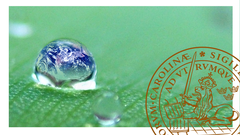
How can we live a good life on one planet with over seven billion people? This course addresses sustainability, climate change and how to combine economic development with a healthy environment. We will explore how individual choices, business strategies, sustainable cities and national policies can promote a greener economy.

In this course you will learn the basics of the life-cycle assessment (LCA) method for holistic environmental analysis of products, technologies, and systems. LCA sheds light on the environmental implications of the consumption and behavioral choices we all make on a daily basis.

Are we alone? This course introduces core concepts in astronomy, biology, and planetary science that enable the student to speculate scientifically about this profound question and invent their own solar systems.

Have you ever imagined what is deep under the ground? What is happening deep inside the earth? How has the earth evolved into its present state? This course is an introduction to earth science, focusing on the deep earth. We will learn how temperature and chemical compositions inside the Earth are inferred from limited observations combined with laboratory experiments. We will also explore the fate of water on the early Earth related to advanced research questions. Upon finishing this course, you will learn how scientists interpret the unknown and use the scientific method to address immeasurable research challenges.
No specific knowledge is needed. Join this course and let’s imagine the inside of the Earth together.

Introduction to Environmental Science, ENVX, was first offered in early 2015.
Environmental science is the study of patterns and processes in the natural world and their modification by human activity. To understand current environmental problems, we need to consider physical, biological and chemical processes that are often the basis of those problems. This course will give you the skills necessary to address the environmental issues we are facing today by examining scientific principles and the application of those principles to natural systems. This course will survey some of the many environmental science topics at an introductory level, ultimately considering the sustainability of human activities on the planet.
Environmental impacts on Earth come from the number of people and the amount and types of resources that they use. By applying scientific principles and considering real-world examples, we will examine:
- The field of environmental science and how to think like an environmental scientist
- The human population and the ways in which changes in the population affect the environment
- Agriculture, soils and the environmental implications of eating meat, vegetables, local, organic, sustainable, industrial and other types of food
- Non-renewable fossil fuels with a focus on coal, petroleum and natural gas and the benefits and consequences of using each
- Renewable fuels such as wind and solar and identify that even renewable “green” energy sources have impacts as well as benefits
- Biodiversity and global change, which are the integrating units of environmental science
Education method
The course will utilize video lectures, interviews with experts, readings, discussions, multiple choice and prompted discussions and one graded quiz per week. There will also be several optional live office hours on Google Hangouts.
Completion of self-assessments, contributions to discussion and quiz scores will determine the final grade.

This course introduces the academic discipline of sustainability and explores how today’s human societies can endure in the face of global change, ecosystem degradation and resource limitations.

In this course, you will learn how to characterize the energy state of a system and the mechanisms for transferring energy from one system to another. These are the tools necessary to understand stationary and transportation power systems from small scale, like batteries, to large scale, like nuclear power plants.
We all have our own understandings of ‘sustainability', of its significance as an environmental, social, economic and moral concept, and as a principle for individual, collective or corporate behaviour. This course begins from your starting point and explores how we might make positive differences to the future of our planet, and encourage others to do so.

Whether you are an outstanding or a struggling student, "Learning How to Learn" will give you powerful mental tools that will help you learn more effectively in tough-to-master subjects. You will discover practical, immediately useful insights that will help you to more deeply master your studies.

In public discussions, climate change is a highly controversial topic. However, in the scientific community, there is little controversy with 97% of climate scientists concluding humans are causing global warming.
- Why the gap between the public and scientists?
- What are the psychological and social drivers of the rejection of the scientific consensus?
- How has climate denial influenced public perceptions and attitudes towards climate change?
This course examines the science of climate science denial.
We will look at the most common climate myths from “global warming stopped in 1998” to “global warming is caused by the sun” to “climate impacts are nothing to worry about.”
We’ll find out what lessons are to be learnt from past climate change as well as better understand how climate models predict future climate impacts. You’ll learn both the science of climate change and the techniques used to distort the science.
With every myth we debunk, you’ll learn the critical thinking needed to identify the fallacies associated with the myth. Finally, armed with all this knowledge, you’ll learn the psychology of misinformation. This will equip you to effectively respond to climate misinformation and debunk myths.
This isn’t just a climate MOOC; it’s a MOOC about how people think about climate change.
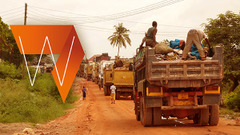
Learn about the key elements of a solid waste management system, with a focus on challenges of and solutions for urban settlements of low and middle income countries. All of this with numerous case examples from around the globe and lots of fun!
Add to calendar

Trusted paper writing service WriteMyPaper.Today will write the papers of any difficulty.