

Courses tagged with "Aviation" (71)

No region on Earth is immune from natural disasters. As we gain scientific understanding into the causes and nature of such phenomena, we become better able to mitigate the effects of disasters. Yet as the world's population continues to grow, an increasingly large number of people are at risk.
This science course examines different types of natural disasters and our ability, or inability, to control and predict such events. You will gain an appreciation of natural disasters beyond the newspaper headlines, and will better understand how the effects of disasters can be reduced.
There is an urgent need for people from all walks of life to better understand the scientific principles behind the occurrence of natural disasters:
- City planners need to know where, and where not, to site buildings.
- Politicians need to make scientifically informed decisions.
- Emergency management officials need to understand the nature of a potential disaster and ways to mitigate such an event.
- Journalists need to report scientifically accurate information.
Learner Testimonial:
“Professors Stix and Gyakum have created and presented an engaging course, and have helped in my quest for a better understanding of the world around me.” – Previous Student

This course will look at how intelligent and innovative use of the ocean can sustainably deliver the key resources necessary to help meet some of the great challenges faced by humanity.

Learn about a new generation of solar cells, organic solar cells, that promise an answer to the energy demands of the future.

The Origins course tracks the origin of all things – from the Big Bang to the origin of the Solar System and the Earth. The course follows the evolution of life on our planet through deep geological time to present life forms.

Develop a greater appreciation for how the air, water, land, and life formed and have interacted over the last 4.5 billion years.

We live on the surface of a dynamic and yet paradoxically stable planet that experiences a remarkable range of energetic phenomena, from waves and currents in the ocean to wind and thunderstorms in the atmosphere. This course traces how the remarkable concept called energy is the natural way of describing, understanding and unifying these diverse phenomena. The course traces the cascade of energy from sunlight to its final destination in a thermal form, considering differential surface heating, the role of convection and buoyancy and the formation of the Earth’s circulation system, and the links to the ocean circulation system. We consider the curvature and rotation of the Earth as key constraints on a system driven by sunlight and energy transformations.
Before your course starts, try the new edX Demo where you can explore the fun, interactive learning environment and virtual labs. Learn more.
How much time will the course take?
Obviously the answer will depend on your background and motivation to master the course material. Each week will consist of 5 or 6 segments that will each take 5 to 10 minutes to watch or listen to once. There will be some exploratory questions for each lesson and a confirmation quiz for each week. There will be one exploratory activity for each week. The average commitment will be 2-3 hours per week with perhaps 20 hours required for the whole course.
What background does the course assume?
We’ll ask you to pull out a calculator from time to time (but not all the time!) simply as this will help you really master the key ideas. The key thing is to have a curiosity and interest in what makes our planet tick!
What kind of learning activities will the course involve?
The activities are designed to use basic household objects, and our own senses, to engage with observations of the world, and to think about what these mean and lead to. We’ll get you to sense how cold or warm different objects get when left in the sun, and to observe how energy explains things we see and hear.
What difference will the course make to my life?
The course has the conviction that it is hard to care for or value things that we don’t appreciate or have never considered. Although harsh in certain places and times, the Earth’s surface is remarkably habitable. Many forms of life can make their way in many kinds of terrain and climate. What produces these conditions? How are they maintained? We will seek to answer those questions in rudimentary form at least.
What conversations will the course help to perform?
Courses often imagine a context in which the course material is discussed, and this one is no different. It imagines a setting with family or friends where you might have just learned of a news event involving a storm like a hurricane or thunderstorm, or where a community might have experienced a flood or a drought, or merely unusual weather. You might have heard of El Nino or climate change in the news. This course will give you a background to better engage in a conversation about these great matters, and offer a better sense of the complexity, challenge and wonder connected to living on the surface of such an energetic planet.

This course is all about energy: what it is, how it is produced, the positive and negative effects, and renewable energy technology. Experts from UC San Diego, Scripps Institution of Oceanography, and industry will explain concepts and present information on this important topic. Come learn all about energy and what our future holds!

This course provides an overview of climate change adaptation for the Small Island Developing States (SIDS) with a focus on the environmental perspective. It will present the key concepts regarding the issues of adaptation to climate change and the methodological tools needed to analyse challenges faced by SIDS, in order to propose sustainable solutions.

Le cours présente les cellules solaires à base de silicium, depuis la physique des semiconducteurs cristallins jusqu’au fonctionnement des modules photovoltaïques. Les semiconducteurs désordonnés utilisés dans les cellules en couche mince sont également traités. Les aspects socio-économiques et environnementaux du photovoltaïque sont abordés.

Planet Earth, an overview of selected geological topics, discusses how earthquakes, volcanoes, minerals and rocks, energy, and plate tectonics have interacted over deep time to produce our dynamic island in space, and its unique resources.

This course will provide you with a basic knowledge of plasma physics and of its applications, which will enable you to understand some of the most important phenomena in space and astrophysics, how plasmas can be used in industry, and how we can achieve fusion on earth to contribute solving the problem of energy in sustainable development. In the first part, we will introduce the plasma state and describe the models, from single particles to fluid, which can be applied to study its dynamics. In the second part, we will illustrate and discuss examples of plasmas in space and in astrophysics, and discuss plasma applications in industry and medicine. The third part will be dedicated to fusion energy, from the design and technology of a fusion reactor, to plasma confinement configurations for fusion, and, finally, to confining, heating, controlling and extracting energy from a burning plasma.

The level of popularity you experienced in childhood and adolescence is still affecting you today in ways that you may not even realize. Learn about how psychologists study popularity and how these same concepts can be used in adulthood to be more successful at work, become better parents, and have a happier life.

The city is now the predominant human habitat. How do we make hyper-dense cities of the future green, livable and poetic?

This is an Exploratorium Teacher Institute professional development course open to any middle or high school science teacher. This course is designed to help science teachers infuse their curriculum with hands-on STEM activities that support the NGSS engineering practices.

There is no doubt that technological innovation is one of the key elements driving human progress.
However, new technologies also raise ethical questions, have serious implications for society and the environment and pose new risks, often unknown and unknowable before the new technologies reach maturity. They may even lead to radical disruptions. Just think about robots, self-driving vehicles, medical engineering and the Internet of Things.
They are strongly dependent on social acceptance and cannot escape public debates of regulation and ethics. If we want to innovate, we have to do that responsibly. We need to reflect on –and include- our societal values in this process. This course will give you a framework to do so.
The first part of the course focuses on ethical questions/framework and concerns with respect to new technologies.
The second part deals with (unknown) risks and safety of new technologies including a number of qualitative and quantitative risk assessment methods.
The last part of the course is about the new, value driven, design process which take into account our societal concerns and conflicting values.
Case studies (ethical concerns, risks) for reflection and discussions during the course include – among others- nanotechnology, self-driving vehicles, robots, AI smart meters for electricity, autonomous weapons, nuclear energy and CO2capture and coolants. Affordable (frugal) innovations for low-income groups and emerging markets are also covered in the course. You can test and discuss your viewpoint.
The course is for all engineering students who are looking for a methodical approach to judge responsible innovations from a broader – societal- perspective.

Explore how science works and what constitutes "good" science through case studies drawn from a wide spectrum of people's experience, for example superheros, movies, and real world issues such as global warming.

In this course, we will take you on a virtual journey covering different Earth observation tools. In the course modules, we cover the most crucial measurement tools for solid Earth, the atmosphere, and the biosphere. Our experts will give you first-hand insights why, where, and how those techniques are applied and they will show you how sensors work in space, on aircrafts, and on the ground.
You will be given insights on how you can use data from various sensors to better understand our living planet and how it changes. Together with your fellow learners all over the world, you will conduct joined experiments that demonstrate, how easy it is to sense the Earth’s environment. On top of that, world-renowned experts will be interviewed - telling you why they think it is so important that we study our planet.
Join us and let’s sense planet Earth together!

Global warming. Rising sea levels. Droughts. Flooding. The melting of the polar ice caps.
Join us, when we discover how continental water and ice masses are measured and monitored through remote sensing. Our experts give you first-hand insights how water and mass transport can be traced, and how this relates to the complex processes in the Earth‘s system.
Together with your fellow learners you will assess and evaluate statements made in relation to climate change. This will prepare you to make evidence-based decisions for a sustainable future.
Join us and let’s sense planet Earth together!

In the third edition of Solar Energy, you will learn to design a complete photovoltaic system. This course introduces the technology that converts solar energy into electricity, heat and solar fuels with a main focus on electricity generation. Photovoltaic (PV) devices are presented as advanced semiconductor devices that deliver electricity directly from sunlight. The emphasis is on understanding the working principle of a solar cell, fabrication of solar cells, PV module construction and the design of a PV system. You will gain a greater understanding of the principles of the photovoltaic conversion— the conversion of light into electricity. This course explores the advantages, limitations and challenges of different solar cell technologies, such as crystalline silicon solar cell technology, thin film solar cell technologies and the latest novel solar cell concepts as studied on lab-scale. We will discuss the specifications of solar modules and demonstrate how to design a complete solar system for any particular application.
Education Method
The class will consist of a collection of eight to twelve minute lecture videos, exercises, assignments and exams. Specified assignments and the three exams will determine the final grade. The new textbook on “Solar Energy, basics, technology and systems” from the Delft University of Technology will be available for the students on-line and free of charge. Your course staff will encourage and challenge you to learn from, and interact with, your fellow students by helping each other and sharing ideas and best practices, in the course forum. We were happy to see the incredible number of interesting student videos on solar energy systems from all over the world in the previous edition of this course.
Professor Smets was the first ever recipient of the edX Prize for Exceptional Contributions to Online Teaching and Learning. His previous online courses attracted over 150,000 students worldwide, who were inspired to take their first steps in the transition to renewable energy.

LICENSE
The course materials of this course are Copyright Delft University of Technology and are licensed under a Creative Commons Attribution-NonCommercial-ShareAlike (CC-BY-NC-SA) 4.0 International License.
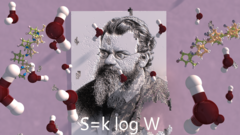
Thermodynamics explains phenomena we observe in the natural world and is the cornerstone of all of engineering. You're going to learn about thermodynamics from a molecular picture where we'll combine theory with a wide range of practical applications and examples. The principles you'll learn in this class will help you understand energy systems such as batteries, semiconductors, catalysts from a molecular perspective. But be warned: this is a fast-paced, challenging course. Everyone is welcome, but hold on to your hat!
Add to calendar

Trusted paper writing service WriteMyPaper.Today will write the papers of any difficulty.