

Courses tagged with "Beginner" (75)

How do we infer which genes orchestrate various processes in the cell? How did humans migrate out of Africa and spread around the world? In this class, we will see that these two seemingly different questions can be addressed using similar algorithmic and machine learning techniques arising from the general problem of dividing data points into distinct clusters.
Learn to use the tools that are available from the Galaxy Project. This is the second course in the Genomic Big Data Science Specialization.

This multidisciplinary production class serves as an introduction to, and exploration of electronic media in the arts. Lectures will cover concepts and presentations of artists working in various capacities with computers, as well as tutorials on specific software packages.

In this 5-week course we’ll introduce the fundamentals of programming in Processing, an accessible introduction to combining arts and computing. The course will provide the essentials of programming in a visual context, allowing you to visualize, design, and create generative art with Processing.

计算概论A是针对“信息科学技术学科一年级本科生”开设的一门专业基础主干课程。本课程的教学目标有二:其一,帮助学习者建立起“学习计算机科学技术知识所需的基本知识背景”;其二,帮助学习者“掌握计算机程序设计的基础知识”,培养学习者“独立设计计算机程序解决问题”的基本技能。

The basic biology of modern genomics and the experimental tools used for measurement. This is the first course in the Genomic Big Data Science Specialization.

In this course, you will learn how to formalize information and reason systematically to produce logical conclusions. We will also examine logic technology and its applications - in mathematics, science, engineering, business, law, and so forth.
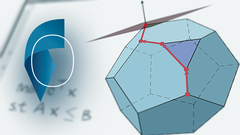
The course is an introduction to linear and discrete optimization - an important part of computational mathematics with a wide range of applications in many areas of everyday life.

This is an introduction to formal logic and how it is applied in computer science, electronic engineering, linguistics and philosophy. You will learn propositional logic—its language, interpretations and proofs, and apply it to solve problems in a wide range of disciplines.

This is an introduction to predicate logic and how it is applied in computer science, electronic engineering, linguistics, mathematics and philosophy. Building on your knowledge of propositional logic, you will learn predicate logic—its language, interpretations and proofs, and apply it to solve problems in a wide range of disciplines.

This Stanford Continuing Studies course is the second of a six-quarter sequence of classes exploring the essential theor

In this course, we will see how evolutionary trees resolve quandaries from finding the origin of a deadly virus to locating the birthplace of modern humans. We will then use methods from computational proteomics to test whether we can reconstruct Tyrannosaurus rex proteins and prove that birds evolved from dinosaurs.

¿Qué es un algoritmo? ¿Cómo se hace un diagrama de flujo? ¿Qué es un pseudocódigo? ¿Cómo me pueden ayudar a resolver problemas cotidianos? Este curso básico de computación te ayudará a desarrollar el pensamiento algorítmico necesario para solucionar problemas en forma estructurada.

This course introduces the basic mathematical and programming principles that underlie much of Computer Science. Students will refine their programming skills as well as learn the basics of creating efficient solutions to common computational problems.
This two-part course introduces the basic mathematical and programming principles that underlie much of Computer Science. Students will refine their programming skills as well as learn the basics of creating efficient solutions to common computational problems.
This two-part course introduces the basic mathematical and programming principles that underlie much of Computer Science. Students will refine their programming skills as well as learn the basics of creating efficient solutions to common computational problems.


The level of popularity you experienced in childhood and adolescence is still affecting you today in ways that you may not even realize. Learn about how psychologists study popularity and how these same concepts can be used in adulthood to be more successful at work, become better parents, and have a happier life.
This class provides an introduction to the Python programming language and the iPython notebook. This is the third course in the Genomic Big Data Science Specialization from Johns Hopkins University.

This is an introduction to quantum computation, a cutting edge field that tries to exploit the exponential power of computers based on quantum mechanics. The course does not assume any prior background in quantum mechanics, and can be viewed as a very simple and conceptual introduction to that field.
Add to calendar

Trusted paper writing service WriteMyPaper.Today will write the papers of any difficulty.