

Courses tagged with "Brain stem" (299)

An introduction to dynamical modeling techniques used in contemporary Systems Biology research.
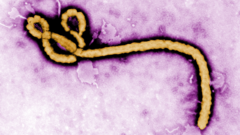
Learn about the evolving Ebola epidemic and its various aspects including disease prevention, management and treatment, response to the epidemic, ethical considerations, and the post-Ebola global health landscape.

This course is for anyone interested in learning more about Veterinary Medicine, giving a “taster” of courses covered in the first year of a veterinary degree and an idea of what it is like to study Veterinary Medicine.

In this education and teacher training course we will explore effective teaching methods for biology. We will emphasize approaches proven to be effective and show you how to implement them. We will also give you the opportunity to reflect on your own teaching experience and exchange ideas and share challenges with other learners in the course.
We will begin by looking at the most common method of teaching science, the lecture. We’ll discuss what the lecture method does well and look at data that illustrates when it is less effective. You will hear highly successful teachers talk about their experience with lecture and how they modified their lecture time to more actively engage students. We’ll investigate creating learning objectives and how they can be used to communicate your expectations to students. You will practice writing your own learning objectives and see how they can streamline exam construction. We’ll look at a variety of ways to include active learning during class time, discuss how active learning strategies support your learning objectives, and give you practice developing learning activities for biology topics you find challenging to teach.
Lastly, we’ll look at how to use resources for student learning outside of class, and how to know that your students have successfully learned from both in-class and outside of class activities.
Our course is designed for instructors, or instructors-to-be, of undergraduate-level biology. High school instructors of AP Biology, post-doctoral fellows and graduate students looking ahead to teaching should find the course useful. The course can serve as a means of professional development. There are no pre-requisites, although prior satisfactory completion of a college biology course is highly recommended.

How did life emerge on Earth? How have life and Earth co-evolved through geological time? Is life elsewhere in the universe? Take a look through the 4-billion-year history of life on Earth through the lens of the modern Tree of Life!
Emotions are the backbone of social activities as well as they drive the cognitive processes of several living entities. This course tries to elucidate the controversial nature of emotions and their evolutionary meaning. Several animals, including humans, have emotions but…what about machines? This is a course to feel and think about.
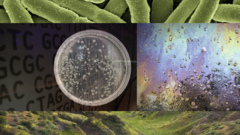
Learn about the ethics and policy issues that arise in the science and application of synthetic biology, from bioremediation to medicine.

If you’re interested in the concept of building with nature, then this is the engineering course for you. This course explores the use of natural materials and ecological processes in achieving effective and sustainable hydraulic infrastructural designs. You will learn the Building with Nature ecosystem-based design concept and its applications in water and coastal systems. During the course, you will be presented with a range of case studies to deepen your knowledge of ecological and engineering principles.
You’ll learn from leading Dutch engineers and environmental scientists who see the Building with Nature integrated design approach as fundamental to a new generation of engineers and ecologists.
Join us in exploring the interface between hydraulic engineering, nature and society.
LICENSE
The course materials of this course are Copyright Delft University of Technology and are licensed under a Creative Commons Attribution-NonCommercial-ShareAlike (CC-BY-NC-SA) 4.0 International License.

Learn how to make effective decisions about your future career and how to take control of your professional development by honing your critical thinking and employability skills. Suitable for anyone undertaking some form of study, regardless of academic discipline, interests or employment background.

Malaria, HIV/AIDS, Influenza, Measles - we’re in a constant battle against infectious diseases. This is a course about the dynamics of such diseases - how they emerge, how they spread around the globe, and how they can best be controlled.

What can we do to prevent outbreaks of infectious diseases from becoming epidemics or pandemic? In this course, you’ll learn the facts about infectious diseases and medical responses. We'll focus on the public health laws and policies that provide the framework for effective prevention, like quarantine laws, drug development policies, and bioterrorism and biodefense.

Each mammalian cell has the same genes, yet performs distinct functions. This is achieved by epigenetic control of gene expression; the switching on and switching off of genes. This course will cover the principles of epigenetic control of gene expression, how epigenetic control contributes to cellular differentiation and development, and how it goes wrong in disease.

Are you preparing for a health-related career, or planning to study in the health sciences? Perhaps you're just keen to learn more about the wonders of the human body? Our bodies are amazing but complex biological machines. This course will provide you with an outstanding foundation of knowledge in human anatomy and physiology.
You will gain a broad understanding of the relationships between normal structure and function in human cells and tissues, both in health and disease. The properties of the four main types of tissue in the body - epithelial, connective, muscular and nervous - will also be clearly explained.
The course employs a variety of engaging learning methods, including short videos, animations, interactive activities and integrated quizzes to guide you through key concepts, and make learning relevant.

Is it okay to take pills to help you ace exams? Should you be able to choose the sex of your child? Is abortion murder?
These controversial questions will be explored through Manga in this bioethics course. Bioethics is an interdisciplinary field of study that looks into ethical, legal, and social implications of life sciences and health care.
This course will help you understand key ethical issues surrounding crucial problems that profoundly impact your life from birth to death.
Topics include:
- Reproductive technology such as surrogacy and sex-selection of the baby
- Abortion
- Informed consent
- Euthanasia
- The use of medical technology for the purpose of enhancement
You will also learn about ethical arguments and regulations in Japan and other countries concerning life sciences and healthcare. Our hope is, through this course, you will better understand and formulate your own opinions on these important issues.
DISCLAIMER: The intention of this course is to present different arguments and perspectives on a number of different topics on bioethics. In other words this course DOES NOT aim to instill in its audience any particular perspective, religious or otherwise, on each topic.
No previous knowledge of bioethics is needed.

Is it permissible to create human clones? Would you really want to live forever? Is brain death the death of a human being?
These controversial questions will be explored through stories in Manga in this bioethics course. Bioethics is an interdisciplinary field of study that looks into ethical, legal, and social implications of life sciences and health care.
This course will help you understand key ethical issues surrounding crucial problems that literally impact your life from birth to death.
Topics include:
- Living Donor Organ Transplantation
- Cloning Technology
- ES Cells and iPS Cells
- Lifespan and Eternal Life
- Brain Death and Organ Transplants
You will also learn about ethical arguments and regulations in Japan and other countries concerning life sciences and healthcare through Lectures and the Discussion forum. Our hope is, through this course, you will better understand and formulate your own opinions on these important issues.
DISCLAIMER: The intention of this course is to present different arguments and perspectives on a number of different topics on bioethics. In other words this course DOES NOT aim to instill in its audience any particular perspective, religious or otherwise, on each topic.
This course is Part 2 of a two-part series, but can be taken as a stand-alone course. You do not need to have completed Part 1. No previous knowledge of bioethics is needed.

Through the process of evolution, animals have developed their biological features and their cultures based on their surrounding environments. How we live our lives today is a direct result of features developed from our primate ancestors as they adapted to new environments.
In primatology, it is essential to think about how cultural development and biological natures are inseparable.
This course will help you rediscover the process of evolution and will introduce primatological studies conducted by researchers at Kyoto University, Japan. Based on carefully conducted research on primate species, we will explore the origins of human beings and provide you with examples of common similarities between human beings and non-human primates.
We will analyze basic features, such as foraging, mating, aggression, and communication from the primatological viewpoint. Furthermore, cultural and social aspects of human society, from the formation of family groups to community activities, will be considered thoroughly, in comparison to those of monkeys and apes.
Our goal is to broaden your view of humans to a wider extent and think dynamically about your biology in terms of human evolution. Through acquiring knowledge of basic primatology in this course, you will establish a viewpoint to think and discuss the evolutionary process of human, and human society, in conjunction with those of our close relatives.
No previous academic knowledge is required. Join us and evolve together with “Evolution of the Human Sociality.”

How are all of the species living on Earth today related? How does understanding evolutionary science contribute to our well-being? In this course, participants will learn about evolutionary relationships, population genetics, and natural and artificial selection. Participants will explore evolutionary science and learn how to integrate it into their classrooms.

Learn about the physiological responses to acute and chronic exercise and their relevance for athletic performance.

Each of our cells contains nearly identical copies of our genome, which provides instructions that allow us to develop and function. This course serves as an introduction to the main laboratory and theoretical aspects of genomics and is divided into themes: genomes, genetics, functional genomics, systems biology, single cell approaches, proteomics, and applications.

Learn about the technologies underlying experimentation used in systems biology, with particular focus on RNA sequencing, mass spec-based proteomics, flow/mass cytometry and live-cell imaging.
Add to calendar

Trusted paper writing service WriteMyPaper.Today will write the papers of any difficulty.