

Courses tagged with "Brain stem" (299)

This is an Exploratorium Teacher Institute professional development course open to any science teacher (particularly middle or high school level) and light enthusiast. Participants will engage in hands-on STEM activities that allow them to directly experience natural phenomena and gain an understanding of how the Exploratorium helps people learn.

Try your hand at understanding the brain by learning to analyze neural data yourself! Working with real neural data sets from neuroscience research labs, you’ll learn data analysis techniques so you can discover for yourself how the brain works.

Making decisions about managing natural resources can be difficult; this course explores why fairness needs to be part of policy.

Over the next 40 years, food production must double to meet the growing needs of the world population, which is estimated to exceed 9 billion by the year 2050. But, how do producers provide the growing human population with the needed food while maximizing the efficiency of production and minimizing impacts on the environment to ensure a sustainable future for us all?

This course begins a series of classes illustrating the power of computing in modern biology. Please join us on the frontier of bioinformatics to look for hidden messages in DNA without ever needing to put on a lab coat. After warming up our algorithmic muscles, we will learn how to apply popular bioinformatics software tools to real experimental datasets.

In this class, we will compare DNA from an individual against a reference human genome to find potentially disease-causing mutations. We will also learn how to identify the function of a protein even if it has been bombarded by so many mutations compared to similar proteins with known functions that it has become barely recognizable.

Feeding nine billion people in 2050 without exhausting the planetary reserves is perhaps the greatest challenge mankind has ever faced. This environmental studies course will examine the principles of production ecology and the ‘availability pillar’ of global food security that lie at the heart of food production, which can be applied to both crops and animal production. This course will discuss why yields in some parts of the world are lagging behind and identify the agro-ecological drivers that shape the wide diversity of production systems.
Furthermore, key issues relating to the closing of yield gaps and the difference in visions of sustainability will be explored.
This online course will be of great interest to international students and those with varied educational backgrounds, both professionally and culturally, to enrich their views and action perspectives related to global food security and food systems. Professor Ken E. Giller will introduce learners to crop production and underlying bio-physical principles in order to identify constraining factors in yield formation. He will explain how to assess yield gaps at the level of fields and production systems around the world, contributing to efficient resource management. Wageningen University and Research, through its unique systems-based approach to food systems, adds the phase of primary production to the broad context of global food security.

Explore the forests of the world, from the taiga to the tropical rainforest! Learn why humans depend on them, and how we can sustainably manage forests for us and the many species with whom we share them.
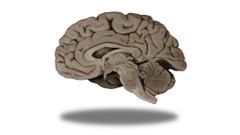
Learn the basic structure and function of the human nervous system, how nerve cells generate electrical signals and communicate, how they reshape their connections with use, and how neural systems integrate external and internal sensory signals to orchestrate action.

This introductory course provides an overview of the principles of nutritional science. Subject matter includes description and functions of nutrients, digestion and absorption, effects of nutrient deficiencies and toxicities, requirements, food sources, nutrient interactions, dietary guidelines, and the role of nutrition in health and disease.

When you're sick, you may wonder, "Why me?" But the real question should be, "Why am I not sick all the time?" You might even ask, "Why does my body respond with a fever, and is it really a good idea to lower it?" This course explores immunology, how the body defends itself from constant assault by parasites and pathogens. This course will present the fundamentals of both innate and adaptive immunity, emphasizing functional interactions among cells and organs. We will cover signaling, pathogen recognition and the division of labor among myeloid, lymphoid and supporting cells. The subject matter will also supply health professionals and biomedical researchers with the basic vocabulary and concepts necessary to understand both clinical press releases and primary literature. The course materials also provide support to other immunology instructors by presenting difficult concepts in creative ways using analogies and models.

The immune system plays a fascinating and vital role in the human body, recognizing outside threats and protecting our bodies against disease. This introductory immunology courses will help you understand the interactions of the immune system, and the jargon scientists use to describe immune function.
This is the second of a two-part course. In the first part we learned about innate immunity and B cell function. This second part covers T cell function and coordination of the immune response.
This immunology course surveys the cells of the immune system and describes how they talk to each other, receive information from the rest of the body and coordinate your defenses.
By presenting complex concepts in innovative, easy-to-understand ways, this course provides a solid introduction to how our immune system keeps us healthy.

The immune system is very powerful and very versatile. Most people forget it is just as capable of destroying your own cells as it is those of a pathogen.
In this biology and life sciences course, we’ll flip the basic question of, “How does the immune system protect you?” to, “How can your immune system endanger you?”
First, we will look at basic mechanisms that determine whether the immune system is roused to action or instructed to stand down, including the roles of inflammasomes and T regulatory cells and the results of mutation to genes and their importance in producing regulatory proteins. Then, we will apply these insights to explain the etiology and treatment of autoimmune diseases and look at a variety of misdirected immune attacks, including allergies, attacks on red blood cells and cellular responses that can produce damage ranging from rashes to autoimmune cellular destruction. Finally we will discuss the protection of transplants from an immune system that views them as foreign invaders instead of necessary replacements.

Fundamentals of Neuroscience is a three part course that explores the structure and function of the nervous system -- from the microscopic inner workings of a single nerve cell, to the staggering complexity of the brain, and beyond to the social interactions and societal dynamics that our brains make possible.
In this first module we’ll look at how individual neurons use electricity to transmit information. We’ll invite you to build up a neuron, piece by piece, using interactive simulations, and we’ll take you on field trips in and around Harvard and Boston, bring you into the lab, and show you how to conduct DIY neuroscience experiments on your own.
Lessons will include video content, interactive content, forum spaces associated with the lessons, and in Lessons 3, labs and lab content.
You can move around within the lessons at your own pace. The only 'graded' part of the course is your final exam. You don't have to get everything correct to 'complete' lessons, you just have to engage with the content!
Please note that this course is NOT hosted on the edX platform, but can be found at www.mcb80x.org. To receive a certificate for this course, you must register for the course through EdX and successfully complete the final exam during an established exam period.
HarvardX requires individuals who enroll in its courses on edX to abide by the terms of the edX honor code. HarvardX will take appropriate corrective action in response to violations of the edX honor code, which may include dismissal from the HarvardX course; revocation of any certificates received for the HarvardX course; or other remedies as circumstances warrant. No refunds will be issued in the case of corrective action for such violations. Enrollees who are taking HarvardX courses as part of another program will also be governed by the academic policies of those programs.
HarvardX pursues the science of learning. By registering as an online learner in an HX course, you will also participate in research about learning. Read our research statement to learn more.
Harvard University and HarvardX are committed to maintaining a safe and healthy educational and work environment in which no member of the community is excluded from participation in, denied the benefits of, or subjected to discrimination or harassment in our program. All members of the HarvardX community are expected to abide by Harvard policies on nondiscrimination, including sexual harassment, and the edX Terms of Service. If you have any questions or concerns, please contact harvardx@harvard.edu and/or report your experience through the edX contact form.

In this second module we will explore how neurons communicate with each other. We will investigate the collective behavior of neurons in small circuits and ways in which signals between neurons are modulated.
Each lesson will be media and content rich and will challenge you to master material with interactive segments that depend on your feedback to move forward in the lesson. You will be able to use virtual labs simulating neurons and circuitry to test your understanding of the course material. Lessons will also be filled with beautiful animations, exploring the richness and complexity of the brain. Documentaries focusing on cutting-edge topics in neuroscience will take you inside labs, hospitals and research institutions around Harvard, MIT and Boston, and quiz banks will allow you to test your knowledge on your own time.
Please note that this course is NOT hosted on the edX platform, but can be found at www.mcb80x.org. To receive a certificate for this course, you must register for the course through EdX and successfully complete the final exam during an established exam period.
HarvardX requires individuals who enroll in its courses on edX to abide by the terms of the edX honor code. HarvardX will take appropriate corrective action in response to violations of the edX honor code, which may include dismissal from the HarvardX course; revocation of any certificates received for the HarvardX course; or other remedies as circumstances warrant. No refunds will be issued in the case of corrective action for such violations. Enrollees who are taking HarvardX courses as part of another program will also be governed by the academic policies of those programs.
HarvardX pursues the science of learning. By registering as an online learner in an HX course, you will also participate in research about learning. Read our research statement to learn more.
Harvard University and HarvardX are committed to maintaining a safe and healthy educational and work environment in which no member of the community is excluded from participation in, denied the benefits of, or subjected to discrimination or harassment in our program. All members of the HarvardX community are expected to abide by Harvard policies on nondiscrimination, including sexual harassment, and the edX Terms of Service. If you have any questions or concerns, please contact harvardx@harvard.edu and/or report your experience through the edX contact form.
Feeding nine billion in 2050 without exhausting the planetary reserves is perhaps the greatest challenge mankind has ever faced. This course will examine the principles of production ecology and the ‘availability pillar’ of global food security that lie at the heart of food production. They can be applied to both crops and animal production. This course on the basics of crop production will discuss why yields in some parts of the world are lagging behind and identify the agro-ecological drivers that shape the wide diversity of production systems.
Furthermore, key issues relating to closing of yield gaps and how these link to different visions of sustainability will be explored.
This online course will be of great interest to international students and those with varied educational backgrounds, both professionally and culturally, to enrich their views and action perspectives related to global food security and food systems. Prof. Ken E. Giller will introduce you to crop production and underlying bio-physical principles in order to identify constraining factors in yield formation. He will explain how to assess yield gaps at the level of fields and production systems around the world, contributing to efficient resource management. Wageningen University and Research, through its unique systems-based approach to food systems, adds the phase of primary production to the broad context of global food security.

To acquire an understanding of the fundamental concepts of genomics and biotechnology, and their implications for human biology, evolution, medicine, social policy and individual life path choices in the 21st century.

¿Es el ADN un microchip que nos guía por la vida? ¿Somos los seres humanos parte de la evolución?¿Por qué no hay dos personas iguales? Este curso ofrece una aproximación cercana y comprensible a las disciplinas de la genética y la evolución, para exponer la importancia de conceptos como ADN, gen, cromosoma, mutación, o selección natural, revelando cómo se interrelacionan de forma accesible cualquier persona interesada. Para ello se emplean ejemplos y demostraciones que facilitan la comprensión de todos los aspectos relevantes, así como permiten que el estudiante detecte la importancia de estas disciplinas en su propio entorno.
El curso analiza en detalle los mecanismos evolutivos, la especiación y el origen de la vida y de toda la variedad de especies de bacterias, hongos, plantas y animales que existen en la Tierra. También analiza el futuro de la diversidad y del planeta, y explica lo que tenemos en común todos los seres vivos, y qué nos diferencia de los seres inertes. A lo largo de las lecciones, se explican las características del ADN y cómo almacena la información para crear vida. El origen de los distintos genes y de las distintas variantes de cada gen, así como las consecuencias que tiene su existencia: desde la determinación del grupo sanguíneo hasta el origen de enfermedades. Con especial énfasis en cómo afecta la genética a nuestra especie: hasta qué punto es responsable de nuestro comportamiento, o de la expresión de algunas de las enfermedades genéticas, del origen de algunos tipos de cáncer o de las enfermedades víricas. También propone un enfoque descriptivo de otros aspectos sorprendentes de la biología, desde cómo trabajan las hormonas hasta cómo el cerebro se encarga de recordarnos que debemos alimentarnos para sobrevivir.
En este curso adquirirás una sólida perspectiva sobre el grado de importancia de la genética en tu vida personal, en tu entorno y en nuestra sociedad. Así como alcanza un firme punto de vista sobre el papel de la evolución en el origen, mantenimiento y diversidad de especies. La formación ofrecida en las disciplinas de la genética y la evolución ofrece aptitudes complementarias para los campos de conocimiento de la biomedicina, la biotecnología o la psicología. Así como una formación global muy adecuada para estudiantes inquietos de cualquier disciplina que quieran consolidar un conocimiento sobre nuestro genoma, nuestra especie, nuestro planeta y los seres que lo habitamos.

How have advances in genetics affected society? What do we need to know to make ethical decisions about genetic technologies? This course includes the study of cloning, genetic enhancement, and ownership of genetic information. Course participants will acquire the tools to explore the ethics of modern genetics and learn how to integrate these issues into their classrooms.

Biologists still cannot read the nucleotides of an entire genome as you would read a book from beginning to end. However, they can read short pieces of DNA. In this course, we will see how graph theory can be used to assemble genomes from these short pieces. We will further learn about brute force algorithms and apply them to sequencing mini-proteins called antibiotics. Finally, you will learn how to apply popular bioinformatics software tools to sequence the genome of a deadly Staphylococcus bacterium.
Add to calendar

Trusted paper writing service WriteMyPaper.Today will write the papers of any difficulty.