

Courses tagged with "Brain stem" (299)

This course is all about energy: what it is, how it is produced, the positive and negative effects, and renewable energy technology. Experts from UC San Diego, Scripps Institution of Oceanography, and industry will explain concepts and present information on this important topic. Come learn all about energy and what our future holds!

Aprenderemos cómo podemos usar el pensamiento científico en la vida cotidiana para tomar mejores decisiones.

Have you ever wondered why you can play at a high level when you're practicing alone at home, but as soon as you play in front of other people, your hands start shaking, your heart starts racing, and everything begins to fall apart?
If you have ever felt crippled by anxiety, this four-module course is your first step to developing the psychological skills that will help you perform at your best under pressure.
Created by Juilliard’s Dr. Noa Kageyama, whose performance psychology classes are a favorite among Juilliard music students, the course combines applied exercises, insights gleaned from interviews with renowned performers, and research in performance psychology and motor learning.
You will learn how to overcome your fears around performing in front of an audience and discover how universal the experience of performance anxiety is amongst musicians at all levels – from beginner to professional.
The three psychological skills covered in this course are:
- Practice that Sticks;
- Beating Anxiety;
- Getting (and Staying) in the Zone.

For the first hundreds of years of modern medicine, progress was a process of trial and error, and to be honest, it was often fatal error, such as bloodletting, which killed the first US president George Washington. Where diseases were clearly understood, and where treatments obviously worked on most patients, such as penicillin for pneumonia, there was no need to delve deeper into questions of effectiveness. But for most conditions, the treatment benefits were modest and there was a need for improved ways of telling whether a new intervention was better than the previous standard treatment. And so scientists introduced a testing procedure for new treatments - the randomized controlled trial.
As the cost of developing new treatments grew, it became very important to detect the slightest improvement that could be attributed to the new drug in order to get it licensed and marketed. So the usual randomized trial was answering the following question: does this treatment work (for otherwise well people with just this single disease, with perfect adherence, treated by the best doctors, under idealised conditions)? But most patients have multiple diseases, imperfect adherence, ordinary doctors and non-ideal circumstances. These patients want to know whether a new treatment is likely to reduce important harms for ordinary people like them, receiving usual care. This mismatch meant that most trials were overestimating the real world effectiveness of new interventions.
In this MOOC, we are going to study this mismatch, and see what its effect is on modern medical care. One example of the studies we will discuss is the VIGOR trial. This influential drug trial resulted in the widespread global overuse of this drug, at a cost of wasted billions of dollars. Ironically, this drug, intended to reduce a problem in individuals, ended up causing more of the same problem in the population!
After we understand the consequences of designing the wrong kinds of trials, we will also look at how best to design pragmatic randomized trials, which answer the important questions that ordinary patients and decision makers in the real world most often ask. We will also explore how these can be combined with economic evaluations and qualitative research – to answer important questions about how much these interventions cost, and how they are experienced by the recipients.

Through this class you should be able to explain basic concepts in cellular and molecular biology using correct terminology, as well as develop critical thinking and problem-solving skills that can be applied to all of your studies of biology.

Chronic pain is at epidemic levels and has become the highest-cost condition in health care. This course uses evidence-based science with creative and experiential learning to better understand chronic pain conditions and how they can be prevented through self-management in our cognitive, behavioral, physical, emotional, spiritual, social, and environmental realms.

Principles of Biochemistry integrates an introduction to the structure of macromolecules and a biochemical approach to cellular function. Topics addressing protein function will include enzyme kinetics, the characterization of major metabolic pathways and their interconnection into tightly regulated networks, and the manipulation of enzymes and pathways with mutations or drugs. An exploration of simple cells (red blood cells) to more complex tissues (muscle and liver) will be used as a framework to discuss the progression in metabolic complexity. Learners will also develop problem solving and analytical skills that are more generally applicable to the life sciences.
New in version 2, learners will explore how alteration of these metabolic pathways relates to the development and progression of some human diseases.
HarvardX requires individuals who enroll in its courses on edX to abide by the terms of the edX honor code. HarvardX will take appropriate corrective action in response to violations of the edX honor code, which may include dismissal from the HarvardX course; revocation of any certificates received for the HarvardX course; or other remedies as circumstances warrant. No refunds will be issued in the case of corrective action for such violations. Enrollees who are taking HarvardX courses as part of another program will also be governed by the academic policies of those programs.
HarvardX pursues the science of learning. By registering as an online learner in an HX course, you will also participate in research about learning. Read our research statement to learn more.
Harvard University and HarvardX are committed to maintaining a safe and healthy educational and work environment in which no member of the community is excluded from participation in, denied the benefits of, or subjected to discrimination or harassment in our program. All members of the HarvardX community are expected to abide by Harvard policies on nondiscrimination, including sexual harassment, and the edX Terms of Service. If you have any questions or concerns, please contact harvardx@harvard.edu and/or report your experience through the edX contact form.
Image credit: PDB ID 2DN1, 2DN2
Park S-Y, Yokoyama T, Shibayama N, Shiro Y, Tame JRH (2006) 1.25 A resolution crystal structures of human haemoglobin in the oxy, deoxy and carbonmonoxy forms. J Mol Biol 360: 690–701.
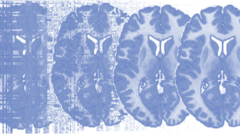
This course covers the design, acquisition, and analysis of Functional Magnetic Resonance Imaging (fMRI) data.

Do you like biology, biotechnology, or genetic engineering? Are you interested in computer science, engineering, or design? Synthetic Biology is an innovative field bringing together these subject areas and many more to create useful tools to solve everyday problems.
This introductory synthetic biology course starts with a brief overview of the field and then delves into more challenging yet exciting concepts. You will learn how to design your very own biological regulatory circuits and consider ways in which you can apply these circuits to real-world problems we face today.
From basic oscillators, toggle switches, and band-pass filters to more sophisticated circuits that build upon these devices, you will learn what synthetic biologists of today are currently constructing and how these circuits can be used in interesting and novel ways.
Join us as we explore the field of synthetic biology: its past, present, and promising future!

Billions of cells in the body die every day. How and why do these cells die? If you want to know the answers to these questions and if you also would like to know how scientists figured them out, this course might interest you.

¿Qué es envejecer? ¿Qué es más importante a la hora de envejecer, la herencia o el ambiente? ¿Podemos actuar sobre nuestro propio envejecimiento? ¿Qué tendríamos que hacer para envejecer bien?
Estas y otras muchas preguntas serán respondidas a los largo de este MOOC en el que se pretende transmitir conocimientos actualizados y científicos sobre cómo llegar a una longevidad positiva y saludable a la vez que se pretende motivar a los participantes en la puesta en práctica de una serie de comportamientos que conforman lo que llamamos estilos de vida activos y saludables. Así pues, esos conocimientos no serán suficientes para el cambio hacia un envejecimiento activo; ello dependerá de que cada uno de los participantes incorpore, como hábitos, esos comportamientos que sabemos influyen en un envejecimiento óptimo, lo cual requerirá de una actitud positiva y de la determinación, el querer realizar algunos cambios.
Partimos de la consideración de que el envejecimiento no tiene un claro inicio sino que “vivir es envejecer y envejecer es vivir” y consideramos que a todo lo largo de la vida hay crecimiento, estabilidad y declive. Desde luego, huimos de una visión simplista, exclusivamente positiva, del envejecimiento y dado que la edad está asociada a la enfermedad, la discapacidad y a otros problemas, tratamos de promover ciertas “soluciones” que llevan consigo lo siguiente: optimizar las capacidades físicas, mentales, afectivas y sociales; prevenir potenciales enfermedades y problemas y, en su caso, compensar o paliar existentes déficits.
Esas estrategias, soluciones comportamentales y estilos de vida protectores o combativos de factores de riesgo pertenecen a cuatro dominios esenciales: la mejora de la salud y la funcionalidad; promover el ejercicio físico y cognitivo regular; el mantenimiento y la optimización del afecto positivo y el control y, finalmente, la implicación familiar y social.
Este curso está dirigido a personas de cualquier edad que estén interesadas en envejecer bien. Va a requerir no solo el aprendizaje de conocimientos científicos sino una implicación personal de los participantes puesto que pretendemos, también, la introducción de cambios en la forma de percibir la vejez y en la incorporación de hábitos saludables que lleven consigo, a largo plazo, el desarrollo personal y la satisfacción con la vida.

Proteins play a very important role in all organisms. In fact, most of the work that happens inside every cell happens because a specific protein is employed for a specific task. Often the three-dimensional shape of a protein plays a major role in its function. As such, it is important to know the structure of all proteins to have an idea of what function they perform.
One of the jobs of a bioinformatician is to predict the three-dimensional structure of a protein using only the DNA sequence that encodes it as well as determining the effects of any mutations in the DNA on the three-dimensional structure/function.
In this course, part of the Bioinformatics MicroMasters program, you will learn about protein structure and its impact on function, practice aligning protein sequences to discover differences, and generate model structures of proteins using web and software-based approaches.

Protein is found in virtually every part of your body. At least 10,000 different proteins make you what you are and keep you that way.
In this biology course you will learn how proteins drive almost all living processes.
Proteins manufactured by cells perform a broad range of essential functions — the molecular workforce of living organisms.
You will learn how proteins are the cellular manifestation of genetic information. They are assembled into a polymeric structure from monomers derived in part from components in our diet. Proteins catalyze metabolic reactions, replicate DNA, respond to stimuli, provide movement, and much more. Using video lectures, articles, case studies, and molecular models, we will explore how proteins are constructed, how they fold into 3-dimensional shapes, the kinds of bonds that hold these folded structures together, and the immense range of roles that proteins assume ‑ from structural proteins found in muscle to catalysts for cellular chemical reactions.
Purification and characterization are essential to understand protein structure and function, and we will identify a variety of methods to uncover how these tiny machines drive almost all living processes.

The level of popularity you experienced in childhood and adolescence is still affecting you today in ways that you may not even realize. Learn about how psychologists study popularity and how these same concepts can be used in adulthood to be more successful at work, become better parents, and have a happier life.

This class provides an introduction to the Python programming language and the iPython notebook. This is the third course in the Genomic Big Data Science Specialization from Johns Hopkins University.

Do you have an interest in biology and quantitative tools? Do you know computational methods but do not realize how they apply to biological problems? Do you know biology but do not understand how scientists really analyze complicated data? 7.QBWx: Quantitative Biology Workshop is designed to give learners exposure to the application of quantitative tools to analyze biological data at an introductory level. For the last few years, the Biology Department of MIT has run this workshop-style course as part of a one-week outreach program for students from other universities. With 7.QBWx, we can give more learners from around the world the chance to discover quantitative biology. We hope that this series of workshops encourages learners to explore new interests and take more biology and computational courses.
We expect that learners from 7.00x Introduction to Biology – The Secret of Life or an equivalent course can complete this workshop-based course without a background in programming. The course content will introduce programming languages but will not teach any one language in a comprehensive manner. The content of each week varies. We want learners to have an introduction to multiple languages and tools to find a topic that they would want to explore more. Participants with programming experience will find some weeks easier than students with only biology experience, while those with a biology background should find the week on genetics easier. We recommend that learners try to complete each week to find what interests them the most.
Workshop Content Creators and Residential Leaders
Gregory Hale, Michael Goard, Ph.D., Ben Stinson, Kunle Demuren, Sara Gosline, Ph.D., Glenna Foight, Leyla Isik, Samir El-Boustani, Ph.D., Gerald Pho, and Rajeev Rikhye
Residential Outreach Workshop Organizer and Creator
Mandana Sassanfar, Ph.D.
This workshop includes activities on the following biological topics: population biology, biochemical equilibrium and kinetics, molecular modeling of enzymes, visual neuroscience, genetics, gene expression and development, and genomics. The tools and programming languages include MATLAB, PyMOL, StarGenetics, Python, and R. This course does not require learners to download MATLAB. All MATLAB activities run and are graded within the edX platform. We do recommend that participants download a few other free tools for the activities so that they learn how to use the same tools and programs that scientists use.

This is an Exploratorium Teacher Institute professional development course open to any middle or high school science teacher. This course is designed to help science teachers infuse their curriculum with hands-on STEM activities that support the NGSS engineering practices.

The actions of ordinary people are often absent in studies of urban renewal and urban ecology. Around the world, people who are fed up with environmental degradation and the breakdown of their communities come together to transform blighted vacant lots, trashed-out stream corridors, polluted estuaries, and other “broken places.” Civic ecology practices—such as community gardening, wetlands restoration, river cleanups, and tree planting—are a means for people to express resilience and rebuild communities marked by disaster and disinvestment.
Civic ecology draws on psychology, sociology, political science, education, ecology, and social-ecological systems resilience to understand how and why people care for nature and their communities.
Throughout this course, you will:
- Explore the people, places, and practices that restore nature and revitalize neighborhoods, making a difference in ways big and small.
- Discuss and evaluate contemporary thinking in resilience, social-ecological systems, and the relationship between nature and human/community wellbeing.
- Grasp an understanding of how civic ecology enables those with limited resources to defy and cope with daily struggles, including after disaster and war.
- Acquire the knowledge and skill set to enact change in your own community.
- Participate in a civic ecology service learning project to turn classroom learning into real-life application.
This course is ideal for a learner who is intrigued by both social and environmental concerns, or simply has a desire to dive into an emerging 21st century, cross-disciplinary subject area. You will complete this course with a keener awareness of social-ecological issues and concerns, as well as a greater knowledge of the practical steps required to rebuild and maintain community and nature in a world marked by inequality, conflict, and climate change.

This class engages students in a transdisciplinary conversation about representations of HIV/AIDS: in science writing, journalism, visual art, literature, drama, and popular culture. We believe that scientists and cultural critics can learn valuable lessons from one another, even as they create their own responses to HIV/AIDS. Today, over 30 years since the first scientific reports of HIV/AIDS, the pandemic remains a major health concern throughout the world. But, rays of hope have led to speculation that an AIDS-free generation may be possible. In such a timely moment, it is essential for us to connect across the "two cultures" as we consider the social and scientific implications of HIV/AIDS.
Courses offered via edX.org are not eligible for academic credit from Davidson College. A passing score in a DavidsonX course(s) will only be eligible for a verified certificate generated by edX.org.

Hoy nuestra cultura debe estar inmersa en ese ya tan importante concepto llamado: RESILIENCIA Nómica. Concepto que la OCDE (Organización para la Cooperación y el Desarrollo Económicos con 34 países) en Japón y México 2015 lo señalan como prioritario, especialmente en las fuerzas de trabajo; el PNUD (Programa de las Naciones Unidas para el Desarrollo) en su reciente Informe sobre Desarrollo Humano 2014 lo vuelve como una urgencia global desde noviembre 2015; el Foro Económico Mundial del 2013, declara el Dinamismo RESILIENTE como una cultura urgente a trasladar a las tradiciones del hogar en familia, sobre todo en Iberoamérica. Es lo único que hará de esta región una región que destaque por su desarrollo humano y erradicación de la pobreza.
Add to calendar

Trusted paper writing service WriteMyPaper.Today will write the papers of any difficulty.