

Courses tagged with "Calculus I" (279)

Whether you are an outstanding or a struggling student, "Learning How to Learn" will give you powerful mental tools that will help you learn more effectively in tough-to-master subjects. You will discover practical, immediately useful insights that will help you to more deeply master your studies.

Comment l’eau de pluie s'infiltre-t-elle dans le sol (et quelle partie ruisselle) ? Quelle est la recharge d’une nappe ? Quelle quantité d’eau un sol peut-il retenir ? Quelle sont les directions des flux de polluants dans un sol ?
Ce cours vous donnera les clés pour comprendre, modéliser et mesurer les processus de transferts de l’eau dans le sol.
Il s’adresse aux ingénieurs, techniciens et étudiants désireux d'accroître ou de rafraîchir leurs connaissances dans le domaine de l’hydrodynamique des sols, pour des applications aussi diverses que l’agronomie, l’environnement, l’irrigation ou la mécanique des sols.
Ce cours sera donné par des experts de différents domaines liés à cette thématique. Il vous permettra d’acquérir les bases nécessaires à l’utilisation d’outils de modélisation hydrologique, d’irrigation, ou de pollution diffuse.
En collaboration avec


This course covers the concepts and physical pictures behind various phenomena that appear in interacting many-body systems. Visualization occurs through concentration on path integral, mean-field theories and semi-classical picture of fluctuations around mean-field state.

This physics course offers a sophisticated view of quantum mechanics and its proper mathematical foundation. In this first module of three you will review the basics of wave mechanics and be introduced to the variational principle. You will learn about the technology of spin one-half states and spin operators and get an in-depth look into linear algebra to establish the mathematical foundation necessary to do quantum mechanics. This course concludes by developing the bra-ket notation of Dirac.
To follow this course you will need some basic familiarity with quantum mechanics. You must have seen the Schrödinger equation and studied its solutions for the square well potential, the harmonic oscillator, and the hydrogen atom. You must be proficient in calculus and have some knowledge of linear algebra.
Completing the 3-part Mastering Quantum Mechanics series will give you the necessary foundation to pursue advanced study or research at the graduate level in areas related to quantum mechanics.
Part 1: Wave Mechanics,
Part 3: Entanglement, and Angular Momentum.
The series will follow MIT’s on campus 8.05, the second semester of the three-course sequence on undergraduate quantum mechanics, and will be equally rigorous. 8.05 is a signature course in MIT's physics program and a keystone in the education of physics majors.
Learner Testimonial
“I’ve thought long and hard to come up with a better MOOC than this one (I’ve completed 25 of these things over the past 2 years) and can’t do it. 8.05x is #1 and I suspect will stay that way for some time to come.”
“Being an engineering student from India trying to shift to Physics, I am often faced with the requirement to study topics on my own. Very often this has led me to feel inadequate. 8.05x was the perfect opportunity for me to both gain knowledge and evaluate my understanding on a high quality international platform. It has really exceeded my expectations. Now, at the end of fifteen weeks, I feel more confident and hopefully I am more knowledgeable.”

This physics course covers Heisenberg’s uncertainty principle and the concept of compatible operators. You will also learn about the Schrödinger and Heisenberg pictures of quantum mechanics and the coherent and squeezed states of the harmonic oscillator. The course concludes with two state systems and their applications to NMR and masers.
This is the second of three courses offering a sophisticated view of quantum mechanics and its proper mathematical foundation.
- Part 1: Wave Mechanics
- Part 2: Quantum Dynamics
- Part 3: Entanglement and Angular Momentum
To understand the material in this course you should have taken Mastering Quantum Mechanics Part 1: Wave Mechanics.
Completing the 3-part Quantum Mechanics series will give you the necessary foundation to pursue advanced study or research at the graduate level in areas related to quantum mechanics
The series will follow MIT’s on campus 8.05, the second semester of the three-course sequence on undergraduate quantum mechanics, and will be equally rigorous. 8.05 is a signature course in MIT's physics program and a keystone in the education of physics majors.
Learner Testimonials
“I’ve thought long and hard to come up with a better MOOC than this one (I’ve completed 25 of these things over the past 2 years) and can’t do it. 8.05x is #1 and I suspect will stay that way for some time to come.”
“Being an engineering student from India trying to shift to Physics, I am often faced with the requirement to study topics on my own. Very often this has led me to feel inadequate. 8.05x was the perfect opportunity for me to both gain knowledge and evaluate my understanding on a high quality international platform. It has really exceeded my expectations. Now, at the end of fifteen weeks, I feel more confident and hopefully I am more knowledgeable.”

This physics course introduces the concept of tensor product states to discuss entanglement and Bell inequalities. You will learn about angular momentum and its representations. This is used to understand the spectrum of central potentials and to introduce hidden symmetries. Lastly, you will learn about the addition of angular momentum and an algebraic approach to the hydrogen atom spectrum.
This is the last of three courses offering a sophisticated view of quantum mechanics and its proper mathematical foundation.
- Part 1: Wave Mechanics
- Part 2: Quantum Dynamics
- Part 3: Entanglement and Angular Momentum
To follow this course you should have taken Part 1: Wave Mechanics, and Part 2: Quantum Dynamics.
Completing the 3-part Quantum Mechanics series will give you the necessary foundation to pursue advanced study or research at the graduate level in areas related to quantum mechanics
The series will follow MIT’s on campus 8.05, the second semester of the three-course sequence on undergraduate quantum mechanics, and will be equally rigorous. 8.05 is a signature course in MIT's physics program and a keystone in the education of physics majors.
Learner Testimonials
“I’ve thought long and hard to come up with a better MOOC than this one (I’ve completed 25 of these things over the past 2 years) and can’t do it. 8.05x is #1 and I suspect will stay that way for some time to come.”
“Being an engineering student from India trying to shift to Physics, I am often faced with the requirement to study topics on my own. Very often this has led me to feel inadequate. 8.05x was the perfect opportunity for me to both gain knowledge and evaluate my understanding on a high quality international platform. It has really exceeded my expectations. Now, at the end of fifteen weeks, I feel more confident and hopefully I am more knowledgeable.”
FAQ
Who can register for this course?
Unfortunately, learners from Iran, Cuba, Sudan and the Crimea region of Ukraine will not be able to register for this course at the present time. While edX has received a license from the U.S. Office of Foreign Assets Control (OFAC) to offer courses to learners from Iran and Sudan our license does not cover this course.
Separately, EdX has applied for a license to offer courses to learners in the Crimea region of Ukraine, but we are awaiting a determination from OFAC on that application. We are deeply sorry the U.S. government has determined that we have to block these learners, and we are working diligently to rectify this situation as soon as possible.

This engineering course presents a broad multidisciplinary approach to understanding and manipulating the mechanical, electrical, optical and magnetic properties of materials.
Materials have always been the keystone of society, and they are playing an increasingly paramount role in our high-tech age. Correspondingly, materials scientists and engineers are highly valued and well-paid specialists.
The course content is closely related to chemical, mechanical, electrical, computing, and bio- and civil engineering. This course will provide key information about fundamental characteristics of a variety of materials including metals, ceramics, polymers, and electronic materials.
Taught by professor Alexander Mukasian, who has decades of experience in various materials science and engineering areas, this course will provide the essential basis for an engineering education.
This course considers:
- How the physical properties of metals, ceramics polymers and composites are correlated with their internal structures (on atomic, molecular, crystalline, micro- and macro- scales) and operational conditions (mechanical, thermal, chemical, electrical and magnetic)
- How materials processing, e.g. mechanical working and heat treatment, affects their properties and performance.
- The latest achievements in Materials Science and Engineering
Basic knowledge in chemistry and physics is required.

In this course you will learn to use some mathematical tools that can help predict and analyze sporting performances and outcomes. This course will help coaches, players, and enthusiasts to make educated decisions about strategy, training, and execution. We will discuss topics such as the myth of the Hot Hand and the curse of the Sports Illustrated cover; how understanding data can improve athletic performance; and how best to pick your Fantasy Football team. We will also see how elementary Calculus provides insight into the biomechanics of sports and how game theory can help improve an athlete’s strategy on the field.
In this course you will learn:
- How a basic understanding of probability and statistics can be used to analyze sports and other real life situations.
- How to model physical systems, such as a golf swing or a high jump, using basic equations of motion.
- How to best pick your Fantasy Football, March Madness, and World Cup winners by using ranking theory to help you determine athletic and team performance.
By the end of the course, you will have a better understanding of math, how math is used in the sports we love, and in our everyday lives.

There are many different ways that you can go about solving engineering problems. One of the most important methods is energy analysis. Energy is a physical property that allows work of any kind to be done; without it, there would be no motion, no heat, and no life. You wouldn’t be able to get out of bed in the morning, but it wouldn’t matter, because there would be no sun. Without energy, our world would not exist as it does. Thermodynamics is the study of energy and its transfers though work. It is the link between heat and mechanical exertion. Once you have a solid grasp on thermodynamic concepts, you should be able to understand why certain mechanisms (such as engines and boilers) work the way they do, determine how much work they can put out, and know how to optimize these power systems. A thorough understanding of thermodynamics is crucial to any career that focuses on HVAC systems, car engines, or renewable energy technology. This course will focus on the fundamentals of thermod…

Ce cours est une première introduction à la mécanique des fluides. Nous allons aborder tout d'abord les propriétés physiques des fluides : les états de la matière et la notion de viscosité. Un chapitre sera dédié à la tension de surface et à la capillarité. Nous introduirons ensuite le concept de similitude et l’utilisation des nombres adimensionnels. Nous allons alors considérer la statique des fluides à travers la loi de l'hydrostatique. La dynamique des fluides sera abordée en premier lieu par la cinématique. Ensuite, nous traiterons des équations de bilan avec notamment une application du théorème de conservation de l’énergie cinétique : le théorème de Bernoulli. Dans le dernier, nous montrerons que ce théorème relativement simple permet d’expliquer et de calculer des écoulements tels que ceux observés dans les rivières. Les vidéos du cours seront enrichies de vidéos d’expériences qui illustreront les concepts clés et par des quiz pour tester votre intuition et vos connaissances. Le dernier module vous permettra de piloter à distance une expérience d'hydraulique qui a lieu dans les laboratoires de l'EPFL.
This course is presented in French.

À l’École Polytechnique Fédérale de Lausanne, un cours de physique générale fait partie de la formation de tous les futurs ingénieurs et scientifiques. Le présent cours de mécanique en fait partie. Il a pour but de leur apprendre à transcrire sous forme mathématique un phénomène physique, afin de pouvoir en formuler une analyse raisonnée.

À l’École Polytechnique Fédérale de Lausanne, un cours de physique générale fait partie de la formation de tous les futurs ingénieurs et scientifiques. Le présent cours de mécanique en fait partie. Il a pour but de leur apprendre à transcrire sous forme mathématique un phénomène physique, afin de pouvoir en formuler une analyse raisonnée.

Mechanics ReView is a second look at introductory Newtonian Mechanics. It will give you a unified overview of mechanics that will dramatically increase your problem-solving ability. It is open to all students who meet the prerequisites (see right), but is especially designed for teachers and students who want to improve their existing understanding of mechanics.
Newtonian mechanics is the study of how forces change the motion of objects. This course begins with force, and moves on to straight-line motion, momentum, mechanical energy, rotational motion, angular momentum, and harmonic oscillators. Optional units include planetary orbits and a unit whose problems require multiple concepts to be applied to obtain one solution.
NOTE: New Section “Problem-solving Pedagogy”
We have developed a special approach to organizing the physics content knowledge and for applying it when solving problems. This approach is called “Modeling Applied to Problem Solving” and has been researched carefully and has proven effectiveness for improving students’ performance in a later physics course on Electricity and Magnetism.
If you are a teacher looking to improve your knowledge of mechanics, or to learn new approaches to teach your students, we encourage you to sign up in the special teacher section featuring a discussion forum for teachers to discuss teaching ideas and techniques related to the topics discussed in this course. To join these discussions, verify yourself as a teacher, and we will sign you up in the teacher forum.
Note that this forum is exclusively reserved for teachers, so please do not register if you are not a teacher.
Teachers in the United States, and especially in Massachusetts, can receive extra benefit from this course. We offer Professional Development Points (PDPs) at no charge to teachers in Massachusetts who complete our course. If you are in a different state, we instead offer Continuing Education Units through the American Association of Physics Teachers. There is a fee for this certificate.
Note: Taking this Course Involves Using Some Experimental Materials
The RELATE group that authors and administers this course is an education research group, dedicated to understanding and improving education, especially online. We showed that 8.MReV generated slightly more conceptual learning than a conventionally taught on-campus course - but we were unable to find exactly what caused this learning. (So far this is the only published measurement of learning in a MOOC). This summer we will be comparing learning from different types of online activities that will be administerered to randomly assigned sub-groups of our students. At certain points in the course, new vs. previously used sequences of activities will be assigned to different groups. We will then use common questions to compare the amount learned. Which group receives the new activities will be switched so that neither group will have all new activities.
Our experimental protocol has been approved by the MIT Committee on Use of Human Subjects. As part of this approval we have the obligation to inform you about these experiments and to assure you that:
- We will not divulge any information about you that may be identified as yours personally (e.g. a discussion post showing your user name).
- The grade for obtaining a certificate will be adjusted downwards (from 60%) to compensate if one group has harder materials.
Note: By clicking on the registration button, you indicate that you understand that everyone who participates in this course is randomly assigned to one of the groups described above.
Welcome, and we hope you will both learn from and enjoy this course.
FAQs
Is there a required textbook?
You do not need to buy a textbook. All material is included in this edX course and is viewable online. If you would like to use a textbook with the course (for example, as a reference), most calculus-level books are suitable. Introductory physics books by Young and Freedman, Halliday and Resnick, or Knight are all appropriate (and older editions are fine).
What if I take a vacation?
The course schedule is designed with this in mind! Course contents are released four weeks ahead of the deadline, so even if you have a four-week vacation, you do not need to miss any deadlines and can still complete all of the material.
Will I get a certficiate?
Yes! This course awards certificates to all who satisfactorily complete the required portion of the course.
How are grades assigned?
There are three parts of the course that are worth points: Checkpoint problems that are folded in with the reading, Homework problems that come at the end of each unit, and Quizzes that are at the end of every 1-2 units. Each is worth a varying number of points, and you will not have to do every problem.
The course consists of 11 required units and three optional units. You do not need to complete the optional units in order to receive a certificate.
There is no final exam.

Mechanics is the study of the physics of motion and how it relates to applied forces. It lays the foundation of understanding the world around us through the how and why of motion.
This physics course is the first in a series of modules that covers calculus-based mechanics. This module reviews kinematics (the geometrical description of motion) in the context of one-dimensional, multi-dimensional, and circular motion. It also reviews Newton’s laws of motion and examines their application to a wide variety of cases.
This series of modules is based on the MIT subject 8.01: Physics I, required of all MIT undergraduates. The modules are:
- Mechanics: Kinematics and Dynamics
- Mechanics: Momentum and Energy
- Mechanics: Rotational Dynamics
The course image is a picture of an MIT building with the name Newton prominently displayed.

This course is the second of a series of modules that cover calculus-based mechanics. You will learn about the concepts of momentum, impulse, energy, and work, as well as the powerful idea of conservation laws. You will apply these concepts to solve interesting mechanics problems such as collisions and rockets.
The complete series of modules is based on the MIT subject 8.01: Physics I, required of all MIT undergraduates. The modules are:
- Mechanics: Kinematics and Dynamics
- Mechanics: Momentum and Energy
- Mechanics: Rotational Dynamics
To understand the material in this course you should have taken Mechanics: Kinematics and Dynamics.
The course image is a fire truck on top of the MIT dome. Image taken by Sarahjane10784 https://en.wikipedia.org/wiki/File:MIT_firetruck_hack_2006.JPG

Mechanics is the basis of much of physics, engineering and other technological disciplines. It begins by quantifying motion, and then explaining it in terms of forces, energy, momentum. This allows us to analyse the operation of many familiar phenomena around us, but also the mechanics of planets, stars and galaxies.

This course is the third of a series of modules that cover calculus-based mechanics. You will explore rotational motion and learn about the concepts of torque and angular momentum. You will learn about the conservation of angular momentum, and use it with other conservation laws to solve complex problems in rotational dynamics.
The complete series of modules is based on the MIT subject 8.01: Physics I, required of all MIT undergraduates. The modules are:
- Mechanics: Kinematics and Dynamics
- Mechanics: Momentum and Energy
- Mechanics: Rotational Dynamics
To understand the material in this course you should have taken Mechanics: Kinematics and Dynamics and Mechanics: Momentum and Energy.
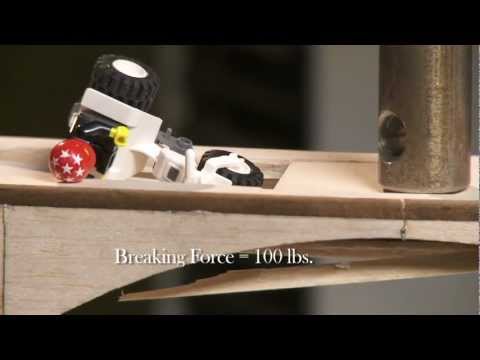
Watch fun, educational videos on all sorts of Physics questions. Bridge Design and Destruction! (part 1). Bridge Design (and Destruction!) Part 2. Shifts in Equilibrium. The Marangoni Effect: How to make a soap propelled boat!. The Invention of the Battery. The Forces on an Airplane. Bouncing Droplets: Superhydrophobic and Superhydrophilic Surfaces. A Crash Course on Indoor Flying Robots.
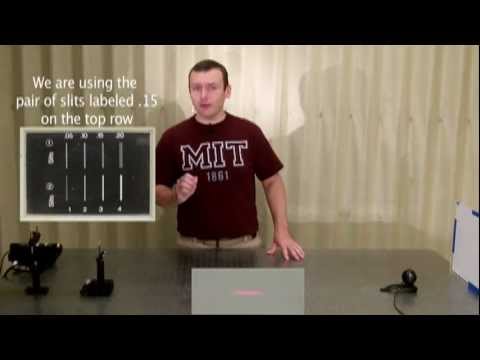
Watch fun, educational videos on all sorts of Physics questions. Thomas Young's Double Slit Experiment. Newton's Prism Experiment. Bridge Design and Destruction! (part 1). Bridge Design (and Destruction!) Part 2. Shifts in Equilibrium. The Marangoni Effect: How to make a soap propelled boat!. The Invention of the Battery. The Forces on an Airplane. Bouncing Droplets: Superhydrophobic and Superhydrophilic Surfaces. A Crash Course on Indoor Flying Robots. Heat Transfer. Thomas Young's Double Slit Experiment. Newton's Prism Experiment. Bridge Design and Destruction! (part 1). Bridge Design (and Destruction!) Part 2. Shifts in Equilibrium. The Marangoni Effect: How to make a soap propelled boat!. The Invention of the Battery. The Forces on an Airplane. Bouncing Droplets: Superhydrophobic and Superhydrophilic Surfaces. A Crash Course on Indoor Flying Robots. Heat Transfer.

Bringing together insights from physics, chemistry, biology, earth and atmospheric sciences -- and even some economics -- this course is geared to curious enthusiasts, allowing them to work with real climate data and simulations of the earth’s changing climate.
This eight-week class takes a quantitative approach to the science of global warming and will enable students to understand the greenhouse effect, the planet's carbon cycle, and how burning fossil fuel affects that cycle; and to evaluate the potential severity of humans’ impact on Earth’s climate.
Add to calendar

Trusted paper writing service WriteMyPaper.Today will write the papers of any difficulty.