

Courses tagged with "Calculus I" (279)

This course covers probability distributions for classical and quantum systems. Topics include: Microcanonical, canonical, and grand canonical partition-functions and associated thermodynamic potentials. Also discussed are conditions of thermodynamic equilibrium for homogenous and heterogenous systems.
The course follows 8.044, Statistical Physics I, and is second in this series of undergraduate Statistical Physics courses.

Statistical Physics in Biology is a survey of problems at the interface of statistical physics and modern biology. Topics include: bioinformatic methods for extracting information content of DNA; gene finding, sequence comparison, and phylogenetic trees; physical interactions responsible for structure of biopolymers; DNA double helix, secondary structure of RNA, and elements of protein folding; considerations of force, motion, and packaging; protein motors, membranes. We also look at collective behavior of biological elements, cellular networks, neural networks, and evolution.
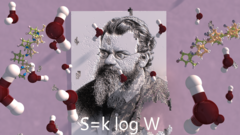
Thermodynamics explains phenomena we observe in the natural world and is the cornerstone of all of engineering. You're going to learn about thermodynamics from a molecular picture where we'll combine theory with a wide range of practical applications and examples. The principles you'll learn in this class will help you understand energy systems such as batteries, semiconductors, catalysts from a molecular perspective. But be warned: this is a fast-paced, challenging course. Everyone is welcome, but hold on to your hat!

The motion of falling leaves or small particles diffusing in a fluid is highly stochastic in nature. Therefore, such motions must be modeled as stochastic processes, for which exact predictions are no longer possible. This is in stark contrast to the deterministic motion of planets and stars, which can be perfectly predicted using celestial mechanics.
This course is an introduction to stochastic processes through numerical simulations, with a focus on the proper data analysis needed to interpret the results. We will use the Jupyter (iPython) notebook as our programming environment. It is freely available for Windows, Mac, and Linux through the Anaconda Python Distribution.
The students will first learn the basic theories of stochastic processes. Then, they will use these theories to develop their own python codes to perform numerical simulations of small particles diffusing in a fluid. Finally, they will analyze the simulation data according to the theories presented at the beginning of course.
At the end of the course, we will analyze the dynamical data of more complicated systems, such as financial markets or meteorological data, using the basic theory of stochastic processes.

Too much mathematical rigor teaches rigor mortis: the fear of making an unjustified leap even when it lands on a correct result. Instead of paralysis, have courage: Shoot first and ask questions later. Although unwise as public policy, it is a valuable problem-solving philosophy and the theme of this course: how to guess answers without a proof or an exact calculation, in order to develop insight.
You will learn this skill by mastering six reasoning tools---dimensional analysis, easy cases, lumping, pictorial reasoning, taking out the big part, and analogy. The applications will include mental calculation, estimating population growth rates, understanding drag without differential equations, singing musical intervals to estimate logarithms, approximating integrals, summing infinite series, and turning differential equations into algebra.
Your learning will be supported by regular readings that you discuss with other students, by short tablet videos, by quick problems to help you check your understanding, by weekly homework problems, review and and a final exam. You will work hard, and, by the end of the course, have learned a rough-and-ready approach to using mathematics to understand the world.
All required readings are available within the courseware, courtesy of The MIT Press. A print version of the course textbook, Street-Fighting Math, is also available for purchase. The MIT Press is offering enrolled students a special 30% discount on books ordered directly through the publisher’s website. To take advantage of this offer, please use promotion code SFM30 at The MIT Press.
FAQ
- Do I need to buy a textbook?
- Back in 2010, MIT Press agreed to publish the textbook, *Street-Fighting Mathematics*, under a free license (in print and online).
- Thus, the book is legally available all over the internet, including on this course platform.
- As a registered student in this course, you can also purchase a printed book from MIT Press at a discount.
- Do you often get into street fights?
- The last time was in high school, when I was attacked for being “different” and suspended for fighting back.
- However, in my problem-solving fights (and now that I’m older!), I regularly use reasoning tools and we’ll do the same in this course.

This string theory course focuses on holographic duality (also known as gauge / gravity duality or AdS / CFT) as a novel method of approaching and connecting a range of diverse subjects, including quantum gravity / black holes, QCD at extreme conditions, exotic condensed matter systems, and quantum information.

This course introduces string theory to undergraduate and is based upon Prof. Zwiebach's textbook entitled A First Course in String Theory. Since string theory is quantum mechanics of a relativistic string, the foundations of the subject can be explained to students exposed to both special relativity and basic quantum mechanics. This course develops the aspects of string theory and makes it accessible to students familiar with basic electromagnetism and statistical mechanics.

In this course we shall develop theoretical methods suitable for the description of the many-body phenomena, such as Hamiltonian second-quantized operator formalism, Greens functions, path integral, functional integral, and the quantum kinetic equation. The concepts to be introduced include, but are not limited to, the random phase approximation, the mean field theory (aka saddle-point, or semiclassical approximation), the tunneling dynamics in imaginary time, instantons, Berry phase, coherent state path integral, renormalization group.

Super-Earths And Life is a course about alien life, how we search for it, and what this teaches us about our place in the universe.
In the past decade astronomers have made incredible advances in the discovery of planets outside our solar system. Thirty years ago, we knew only of the planets in our own solar system. Now we know of thousands circling nearby stars.
Meanwhile, biologists have gained a strong understanding of how life evolved on our own planet, all the way back to the earliest cells. We can describe how simple molecules can assemble themselves into the building blocks of life, and how those building blocks might have become the cells that make up our bodies today.
Super-Earths And Life is all about how these two fields together - astronomy and biology - can answer one of our most powerful and primal questions: are we alone in the universe?
HarvardX requires individuals who enroll in its courses on edX to abide by the terms of the edX honor code: https://www.edx.org/edx-terms-service. HarvardX will take appropriate corrective action in response to violations of the edX honor code, which may include dismissal from the HarvardX course; revocation of any certificates received for the HarvardX course; or other remedies as circumstances warrant. No refunds will be issued in the case of corrective action for such violations. Enrollees who are taking HarvardX courses as part of another program will also be governed by the academic policies of those programs.
HarvardX pursues the science of learning. By registering as an online learner in an HX course, you will also participate in research about learning. Read our research statement: http://harvardx.harvard.edu/research-statement to learn more.
Harvard University and HarvardX are committed to maintaining a safe and healthy educational and work environment in which no member of the community is excluded from participation in, denied the benefits of, or subjected to discrimination or harassment in our program. All members of the HarvardX community are expected to abide by Harvard policies on nondiscrimination, including sexual harassment, and the edX Terms of Service. If you have any questions or concerns, please contact harvardx@harvard.edu and/or report your experience through the edX contact form: https://www.edx.org/contact-us.

There is a vast variety of contemporary surface analysis methods that you can use for your research. If you are not sure which one is right for you, or if you want to obtain the right information about different surface analysis techniques, then this course is for you!
This course describes the most widely used analysis methods in contemporary surface science. It presents the strengths and weaknesses of each method so that you can choose the one that provides you with the information you need. It also reviews what each method cannot give to you, as well as how to interpret the results obtained from each method.
This course is filled with examples to help you become familiar with the graphs and figures obtained from common surface analysis methods.
Each method is described in a similar way: basic principle, apparatus scheme, example results, special features, and actual device examples.

A transition to sustainable energy is needed for our climate and welfare. In this engineering course, you will learn how to assess the potential for energy reduction and the potential of renewable energy sources like wind, solar and biomass. You’ll learn how to integrate these sources in an energy system, like an electricity network and take an engineering approach to look for solutions and design a 100% sustainable energy system.
This course is an introduction to the Master Programme Sustainable Energy Technology at TU Delft and is aimed at Bachelor students from science and engineering disciplines.
LICENSE
The course materials of this course are Copyright Delft University of Technology and are licensed under a Creative Commons Attribution-NonCommercial-ShareAlike (CC-BY-NC-SA) 4.0 International License.

In 3.072x: Symmetry, Structure, and Tensor Properties of Materials, you will study the underlying structures of materials and deepen your understanding of the relationship between the properties of materials and their structures. Topics include lattices, point groups, and space groups in both two and three dimensions; the use of symmetry in the tensor representation of crystal properties; and the relationship between crystalline structure and properties, including transport properties, piezoelectricity, and elasticity. Two course projects will allow students to explore their particular interests in greater depth.
FAQ
Who can register for this course?
Unfortunately, learners from Iran, Sudan and the Crimea region of Ukraine will not be able to register for this course at the present time. While edX has received a license from the U.S. Office of Foreign Assets Control (OFAC) to offer courses to learners from Iran and Sudan our license does not cover this course. Separately, EdX has applied for a license to offer courses to learners in the Crimea region of Ukraine, but we are awaiting a determination from OFAC on that application. We are deeply sorry the U.S. government has determined that we have to block these learners, and we are working diligently to rectify this situation as soon as possible.

This course provides an introduction to cellular and population-level systems biology with an emphasis on synthetic biology, modeling of genetic networks, cell-cell interactions, and evolutionary dynamics. Cellular systems include genetic switches and oscillators, network motifs, genetic network evolution, and cellular decision-making. Population-level systems include models of pattern formation, cell-cell communication, and evolutionary systems biology.

This course introduces the mathematical modeling techniques needed to address key questions in modern biology. An overview of modeling techniques in molecular biology and genetics, cell biology and developmental biology is covered. Key experiments that validate mathematical models are also discussed, as well as molecular, cellular, and developmental systems biology, bacterial chemotaxis, genetic oscillators, control theory and genetic networks, and gradient sensing systems. Additional specific topics include: constructing and modeling of genetic networks, lambda phage as a genetic switch, synthetic genetic switches, circadian rhythms, reaction diffusion equations, local activation and global inhibition models, center finding networks, general pattern formation models, modeling cell-cell communication, quorum sensing, and finally, models for Drosophila development.
This course introduces the mathematical modeling techniques needed to address key questions in modern biology. An overview of modeling techniques in molecular biology and genetics, cell biology and developmental biology is covered. Key experiments that validate mathematical models are also discussed, as well as molecular, cellular, and developmental systems biology, bacterial chemotaxis, genetic oscillators, control theory and genetic networks, and gradient sensing systems. Additional specific topics include: constructing and modeling of genetic networks, lambda phage as a genetic switch, synthetic genetic switches, circadian rhythms, reaction diffusion equations, local activation and global inhibition models, center finding networks, general pattern formation models, modeling cell-cell communication, quorum sensing, and finally, models for Drosophila development.

Have you ever wondered why ventilation helps to cool down your hot chocolate? Do you know why a surfing suit keeps you warm? Why iron feels cold, while wood feels warm at room temperature? Or how air is transferred into aqueous liquids in a water treatment plant? How can we sterilize milk with the least amount of energy? How does medicine spread in our tissue? Or how do we design a new cooling tower of a power plant? All these are phenomena that involve heat transfer, mass transfer or fluid flow.
Transport Phenomena investigates such questions and many others, exploring a wide variety of applications ranging from industrial processes to environmental engineering, to transport processes in our own body and even simple daily life problems
In this course we will look into the underlying concepts of these processes, that often take place simultaneously, and will teach you how to apply them to a variety of real-life problems. You will learn how to model the processes and make quantitative statements.
LICENSE
The course materials of this course are Copyright Delft University of Technology and are licensed under a Creative Commons Attribution-NonCommercial-ShareAlike (CC-BY-NC-SA) 4.0 International License.

The course will provide an overview of the knowledge acquired during the past 20 years in the domain of exoplanets. It will review the different detection methods, their limitations, and the information provided on the orbital system and the planet itself, and how this information is helping our understanding of planet formation.

The Early Universe provides an introduction to modern cosmology. The first part of the course deals with the classical cosmology, and later part with modern particle physics and its recent impact on cosmology.
For more about Professor Guth's work, listen to this interview from WBUR, Boston's National Public Radio news station.
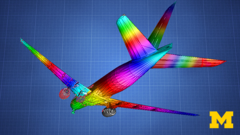
This course is an introduction to the finite element method as applicable to a range of problems in physics and engineering sciences. The treatment is mathematical, but only for the purpose of clarifying the formulation. The emphasis is on coding up the formulations in a modern, open-source environment that can be expanded to other applications, subsequently.

This course is designed to give you the scientific understanding you need to answer questions like:
- How much energy can we really get from wind?
- How does a solar photovoltaic work?
- What is an OTEC (Ocean Thermal Energy Converter) and how does it work?
- What is the physics behind global warming?
- What makes engines efficient?
- How does a nuclear reactor work, and what are the realistic hazards?
The course is designed for MIT sophomores, juniors, and seniors who want to understand the fundamental laws and physical processes that govern the sources, extraction, transmission, storage, degradation, and end uses of energy.
Add to calendar

Trusted paper writing service WriteMyPaper.Today will write the papers of any difficulty.