

Courses tagged with "Chemokines" (562)


Oscar Wilde est l’auteur d’une œuvre abondante qui illustre tous les genres littéraires.
Parfois mal compris, sans doute en raison de la confidence qu’il aurait faite à André Gide (« J’ai mis tout mon génie dans ma vie; je n’ai mis que mon talent dans mon œuvre ») dont tout invite à penser qu’elle n’est pas authentique, Wilde, souvent perçu comme un esthète brillant ancré dans son siècle, était au contraire un écrivain innovant qui a bel et bien mis son génie dans son œuvre.
Si sa culture était immense, il a su l’utiliser pour créer une œuvre profondément originale qui s’interroge en permanence sur le pouvoir, ou sur l’impuissance, du langage.
Wilde avait également une pensée politique qui remettait en cause les présupposés de son temps, et son théâtre, notamment, rend compte de sa capacité à déstabiliser les catégories établies, par exemple celles du « masculin » et du « féminin », avec les implications idéologiques que cela suppose.
Ce MOOC s’intéresse aussi, par conséquent, à sa postérité qui montre bien que son œuvre fait sens pour les lecteurs contemporains.

A Comprehensive, but Fun, Chapter by Chapter Walk-through

Aprenderemos cómo podemos usar el pensamiento científico en la vida cotidiana para tomar mejores decisiones.

Analizar el contexto próximo del Papa Francisco y proponer alternativas de acción. Este curso teórico práctico, pretende hacer una aproximación reflexiva y crítica al pensamiento social del Papa Francisco desde la teología, teniendo como marco doctrinal de referencia, la doctrina social de la Iglesia, la realidad latinoamericana y mundial.

This course, part of the Public Library Management Professional Certificate program, will explore skills needed for hiring and evaluating personnel to reflect your library's mission through an organizational culture that will thrive in your community.
Learners will understand the legal considerations when managing a diverse workforce.

This course will introduce you to the major topics, problems, and methods of philosophy and surveys the writings of a number of major historical figures in the field. Philosophy can be - and has been - defined in many different ways by many different thinkers. In a scholarly sense, philosophy is the study of the history of human thought. It requires familiarity with great ideas understood through the various major thinkers in world history. In its most general sense, philosophy is simply the investigation of life’s “big questions.” We will explore such fundamental questions in several of the core areas of philosophy, including metaphysics, epistemology, political philosophy, ethics, and the philosophy of religion. With the help of commentaries and discussions from a number of contemporary philosophers, we will read and reflect on texts by major Western and non-Western thinkers including Lao Tzu, Buddha, Confucius, Plato, Aristotle, Saint Anselm, René Descartes, Blaise Pascal, John Locke, Immanuel…

A course listing of philosophers

There is one thing I can be sure of: I am going to die. But what am I to make of that fact? This course will examine a n

What can we learn through philosophical inquiry that will help us to think with clarity, rigour and humour about things that matter?
This course introduces principles of philosophical inquiry and critical thinking that will help us answer this question. Learn how we can use philosophical ideas to think about ourselves and the world around us.

Learn about the historical and philosophical foundations of contemporary science. Explore cutting-edge debates in the philosophy of the physical sciences and philosophy of the cognitive sciences.
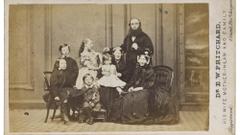
Explore the Victorian craze for photography, examine its history, from the earliest images in 1839 and how it has influenced the way we capture and share images today as photography moved from being a niche concern of the few, to one of the most important cultural forms of the modern world.

Conoce la obra inspiradora de los principales pintores europeos desde 1400 hasta 1800 aproximadamente, y descubre los problemas que encuentran su expresión en el arte de la pintura. En este amplio marco temporal se incluyen artistas de la importancia de Leonardo da Vinci, Caravaggio, Velázquez, Rembrandt, Vermeer o Goya.
Los pintores durante este periodo estaban preocupados por ideas tales como la búsqueda de la belleza, los placeres y dolores asociados al amor, la demostración de poder y estatus, o la relación de hombres y mujeres con la divinidad y la naturaleza. En las pinturas del período cubierto en este curso se encuentran rastros de la aparición de la mentalidad moderna, así como información sobre cuestiones tales como los roles respectivos de los hombres y las mujeres en el mundo.
Este curso se centrará en imágenes de pinturas de los artistas que figuran en el programa del curso. Las discusiones que tendrán lugar en el "Foro del curso" nos permitirán abordar una gama más amplia de cuestiones.

A unique and exciting introduction to the genre and craft of historical fiction, for curious students, aspiring authors--anyone with a passion for the past. Read classics of the genre, encounter bestselling writers of historical fiction, and discover your own historical archive while interacting with a global community of interested readers.

Diretrizes e Ferramentas visando cumprir as rotinas trabalhistas observando os parâmetros legais vigentes. Atualize-se!

This philosophy course explores the origins of Western philosophy – a rich tapestry of ideas that began with the most noted ancient Greek and Roman philosophers.
By examining the work of these historic figures, students will attain a strong grasp of Western philosophy’s basic spirit. In doing so, they’ll cultivate deeper thinking abilities, explore noble values, and learn to contemplate the world around them in new ways.
本课程面向各专业本科生,通过课堂讲授与课外阅读讨论的方法,把握古希腊罗马哲学家丰富的思想,探讨哲学精神的起源,揭示古希腊民族的精神取向,阐明古希腊民族思维方式的特征,帮助学生把握哲学的基本精神,养成理论思维的能力,培养高尚的情操,提高人文素质。

This course, the fourth installment of the multi-part Poetry in America series, explores the poetry of Emily Dickinson, one of America’s most distinctive and prolific poets. While Dickinson wrote nearly 2,000 poems during her lifetime, she chose never to publish, opting instead to revisit and revise her works throughout her lifetime. Keeping this dynamic of self-revision in mind, we will consider a number of Dickinson’s poems—many seemingly in tension with one another—concerned with Nature, Art, the Self, and Darkness. We will travel to the Dickinson Collection at Harvard's Houghton Library, and to Amherst, Massachusetts, paying a visit to the house in which the poet lived and wrote until her death in 1886. Distinguished guests for this module include NBA athlete Jason Collins, dancers Damian Woetzel and Charles “Lil Buck” Riley, and President and CEO of the New America Foundation Anne Marie Slaughter, among others.
Led by Harvard Professor Elisa New, Poetry in America surveys nearly 400 years of American poetry. Through video lectures, archival images and texts, expeditions to historic sites, interpretive seminars with large and small groups, interviews with poets and scholars, and conversations about poems with distinguished Americans, Poetry in America embarks on a journey through the literature of a nation. Distinguished guests, including President Bill Clinton, Elena Kagan, Henry Louis Gates, Eve Ensler, John McCain, Andrea Mitchell, Michael Pollan, Drew Faust, Tony Kushner, and Nas, among others, bring fresh perspectives to the study of American Poetry.
HarvardX pursues the science of learning. By registering as an online learner in an HX course, you will also participate in research about learning. Read our research statement to learn more.

This literature course, the sixth module in the Poetry in America series, explores a diverse array of American Modernist poets and poems. While “Modernism” is notoriously difficult to define, the movement spanned the decades from the 1910s to the mid-1940s, and the poetry of this period marked a clear break from past traditions and past forms.
Throughout this module, we will encounter such poets as Robert Frost, T.S. Eliot, Marianne Moore, Langston Hughes, William Carlos Williams, Edna St. Vincent Millay, Claude McKay, Dorothy Parker, and Wallace Stevens. We will study how these poets employed the language of rejection and revolution, of making and remaking, of artistic appropriation and cultural emancipation. Traveling to the homes and workplaces of Robert Frost and Wallace Stevens; to the Poetry Foundation in Chicago, where the institution of American Modernism was born; and even exploring the River Thames in the London of Eliot's THE WASTE LAND, we will see the sites that witnessed—and cultivated—the rise of American Modernism.
Led by Harvard Professor Elisa New, the Poetry in America series surveys nearly 400 years of American poetry. Through video lectures, archival images and texts, expeditions to historic sites, interpretive seminars with large and small groups, interviews with poets and scholars, and conversations about poems with distinguished Americans, Poetry in America takes learners on a journey through the literature of a nation. Along the way, distinguished guests including Elena Kagan, Henry Louis Gates, Eve Ensler, John McCain, Andrea Mitchell, Michael Pollan, Drew Faust, Tony Kushner, and Nas, among others, bring fresh perspectives to the study of American poetry.

This course, the second installment of the multi-part Poetry in America series, spans the poetry of America’s early years, directly before and after the creation of the Republic. We examine the creation of a national identity through the lens of an emerging national literature, focusing on such poets as Phillis Wheatley, Henry Wadsworth Longfellow, Edgar Allan Poe, and Ralph Waldo Emerson, among others. Distinguished guest discussants in this part of the course include writer Michael Pollan, economist Larry Summers, Vice President Al Gore, Mayor Tom Menino and others.
Led by Harvard Professor Elisa New, Poetry in America surveys nearly 400 years of American poetry. Through video lectures, archival images and texts, expeditions to historic sites, interpretive seminars with large and small groups, interviews with poets and scholars, and conversations about poems with distinguished Americans, Poetry in America embarks on a journey through the literature of a nation. Distinguished guests, including President Bill Clinton, Elena Kagan, Henry Louis Gates, Eve Ensler, John McCain, Andrea Mitchell, Michael Pollan, Drew Faust, Tony Kushner, and Nas, among others, bring fresh perspectives to the study of American Poetry.
HarvardX pursues the science of learning. By registering as an online learner in an HX course, you will also participate in research about learning. Read our research statement to learn more.

This module, the fifth installment of the multi-part Poetry in America series, explores the Poetry of the Civil War and its Aftermath. We will:
- Encounter such poets as Herman Melville, Julia Ward Howe, Walt Whitman, Edwin Arlington Robinson, Paul Laurence Dunbar, James Weldon Johnson, Francis Ellen Watkins Harper, Emma Lazarus and W.E.B DuBois.
- Examine the language of patriotism, pride, justice, violence, loss, and memory inspired by the Nation’s greatest conflict.
- Travel to Boston’s Robert Gould Shaw and Massachusetts 54th Regiment Monument, and to Harvard’s Memorial Hall, two iconic sites of Civil War public memory.
Distinguished guests for this module include Harvard President Drew Faust, Pulitzer Prize-winning playwright and screenwriter Tony Kushner, Professor and Emmy Award-winning filmmaker Henry Louis Gates Jr., baritone Davone Tines, and Harvard Civil War scholar John Stauffer, among others.
Led by Harvard Professor Elisa New, Poetry in America surveys nearly 400 years of American poetry. Through video lectures, archival images and texts, expeditions to historic sites, interpretive seminars with large and small groups, interviews with poets and scholars, and conversations about poems with distinguished Americans, Poetry in America embarks on a journey through the literature of a nation. Distinguished guests, including President Bill Clinton, Elena Kagan, Henry Louis Gates, Eve Ensler, John McCain, Andrea Mitchell, Michael Pollan, Drew Faust, Tony Kushner, and Nas, among others, bring fresh perspectives to the study of American Poetry.
HarvardX pursues the science
Add to calendar

Trusted paper writing service WriteMyPaper.Today will write the papers of any difficulty.