

Courses tagged with "Chemokines" (562)

Whether you are an EU citizen or not, this course concerns you! The EU is a major global actor in the field of human rights. EU treaties state that human rights are a fundamental value of the Union, which must be a silver thread in all its policies. The EU now acts within an impressive array of competences, and therefore has the potential to impact – positively or negatively – anyone’s human rights.
This EU and Human Rights course teaches the basics of human rights, placing the EU at the centre of investigation. The course will examine a number of key questions:
- What factors are key to making the EU a positive or a negative force for human rights? An example is the economic crisis: what impact has it had on people’s human rights in the EU and the world?
- Which actors, friends or foes, must the EU engage with to successfully promote human rights? Examples include NGOs, businesses, or other international organisations like the Council of Europe or the United Nations.
- In key policy sectors in which the EU is active, what is on balance the impact of the EU? Examples include trade, development, migration, social policy or international crisis management.
All of the course activities aim to improve your understanding of how the EU, alone or in combination with other local or global, state or non-state actors, can better promote and uphold human rights worldwide. The course is intended for anyone interested in human rights and the EU, human rights law, European law, European Studies, international relations, global governance, etc. It is divided into four modules:
- The EU and Human Rights: Value Promotion and Coherence
- Promoting Human Rights inside the EU
- Promoting Human Rights in EU External Action
- Capitalising on Success and Remedying Flaws
This course is taught by leading academics, and the content is illustrated through interviews of practitioners in the field of the EU and human rights. The course also comprises a wealth of bibliographical resources, and frequent exercises to test what you have learned.
This MOOC is based on the FRAME project (www.fp7-frame.eu), which has received funding from the European Union’s Seventh Framework Programme for research, technological development and demonstration. (Grant Agreement No. 320000)

The destruction of the First Temple in Jerusalem and the Babylonian Exile were a great catastrophe in the history of the Jewish Nation. What really happened during that dark, fateful age, and how did new opportunities arise from the ashes?

What is the nature of our relationship to others and the world? How can literature help us see these relationships more clearly? This course seeks to explore such questions through adventurous readings of ten great works of narrative fiction from the 18th to the 20th century.

The French Revolution was one of the most important upheavals in world history. This course examines its origins, course and outcomes.

This course will take students on an extraordinary journey – the beginning of a massive transformation of humankind. Nothing remotely like this had ever happened in the billions of years of evolution on Earth. It was enabled by technology, but many other factors were part of its driving force.

World War 1 was the original catastrophe of the 20th-century. This course investigates the complex ways in which the First World War mobilized philosophical reflection during the war and the varied ways in which philosophical thought responded to the war.
Students in this course will be introduced to different philosophical reactions to the First World War through discussion and analysis of texts, documents, images, artworks, film, and music. The relation between philosophy and poetry will also be explored. In this course, students will gain historical knowledge, conceptual understanding, and literacy for a clearer grasp of the complex ways in which philosophy and the Great War intersected.
The course is divided into four thematic sections:
- An Absolute War
- The Clash of Civilizations
- Memento Mori
- The Hope of Peace
Across each of these thematic sections, we will explore different philosophical traditions and movements in England, France, and Germany during the war.
Discussions will be held in English, Dutch and French.

This course traces the destruction of the Jews and Jewish life in Europe by Nazi Germany, drawing on major works of history, literature, and film. The lectures outline the work of the Nazis as well as Jewish responses.

This course will examine why and how the Holocaust occurred, focusing on the period of 1933-1945.

Who the Holy Spirit Is, What He Does, and Why You Should Care

Learn how John F. Kennedy's life, presidential administration, and tragic death have influenced the general public, the media, and all nine U.S. presidents over the last fifty years. THIS COURSE IS OFFERED FREE OF CHARGE! Follow @LarrySabato on Twitter. He tweets frequently about JFK and other political subjects.

This Film History course explores how fundamental changes in film technology affected popular Hollywood storytelling. We will consider the transition to sound, and the introduction of color. This online educational experience is not equivalent to a college course.

The EU is the most successful supranational legal order to which 27 Member States have transferred sovereign rights. This course explores the functioning of the unique creature that is the EU, the impact of its laws on states, citizens and companies, and the current challenges it faces.

A Man After God's Own Heart

The Most Important Man of the Old Testament

We can read a city in a number of ways: in its plan, in the buildings that make its streets and public spaces, in the skyline. We can ask, what are the buildings or spaces saying? How do they say it? How does it all stitch together?
In this architecture course you will learn how to “read” Rome, an ancient city, reborn in the fifteenth century and reshaped substantially in the following three centuries. You will discover how Renaissance and Baroque Rome’s urban form, art, and architecture projected the city’s image of itself to its citizens (urbi) and the world (orbi).
Popes, architects, scholars and sculptors invested in Rome a variety of narratives that strove to explain the city’s history, convince its citizens and visitors of its harmony, and exhort society at large to share in and shape its destiny. The city that resulted became a destination for pilgrims and Grand Tourists, and still is today.
The Meaning of Rome: The Renaissance and Baroque City is organized around three themes—the city and memory, the city as reliquary, and the city as theater. In uncovering some of the meaning of Rome, you will be equipped with the skills necessary to consider how our own cities and communities are, or could be, meaningful. You will come away from this course not only better informed about the cities of the past, but also better equipped to think about the cities of the present and the future.
Students who successfully complete all of the required course assignments will have the opportunity to compile a Digication ePortfolio and earn a digital badge.

This course examines how the idea of "the modern" develops at the end of the 18th century in European philosophy and literature, and how being modern (or progressive, or hip) became one of the crucial criteria for understanding and evaluating cultural change. Are we still in modernity, or have we moved beyond the modern to the postmodern?

This is a survey of modern history from a global perspective. It begins with the revolutions of the late 1700s, tracks the transformation of the world during the 1800s, and analyzes the cataclysms of last century, concluding with the new phase of world history we are experiencing today.

This course analyses the intersection between the Olympic Games and the media and how television and other media contribute to fund, shape and disseminate the major sporting spectacle in the world: the Olympic Games.

Join the Smithsonian, and comic book industry legend Stan Lee, in this self-paced course to explore the history of the comic book and the rise of superheroes.
The ancient gods of Egyptian, Greek and Roman myths still exist, but today, they have superpowers, human foibles and secret identities. They come from comic books and graphic novels, and have taken over pop culture on the stage, screen, video games, and animation.
From Superman® and Spider-Man®, to The Avengers® and The Hulk® and beyond, who are these heroes? And, how have they evolved from folklore and myth, across all cultures and religions?
Learn from Smithsonian and industry experts including:
- Stan Lee, who was one of the creators of the modern superhero template. His early comics featuring Spider-Man, Iron Man®, The Hulk, Thor®, and The Avengers led Marvel to success. He continues to reinvent himself to create modern global superheroes and appear in cameos in superhero films and TV, such as Avengers: Age of Ultron.
- Michael Uslan, executive producer of top grossing, award winning movies, including The Dark Knight series, Lego® Movie, the animated Batman films and Batman® VS Superman.
In this self-paced course, we explore the following questions:
- Why did superheroes first arise in 1938 and experience what we refer to as their “Golden Age” during World War II?
- Why did the superhero genre ebb and flow in popularity over the decades?
- How have comic books, published weekly since the mid-1930’s, mirrored a changing American society, reflecting our mores, slang, fads, biases and prejudices?
- Why was the comic book industry nearly shut down in the McCarthy Era of the 1950’s?
- How did our superheroes become super-villains in the eyes of the government, clergy, educators, and parents of the mid-20th Century?
- When and how did comic books become acceptable again, and eventually become valid teaching tools in universities and schools?
- When and how did comic book artwork become accepted as a true American art form as indigenous to this country as jazz?
- Finally, when and how did comic books become “cool” and the basis for blockbuster movies, hit TV series, top-selling video games, and acclaimed animation, while also impacting fashion and style- and even the moral and ethical codes of children- around the globe?
The Smithsonian's National Museum of American History is excited to offer the opportunity to go into the collection and see why superheroes are a dominant cultural force in today’s world.
As you learn about how cultural myths, world events, and personal experiences shaped the first superheroes, you will apply these frameworks to create your own superhero– or you can choose to do a deeper analysis on existing comic book heroes. This original project is required for certification and anything created by you as part of this self-paced course is the intellectual property of you and you alone.
At last, fans, students and seekers of knowledge have the opportunity to enroll in the ultimate comic book course.
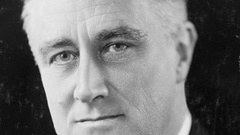
Who were Franklin, Eleanor, and Theodor Roosevelt? What values did they stand for? This course explores twentieth century US history through these three unique leaders. The 3Rs propelled the United States into a superpower. They changed the way we think about security, equality, and freedom. The Roosevelt Century takes you through their time, and connects it with our own
Add to calendar

Trusted paper writing service WriteMyPaper.Today will write the papers of any difficulty.