

Courses tagged with "Curriculum" (169)
This course is intended as a self-study course for those interested in exploring a career as a Home Health Aide or Personal Care Aide.

As the world grows more socially and economically interdependent, Global Health has developed from an ethical dimension to an issue that now dominates global security. A diverse team of experts has designed an introductory course to give you a primer of the field and a dazzling view of one of the emerging disciplines of the 21st century. This course also serves as a prerequisite to the hands-on 'Global Health Responder' certification from the CU School of Medicine.

This course introduces concepts, algorithms, programming, theory and design of spatial computing technologies such as global positioning systems (GPS), Google Maps, location-based services and geographic information systems. Learn how to collect, analyze, and visualize your own spatial datasets while avoiding common pitfalls and building better location-aware technologies.

This introductory course provides an overview of the principles of nutritional science. Subject matter includes description and functions of nutrients, digestion and absorption, effects of nutrient deficiencies and toxicities, requirements, food sources, nutrient interactions, dietary guidelines, and the role of nutrition in health and disease.

Think that a prescription medication must be safer than a “street drug”? Think again. Investigate the epidemic rise of prescription drug abuse and use science to debunk commonly held misconceptions regarding this phenomenon.

To acquire an understanding of the fundamental concepts of genomics and biotechnology, and their implications for human biology, evolution, medicine, social policy and individual life path choices in the 21st century.

How have advances in genetics affected society? What do we need to know to make ethical decisions about genetic technologies? This course includes the study of cloning, genetic enhancement, and ownership of genetic information. Course participants will acquire the tools to explore the ethics of modern genetics and learn how to integrate these issues into their classrooms.
Learn to use the tools that are available from the Galaxy Project. This is the second course in the Genomic Big Data Science Specialization.

A philanthropist is anyone who gives anything — time, money, experience, skills, and networks — in any amount, to create a better world. This course will empower you to practice philanthropy more effectively and make your giving more meaningful to both you and those you strive to help.
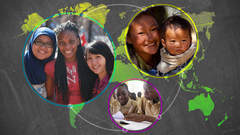
This course will explore the dynamic factors affecting the health and wellbeing of young people around the world, and how important it is for individuals, communities and nations that we improve the health and life chances of this important population group.
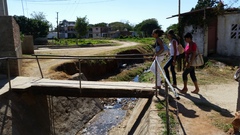
Learn about the best environmental technologies for a sustainable development and how they are managed in various settings around the world.

This course proposes an overview of current global health challenges drawing on the insights of several academic disciplines including medicine, public health, law, economics, social sciences and humanities. This interdisciplinary approach will guide the student into seven critical topics in global health.
Questions related to sexuality and reproduction are intimately linked to health, well-being and human rights. In this course, you will gain a unique opportunity to explore the field of SRHR together with participants from around the world, and to reflect upon themes and issues that are of global relevance.

This course provides an overview of the issue of postharvest loss of grains by exploring essential physical, technical, and social dimensions of postharvest supply chains and loss prevention methods globally.

Health Care Workers and Health Professions Students can prepare to plan and deliver TB care in their communities by applying the latest clinical and research data presented in this nine-week course focusing on TB/HIV Co-Infection.

The world is ageing – people are older and societies are facing hard realities. What are we to make our lives in this time of global ageing? In six weeks, we analyze critical questions about age and ageing around the world.

Learn about the ethical issues that arise when conducting human subjects research, as well as the history that grounds policies and debates in this area of biomedicine.

Imagine if there were an organ in your body that weighed as much as your brain, that affected your health, your weight, and even your behavior. Wouldn’t you want to know more about it? There is such an organ — the collection of microbes in and on your body, your human microbiome.

This course explores why primary health care is central for achieving Health for All. It provides examples of how primary health care has been instrumental in approaching this goal in selected populations and how the principles of primary health care can guide future policies and actions.

A non-technical introduction to the contemporary application of computing to healthcare delivery, public health and community-based clinical research.
Add to calendar

Trusted paper writing service WriteMyPaper.Today will write the papers of any difficulty.