

Courses tagged with "Customer Service Certification Program" (283)

Ce cours contient les 7 premiers chapitres d'un cours donné aux étudiants bachelor de l'EPFL. Il est basé sur le livre "Introduction à l'analyse numérique", J. Rappaz M. Picasso, Ed. PPUR. Des outils de base sont décrits dans les 5 premiers chapitres. Les deux derniers chapitres abordent la question de la résolution numérique d'équations différentielles.

Analysis I covers fundamentals of mathematical analysis: metric spaces, convergence of sequences and series, continuity, differentiability, Riemann integral, sequences and series of functions, uniformity, interchange of limit operations.

This course continues from Analysis I (18.100B), in the direction of manifolds and global analysis. The first half of the course covers multivariable calculus. The rest of the course covers the theory of differential forms in n-dimensional vector spaces and manifolds.

In this course we’ll explore complex analysis, complex dynamics, and some applications of these topics.

This course teaches a calculus that enables precise quantitative predictions of large combinatorial structures. In addition, this course covers generating functions and real asymptotics and then introduces the symbolic method in the context of applications in the analysis of algorithms and basic structures such as permutations, trees, strings, words, and mappings.

Analytic Combinatorics teaches a calculus that enables precise quantitative predictions of large combinatorial structures. This course introduces the symbolic method to derive functional relations among ordinary, exponential, and multivariate generating functions, and methods in complex analysis for deriving accurate asymptotics from the GF equations.

This course teaches a calculus that enables precise quantitative predictions of large combinatorial structures. Part I covers generating functions and real asymptotics and then introduces the symbolic method in the context of applications in the analysis of algorithms and basic structures such as permutations, trees, strings, words, and mappings.

This course teaches a calculus that enables precise quantitative predictions of large combinatorial structures.

This course provides theoretical and practical training on the increasingly popular logistic regression model, which has become the standard analytical method for use with a binary response variable.
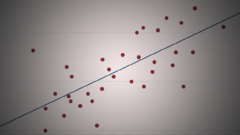
Regression modeling is the standard method for analysis of continuous response data. This course provides theoretical and practical training in statistical modeling with particular emphasis on linear and multiple regression.
This course is taught in French Vous voulez comprendre l'arithmétique ? Vous souhaitez découvrir une application des mathématiques à la vie quotidienne ? Ce cours est fait pour vous ! De niveau première année d'université, vous apprendrez les bases de l'arithmétique (division euclidienne, théorème de Bézout, nombres premiers, congruence). Vous vous êtes déjà demandé comment sont sécurisées les transactions sur Internet ? Vous découvrirez les bases de la cryptographie, en commençant par les codes les plus simples pour aboutir au code RSA. Le code RSA est le code utilisé pour crypter les communications sur internet. Il est basé sur de l'arithmétique assez simple que l'on comprendra en détail. Vous pourrez en plus mettre en pratique vos connaissances par l'apprentissage de notions sur le langage de programmation Python. Vous travaillerez à l'aide de cours écrits et de vidéos, d'exercices corrigés en vidéos, des quiz, des travaux pratiques. Le cours est entièrement gratuit !

This course is part one of a two-part introductory survey of graduate-level academic asset pricing. We will focus on building the intuition and deep understanding of how the theory works, how to use it, and how to connect it to empirical facts. This first part builds the basic theoretical and empirical tools around some classic facts. The second part delves more deeply into applications and empirical evaluation.

This course is part two of an introduction to graduate-level academic asset pricing. This second part uses the theory and elaborates empirical understanding. It explores some classic applications including the Fama-French three-factor model, consumption and the equity premium, and extends the theory to cover options, bonds, and portfolios.

Learn various methods of analysis including: unsupervised clustering, gene-set enrichment analyses, Bayesian integration, network visualization, and supervised machine learning applications to LINCS data and other relevant Big Data from high content molecular and phenotype profiling of human cells.

This course was the first in a two-part series covering some of the algorithms underlying bioinformatics. It has now been split into three smaller courses.

This is the second course in a two-part series on bioinformatics algorithms, covering the following topics: evolutionary tree reconstruction, applications of combinatorial pattern matching for read mapping, gene regulatory analysis, protein classification, computational proteomics, and computational aspects of human genetics.

This course teaches the concepts and computational methods in the exciting interdisciplinary field of bioinformatics and their applications in life sciences. The lectures are taught in both Mandarin Chinese and English with slides in English. 生物信息学是一门新兴的生命科学与计算科学的前沿交叉学科。本课程讲授生物信息学主要概念和方法,以及如何应用生物信息学手段解决生命科学问题。本课程同时提供中文普通话授课和英文授课两个版本,以及英文幻灯片。

Are you interested in learning how to program (in Python) within a scientific setting? This course will cover algorithms for solving various biological problems along with a handful of programming challenges helping you implement these algorithms in Python. It offers a gentler-paced alternative to the first course in our Bioinformatics Specialization (Finding Hidden Messages in DNA).

Videos on a first course in calculus (Differential Calculus).

Videos on a second course in calculus (Integral Calculus).
Add to calendar

Trusted paper writing service WriteMyPaper.Today will write the papers of any difficulty.