

Courses tagged with "Diencephalon" (158)
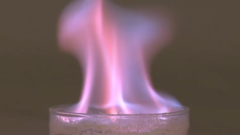
This is an introductory course for students with limited background in chemistry; basic concepts such as atomic and molecular structure, solutions, phases of matter, and quantitative problem solving will be emphasized with the goal of preparing students for further study in chemistry.

This course is the first part of a modular sequence of increasingly sophisticated (and challenging) laboratory courses required of all Chemistry majors: 5.35 Introduction to Experimental Chemistry, 5.36 Biochemistry and Organic Laboratory, 5.37 Organic and Inorganic Laboratory, and 5.38 Physical Chemistry Laboratory. This course provides students with a survey of spectroscopy, and introduces synthesis of coordination compounds and kinetics.
This class is part of the new laboratory curriculum in the MIT Department of Chemistry. Undergraduate Research-Inspired Experimental Chemistry Alternatives (URIECA) introduces students to cutting edge research topics in a modular format.
Acknowledgements
Professor Nelson and Dr. Twardowski would like to acknowledge the contributions of MIT Professor Timothy Swager to the development of this course. Module 3 on Fabrication of a Polymeric Light Emitting Device, taught by Timothy Swager, is not currently available on OCW.

5.302 is a 3-unit course intended to provide freshmen with a stimulating and enjoyable "hands-on" experience with chemical phenomena. The aim of this course is to provide freshmen with an opportunity to get "up close and personal" with the chemical phenomena introduced in 5.111, 5.112 and 3.091. Interesting and dramatic experiments have been selected to illustrate and reinforce the concepts and principles introduced in the chemistry core lecture courses.
WARNING NOTICE
The experiments described in these materials are potentially hazardous and require a high level of safety training, special facilities and equipment, and supervision by appropriate individuals. You bear the sole responsibility, liability, and risk for the implementation of such safety procedures and measures. MIT shall have no responsibility, liability, or risk for the content or implementation of any of the material presented.
Legal Notice

Understand how basic scientific principles underpin forensic science and can contribute to solving criminal cases.

This course, which spans a third of a semester, provides students with experience using techniques employed in synthetic organic chemistry. It also introduces them to the exciting research area of catalytic chiral catalysis.
This class is part of the new laboratory curriculum in the MIT Department of Chemistry. Undergraduate Research-Inspired Experimental Chemistry Alternatives (URIECA) introduces students to cutting edge research topics in a modular format.

Gain a rigorous introduction to physical chemistry suitable for undergraduates starting university. The course provides a unique, in-depth introduction to the three main pillars of physical chemistry: thermodynamics, kinetics and quantum mechanics.

This first-year University chemistry course explores the basic principles of the chemical bond by studying the properties of solids. Properties such as stiffness, electrical conductivity, thermal expansion, strength, and optical properties are the vehicle by which you can learn a great deal of practical chemistry.
You will see how experts use their knowledge of trends in the periodic table to predict the properties of materials. 3.091x is an engineering course so there is an emphasis on applications and how materials are used. The on-campus version of the course has been taught for over forty years and is one of the largest classes at MIT.
This course will cover the relationship between electronic structure, chemical bonding, and atomic order, and characterization of atomic arrangements in crystalline and amorphous solids: metals, ceramics, semiconductors, and polymers (including proteins). There will be topical coverage of organic chemistry, solution chemistry, acid-base equilibria, electrochemistry, biochemistry, chemical kinetics, diffusion, and phase diagrams. Examples will be drawn from industrial practice (including the environmental impact of chemical processes), from energy generation and storage (e.g., batteries and fuel cells), and from emerging technologies (e.g., photonic and biomedical devices).

5.311 is the first of a three-term laboratory subject sequence for chemistry majors. Experimental work emphasizes development of fundamental laboratory skills and techniques: volumetric and colorimetric analysis; nuclear magnetic resonance; preparation, purification, and characterization of chemical substances; and data analysis.
Acknowledgements
The experiments for 5.311 have evolved over a period of many years and include contributions from past instructors, course textbooks, and others affiliated with the course. Thus for many of the lab documents, no single source can be attributed.
WARNING NOTICE
The experiments described in these materials are potentially hazardous and require a high level of safety training, special facilities and equipment, and supervision by appropriate individuals. You bear the sole responsibility, liability, and risk for the implementation of such safety procedures and measures. MIT shall have no responsibility, liability, or risk for the content or implementation of any of the material presented.

This is a organic chemistry course surveying introductory topics in structure and reactivity with an emphasis on structural fundamentals including electronic structure, conformation and stereochemistry.

Organic chemistry course surveying introductory topics in structure and reactivity with an emphasis on elementary reaction mechanisms.

5.73 covers fundamental concepts of quantum mechanics: wave properties, uncertainty principles, Schrödinger equation, and operator and matrix methods. Basic applications of the following are discussed: one-dimensional potentials (harmonic oscillator), three-dimensional centrosymmetric potentials (hydrogen atom), and angular momentum and spin. The course also examines approximation methods: variational principle and perturbation theory.

This course covers topics in time-dependent quantum mechanics, spectroscopy, and relaxation, with an emphasis on descriptions applicable to condensed phase problems and a statistical description of ensembles.

This course deals with the experimental and theoretical aspects of chemical reaction kinetics, including transition-state theories, molecular beam scattering, classical techniques, quantum and statistical mechanical estimation of rate constants, pressure-dependence and chemical activation, modeling complex reacting mixtures, and uncertainty/sensitivity analyses. Reactions in the gas phase, liquid phase, and on surfaces are discussed with examples drawn from atmospheric, combustion, industrial, catalytic, and biological chemistry.

Use your kitchen as a laboratory to learn about chemistry using everyday chemicals.

Se satisfará la curiosidad del alumno sobre la estructura molecular de sustancias, tanto naturales como otras creadas por el Químico Orgánico. Percibirá su importancia sobre la preservación de la vida, el control de enfermedades y la producción eficiente de alimentos, así como las limitaciones que tenemos en la producción de energía y nuestra incidencia sobre el medio ambiente. Se introducirá en el apasionante arte de la separación, purificación y determinación de estructuras.

¡La Química Orgánica está en todas partes! Simplemente nos rodea. ¿Te has dado cuenta que nosotros mismos somos Química Orgánica? Las moléculas biológicas son Química Orgánica. En este curso se introducen los fundamentos de la Química Orgánica y de la estructura molecular, sin que sea necesario tener ningún conocimiento previo de Química, ¡lo creas o no!.

SCOPE: To create an interactive learning module to help reinforce the concept of maintaining lab safety where hazardous materials are used in various laboratories.
Academic laboratories where hazardous materials are used are potentially dangerous places. Taking the necessary precautions to avoid unnecessary hazards is paramount for the safety of all involved.
In this course, you will learn about lab safety through an interactive game called "Don't Endanger the Owls".
The characters in the game include Wise Owl, Owlet, and the Zombie Squirrels. Owlet is the student figure and Wise Owl is Owlet’s sage advisor / professor figure.
In the game, your goal is to stop the Zombie Squirrels from spreading their Zombiegen by finding an “Anti-Zombiegen” in the lab that will counteract the effects of the Zombiegen. In order to find the Anti-Zombiegen, you will journey through three lab rooms: the biology lab, the chemistry lab and the analytical lab. Along the way, you will learn safe laboratory practices. In the end, if you follows safe laboratory practices, you will find the Anti-Zombiegen and saves the campus from the Zombiegen outbreak.
“Don’t Endanger the Owls” is a collaboration between the instructors of Rice University’s Responsible Conduct of Research Graduate Course, Rice’s Environmental Health and Safety and HyperWindows Inc.

Laboratory Chemistry (5.310) introduces experimental chemistry for students requiring a chemistry laboratory who are not majoring in chemistry. Students must have completed general chemistry (5.111) and have completed or be concurrently enrolled in the first semester of organic chemistry (5.12). The course covers principles and applications of chemical laboratory techniques, including preparation and analysis of chemical materials, measurement of pH, gas and liquid chromatography, visible-ultraviolet spectrophotometry, infrared spectroscopy, kinetics, data analysis, and elementary synthesis.
NOTE: The Staff for this course would like to acknowledge that the experiments include contributions from past instructors, course textbooks, and others affiliated with course #5.310. Since the following works have evolved over a period of many years, no single source can be attributed.
WARNING NOTICE
The experiments described in these materials are potentially hazardous and require a high level of safety training, special facilities and equipment, and supervision by appropriate individuals. You bear the sole responsibility, liability, and risk for the implementation of such safety procedures and measures. MIT shall have no responsibility, liability, or risk for the content or implementation of any of the material presented.
Legal Notice
Related Content

Whether you are an outstanding or a struggling student, "Learning How to Learn" will give you powerful mental tools that will help you learn more effectively in tough-to-master subjects. You will discover practical, immediately useful insights that will help you to more deeply master your studies.

This engineering course presents a broad multidisciplinary approach to understanding and manipulating the mechanical, electrical, optical and magnetic properties of materials.
Materials have always been the keystone of society, and they are playing an increasingly paramount role in our high-tech age. Correspondingly, materials scientists and engineers are highly valued and well-paid specialists.
The course content is closely related to chemical, mechanical, electrical, computing, and bio- and civil engineering. This course will provide key information about fundamental characteristics of a variety of materials including metals, ceramics, polymers, and electronic materials.
Taught by professor Alexander Mukasian, who has decades of experience in various materials science and engineering areas, this course will provide the essential basis for an engineering education.
This course considers:
- How the physical properties of metals, ceramics polymers and composites are correlated with their internal structures (on atomic, molecular, crystalline, micro- and macro- scales) and operational conditions (mechanical, thermal, chemical, electrical and magnetic)
- How materials processing, e.g. mechanical working and heat treatment, affects their properties and performance.
- The latest achievements in Materials Science and Engineering
Basic knowledge in chemistry and physics is required.
Add to calendar

Trusted paper writing service WriteMyPaper.Today will write the papers of any difficulty.