

Courses tagged with "Evaluation" (733)

Dieser Kurs vermittelt einen Überblick über die Grundlagen des Maschinellen Sehens an Hand der Extraktion von 3D-Information aus dem Stereokamerabild einer Szene.

Wollen Sie realistische Probleme der Ingenieurmathematik lösen? Das ist ohne Einsatz von Computersoftwarelösungen, wie sie etwa MATLAB bietet, nicht möglich.
In diesem Kurs zeigen wir, wie Sie die in MATLAB zur Verfügung stehenden Funktionen benutzen können, um zahlreiche typische Problemstellungen aus der Höheren Mathematik zu lösen bzw. zu visualisieren. Sie entwickeln ein tiefes Verständnis für die mathematischen Problemstellungen und deren Lösungen. Das aktive Erstellen von Programmen unterstützt das sogfältige und genaue Arbeiten der Studierenden – die Lösungsstrategien werden nicht nur nachvollzogen, sondern erarbeitet.
Es sind keine Voraussetzungen nötig. Nehmen Sie an dem Kurs teil und erwerben Sie eine Schlüsselqualifikation, die Ihnen nicht nur im Studium, sondern auch im Berufsleben von entscheidendem Nutzen sein wird.

Learn how electronic gadgets are designed, developed, and built as embedded systems that shape the world.
This is part one of a two part sequence. Together these are hands-on, learn-by-doing courses that show you how to build solutions to real-world problems using embedded systems. In this course, we take a bottom-up approach to problem solving, building gradually from simple interfacing of switches and LEDs to complex concepts like a microcontroller-based pacemaker, digital lock, and a traffic light controller. We will present both general principles and practical tips for building circuits and programming the microcontroller in the C programming language. You will develop debugging skills using oscilloscopes, logic analyzers, and software instrumentation. Laboratory assignments are first performed in simulation, and then you will build and debug your system on the real microcontroller. At the conclusion of this part 1 you will possess the knowledge to build your own traffic light controller from the ground up.
This is the fourth time we have offered this course. Since the reviews have been overwhelmingly positive we do not plan major changes over the previous offerings of the course. We did however break the large class into two smaller classes. There are eight labs in part 1 and six labs in part 2. Students can pick and choose a subset of labs to achieve certification. The three labs that students found most rewarding in this part were designing the software algorithm for a demand pacemaker, interfacing switches and LEDS, and the finite state machine traffic light controller.
To complete this course, you will be required to purchase a Texas Instruments TM4C123 microcontroller kit and a few electronic components.
This microcontroller has a state-of-the-art ARM Cortex-M4 processor.
We will provide instructions about purchasing the kit and installing required software at: http://edx-org-utaustinx.s3.amazonaws.com/UT601x/index.html.
Learn how electronic gadgets are designed, developed, and built as embedded systems that shape the world.
This is part two of a two part sequence. In this class, we will use interrupts to design a range of real-time systems including an audio player, a data acquisition system, a control system, and an interactive game. This is a hands-on, learn-by-doing course that shows you how to build solutions to real-world problems using embedded systems. These courses use a bottom-up approach to problem solving, building gradually from simple interfacing of switches and LEDs to complex concepts like display drivers, digital to analog conversion, generation of sound, analog to digital conversion, motor control, graphics, interrupts, and communication. We will present both general principles and practical tips for building circuits and programming the microcontroller in the C programming language. You will develop debugging skills using oscilloscopes, logic analyzers, and software instrumentation. Laboratory assignments are first performed in simulation, and then you will build and debug your system on the real microcontroller. At the conclusion of this course you will possess the knowledge to build your own arcade-style game from the ground up.
This is the fourth time we have offered this course. Since the reviews have been overwhelmingly positive we do not plan major changes over the previous offerings of the course. We did however break the large class into two smaller classes. There are eight labs in part 1 and six labs in this class. Students can pick and choose a subset of labs to achieve certification. The three labs that students found most rewarding were the hand-held video game, generating sound using a digital to analog convertor, and creating a smart object using Wifi communication.
To complete this course, you will be required to purchase a Texas Instruments TM4C123 microcontroller kit and a few electronic components. This microcontroller has a state-of-the-art ARM Cortex-M4 processor.
We will provide instructions about purchasing the kit and installing required software at: http://edx-org-utaustinx.s3.amazonaws.com/UT601x/index.html.
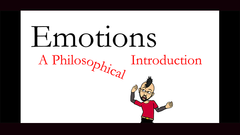
Emotions are the backbone of social activities as well as they drive the cognitive processes of several living entities. This course tries to elucidate the controversial nature of emotions and their evolutionary meaning. Several animals, including humans, have emotions but…what about machines? This is a course to feel and think about.

In Enabling Office 365 Clients you will learn how to plan the deployment of Microsoft Office 365 ProPlus clients. You will learn how to manage the deployments and how to customize the components you want to deploy in your Office 365 tenant. We will also take you through the steps of monitoring your Office 365 clients with the built-in telemetry tools for IT administrators.

The Internet of Things is rapidly growing. It is predicted that more than 25 billion devices will be connected by 2020.
In this data science course, you will learn about the major components of the Internet of Things and how data is acquired from sensors. You will also examine ways of analyzing event data, sentiment analysis, facial recognition software and how data generated from devices can be used to make decisions.

Learn how to make effective decisions about your future career and how to take control of your professional development by honing your critical thinking and employability skills. Suitable for anyone undertaking some form of study, regardless of academic discipline, interests or employment background.

Want to manage software development, but unsure where to begin? This computer science course will teach you the models, methods and practices of software development to make the process manageable and result in high-quality and efficient software products.
This course is an introduction to software lifecycle management using the approved principles and best practices developed by IT leaders and verified by large-scale systems operation. Starting with the basics of lifecycles, the course will open your mind and challenge you. You will learn how to make justified decisions on the industry-level software solutions, and instantly apply the principles and methods learned.
Taught by an instructor with over a decade of managing software development at a diverse multinational corporation, ITERA International Oil and Gas, this computer science course will equip managers with the skills they need to understand the principles and use the state-of-the-art methods and practices for lifecycle management. Additionally, learners (and managers) who require a systematic understanding of what happens inside the software development in terms of roles, activities, resources and deliverables can use this course to eliminate skill gaps.
No previous knowledge needed. Join us as you start your software engineering journey.

This course is part of the Microsoft Professional Program Certificate in Data Science.
If you’re considering a career as a data analyst, you need to know about histograms, Pareto charts, Boxplots, Bayes’ theorem, and much more. In this applied statistics course, the second in our Microsoft Excel Data Analyst XSeries, use the powerful tools built into Excel, and explore the core principles of statistics and basic probability—from both the conceptual and applied perspectives. Learn about descriptive statistics, basic probability, random variables, sampling and confidence intervals, and hypothesis testing. And see how to apply these concepts and principles using the environment, functions, and visualizations of Excel.
As a data science pro, the ability to analyze data helps you to make better decisions, and a solid foundation in statistics and basic probability helps you to better understand your data. Using real-world concepts applicable to many industries, including medical, business, sports, insurance, and much more, learn from leading experts why Excel is one of the top tools for data analysis and how its built-in features make Excel a great way to learn essential skills.
Before taking this course, you should be familiar with organizing and summarizing data using Excel analytic tools, such as tables, pivot tables, and pivot charts. You should also be comfortable (or willing to try) creating complex formulas and visualizations. Want to start with the basics? Check out DAT205x: Introduction to Data Analysis using Excel. As you learn these concepts and get more experience with this powerful tool that can be extremely helpful in your journey as a data analyst or data scientist, you may want to also take the third course in our series, DAT206x Analyzing and Visualizing Data with Excel. This course includes excerpts from Microsoft Excel 2016: Data Analysis and Business Modeling from Microsoft Press and authored by course instructor Wayne Winston.
This course is also part of the Microsoft Excel for the Data Analyst XSeries.

When designing systems that work for users, there is no substitute for watching them try to use the system to see what works and what doesn’t.
In this UX course, you will learn how to design and conduct tests with users that will tell you how effective your design is for helping users do what they need to do, and how they feel about using your system.
This course is part of the User Experience (UX) Research and Design MicroMasters Program offered by MichiganX.

Este es un curso introductorio en el que aprenderemos a trabajar con Excel, el componente para hojas de cálculo de la suite ofimática de Microsoft, MS-Office.
Este programa permite realizar todo tipo de operaciones con datos, pudiendo clasificar y manejar grandes cantidades de ellos; incorpora una gran cantidad de funciones y posee grandes cualidades para representar los resultados de forma gráfica.
Partiremos de 0 y exploraremos las funcionalidades más utilizadas, como los formatos, la presentación de resultados, los gráficos, las funciones y la tablas de datos.

Este es un curso de nivel intermedio que te permitirá trabajar con datos para su tratamiento y extraer conclusiones mediante el agrupamiento de datos, el uso de tablas y gráficos dinámicos, la realización de análisis de hipótesis y la vinculación de datos de otras hojas de cálculo. El curso que se propone es ideal para aquellos que tratan con gran cantidad de datos, ya sea su ámbito laboral el de la empresa, las administraciones públicas o el de la investigación, ya que les permitirá extraer información de manera sencilla y ágil, todo ello orientado a la toma de decisiones en sus actividades diarias.
Unidades:
- Trabajar con plantillas y hojas vinculadas
- Trabajar con grupos de datos
- Tablas y gráficos dinámicos
- Ampliación del uso de funciones de cálculo
- Análisis de hipótesis
- Otras utilidades
- Examen Final

This course begins a series of classes illustrating the power of computing in modern biology. Please join us on the frontier of bioinformatics to look for hidden messages in DNA without ever needing to put on a lab coat. After warming up our algorithmic muscles, we will learn how to apply popular bioinformatics software tools to real experimental datasets.

In this class, we will compare DNA from an individual against a reference human genome to find potentially disease-causing mutations. We will also learn how to identify the function of a protein even if it has been bombarded by so many mutations compared to similar proteins with known functions that it has become barely recognizable.

This course teaches the fundamentals of Fog Networking, the network architecture that uses one or a collaborative multitude of end-user clients or near-user edge devices to carry out storage, communication, computation, and control in a network. It also teaches the key results in the design of the Internet of Things, including consumer and industrial applications.

Want to gain software quality skills used in mission critical systems?
Modeling checking, symbolic execution and formal methods are techniques that are used for mission critical systems where human life depends upon the system working correctly.
In this course, part of the Software Testing and Verification MicroMasters program, you will learn how to perform these techniques manually and by using automation tools.
No previous programming knowledge needed. The concepts from this course can be applied to any programming language and testing software. This course will use Java, Java Path Finder and Java Modeling Language, however, for examples and assignments.

Thinking about teaching Computer Science, or incorporating CS into a subject you already teach? CS skills are fundamental to student success and you can teach it!
This course is intended for prospective K-12 Computer Science teachers to review key topics in Technology Applications, Programming Languages and CS special topics.
The course provides extensive detailed instruction, examples and practice on everything from introductory programming topics such as variables, functions, loops and logical expressions to more advanced topics such as data structures, recursion, and object oriented programming.
States around the country have adopted the Praxis Computer Science Test as a component of their certification/licensure and this course covers all of the topics in that test and more. In the state of Texas this test is called TExES 141/241 Grades 8-12 Computer Science Certification exam. Hundreds of teachers from around the country have already taken the course and many have gone on to achieve state certification.
Whether you plan to take a certification exam or not, this course will strengthen your understanding of key CS concepts and constructs and increase your confidence in teaching CS.
Note: In addition to the verified certificate, Texas Teachers that successfully complete this course will receive 36 hours of CPE credit.

Data structures provide a means to manage large amounts of data for use in databases and internet indexing services. Efficient data structures are key for designing efficient algorithms and obtaining maintainable software design.
In this Computer Science course, you will start by learning basic data types, such as numbers, and gradually build a conceptual framework for organizing and managing efficient structures.
Topics covered:
- Basic Data Types, Notion of an Abstract Data Type
- Mathematical Properties of Sequences
- Special Types of Sequences: Stacks, Queues, Strings
- Implementation of Sequence Type: Arrays and Linked Lists
- Trees
- Sets and Maps
- Graphs
Preliminary understanding of implementing sequence structures such as stacks, queues, and linked lists, will also be covered.
This course is part of the Fundamentals of Computer Science XSeries Program:

This course introduces concepts, algorithms, programming, theory and design of spatial computing technologies such as global positioning systems (GPS), Google Maps, location-based services and geographic information systems. Learn how to collect, analyze, and visualize your own spatial datasets while avoiding common pitfalls and building better location-aware technologies.
Add to calendar

Trusted paper writing service WriteMyPaper.Today will write the papers of any difficulty.