

Courses tagged with "Evaluation" (733)

This MIS course will cover supporting tech infrastructures (Cloud, Databases, Big Data), the MIS development/ procurement process, and the main integrated systems, ERPs, such as SAP®, Oracle® or Microsoft Dynamics Navision®, as well as their relationship with Business Process Redesign.
Management Information Systems (MIS) are an integral part of today’s professional landscape. From customer relationship management (CRM) systems handling the day to day interactions with clients and prospects, to financial systems issuing invoices and paying bills, day to day working life is increasingly controlled by these systems that dictate what to do and how.
This course will focus on what MIS are, how they influence your current or prospective jobs, why they impose specific - and sometimes seemingly absurd - operational procedures, and how to use this knowledge to your advantage in your professional life.
Grasping the key concepts in MIS does not need to be daunting. We will use real world examples to illustrate key concepts, and strive to strike a proper balance between clarity / amenity and conceptual soundness. Join us on this stimulating journey that will allow you to better understand and perform in your current or desired job.

Learn the fundamentals of working in a Microsoft Azure environment to help improve your business.
Begin learning what it takes to become a cloud administrator using Microsoft Azure, Microsoft’s open and flexible cloud computing platform.
This computer science course will help you get started with Microsoft Azure technologies such as infrastructure, virtual machines, virtual networking, identity, and storage. You will learn how Microsoft Azure can help you build and manage your business’s applications and cloud services and help improve overall business productivity.

Learn how to build a simple SQL Server database to collect and analyze your data in this Microsoft SQL server training

Have you ever wondered how your favorite mobile applications are developed?
Join us on a gentle journey through the mobile application development landscape, using Android as the platform. Along the way we will learn to use Android Studio, the integrated development environment (IDE) for Android apps. This course is intended for students who have some prior programming experience. The course will introduce you to the basics of the Android platform, Android application components, Activities and their lifecycle, UI design, Multimedia, 2D graphics and networking support in Android.
This course covers the following topics:
- Android platform and the Android Studio IDE
- Android components, Activities and their lifecycle, Intents
- UI Design: Widgets and Layouts, UI Events, Event Listeners
- 2D graphics: Canvas/Drawing using a view
- Multimedia: Audio playback and MediaPlayer
- Network support: AsyncTask, HttpURLConnection

This advanced computer science course will provide an overview of several of the most popular web and mobile app development toolkits, including MongoDB, ExpressJS, AngularJS, and Node.js. Together, these tools are called the “MEAN stack.”
This is an advanced course for experienced web developers. In this course, we will introduce the essential concepts of the MEAN stack using a fast-paced, learn-by- doing approach. As a concrete example, we will walk through building a retail application. This online store will enable users to search for products, add them to their cart, and check out using Stripe, an online payment processor. You’ll build your own REST API (Representational State Transfer Application Programming Interface) server from scratch using MongoDB schema design principles, as well as a web application using AngularJS and a hybrid mobile application using the Ionic framework.
When you complete the course, you will receive a discount to MongoDB Professional Certification, enabling you to demonstrate your skills, show recruiters and hiring managers your expertise, and earn a spot in the MongoDB Certified Professional Finder.

Learn the basics of MySQL during this introductory course.
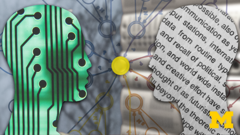
This course provides an introduction to the field of Natural Language Processing, including topics like Language Models, Parsing, Semantics, Question Answering, and Sentiment Analysis.

The Office 365 APIs enable you to access the Microsoft Cloud from all devices and platforms — including those running iOS and Android, PHP, ASP.NET and node.js, and Linux and Mac OSX — by connecting using an open platform. If you’re already familiar with programming in one of those platforms you’re already well on your way to integrating Office 365 into your applications.
"The most strategic developer surface area for us is Office 365“
- Satya Nadella, CEO, Microsoft Corp.
In this course, you’ll see how to use the Outlook Services Client to expose mail, calendar and user objects to your apps. You’ll see how the SharePoint Client will allow access to users’ files and SharePoint data. And you’ll see how to authenticate users using Azure Active Directory and OAuth.
With these tools, you’ll learn how to implement complete experiences to satisfy business scenarios.

OpenStack is growing at an unprecedented rate, with over 65% of OpenStack deployments now in production - a number which continues to rise.
The demand for individuals who have experience managing this cloud platform is also accelerating. According to the Open Source Jobs Report from The Linux Foundation and Dice, 51% of hiring managers say experience with OpenStack and other cloud technologies are driving open source hiring decisions. Now is the time to build an exciting and rewarding career managing OpenStack clouds.
This introductory course is taught by cloud experts from The Linux Foundation, which also delivers the Certified OpenStack Administrator (COA) exam. As host to some of the world's leading open source cloud projects, The Linux Foundation provides training and networking opportunities to help you advance your career.
Take this course to learn:
- The origins of OpenStack: Where does it come from and how can you contribute as a developer to the project?
- How to deploy OpenStack: Setup your own lab environment and deploy OpenStack on Ubuntu and CentOS with DevStack and Packstack, respectively.
- How to deploy a virtual machine from Horizon: Get the steps and components that lead to a working and accessible virtual machine.
- An introduction to managing OpenStack from the command line.
- Scaling out your OpenStack cloud by adding SDN, object storage, compute nodes, high availability, and more.
This course is perfect for IT professionals seeking a high-level overview of OpenStack, and who want to find out if OpenStack is the right solution to meet the IT needs of their organization. This course also helps anyone who wants to set up a small scale OpenStack test environment to gain experience working with OpenStack.

Covering the Basic Architecture, Roles, and Processes of Being an Oracle Database Administrator

This course provides a complete introduction to programming for digital musicians and artists, in the real-time multimedia language ChucK. Rich with practical examples and pointers to additional web resources, it can be understood by novices wishing to learn to program interactive arts systems.

In this introductory course, you will learn programming with Java in an easy and interactive way.
You will learn about fundamental data structures, such as lists, stacks, queues and trees, and presents algorithms for inserting, deleting, searching and sorting information on these data structures in an efficient way.
Emphasis is put on immediate feedback and on having a fun experience. Programming knowledge is not only useful to be able to program today’s devices such as computers and smartphones. It also opens the door to computational thinking, i.e. the application of computing techniques to every-day processes.
This course is designed taking into account the subset and recommendations of the College Board in order to prepare learners for the Advanced Placement (AP) Computer Science A exam.

In this introductory Java programming course, you will be introduced to powerful concepts such as functional abstraction, the object oriented programming (OOP) paradigm and Application Programming Interfaces (APIs). Examples and case studies will be provided so that you can implement simple programs on your own or collaborate with peers.
Emphasis is put on immediate feedback and on having a fun experience. Programming knowledge is not only useful to be able to program today’s devices such as computers and smartphones. It also opens the door to computational thinking, i.e. the application of computing techniques to every-day processes.
This edition is an improved version of the course released in April 2015.
This is an introductory course to learn programming with Java. It is comprised of three parts, of which Part 1 introduces programming on the basis of familiar concepts, like calculators and games. This edition is an improved version of the course released in April 2015.
Powerful concepts such as functional abstraction, the object oriented programming (OOP) paradigm and Application Programming Interfaces (APIs) are progressively introduced throughout the five weeks. Examples and case studies are provided so that learners can implement simple programs on their own or collaborating with peers.
Part 2 will focus on how to write “good” programs, where “good” is to be understood from several perspectives: correctness, efficiency, software engineering techniques, and ethics.
Part 3 will deal with fundamental data structures, such as sequences, and algorithms on them, such as searching and sorting.
Emphasis is put on immediate feedback and on having a fun experience. Programming knowledge is not only useful to be able to program today’s devices such as computers and smartphones. It also opens the door to computational thinking, i.e. the application of computing techniques to every-day processes.

This is an introductory course to learn programming with Java designed to teach how to code good programs in Java, understanding “good” as both correct and efficient. Basic principles of software engineering will be introduced to make it easier for our future self and others to reuse code. Ethical issues and the intellectual property of our programs will also be addressed in the last part of this course. Examples and case studies will be provided, so that learners can implement simple but increasingly complex programs in Java.
Emphasis is put on immediate feedback and on having a fun experience. Programming knowledge is not only useful to be able to program today’s devices such as computers and smartphones. It also opens the door to computational thinking, i.e. the application of computing techniques to every-day processes.
This course is designed taking into account the subset and recommendations of the College Board in order to prepare learners for the Advanced Placement (AP) Computer Science A exam..

This course teaches computer programming to those with little to no previous experience. It uses the programming system and language called MATLAB to do so because it is easy to learn, versatile and very useful for engineers and other professionals.

This course is part of the Microsoft Professional Program Certificate in Data Science.
Python is a very powerful programming language used for many different applications. Over time, the huge community around this open source language has created quite a few tools to efficiently work with Python. In recent years, a number of tools have been built specifically for data science. As a result, analyzing data with Python has never been easier.
In this practical course, you will start from the very beginning, with basic arithmetic and variables, and learn how to handle data structures, such as Python lists, Numpy arrays, and Pandas DataFrames. Along the way, you’ll learn about Python functions and control flow. Plus, you’ll look at the world of data visualizations with Python and create your own stunning visualizations based on real data.

Brand new to text-based programming? Check out this hands-on course for an in-depth look at the details of Python layers and concepts. Get ample practice drills and projects, using Jupyter Notebooks on Azure, which require only a browser and an Internet connection. Learn best practices and begin coding almost immediately.
After you explore data types and variables, take a look at strings, input, testing, and formatting. From there, learn about arguments and parameters, along with conditionals and nested conditionals. By the end of the course, you’ll be able to create programs that prompt users for input and use conditional (True/False) logic and Python methods to manipulate numbers and text to provide responses to the users, in addition to requesting further input. Plus, learn basic troubleshooting for your code. Sign up, and get started coding right away!
Ready for next steps? Take the Introduction to Python: Fundamentals course.

Ready for more hands-on, step-by-step Python fundamentals? Add to the foundational experience you got in the Introduction to Python: Absolute Beginner, and explore data structures. Get lots of practice working with sample code in Jupyter Notebooks on Azure, which require only a browser and an Internet connection.
Focus on Python data structures, and work with string, list, and range sequences. Discover the power of list iteration, and learn about string and list methods. From there, get the details on file input and output—open files, read them, add to them, close them, and more. At the end of the course, you’ll be able to slice strings into substrings, create lists, iterate through them, import files, and use file append mode, along with a lot of other practical Python tasks, as you get started coding.

This course is part of the Microsoft Professional Program Certificate in Data Science.
R is rapidly becoming the leading language in data science and statistics. Today, R is the tool of choice for data science professionals in every industry and field. Whether you are full-time number cruncher, or just the occasional data analyst, R will suit your needs.
This introduction to R programming course will help you master the basics of R. In seven sections, you will cover its basic syntax, making you ready to undertake your own first data analysis using R. Starting from variables and basic operations, you will eventually learn how to handle data structures such as vectors, matrices, data frames and lists. In the final section, you will dive deeper into the graphical capabilities of R, and create your own stunning data visualizations. No prior knowledge in programming or data science is required.
What makes this course unique is that you will continuously practice your newly acquired skills through interactive in-browser coding challenges using the DataCamp platform. Instead of passively watching videos, you will solve real data problems while receiving instant and personalized feedback that guides you to the correct solution.
Enjoy!
Add to calendar

Trusted paper writing service WriteMyPaper.Today will write the papers of any difficulty.