

Courses tagged with "Evaluation" (733)

Interested in gaining the basic skills needed to go beyond simple IP address management? It may be time to consider management tools like DHCP and DNS in your quest to optimize your network infrastructure management.
This computer science course is an introduction to working with Dynamic Host Configuration Protocol (DHCP) in a Windows Server networked environment where you’ll have an opportunity to learn the basics of IP address management, DHCP scope creation and configuration and how to manage and maintain a DHCP infrastructure.
This self-paced interactive computer science course is the third in a series of courses where you’ll have the opportunity to learn the fundamentals of Windows Server 2012 operating system administrative tasks. Through video, practical exercises, and assessments, the task-focused material is designed to ensure you can confidently perform the relevant task.

DNS (Domain Name System) is an essential core pillar of all Microsoft networking infrastructure. However, incorrectly configured DNS is one of the most common causes of slow and failed logons in Microsoft environments.
In this computer science course, you will learn the core skills to quickly and easily implement DNS in your work environment.
This self-paced interactive computer science course is the fourth in a series of courses where you’ll have the opportunity to learn the fundamentals of Windows Server 2012 operating system administrative tasks. Through video, practical exercises, and assessments, the task-focused material is designed to ensure you can confidently perform the relevant task.

Server virtualization has been a part of the Windows Server operating system since the release of Windows Server 2008 and the introduction of the Hyper-V role. By using server virtualization, organizations can save money through server consolidation. However, to use server virtualization more efficiently, server administrators need to be able to decide which server workloads will run effectively in virtual machines, and which server workloads must remain deployed in a more traditional server environment.
This computer science course introduces you to the Hyper-V role in Windows Server 2012, the components of the role, how best to deploy the role, and the new features of the Hyper-V role that Windows Server 2012 showcases.
This self-paced interactive computer science course is the fifth in a series of courses where you’ll have the opportunity to learn the fundamentals of Windows Server 2012 operating system administrative tasks. Through video, practical exercises, and assessments, the task-focused material is designed to ensure you can confidently perform the relevant task.

Active Directory Domain Services (AD DS) is the foundation for centralized management of an organization’s users and resources. As a Windows Server administrator, you must be able to implement AD DS.
In this computer science course, you will learn, through videos, discussions, hands-on labs and assessments, how to put in place a secure, scalable and manageable AD DS infrastructure for Windows Server users and resources.
This self-paced interactive computer science course is the first in a series of courses where you’ll have the opportunity to learn the fundamentals of Windows Server 2012 operating system administration.

One of the key components when you plan and deploy Microsoft Windows Server is storage. Most organizations require lots of storage because users and applications are constantly working with and creating data.
As a Microsoft Windows Server System Administrator you must be able to:
- Identify and decide on the type of storage your organization needs
- Manage disks, volumes, and file systems
- Use BitLocker to secure volumes
- Encrypt data with Encrypted File System (EFS)
Furthermore, optimizing Microsoft Windows Server storage is key to keeping pace with your organization’s ever increasing data needs. Once you have initially configured your Microsoft Windows Server storage you will want to take advantage of three key features: iSCSI Storage, Storage Spaces and Data Deduplication.
iSCSI is a protocol that supports remote access to SCSI-based storage devices over a TCP/IP network. It provides and easy to use alternative to Storage Area Networks (SANs) and can use existing infrastructure.
Storage Spaces lets you group physical disks together and present them as a single logical disk. This makes it easy to manage and dynamically allocate storage.
Data Deduplication is a service that identifies and removes duplications within data. The goal of Data Deduplication is to maximize the use of disk space.
Go beyond simple storage strategies and take control of your organization’s storage needs!
This self-paced interactive computer science course is the second in a series of courses where you’ll have the opportunity to learn the fundamentals of Windows Server 2012 operating system administrative tasks. Through video, practical exercises, and assessments, the task-focused material is designed to ensure you can confidently perform the relevant task.

New to coding? Want to learn how to teach coding to your students? Do you have students who love to play Minecraft?
The LearnToMod software combines Minecraft, Coding, and Teacher support for teachers who have never coded on their own, and who have never taught coding! With hundreds of self-guided micro-coding assignments, lesson plans, and project ideas, this education and teacher training course will guide you through the basics of coding with Minecraft, and, more importantly, provide you with the tools and community to help you teach your students how to code in your way!
No previous coding knowledge needed! Some teaching experience recommended.
Taught by instructors who have been teaching novice coding teachers to teach for over a decade, this course will help teachers gain skills to teach coding with Minecraft, but also confidence to learn how to teach other coding topics!

This class teaches algorithms for extracting models and other information from very large amounts of data. The emphasis is on techniques that are efficient and that scale well.

How do you design a mobile app that truly changes people's lives? How can you understand how a new service is being used, both quantitatively and qualitatively? How can you use all of the rich sensing and I/O capabilities of mobile devices to create experiences that go far beyond what's possible on a traditional computer?
Mobile devices are changing the ways that we interact with each other and information in the world. This course will take you from a domain of interest, through generative research, design, usability, implementation and field evaluation of a novel mobile experience. You'll finish the course with a working, field-tested application suitable for release in the app store as well as a deep understanding of human interaction with mobile devices and services.
Based on a popular MIT class that has been taught since 2006 by Frank Bentley of Yahoo Labs and Ed Barrett, a Senior Lecturer at MIT, this course will explore what makes mobile devices unique. A primary focus will be on studying existing behavior and using key findings for design. While writing the code for an app is a part of the class, the majority of the topics will cover designing and evaluating a unique mobile experience. Along the way, you will have opportunities to share your work with other students from around the world! Java experience (or Objective C for iOS users) and a smartphone are required.
All required readings are available within the courseware, courtesy of The MIT Press. A print version of the course textbook, Building Mobile Experiences, is also available for purchase. The MIT Press is offering enrolled students a special 30% discount on books ordered directly through the publisher’s website. To take advantage of this offer, please use promotion code BME30 at The MIT Press site.

Want to create the next big app, grounded in the needs of real users? This course will teach you Human Computer Interaction (HCI) methods to better understand current behavior in a domain, and then design, develop, and deploy your own application.
This module will take you from an application idea through the creation of a paper prototype and a usability evaluation to validate initial usability of your concept.
Completion of Mobile Application Experiences Part 1 is not required. You can begin this module with an idea you have had on your own.
This course is part of a five-part Mobile Application Experiences series:
- 21W.789.1x: Mobile Application Experiences Part 1: From a Domain to an App Idea
- 21W.789.2x: Mobile Application Experiences Part 2: Mobile App Design
- 21W.789.3x: Mobile Application Experiences Part 3: Building Mobile Apps
- 21W.789.4x: Mobile Application Experiences Part 4: Understanding Use
- 21W.789.5x: Mobile Application Experiences Part 5: Reporting Research Findings

Learn to use the open development tool, App Inventor, to program on Android devices. You will learn how to design and build mobile apps -- apps that are aware of their location, send and receive text messages, and give advice and directions. The only limit on the types of apps you will learn to build is your own imagination!
However, computer science is not just about coding and building apps. We will also learn some of the fundamental principles of computer science. We'll learn about the potential and the limitations of computing and coding. We'll learn how the Internet works and about the positive and negative aspects of computing in today's society, and much more!
For these broader computing concepts we will work within an emerging curricular framework -- the Computer Science Principles (CSP). The CSP framework is being developed by leading computer science educators from around the country under the auspices of the College Board and with funding support of the National Science Foundation.
In addition to programming and CSP the course is project-based and emphasizes writing, communication, and creativity. Multiple-choice questions, in the style that students can expect to encounter on the AP exam, will also be a key component of this course.

We will use the free and open tool, App Inventor for Android, to explore advanced topics in computer science.
You’ll build an app a week, exploring such advanced topics as gameplay over a network, encryption, and more.
At the end of the course, we’ll collectively decide on an app that we will build together. You will be able to build almost anything you can imagine!
Because computer science is not just about coding and building apps, we will also learn some of the fundamental principles of computer science. We'll explore the potential and the limitations of computing and coding. We'll learn how the Internet works and about the positive and negative aspects of computing in today's society.
For these broader computing concepts we will work within an emerging curricular framework -- the Computer Science Principles (CSP). The CSP framework is being developed by leading computer science educators from around the country under the auspices of the College Board and with funding support of the National Science Foundation.
In addition to programming and CSP, the course is project-based and emphasizes writing, communication, and creativity. Multiple-choice questions, in the style that students can expect to encounter on the AP exam, will also be a key component of this course.
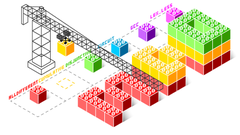
Learn a new way to approach problem solving by stating the problem and letting powerful constraint solving software do the rest. This class teaches you the art of encoding complex discrete optimization problems in the MiniZinc modeling language and then shows you how to effortlessly solve them by leveraging state-of-the-art open-source constraint solving software.

In this course, we will see how evolutionary trees resolve quandaries from finding the origin of a deadly virus to locating the birthplace of modern humans. We will then use methods from computational proteomics to test whether we can reconstruct Tyrannosaurus rex proteins and prove that birds evolved from dinosaurs.

Learn how to monetize Android apps without adversely affecting the user experience. We will present the best practices of advertising, monetizing and publishing your Android app. We will also present an introduction to business models that will help you make money from an app using Google AdMob, Google’s mobile advertising platform specifically designed for mobile apps.
This course is part of the GalileoX Android Developer MicroMasters Program that is specifically designed to teach the critical skills needed to be successful in this exciting field and to prepare you to take the Google Associate Android Developer Certification exam. In order to qualify for the MicroMasters Credential you will need to earn a Verified Certificate in each of the four courses as well as the Final Project.

Technology has greatly altered how we write, listen to and enjoy music. This music course will show you how to apply new technologies to your own creative practice. Music Technology Foundations draws on Adelaide’s world-class pioneering expertise in making electronic music, to provide a great foundation to a career in music and to enable any learner to use technology in creative ways.
In Music Technology Foundations, you’ll learn about the core principles of music technology, including sound, audio, MIDI, effects and sequencing. Each week, you’ll complete creative practical tasks in freeware and browser based apps, and you’ll share the music you make with the course instructors and fellow learners. This practical work is underpinned with historical context and essential theory, so that you can gain even greater insight into your music.

How do computers work? What do computer scientists do? What does it take to make a computer or a computer program work? We answer these questions and more with MyCS: Computer Science for Beginners.
We believe that anyone can succeed in and enjoy computer science. This course is an early introduction to CS, designed for anyone who's completely new to the field. It explores a combination of the basic principles of how computers work and how we can use them to solve interesting problems and create amazing things. Lessons alternate between general exercises and assignments in Scratch, which offer a chance to both practice some basic concepts of computer programming and explore the many cool, creative, and useful applications of CS.
You don't need any CS or programming background to do this course - just a bit of basic math and a lot of creative thinking. The course is intended especially for middle school students and their teachers, but is good for learners of all ages.
This material is based upon work supported by the National Science Foundation under Grant No. 1240939. Any opinions, findings and conclusions or recommendations expressed in this material are those of the author(s) and do not necessarily reflect the views of the National Science Foundation (NSF).

Learn about MySQL and Databases with Bucky Roberts!

Learn MySQL and Take Your Web Development to the Next Level.

In this class, you will learn fundamental algorithms and mathematical models for processing natural language, and how these can be used to solve practical problems.

Have you ever wondered how to build a system that automatically translates between languages? Or a system that can understand natural language instructions from a human? This class will cover the fundamentals of mathematical and computational models of language, and the application of these models to key problems in natural language processing.
Add to calendar

Trusted paper writing service WriteMyPaper.Today will write the papers of any difficulty.