

Courses tagged with "Fine Arts" (252)

This seminar focuses on downtowns in U.S. cities from the late nineteenth century to the late twentieth century. Emphasis will be placed on downtown as an idea, place, and cluster of interests; on the changing character of downtown; and on recent efforts to rebuild it. Subjects to be considered will include subways, skyscrapers, highways, urban renewal, and retail centers. The focus will be on readings, discussions, and individual research projects.
This seminar focuses on downtowns in U.S. cities from the late nineteenth century to the late twentieth century. Emphasis will be placed on downtown as an idea, place, and cluster of interests; on the changing character of downtown; and on recent efforts to rebuild it. Subjects to be considered will include subways, skyscrapers, highways, urban renewal, and retail centers. The focus will be on readings, discussions, and individual research projects.

The letters of Paul are the earliest texts in the Christian scriptures, written by a Jew at a time when the word “Christian” hadn’t yet been coined. What is the religious and political context into which they emerged? How were they first interpreted? How and why do they make such an enormous impact in Christian communities and in politics today?
Archaeological materials and ancient writings will help you to enter the ancient Mediterranean world and to think about religious groups, power, poverty, health, and the lives of elites and slaves in the Roman Empire. We’ll explore how immediately controversial these letters were, and how these letters are used today to debate relations between Christians and Jews; issues such as love, law, and grace; and topics such as charismatic Christianity, homosexuality, and women’s religious leadership.
Whether you’ve been studying Paul’s letters for years or are merely curious about what Christian scriptures are, this course will provide you with information to deepen your understanding of the ancient contexts and present-day controversies about these texts.
Before your course starts, try the new edX Demo where you can explore the fun, interactive learning environment and virtual labs. Learn more.
HarvardX requires individuals who enroll in its courses on edX to abide by the terms of the edX honor code. HarvardX will take appropriate corrective action in response to violations of the edX honor code, which may include dismissal from the HarvardX course; revocation of any certificates received for the HarvardX course; or other remedies as circumstances warrant. No refunds will be issued in the case of corrective action for such violations. Enrollees who are taking HarvardX courses as part of another program will also be governed by the academic policies of those programs.
HarvardX pursues the science of learning. By registering as an online learner in an HX course, you will also participate in research about learning. Read our research statement to learn more.
Harvard University and HarvardX are committed to maintaining a safe and healthy educational and work environment in which no member of the community is excluded from participation in, denied the benefits of, or subjected to discrimination or harassment in our program. All members of the HarvardX community are expected to abide by Harvard policies on nondiscrimination, including sexual harassment, and the edX Terms of Service. If you have any questions or concerns, please contact harvardx@harvard.edu and/or report your experience through the edX contact form.
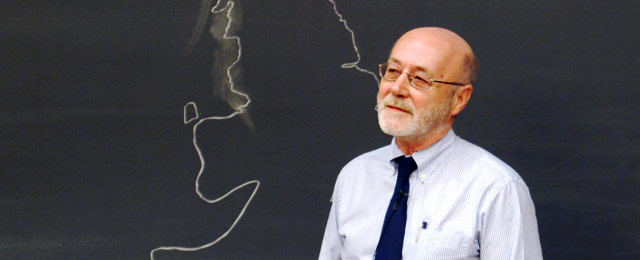
This course is intended to provide an up-to-date introduction to the development of English society between the late fifteenth and the early eighteenth centuries. Particular issues addressed in the lectures will include: the changing social structure; households; local communities; gender roles; economic development; urbanization; religious change from the Reformation to the Act of Toleration; the Tudor and Stuart monarchies; rebellion, popular protest and civil war; witchcraft; education, literacy and print culture; crime and the law; poverty and social welfare; the changing structures and dynamics of political participation and the emergence of parliamentary government.

This subject examines the interactions of East Asia with the rest of the world and the relationships of each of the East Asian countries with each other, from ca. 1500 to 2000 A.D. Primary focus on China and Japan, with some reference to Korea, Vietnam, and Central Asia. Asks how international diplomatic, commercial, military, religious, and cultural relationships joined with internal processes to direct the development of East Asian societies. Subject addresses perceptions and misperceptions among East Asians and foreigners.

This course is an investigation of the Roman empire of Augustus, the Frankish empire of Charlemagne, and the English empire in the age of the Hundred Years War. Students examine different types of evidence, read across a variety of disciplines, and develop skills to identify continuities and changes in ancient and medieval societies. Each term this course is different, looking at different materials from a variety of domains to explore ancient and mideveal studies. This version is a capture of the course as it was taught in 2012, and does not reflect how it is taught currently.

This course is presented in both English and Hindi. Videos will feature Hindi subtitles.
This course offers an overview of contemporary India and explores its role as one of the dominant economic and military powers of Asia. We begin with a discussion on India as a multilingual society. The entire course will be available in both English and Hindi.
The central focus of the course is an examination of contemporary issues in India. This includes perspectives on how Indian culture and language are being affected by the boom in technology; sections on politics and nationalism; economics and the implications of recent moves toward liberalisation of the economy; and security, international relations, and regionalism. In addition, we will examine India’s role in South Asian politics and current issues relating to its regional neighbours in Asia. The aim of the course is to provide students with a comprehensive and wide-ranging overview of India in order that they may better understand its role in the world.
यह पाठ्यक्रम हमें आधुनिक भारत के बारे में एक संक्षिप्त विवरण देता है। और उसके साथ यह भी दर्शाता है कि किस तरह से भारत आज एशिया का एक प्रभावशाली आर्थिक और सैन्य सत्ता बन गया है। इस पाठ्यक्रम की शुरुआत हम भारत के बहुभाषी समाज पर चर्चा से करेंगे।
यह पाठ्यक्रम हिन्दी और अंग्रेज़ी दोनों भाषाओं में उपलब्ध होगा।
इस पाठ्यक्रम का केंद्र बिन्दू भारत के समकालीन मुद्दों का विश्लेषण करना है। इस में भिन्न-भिन्न दृष्टिकोणों से विचार प्रस्तुत किये जायेंगे कि भारतीय संस्कृतियाँ और भाषाएँ किस तरह से टेक्नोलोजी में आई तेज़ी से प्रभावित हुईं हैं। इसके अलावा हम इन विषयों के बारे में बातचीत करेंगे: राजनीति और राष्ट्रवाद, अर्थशास्त्र और अर्थव्यवस्था के उदारीकरण से हुये परिवर्तन का असर, सुरक्षा, भारत की विदेश नीति और क्षेत्रवाद। इन सब के साथ हम यह भी देखेंगे कि दक्षिण एशिया की राजनीति में भारत ने क्या भूमिका निभाई है और उसके पड़ोसी देशों के संबंध में विचार करेंगे। इस पाठ्यक्रम का उद्देश्य है विद्यार्थियों को भारत के बारे में विस्तृत जानकारी देना ताकि वे ज़्यादा अच्छी तरह से भारत और विश्व में भारत की भूमिका को समझ सकें।
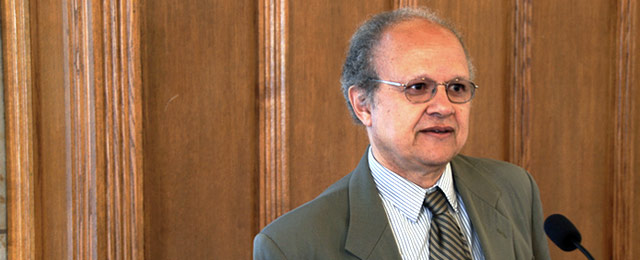
This course consists of an international analysis of the impact of epidemic diseases on western society and culture from the bubonic plague to HIV/AIDS and the recent experience of SARS and swine flu. Leading themes include: infectious disease and its impact on society; the development of public health measures; the role of medical ethics; the genre of plague literature; the social reactions of mass hysteria and violence; the rise of the germ theory of disease; the development of tropical medicine; a comparison of the social, cultural, and historical impact of major infectious diseases; and the issue of emerging and re-emerging diseases.
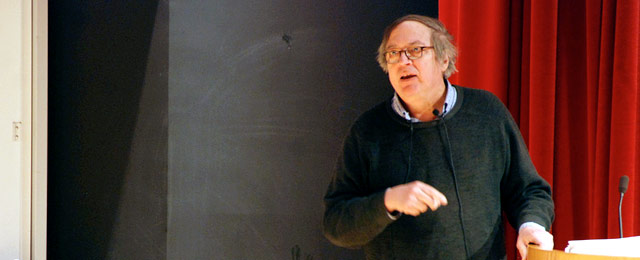
This course offers a broad survey of modern European history, from the end of the Thirty Years' War to the aftermath of World War II. Along with the consideration of major events and figures such as the French Revolution and Napoleon, attention will be paid to the experience of ordinary people in times of upheaval and transition. The period will thus be viewed neither in terms of historical inevitability nor as a procession of great men, but rather through the lens of the complex interrelations between demographic change, political revolution, and cultural development. Textbook accounts will be accompanied by the study of exemplary works of art, literature, and cinema.

From pineapples grown in Hawaii to English-speaking call centers outsourced to India, the legacy of the "Age of Imperialism" appears everywhere in our modern world. This class explores the history of European imperialism in its political, economic, and cultural dimensions from the 1840s through the 1960s.

Learn about the inspirational work of the leading European painters from approximately 1400 to 1800, and explore the issues expressed through the art of painting. Included in this broad time frame are the works of Leonardo da Vinci, Caravaggio, Velázquez, Rembrandt, Vermeer and Goya.
Painters during this period were concerned with ideas such as the pursuit of beauty, the pleasures and pains associated with love, the demonstration of power and status, or the relationship of men and women to the divinity and to nature. In paintings from this period, we find traces of the emergence of the modern mind set, and perspective on issues such as the respective roles of women and men in the world.
This course focuses on images of paintings by the artists listed in the course syllabus. The discussions that will take place in the “course forum” will allow us to touch upon a broader range of issues.

Through the process of evolution, animals have developed their biological features and their cultures based on their surrounding environments. How we live our lives today is a direct result of features developed from our primate ancestors as they adapted to new environments.
In primatology, it is essential to think about how cultural development and biological natures are inseparable.
This course will help you rediscover the process of evolution and will introduce primatological studies conducted by researchers at Kyoto University, Japan. Based on carefully conducted research on primate species, we will explore the origins of human beings and provide you with examples of common similarities between human beings and non-human primates.
We will analyze basic features, such as foraging, mating, aggression, and communication from the primatological viewpoint. Furthermore, cultural and social aspects of human society, from the formation of family groups to community activities, will be considered thoroughly, in comparison to those of monkeys and apes.
Our goal is to broaden your view of humans to a wider extent and think dynamically about your biology in terms of human evolution. Through acquiring knowledge of basic primatology in this course, you will establish a viewpoint to think and discuss the evolutionary process of human, and human society, in conjunction with those of our close relatives.
No previous academic knowledge is required. Join us and evolve together with “Evolution of the Human Sociality.”

Ludwig van Beethoven’s 9th Symphony premiered in Vienna in 1824, and continues to be one of the most popular symphonies in the repertoire. The monumental symphony’s size and complexity stretches traditional instrumental forms to the breaking point, and its famous choral finale changed our view of orchestral music forever.
Harvard’s Thomas Forrest Kelly (Morton B. Knafel Professor of Music) guides learners through all four movements of Beethoven’s 9th Symphony, highlighting aspects of symphonic form, describing Beethoven’s composition process, the rehearsals and premiere performance, and the work’s continued relevance today.
You will learn the basics of musical form and analysis, the genres and styles used and the circumstances of this symphony’s first performance and subsequent history. Learners in this course need not have any prior musical experience.
Additional First Nights Modules:
First Nights: Handel’s Messiah and Baroque Oratorio
HarvardX requires individuals who enroll in its courses on edX to abide by the terms of the edX honor code. HarvardX will take appropriate corrective action in response to violations of the edX honor code, which may include dismissal from the HarvardX course; revocation of any certificates received for the HarvardX course; or other remedies as circumstances warrant. No refunds will be issued in the case of corrective action for such violations. Enrollees who are taking HarvardX courses as part of another program will also be governed by the academic policies of those programs.
HarvardX pursues the science of learning. By registering as an online learner in an HX course, you will also participate in research about learning. Read our research statement to learn more.
Harvard University and HarvardX are committed to maintaining a safe and healthy educational and work environment in which no member of the community is excluded from participation in, denied the benefits of, or subjected to discrimination or harassment in our program. All members of the HarvardX community are expected to abide by Harvard policies on nondiscrimination, including sexual harassment, and the edX Terms of Service. If you have any questions or concerns, please contact harvardx@harvard.edu and/or report your experience through the edX contact form.

Six years after the premiere of Beethoven’s monumental Ninth Symphony, composer Hector Berlioz sought to make use of the symphonic genre, but on his own terms. Indeed, he wrote not only a five-movement symphony, but also a narrative program to accompany and explain the symphony.
This music course introduces students to the music and programmatic elements of Berlioz’s Symphonie Fantastique, illuminating a new direction for nineteenth-century music. The course’s grand finale is a live performance of the entire symphony by the Harvard Radcliffe Orchestra.
Harvard’s Thomas Forrest Kelly (Morton B. Knafel Professor of Music) guides learners through Berlioz’s Symphony Fantastique,, highlighting Berlioz’s compostional process, his innovative orchestration, and the reception of his controversial piece of narrative instrumental music.
You will learn the basics of Romantic musical style, Berlioz’s creative expansion of the standard orchestra, and the debates surrounding the idea of purely musical narrative in the 19th century.

While Italian opera set the standard in the Baroque era, German composer George Frederic Handel quickly gained popularity for his oratorios, which put operatic techniques to work in the service of sacred music. Handel’s Messiah premiered in Dublin on April 13, 1742, and remains popular to this day. Harvard’s Thomas Forrest Kelly (Morton B. Knafel Professor of Music) guides learners through Messiah’s musical highlights, while detailing Handel’s composition process, the preparations and rehearsals, and the premiere performance.
Learners in this module of First Nights need not have any prior musical experience. In this unit, you will learn the basics of musical form and analysis, the genres and styles used in Messiah, the circumstances of its first performance, and its subsequent history.
Additional First Nights Modules:
Beethoven’s 9th Symphony and the 19th Century Orchestra
HarvardX requires individuals who enroll in its courses on edX to abide by the terms of the edX honor code. HarvardX will take appropriate corrective action in response to violations of the edX honor code, which may include dismissal from the HarvardX course; revocation of any certificates received for the HarvardX course; or other remedies as circumstances warrant. No refunds will be issued in the case of corrective action for such violations. Enrollees who are taking HarvardX courses as part of another program will also be governed by the academic policies of those programs.
HarvardX pursues the science of learning. By registering as an online learner in an HX course, you will also participate in research about learning. Read our research statement to learn more.
Harvard University and HarvardX are committed to maintaining a safe and healthy educational and work environment in which no member of the community is excluded from participation in, denied the benefits of, or subjected to discrimination or harassment in our program. All members of the HarvardX community are expected to abide by Harvard policies on nondiscrimination, including sexual harassment, and the edX Terms of Service. If you have any questions or concerns, please contact harvardx@harvard.edu and/or report your experience through the edX contact form.

Igor Stravinsky’s The Rite of Spring premiered in Paris in 1913, sparking a riot and screaming so loud that the dancers could not hear the orchestra, and the choreographer had to shout numbers from backstage to keep the dancers on beat.
The Rite of Spring continues to challenge listeners. According to Stravinsky, The Rite of Spring was intended to portray “the surge of spring, the magnificent upsurge of nature reborn.” As you will see, Stravinsky’s description is almost frighteningly apt!
Harvard’s Thomas Forrest Kelly (Morton B. Knafel Professor of Music) guides learners through The Rite of Spring, highlighting not only the contributions of Stravinsky, the composer, but also those of his collaborators. Professor Kelly takes learners through the ballet’s development, rehearsals, and finally, premiere performance, and he explores just how and why The Rite of Spring challenged (and to a certain extent, continues to challenge) its listeners.
You will learn about the ballet’s innovative choreography, the basics of 20th-century orchestral form and technique, and the circumstances of this ballet’s first performance and subsequent history. Learners in this course need not have any prior musical experience.

Claudio Monteverdi’s L’Orfeo premiered in Mantua in 1607, and continues to be regarded as one of the most important examples of early opera. With L’Orfeo, Monteverdi helped to establish the techniques and traditions that continue to inform the genre of opera to this day.
Harvard’s Thomas Forrest Kelly (Morton B. Knafel Professor of Music) guides learners through the first half of L’Orfeo, highlighting aspects of operatic form and dramatic technique, the rehearsals and cultural context for the premiere performance, and the work’s continued relevance today. There will also be a focus on Monteverdi’s life and work as a Renaissance court musician.
In this music course, you will learn the basics of operatic form and analysis, the genres and styles used, and the circumstances of this opera’s first performance and subsequent history. Learners in this course need not have any prior musical experience.

This course will explore food in modern American history as a story of industrialization and globalization. Lectures, readings, and discussions will emphasize the historical dimensions of—and debates about—slave plantations and factory farm labor; industrial processing and technologies of food preservation; the political economy and ecology of global commodity chains; the vagaries of nutritional science; food restrictions and reform movements; food surpluses and famines; cooking traditions and innovations; the emergence of restaurants, supermarkets, fast food, and slow food. The core concern of the course will be to understand the increasingly pervasive influence of the American model of food production and consumption patterns.

This physics course is designed to expose teachers of introductory physics, from novice to experienced, to effective tools for teaching physics at the high school level. Learn (or re-learn) basic concepts, including Newton’s laws, motion, momentum, and energy. Become a more competent and engaging teacher by familiarizing yourself with the historical development of these concepts, and with the physics education research literature about ways to teach the concepts effectively. Learn to employ research-based methods to help your students succeed in physics.
It covers the following content:
- Kinematics
- Projectile motion
- Forces and Newton’s laws
- Impulse and work
- Conservation of energy
- Readings of, and discussion about, the conceptual history of physics and relevant education research
In your final projects, you will develop a research-based lesson plan that you can use in your own teaching.
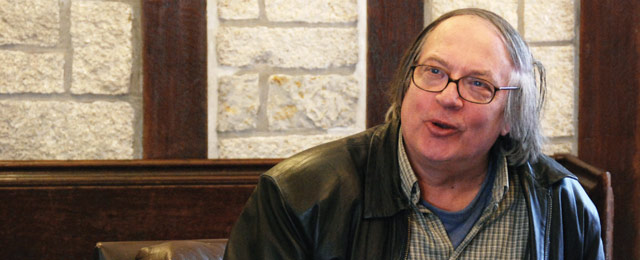
This course covers the emergence of modern France. Topics include the social, economic, and political transformation of France; the impact of France's revolutionary heritage, of industrialization, and of the dislocation wrought by two world wars; and the political response of the Left and the Right to changing French society.
Add to calendar

Trusted paper writing service WriteMyPaper.Today will write the papers of any difficulty.