

Courses tagged with "How to Succeed" (381)
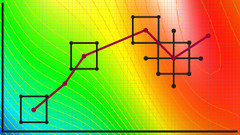
We are constantly using experiments to tweak and find improvements in our personal lives, our communities, and in our work. But are you doing it efficiently? Or are you changing one thing at a time and hoping for the best? In this course, you'll learn how to plan efficient experiments using statistical methods - enabling you to test for many variables that lead to better results.

This course covers the physics, concepts, theories, and models underlying the discipline of aerodynamics. A general theme is the technique of velocity field representation and modeling via source and vorticity fields, and via their sheet, filament, or point-singularity idealizations.
The intent is to instill an intuitive feel for aerodynamic flowfield behavior, and to provide the basis of aerodynamic force analysis, drag decomposition, flow interference estimation, and many other important applications. A few computational methods are covered, primarily to give additional insight into flow behavior, and to identify the primary aerodynamic forces on maneuvering aircraft. A short overview of flight dynamics is also presented.
Before your course starts, try the new edX Demo where you can explore the fun, interactive learning environment and virtual labs. Learn more.
FAQ
Is there a required textbook?
You do not need to buy a textbook. All material is included in the edX course and is viewable online. This includes a full textbook in PDF form. If you would like to buy a print copy of the textbook, a mail-order service will be provided.
Can I still register after the start date?
You can register at any time, but you will not get credit for any assignments that are past due.
How are grades assigned?
Grades are made out of four parts: simple, multiple-choice "Concept Questions " completed during lectures; weekly homework assignments; and two exams, one at the midpoint and one at the end of the course.
How does this course use video? Do I need to watch the lectures live?
Video lectures as well as worked problems will be available and you can watch these at your leisure. Homework assignments and exams, however, will have due dates.
Will the text of the lectures be available?
Yes, transcripts of the course will be made available.
Will the material be made available to anyone registered for this course?
Yes, all the material will be made available to all students.
What are the prerequisites?
The student is expected to be well-versed in basic mechanics, vector calculus, and basic differential equations. Good familiarity with basic fluid mechanics concepts (pressure, density, velocity, stress, etc.) is expected, similar to the content in 16.101x (however, 16.101x is not a requirement). If you do not know these subjects beforehand, following the class material will be extremely difficult. We do not check students for prerequisites, so you are certainly allowed to try.
Who can register for this course?
Unfortunately, learners from Iran, Sudan, Cuba and the Crimea region of Ukraine will not be able to register for this course at the present time. While edX has received a license from the U.S. Office of Foreign Assets Control (OFAC) to offer courses to learners from Iran and Sudan our license does not cover this course. Separately, EdX has applied for a license to offer courses to learners in the Crimea region of Ukraine, but we are awaiting a determination from OFAC on that application. We are deeply sorry the U.S. government has determined that we have to block these learners, and we are working diligently to rectify this situation as soon as possible.

This course teaches the fundamentals of Fog Networking, the network architecture that uses one or a collaborative multitude of end-user clients or near-user edge devices to carry out storage, communication, computation, and control in a network. It also teaches the key results in the design of the Internet of Things, including consumer and industrial applications.

What do collapsed buildings, infected hospital patients, and crashed airplanes have in common? If you know the causes of these events and conditions, they can all be prevented.
In this course, you will learn how to use the TU Delft mind-set to investigate the causes of such events so you can prevent them in the future.
When, for instance, hundreds of hospital patients worldwide got infected after having gall bladder treatments, forensic engineering helped reveal how the design and use of the medical instruments could cause such widespread infections. As a result, changes were made to the instrument design and the procedural protocols in hospitals. Learning from failure in this case benefitted patient health and safety across the world.
After taking this course you will have an understanding of failures and the investigation processes used to find their causes. You will learn how to apply lessons gained from investigating previous failures into new designs and procedures.
The TU Delft Forensic Engineering mind-set involves recommendations for:
- Data collection ranging from desk studies (theoretical/predicted performance of structures) to field investigations (actual performance of failed structures)
- Hypothesis generation techniques for technical and procedural causes of failure
- Hypothesis testing for engineering aspects of forensic cases
- Reporting findings about the most likely causes and consequences
- Improving engineering designs based on lessons learned from forensic cases
The course uses case studies from Building Engineering, Aerospace Engineering, and Biomechanical Engineering. All of these provide great examples that illustrate the approaches and highlight technical and procedural causes of failure. You’ll find that not only is it crucial, but it’s also exciting to learn from failures.
This course is most useful for:
- Students who want to familiarize themselves with forensic engineering
- Building, aeronautical, biomechanical designers and engineers
- Forensic investigators, police, legal and insurance professionals
- Professionals from municipalities, government agencies or clients who are asked to perform internal forensic investigations
This course has been designed by TU Delft's international experts on safety issues, failure investigations and forensics. Arjo Loeve, Michiel Schuurman and Karel Terwel are members of the TU Delft Forensics community, the Delft Safety & Security Institute and the CLHC Expertise Center for Forensic Science and Medicine.

Want to gain software quality skills used in mission critical systems?
Modeling checking, symbolic execution and formal methods are techniques that are used for mission critical systems where human life depends upon the system working correctly.
In this course, part of the Software Testing and Verification MicroMasters program, you will learn how to perform these techniques manually and by using automation tools.
No previous programming knowledge needed. The concepts from this course can be applied to any programming language and testing software. This course will use Java, Java Path Finder and Java Modeling Language, however, for examples and assignments.

Is a good, solid argument enough to make an impact? How would you disprove the stance that man-made global warming is just an “opinion”? How would you explain your opinion on school tests, budget cuts, crime, immigration, safety and security issues? No doubt that your persuasiveness relies on your arguments. But your ability to influence and convince critically depends on the way you frame your message.
In today’s world, you often need to reduce a complex reality to a concise and convincing message. Framing is an approach that deals with the way we convey our message: our words, images, and metaphors. To take one basic characteristic, a good frame engages the listeners’ values and emotions – it is easy to remember and it is something that people will usually agree with intuitively.
When you enter into a debate, you might be faced with frames of your opponents – and you will have to reframe the debate. This game of framing and reframing makes the debate to look like a chessboard made out of words. Of course, politicians play this game, trying to pull the debate towards their own words and metaphors in order to win their audience. But the game can be found everywhere: in the world of business, science, media – even at home.
We invite you to join our journey of learning the game of framing and reframing. You will discover how this game is played, and how you can play it yourself.
This course suits people who are engaged with and interested in public and political debates. Not only people from the public sector will find it useful, but also engineers, consultants, managers and anyone who wants to make an impact in discussions and debates.
LICENSE
The course materials of this course are Copyright Delft University of Technology and are licensed under a Creative Commons Attribution-NonCommercial-ShareAlike (CC-BY-NC-SA) 4.0 International License.
Credits banner
Photo Obama by NASA CC BY-NC
Photo Thatcher by British Wallpaper CC BY-NC-SA

Explore this five-unit course and discover a unified framework for understanding the essential physics that govern materials at atomic scales. You’ll then be able to relate these processes to the macroscopic world.
The course starts with an introduction to quantum mechanics and its application to understand the electronic structure of atoms and the nature of the chemical bond. After a brief description of the electronic and atomic structures of molecules and crystals, the course discusses atomic motion in terms of normal modes and phonons, as well as using molecular dynamics simulations.
Finally, principles of statistical mechanics are introduced and used to relate the atomic world to macroscopic properties.
Throughout the course, students will use online simulations in nanoHUB to apply the concepts learned to interesting materials and properties; these simulations will involve density functional theory and molecular dynamics.

Learn about one of the greatest engineering efforts in human history: NASA’s Project Apollo and the space race to put a man on the moon.
Apollo 11 landed on the moon in 1969, just eleven years after the first successful satellite launch (Sputnik in 1957) and forty-three years after Robert Goddard’s launch of the world’s first liquid fueled rocket. But the history of rocket development actually can be traced back more than 2,000 years to the experiments of Archytas, an ancient Greek Philosopher.
This aerospace history course will take you back in time and trace the many developments in technology that transformed rockets from celebratory accouterments to weapons and finally to launchpads for human space travel. It is a story of technology, but ultimately the emphasis on this course is about people. Some are very well-known, but others not so.
You will learn how the Chinese introduced rockets as weapons, how early experimenters succeeded through trial and error, how scientific advancement provided the foundation for rocket development and space travel, and how rocket use spread throughout the world prior to the modern era. Finally, you will be introduced to the contributions of rocket pioneers such as Tsiolkovsky, Oberth and Goddard who dreamed of and paved the way for space travel. The course culminates with an introduction of German rocket development in the early 1930s and the emergence the genius rocket engineer Wehner von Braun.
Verified students are eligible to earn Continuing Education Units (CEUs) and Professional Development Hours (PDHs), valid toward continuing education requirements for many professional certifications.
Build a modern computer system, starting from first principles. The course consists of six weekly hands-on projects that take you from constructing elementary logic gates all the way to building a fully functioning general purpose computer. In the process, you will learn -- in the most direct and intimate way -- how computers work, and how they are designed.

In this course students learn the basic concepts of acoustics and electronics and how they can applied to understand musical sound and make music with electronic instruments. Topics include: sound waves, musical sound, basic electronics, and applications of these basic principles in amplifiers and speaker design.

This physics course covers the physical principles of major in vivo bio-imaging modalities.
This course will focus on magnetic resonance imaging, also known as an MRI. In the first part of the course, the dynamic of spins in a magnetic field is described, leading to the essential notions of magnetic resonance (MR), excitation and relaxation. We will also discuss the basic mechanisms of image reconstruction, MR spectroscopy and functional MRI.
You will learn how existing physical principles transcend into bio-imaging and establish an important link into life sciences, illustrating the contributions physics can make to life sciences. Practical examples will be shown to illustrate the respective imaging modality, its use, premise and limitations, and biological safety will be touched upon.
During this course, you will develop a good understanding of the mechanisms leading to tissue contrast of the bio-imaging modalities covered in this course, including the inner workings of the scanner and how they define the range of possible biomedical applications. You will be able to judge which imaging modality is adequate for specific life science needs and to understand the limits and promises of each modality.
This physics course covers the physical principles of major in vivo bio-imaging modalities and the different imaging techniques.
After a short study of ultrasound imaging, you will learn about the different X-ray imaging techniques. The understanding of the interaction of X-rays with tissue will lead to the study of three different techniques:
- Computed Tomography (CT)
- Emission Tomography
- Positron Emission Tomography (PET)
This course shows how existing physical principles transcend into bio-imaging and establish an important link into life sciences, illustrating the contributions physics can make to life sciences. Practical examples will be shown to illustrate the respective imaging modality, its use, premise and limitations, and biological safety will be touched upon.
During this course, you will develop a good understanding of the mechanisms leading to tissue contrast of the bio-imaging modalities covered in this course, including the inner workings of the scanner and how they define the range of possible biomedical applications. You will be able to judge which imaging modality is adequate for specific life science needs and to understand the limits and promises of each modality.
To learn more about biomedical imaging, join us in the second part of this course Biomedical Imaging: Magnetic Resonance Imaging (MRI).

In this class you will learn the basic principles and tools used to process images and videos, and how to apply them in solving practical problems of commercial and scientific interests.

This course probes fundamental ideas in electrical engineering, seeking to understand how electrical signals convey information, how bits can represent smooth signals like music and how modern communication systems work.

This hands-on laboratory course complements Coursera's Fundamentals of Electrical Engineering. The course develops basic skills in constructing and measuring electrical circuits using modern laboratory instruments.

Fluid power has the highest power density of all conventional power-transmission technologies. Learn the benefits and limitations of fluid power, how to analyze fluid power components and circuits, and how to design and simulate fluid power circuits for applications.
Fluid-Solid Interactions happen when the motion of solids and fluids are coupled. The aim of the course is to give you the basic tools to be able to understand, predict and eventually mitigate these interactions.

Have you wondered how something was manufactured? Do you want to learn what it takes to turn your design into a finished product? This course introduces a wide range of manufacturing processes including machining, injection molding, and 3D printing; and explains the fundamental principles and practices of manufacturing at scale.
For each process, 2.008x explains the underlying physical principles, provides several practical examples and demonstrations, and summarizes design for manufacturing principles. Lectures are also included on cost estimation, quality and variation, robotics, and sustainability. Together, this knowledge will enable you to plan a manufacturing process for a multi-part product, make quantitative estimates of cost and throughput, and recognize important constraints and tradeoffs.
Whether you may be an engineer, entrepreneur, or from another field—by completing 2.008x you will gain the understanding needed to assess a wide variety of manufacturing techniques, identify potential improvements, and confidently pursue the scale-up of innovative products.

Nanoelectronic devices are an integral part of our life, including the billion-plus transistors in every smartphone, each of which has an active region that is only a few hundred atoms in length.
This nanotechnology course explains the fundamentals of nanoelectronics and mesoscopic physics.
Even with NO prior background in quantum mechanics, you should learn about cutting-edge developments and concepts that will prepare you for a future in nanotechnology and nanoelectronics.
Indeed we hope you will be excited to join the field and help invent the new devices that will shape the electronics of this century and meet its challenges.
Second in a two part series, this nanotechnology course provides an introduction to more advanced topics, including the Non-Equilibrium Green’s Function (NEGF) method widely used to analyze quantum transport in nanoscale devices. We will explore a number of topics within nanoelectronics, taking a more in depth look at quantum transport, gaining greater insight into the application of the Schrodinger Equation, and learning the basics of spintronics.
“The course was just awesome!”
- Student from Part A
This course is the latest in a series offered by the nanoHUB-U project which is jointly funded by Purdue and the National Science Foundation with the goal of transcending disciplines through short courses accessible to students in any branch of science or engineering. These courses focus on cutting-edge topics distilled into short lectures with quizzes and practice exams.

The modern smartphone is enabled by a billion-plus nanotransistors, each having an active region that is barely a few hundred atoms long. Interestingly the same amazing technology has also led to a deeper understanding of the nature of current flow on an atomic scale and my aim is to make these lessons from nanoelectronics accessible to anyone in any branch of science or engineering. I will assume very little background beyond linear algebra and differential equations, although we will be discussing advanced concepts in non-equilibrium statistical mechanics that should be of interest even to specialists.
In the first half of this course (4 weeks) we will introduce a new perspective connecting the quantized conductance of short ballistic conductors to the familiar Ohm's law of long diffusive conductors, along with a brief description of the modern nanotransistor. In the second half (4 weeks) we will address fundamental conceptual issues related to the meaning of resistance on an atomic scale, the interconversion of electricity and heat, the second law of thermodynamics and the fuel value of information.
Overall I hope to show that the lessons of nanoelectronics lead naturally to a new viewpoint, one that changes even some basic concepts we all learn in freshman physics. This unique viewpoint not only clarifies many old questions but also provides a powerful approach to new questions at the frontier of modern nanoelectronics, such as how devices can be built to control the spin of electrons.
This course was originally offered in 2012 on nanoHUB-U and the accompanying text was subsequently published by World Scientific. I am preparing a second edition for publication in 2015, which will be used for this course. The manuscript will be made available to registered students.
Sample comments:
From Roald Hoffmann, http://en.wikipedia.org/wiki/Roald_Hoffmann
Cornell University
"… the pedagogical imperative in research is very important to me, and so I really value a kindred spirit. Your (Datta's) online courses are just wonderful!"
From anonymous student in previous offering.
"The course was just awesome .. Prof. Datta's style of delivering lecture is mind-blowing."
This course is the latest in a series offered by the nanoHUB-U project which is jointly funded by Purdue and NSF with the goal of transcending disciplines through short courses accessible to students in any branch of science or engineering. These courses focus on cutting-edge topics distilled into short lectures with quizzes and practice exams.
Add to calendar

Trusted paper writing service WriteMyPaper.Today will write the papers of any difficulty.