

Courses tagged with "How to Succeed" (381)

Want to become a biomedical engineer but not sure where to focus or how to get there? This engineering course will give you an overview of this wildly popular and vast field, as you learn about more than two dozen areas of focus and get a peek at some of the cool and exciting advances going on at top institutions. Along the way, you’ll meet more than three dozen biomedical engineers—from top names in the field to those just starting their careers.
Through exercises, you’ll get to think like a BME and experience the various areas to see which fits your interests and talents.
Finally, once you have a better sense of where you’d like to focus, our educational and career advice will help show you how to get there.
While targeted to students exploring a career in biomedical engineering, anyone curious about this fascinating field will find something of interest: from the thinking processes of pilots and baseball batters to an inside view of a beating heart to developments in bionics, exoskeletons, and nanotechnology.
Join us on a journey through the world of biomedical engineering.
Verified students are eligible to earn Continuing Education Units (CEUs) and Professional Development Hours (PDHs), valid toward continuing education requirements for many professional certifications.

Software developers are in high demand in the current job market, and computer programming is a prerequisite skill for success in this field.
Start your journey toward becoming a professional software developer by learning Java, one of the industry’s most commonly used programming languages.
This course, part of the CS Essentials for Software Development Professional Certificate program, will quickly cover Java syntax and keywords and then explore features of object-oriented programming including encapsulation, inheritance, and polymorphism. You will learn how to apply these concepts to programmatic problem solving by investigating class modeling techniques and relationships such as aggregation, realization, and generalization.
In addition to programming, you will learn about software testing techniques that help us find problems in our code, and you will use modern development environments and tools for tasks like debugging and unit testing. We will introduce Eclipse, the eclipse debugger and Junit (a unit testing framework).
After completing this course, you will be able to design, develop, and test large applications in Java and understand and apply core principles of professional software development.

Want to gain software testing skills to start a career or are you a software developer looking to improve your unit testing skills? This course, part of the Software Testing and Verification MicroMasters program, will provide the essential skills you need for success.
Software needs to be tested for bugs and to insure the product meets the requirements and produces the desired results. Software testing is essential to providing a quality product.
Learn the techniques Software Testers and Quality Assurance Engineers use every day, which can be applied to any programming language and testing software.
No previous programming knowledge needed. This course will use Java and JUnit, however, for examples and assignments.

Operating principles and applications of emerging technological solutions to the world's energy demands. Discussion of global energy usage and requirements for solutions.

Operating principles and applications of emerging technological solutions to the world's energy demands. Discussion of global energy usage and requirements for solutions.

In the third edition of Solar Energy, you will learn to design a complete photovoltaic system. This course introduces the technology that converts solar energy into electricity, heat and solar fuels with a main focus on electricity generation. Photovoltaic (PV) devices are presented as advanced semiconductor devices that deliver electricity directly from sunlight. The emphasis is on understanding the working principle of a solar cell, fabrication of solar cells, PV module construction and the design of a PV system. You will gain a greater understanding of the principles of the photovoltaic conversion— the conversion of light into electricity. This course explores the advantages, limitations and challenges of different solar cell technologies, such as crystalline silicon solar cell technology, thin film solar cell technologies and the latest novel solar cell concepts as studied on lab-scale. We will discuss the specifications of solar modules and demonstrate how to design a complete solar system for any particular application.
Education Method
The class will consist of a collection of eight to twelve minute lecture videos, exercises, assignments and exams. Specified assignments and the three exams will determine the final grade. The new textbook on “Solar Energy, basics, technology and systems” from the Delft University of Technology will be available for the students on-line and free of charge. Your course staff will encourage and challenge you to learn from, and interact with, your fellow students by helping each other and sharing ideas and best practices, in the course forum. We were happy to see the incredible number of interesting student videos on solar energy systems from all over the world in the previous edition of this course.
Professor Smets was the first ever recipient of the edX Prize for Exceptional Contributions to Online Teaching and Learning. His previous online courses attracted over 150,000 students worldwide, who were inspired to take their first steps in the transition to renewable energy.

LICENSE
The course materials of this course are Copyright Delft University of Technology and are licensed under a Creative Commons Attribution-NonCommercial-ShareAlike (CC-BY-NC-SA) 4.0 International License.

Use the knowledge of Photovoltaic technology, systems and microgrids to design your own engineering project.
This project-based course finalizes the Solar Energy Engineering MicroMasters program and focuses on applying the knowledge you gained to a solar energy project. You will work on either your own project or on a project provided by the course team. These projects can be focused on design, analysis, monitoring or integration of any photovoltaic application.
First, you will write a short project plan describing the project and the orientation of your work. After approval, you will execute your project.
Your final product is a written paper on the results of your project. This paper will be peer reviewed and assessed by a professor. You will also defend your project in an oral presentation. You will be assessed on your ability to justify design choices, to critically analyze the performance of systems, to find creative solutions and to show the potential of your solution.
Finding a sponsor for your project within a company, institute or university is encouraged.
This is the last course of the Solar Energy Engineering MicroMasters Program designed to cover all physics and engineering aspects of photovoltaics: photovoltaic energy conversion, technologies and systems.
You can start the capstone project after completing PV1x, PV2x and PV3x. However, you will need the knowledge and skills gained in PV4x to complete the final module of this course, the oral presentation.
Note: The capstone project is only accessible for ID verified MicroMasters learners.

Photovoltaic systems are often placed into a microgrid, a local electricity distribution system that is operated in a controlled way and includes both electricity users and renewable electricity generation. This course deals with DC and AC microgrids and covers a wide range of topics, from basic definitions, through modelling and control of AC and DC microgrids to the application of adaptive protection in microgrids. You will master various concepts related to microgrid technology and implementation, such as smart grid and virtual power plant, types of distribution network, markets, control strategies and components. Among the components special attention is given to operation and control of power electronics interfaces.
You will familiarize yourself with the advantages and challenges of DC microgrids (which are still in an early stage). You will have the opportunity to master the topic of microgrids through an exercise in which you will evaluate selected pilot sites where microgrids were deployed. The evaluation will take the form of a simulation assignment and include a peer review of the results.
This course is part of the Solar Energy Engineering MicroMasters program designed to cover all physics and engineering aspects of photovoltaics: photovoltaic energy conversion, technologies and systems.

The key factor in getting more efficient and cheaper solar energy panels is the advance in the development of photovoltaic cells. In this course you will learn how photovoltaic cells convert solar energy into useable electricity. You will also discover how to tackle potential loss mechanisms in solar cells. By understanding the semiconductor physics and optics involved, you will develop in-depth knowledge of how a photovoltaic cell works under different conditions. You will learn how to model all aspects of a working solar cell. For engineers and scientists working in the photovoltaic industry, this course is an absolute must to understand the opportunities for solar cell innovation.
This course is part of the Solar Energy Engineering MicroMasters Program designed to cover all physics and engineering aspects of photovoltaics: photovoltaic energy conversion, technologies and systems.
We recommend that you complete this course prior to taking the other courses in this MicroMasters program.

In this course you will learn how to turn solar cells into full modules; and how to apply full modules to full photovoltaic systems.
The course will cover design of photovoltaic systems, such as utility scale solar farms or residential scale systems (on/off the grid). You will learn about the function and operation of various components including inverters, batteries, DC-DC converters and the grid. After learning about the components, you will gain an understanding of the main design decisions to be taken when planning a real PV installation with excellent performance and reliability.
Finally, you will practice modelling the performance of a PV system for different solar energy applications, and estimating the energy production of a client's potential system.
This course is part of the Solar Energy Engineering MicroMasters Program designed to cover all physics and engineering aspects of photovoltaics: photovoltaic energy conversion, technologies and systems.

The technologies used to produce solar cells and photovoltaic modules are advancing to deliver highly efficient and flexible solar panels. In this course you will explore the main PV technologies in the current market. You will gain in-depth knowledge about crystalline silicon based solar cells (90% market share) as well as other up and coming technologies like CdTe, CIGS and Perovskites. This course provides answers to the questions: How are solar cells made from raw materials? Which technologies have the potential to be the major players for different applications in the future?
This course is part of the Solar Energy Engineering MicroMasters Program designed to cover all physics and engineering aspects of photovoltaics: photovoltaic energy conversion, technologies and systems.

Operating principles and applications of emerging technological solutions to the world's energy demands. Discussion of global energy usage and requirements for solutions.

Oímos en tres dimensiones porque la evolución nos ha dotado de esta capacidad fundamental para desenvolvernos en nuestro entorno. El oído sustituye a la vista cuando las fuentes sonoras quedan fuera del alcance de esta o bien sirve para complementarla cuando están visibles. Desde los principios de la electrónica la ingeniería ha trabajado para simular estos estímulos sonoros a través de múltiples sistemas de sonido espacial, empezando desde el más simple, el estéreo. En este curso el alumno empezará familiarizándose con los mecanismos de la audición espacial humana, para pasar a estudiar los principales sistemas de reproducción de sonido espacial, siguiendo una clasificación ordenada atendiendo a criterios de ingeniería. Se estudiarán desde los sistemas más comunes como el 5.1 hasta los sistemas más modernos como la Wave-Field Synthesis o los sistemas binaurales con personalización de la HRTF.

Space exploration is truly fascinating. From Sputnik to the Apollo, followed by the assembly and exploitation of the International Space Station and the successful operation of the Hubble Space Telescope and other space observatories, we are uncovering many mysteries of our universe. We also made huge progress learning how to work and be productive in outer space!
This course builds on university level physics and mechanics to introduce and illustrate orbital dynamics as they are applied in the design of space missions. You will learn from the experiences of Claude Nicollier, one of the first ESA astronauts, specifically through his role in the maintenance of the Hubble Space Telescope on two occasions.
The course focuses on conceptual understanding of space mechanics, maneuvers, propulsion and control systems used in all spacecraft. You will gain knowledge of the challenges related to the use of the space environment as a scientific and utilitarian platform.

Have we reached the boundaries of what can be achieved in sports and building design? The answer is definitely “NO”. This course explains basic aspects of bluff body aerodynamics, wind tunnel testing and Computational Fluid Dynamics (CFD) simulations with application to sports and building aerodynamics. It is intended for anyone with a strong interest in these topics. Key fields addressed are urban physics, wind engineering and sports engineering.
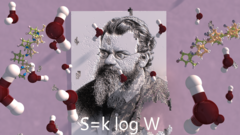
Thermodynamics explains phenomena we observe in the natural world and is the cornerstone of all of engineering. You're going to learn about thermodynamics from a molecular picture where we'll combine theory with a wide range of practical applications and examples. The principles you'll learn in this class will help you understand energy systems such as batteries, semiconductors, catalysts from a molecular perspective. But be warned: this is a fast-paced, challenging course. Everyone is welcome, but hold on to your hat!

The motion of falling leaves or small particles diffusing in a fluid is highly stochastic in nature. Therefore, such motions must be modeled as stochastic processes, for which exact predictions are no longer possible. This is in stark contrast to the deterministic motion of planets and stars, which can be perfectly predicted using celestial mechanics.
This course is an introduction to stochastic processes through numerical simulations, with a focus on the proper data analysis needed to interpret the results. We will use the Jupyter (iPython) notebook as our programming environment. It is freely available for Windows, Mac, and Linux through the Anaconda Python Distribution.
The students will first learn the basic theories of stochastic processes. Then, they will use these theories to develop their own python codes to perform numerical simulations of small particles diffusing in a fluid. Finally, they will analyze the simulation data according to the theories presented at the beginning of course.
At the end of the course, we will analyze the dynamical data of more complicated systems, such as financial markets or meteorological data, using the basic theory of stochastic processes.

The Statics of Everyday Objects is a course about how structures react to forces exerted on them while remaining unmoved.

An engineer's road map to professional and personal success.
Congratulations! You're an engineer, and now you're ready to take the corporate world by storm. But in order to succeed in your career, you'll need more than just great technical skills. You'll need to be able to promote your ideas, share them with others, and work with a wide variety of people. Stuff You Don't Learn in Engineering School is designed to give engineers entering the corporate world the soft skills they'll need to succeed -- in business, and in life. Based on the instructor’s popular leadership seminars and book, this easy-to-digest guide to success will help even the most inhibited engineer to comfortably deal with the difficult people, processes, and meetings of today's competitive business world.
Filled with insightful, practical advice addressing vital skill areas and helpful tips you can apply immediately to any situation, Stuff You Don't Learn in Engineering School will help you take charge of your career and achieve the success for which you've worked so hard.

Supply chains are complex systems involving multiple businesses and organizations with different goals and objectives. Many different analytical methods and techniques are used by researchers and practitioners alike to better design and manage their supply chains. This business and management course introduces the primary methods and tools that you will encounter in your study and practice of supply chains. We focus on the application of these methods, not necessarily the theoretical underpinnings.
We will begin with an overview of introductory probability and decision analysis to ensure that students understand how uncertainty can be modeled. Next, we will move into basic statistics and regression. Finally, we will introduce optimization modeling from unconstrained to linear, non-linear, and mixed integer linear programming.
This is a hands-on course. Students will use spreadsheets extensively to apply these techniques and approaches in case studies drawn from actual supply chains.
MITx MicroMasters Credential in Supply Chain Management
The MITx MicroMasters Credential in Supply Chain Management is specifically designed and administered by MIT’s Center for Transportation & Logistics (CTL) to teach the critical skills needed to be successful in this exciting and growing field. In addition to being a standalone certificate demonstrating expertise in the field, students who complete all of the required courses and the final proctored exam will be qualified to apply to gain credit at MIT for the blended graduate master's degree program. In order to qualify for the MITx MicroMasters Credential in Supply Chain Management you need to earn a Verified Certificate in all of the required courses. When you register for a Verified Certificate you will also be granted access to additional practice problems, supplemental readings, and opportunities for increased interaction with the faculty and teaching staff.
To learn more about the MITx MicroMasters Credential in Supply Chain Management, please visit http://scm.mit.edu/micromasters
MITx requires individuals who enroll in its courses on edX to abide by the terms of the edX honor code. MITx will take appropriate corrective action in response to violations of the edX honor code, which may include dismissal from the MITx course; revocation of any certificates received for the MITx course; or other remedies as circumstances warrant. No refunds will be issued in the case of corrective action for such violations.
The Office of Foreign Assets Control (OFAC) has restricted access of these courses to any learners living in Cuba or Iran. The only exception is that learners in Iran may take SC0x, but no other classes. This is not a ruling that MITx, edX, or the course staff may overrule or change.
Add to calendar

Trusted paper writing service WriteMyPaper.Today will write the papers of any difficulty.