

Courses tagged with "Labor+Relations" (6)

How can we think of culture as a tool for understanding foreign societies?
Why do emerging countries consider cultural values as instrumental in their quest for modernisation?
How can art contribute to a country’s public image?
These are central questions in an increasingly globalised world. Through a case study on global culture, this online course on the first ever award for contemporary art in China aims to address these questions and to find some possible answers.
While working through six chapters, you will receive exclusive reading material, supplementary videos and background information about the developments in the Chinese art scene over the past 40 years, the Chinese Contemporary Art Award established by Mr Uli Sigg as well as the Sigg Collection as part of the newly created M+ museum in Hong Kong.
Moreover, you will gain insights into Chinese contemporary art, first-hand information about the art scene in China, and a wide range of contacts with relevant local and international institutions and actors.
The course is produced by the Centre of Further Education at the Zurich University of the Arts (ZHdK), based on research by IFCAR and presented by Michael Schindhelm on the e-learning platform iversity.org.
–
–
Zurich University of the Arts
Centre of Further Education
Prof. Elisabeth Danuser
–
Target Group
The CCAA online course is tailored to the needs and interests of curators, collectors, art managers, artists, journalists, cultural producers, gallery owners and researchers but equally attractive for curious individuals.
Prerequisites
If you opt for the Certification of Accomplishment track, you must have experience in a cultural or artistic field in order to help shape your personal perspective. Such prior knowledge will help you while completing the assignment and applying models and methods.
With its audit track, the CCAA online course also welcomes curious individuals.
Learning Objectives
In this online course you will learn:

By working through the entire online course, you will acquire the skills and knowledge needed to analyse and navigate the Chinese contemporary art scene.
Course Structure
This online course will be accessible for one year, beginning on April 13, 2016. For the first six weeks, it will be released as a time-based MOOC with a new chapter launched every Wednesday. Later on, it will be available as a self-paced course.
The course includes six chapters:
Suggested reading list
- Belting, Hans 2011: Global Studies. Mapping Contemporary Art and Culture. Ostfildern: Hatje Cantz.
- Chiu, Melissa 2008: Chinese Contemporary Art. 7 Things You Should Know. New York: AW Asia.
- Fibicher, Bernhard (ed.) 2005: Mahjong. Contemporary Chinese Art from the Sigg Collection, Ostfildern-Ruit: Hatje Cantz. (exhibition catalogue)
- Goodrow, Gérard A. 2014: Crossing China. Land of the Rising Art Scene. Köln: Daab.
- Schindhelm, Michael et al. 2014: Why Hong Kong. Connecting Spaces Documents # 1, Zurich.
http://issuu.com/connecting_spaces_hk_zh/docs/why_hong_kong_k
- Wu, Hung 2014: Contemporary Chinese Art. A History: 1970s-2000s. London: Thames&Hudson.

How can we think of culture as a tool to understand foreign societies?
Why emerging countries consider cultural values as instrumental in their quest for modernization?
How can art contribute to a country’s public image?
These are central questions in an increasingly globalized world. Through a case study on global culture, this online course on the first ever award for contemporary art in China named CCAA aims to address these questions and identify some possible answers.
While working through six chapters, you will receive exclusive reading material, supplementary videos and background information about the developments in the Chinese art scene of the last 40 years, the Chinese Contemporary Art Award established by Mr Uli Sigg as well as the Sigg Collection as part of the newly created museum M+ in Hong Kong.
Moreover, you get insights into contemporary Chinese art, first-hand information about the art scene in China, and a wide range of contacts with relevant local and international institutions and actors.
What will I learn?
In this online course you will learn about...
- ... the crucial stakeholders, institutions and networks that influence/d Chinese contemporary art.
- ...divergent terminological interpretations in a global context.
- ... how questions can be discussed and approached with the CCAA case study, by applying it to other topics in the field of global culture.
- ... the strategy of running an art award, as used by Uli Sigg to explore and describe the - to him unknown - field of Chinese contemporary art.
- ...the ambivalences of Chinese art historiography and how to build a sensorium for different interest groups and their agendas
- ... a method on how to study cultural milieus with the help of a specific model.
- and finally, you will develop criteria necessary for critically engaging with contemporary Chinese art.
By working through the entire online course, you will acquire the skills and knowledge needed to analyze and navigate the Chinese contemporary art scene.
What do I need to know?
If you opt for the Certification of Accomplishment track, you might have experience in a cultural or artistic field to bring in individual perspectives and your personal expertise. Such prior knowledge will help you while writing the assignment and applying models and methods.
With its audit track, the CCAA online course also welcomes curious individuals.
Course Structure
This online course will be accessible for one year, beginning on April 13, 2016. For the first six weeks, it will be released as a time-based MOOC with a new chapter launched every Wednesday. Later on, it will be available as a self-paced course.
The course includes six chapters:
1 - Chinese contemporary art in the context of cultural globalization
Chapter 1 gives you an insight into the complexity of how cultural globalization can be approached in form of a case study and why the example of China is appropriate to study these questions.
2 - Bringing up China – Uli Sigg, his collection and its internationalization
Chapter 2 «Bringing up China» leads to discussions on how culture can be understood as a tool in order to understand foreign societies and how Mr Sigg strategically approached China’s art scene.
3 - The west discovers contemporary Chinese Art — and so does China
Chapter 3 investigates how art can contribute to a country’s public image and how this has been used by different actors to promote a certain impression of Chinese society and cultural production.
4 - The Story of the Unknown Artist. From mapping the art scene to promoting excellency.
Chapter 4 broaches the subject on how the CCAA’s approach on promoting artists has changed over the years and why the model of the «unknown artist» is introduced to trace these changes.
5 - Locating the CCAA – From letter-box company to multi-purpose centre
Chapter 5 traces back the adaptations of the art prize and its institutional representation over the last 15 years. The learners find out about the enormous shifts in Chinese society, politics and also the art scene.
6 - 15 Years CCAA – Whom does Chinese contemporary art belong to?
Chapter 6 aims to discuss the question of independence in art on the occasion of the CCAA’s first encounter with government censorship during the 15-year anniversary show in Shanghai. Finally, the massive museum project M+ is presented.
The course features two different tracks. The Audit Track is for free and allows learners to get familiar with the subject. The Certificate Track costs €119. To obtain a Certificate of Accomplishment , participants must submit an assignment. The ZHdK Centre of Further Education evaluates assignments four times a year.
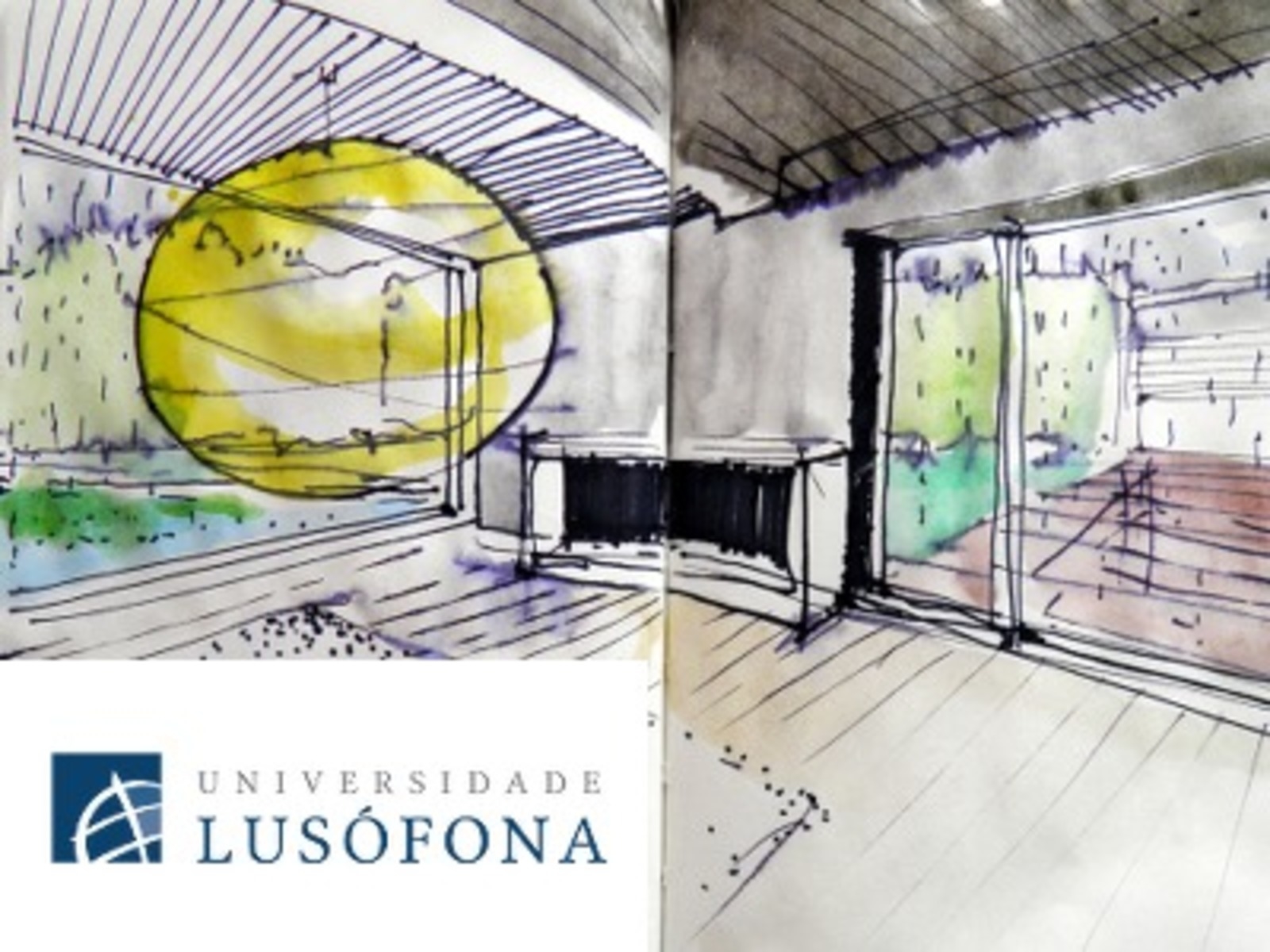
A formação em desenho consiste numa das matérias mais aliciantes da capacidade expressiva do ser humano. O deslumbramento sobre uma linguagem completa de técnica, de perceções sensoriais e persistência.
Ao longo do presente curso os alunos encontrarão alguns dos princípios sugeridos para a iniciação a um diário gráfico pessoal, numa linguagem a conquistar em cada desafio proposto.
Os desenhos são livremente registados em processo analógico de forma livre mas alicerçados a conteúdos subsequentes, somando competências ao longo dos diferentes exercícios.
Mais do que saber desenhar virtuosamente, procura-se dar a conhecer a confiança de desenhar livremente, sem pré conceitos e caminhando para um registo individual, único.
Objetivos de aprendizagem
O curso tem por objetivo principal o ensino de técnicas de composição aplicadas ao desenho. Serão exploradas diferentes abordagens de desenho com a aplicação de diferentes técnicas e materiais.
Como material de suporte serão usados cadernos para Diário Gráfico de formato A4 e A5. Serão exploradas técnicas alternativas de desenho para Diário Gráfico como por exemplo o uso de café e lápis e canetas aguareláveis. Serão exploradas técnicas bidimensionais e tridimensionais, a criação de volume e o uso de perspetiva.
O curso segue uma metodologia baseada no experimentar fazer. O modelo pedagógico do curso foi definido com o intuito de derrubar as barreiras iniciais ao desenho e os medos associados ao “gostava mas não sei”. Os diferentes exercícios apresentados em vídeo em tempo real de produção do desenho permitem uma maior compreensão do desenho enquanto aplicação de técnicas aprendíveis e não como fruto de um “dom” que só poucos têm. Desafiamos todos os que gostariam de desenhar a participar neste curso.
Requisitos
O curso de Desenho para Diário Gráfico não tem pré-requisitos. Partimos do princípio que todas as pessoas podem aprender a desenhar se assim o quiserem. Deste modo, o curso destina-se a todos os interessados em aprender as técnicas e regras mais comuns aplicadas ao desenho para diários gráficos.
Alunos têm ainda a possibilidade de comprar o Statement of Participation (no valor de 29€). Aqueles que comprarem o Statement of Participation, devem completar no mínimo 80% do curso (exercícios, vídeos e quizzes) para poderem fazer download do Statement of Participation.
Estrutura do curso
A matéria divide-se metodologicamente em quatro partes:
- Introdução;
- Codificação do Campo visual;
- Codificação expressiva;
- e aplicabilidade em desenho de exterior.
Os desafios são compostos por uma contextualização em vídeo e por materiais didáticos complementares.

Design your own world. Are you ready? This MOOC is a journey into contemporary design through 101 exercises. Learn by doing and transform your everyday life into 101 projects.
What is the course about? What are Digital Arts? Questions to the digital.
Digital Arts focus on art that engages with, uses and is impacted by the digital. This course doesn’t focus on technology but presents it as a tool to facilitate ideas, placing emphasis upon its creative and artistic use. The program encourages students to explore the possibilities and potential of technologies within an art context. It offers the opportunity to develop a project from proposal to final exhibition. You will be asked to research content, materials and methods. Written work and practical work in the course combine as an investigation of the relationship to the subject and contemporary practice.
Let's understand Digital Arts together by exploring the topics above as well as experiencing interviews and art works from well-known artists.
Main theme of the art seminar: '90 minutes of life'
What is life? (Philosophically, artistically and conceptually)
Artistic work will be analysed from the perspective of motivation and the outcome of the work.
What message does the work communicate?
What kind of shapes or forms can you find?
What is the medium of the work?
What will you learn?
Throughout the course, you will learn the following:
• The work and concepts of contemporary photographic and video artists.
• To understand and articulate how meaning of images is visually communicated.
• The “language” of creative expression and how this can improve your own artistic work.
• The ability to identify and explain the basic visual and conceptual elements that are common to all works of art.
• The key contemporary photographic narratives.
YOU will learn to have direct access to the voice of the artist. The work of contemporary artists provides not only new art and ideas to introduce but also new approaches for making art.
Who should take this course?
If photography, video making, sound & theory based on art is your passion, then you fit perfectly to the course.
Using computers, visual artists can manipulate all forms of artefacts, whether video, photographic images, sound clips or text, to create exciting new experiences for audiences.
What do I need to know?
You do not need to be prepared. You need to be excited! Let the course experience lead you to more creative ideas.
At the end of the course, what will I make?
Create a cohesive body of exhibition-quality work that collectively explores the concept of the course “W_h_a_t_ i_s _l_i_f_e” and be able to explain the significance of subject, form, presentation and meaning your work.
Course structure
Chapter 1: (2 November - 8 November)
This chapter is an introduction to video art, performance art and photography. The starting point is: what is life? The motivation of creativity.
We are investigating each medium from its beginning through history to the present day, dissecting it to its components. What is the main motivation for artists? What message does the work communicate? What kind of shapes or forms can you find? What is the medium of the work?
Homework:
Art example in Second Life (virtual world), Video art presentation
Chapter 2: (9 November - 15 November)
What is life? Life and beauty: The work and concepts of contemporary photographic and video artists.
Starting from a philosophical viewpoint we examine the approaches on life, beauty and art illustrating our argument with various examples.
Homework:
Artistic work will be analysed from the perspective of motivation and the outcome of the work. What message does the work communicate? What kind of shapes or forms can you find? What is the medium of the work?
Chapter 3: (16 November - 22 November)
What is life? Life and death: To understand and articulate how meaning of images is visually communicated.
In this chapter we look into life, death and trauma. These moments in everybody’s life give cause to artists to delve into the core of human existence and wonder about the human condition.
Homework:
Artistic work will be analysed from the perspective of motivation and the outcome of the work.
What message does the work communicate? What kind of shapes or forms can you find? What is the medium of the work?
Chapter 4: (23 November - 29 November)
What is life? Life and documentation: The “language” of creative expression and how this can improve your own artistic work.
The boundaries of artistic expression are not confined in the studio or art gallery. Artists document life performed in its natural state and how people interact with their environment.
Homework:
Video presentation - Artistic work will be analysed from the perspective of motivation and the outcome of the work. What message does the work communicate? What kind of shapes or forms can you find? What is the medium of the work?
Chapter 5: (30 November - 6 December)
What is life? Life and Eros: The ability to identify and explain the basic visual and conceptual elements that are common to all works of art.
Many say that love is the motivating force of life. In worldwide mythology love and lust are responsible for cosmogonic events such as the birth of heroes and the beginning of wars among other circumstances. Art inspired by mythology, cinema or real (or virtual) life is a staple theme motivating artists since antiquity.
Homework:
Artistic work will be analysed from the perspective of motivation and the outcome of the work. What message does the work communicate? What kind of shapes or forms can you find? What is the medium of the work?
Chapter 6: (7 December - 13 December)
What is life? Life and memory: The key contemporary photographic and video-film narratives.
Memories are a key component of who we are. Its subjective and fragmentary nature forms our personality. It is a matter of philosophical debate since ancient times. Through art we record and preserve and try to dominate its fleeting state.
Homework:
(Plus exercises) Artistic work will be analyzed from the perspective of motivation and the outcome of the work.
What message does the work communicate? What kind of shapes or forms can you find? What is the medium of the work?
Chapter 7: (14 December - 20 December)
What is life? Celebrating life: An understanding of the history of video art and the impact of video on contemporary culture.
In this chapter, we recap on what we have discussed in the previous chapters. Life isn’t just one thing. It is beauty and death, love and memories. Here we celebrate the multifaceted thing that is life.
XMAS BREAK
Final chapter 8: Final show

Prototyping is a skill every designer should master because it's the most effective, fast and often cheapest way to make your ideas tangible and tested. In this course, you'll learn to think through and make your design a better experience for your users by sketching, experimenting, creating and testing.
In this six week course, you will be working on a prototype for a concept you’ll develop in the first weeks involving a mobile device. You will explore different types of prototyping, from paper prototypes to a digital prototype and eventually even a physical prototype.
In a world where we have to deal with new technologies on a daily basis, the prototyping process will help you understand the user and the way he or she interacts with these new and existing technologies. Understanding and executing this process will make your design stronger and more valuable to the end user.
What will I learn?
By the end of the course, you know how to incorporate prototyping interaction in your design process. This will not only make your design process more effective, it will also help you gain new insights about the user and the way he or she interacts with your product or service.
What do I need to know?
No prior knowledge is required, but some practical experience in UX design, interaction design and design principles is recommended since the course is covering prototyping for user experience for mobile devices but also physical prototyping. For this you might need a physical prototyping tool (e.g. a Makey Makey, an Arduino or a Touchboard) prior to, or during the course, if you want fully participate in the course exercises.
Course Structure
1. Start it: defining the design challenge & generating an idea
In this chapter, we will explain what design challenge you will be working on for the next six weeks.
Topics: introduction to prototyping interaction, research, idea generation and experience prototyping
Workshop: storyboarding
2. Sketch it: visualizing & paper prototyping
Visualise your idea by sketching and paper prototyping.
Topics: sketching interfaces and paper prototyping
Workshop: paper prototyping
3. Fake it: digital prototyping & tools
Use digital prototyping tools to make your prototype interactive.
Topics: digital prototyping, tools, transitions & gestures, connectivity
Workshop: digital tools
4. Test it: testing with digital prototypes
Testing you digital prototype and iterate on your design.
Topics: user centred design, usability testing
Workshop: testing
5. Make it: physical prototyping
Make a physical object or a maquette, anything that will help you translate your idea from your screen to the physical world.
Topic: model making, rapid prototyping
Workshop: modeling
6. Activate it: making it interactive
Experimenting with your design and test it using your physical prototype.
Topics: Internet of things, hacking stuff, interactive toolkits
Workshop: interactive tools
Add to calendar

Trusted paper writing service WriteMyPaper.Today will write the papers of any difficulty.