

Courses tagged with "Multiplying+and+factoring+expressions" (233)

Learn about the ethical issues that arise when conducting human subjects research, as well as the history that grounds policies and debates in this area of biomedicine.

Imagine if there were an organ in your body that weighed as much as your brain, that affected your health, your weight, and even your behavior. Wouldn’t you want to know more about it? There is such an organ — the collection of microbes in and on your body, your human microbiome.

The purpose of this course is to introduce students to the major social variables—social class, race, gender, poverty, income distribution, social networks/support, community cohesion, the work and neighborhood environment—that affect population health.
The course covers the theoretical underpinnings of each construct (e.g. "race" as a social category), and surveys the empirical research linking each to population health status. Methods are introduced to operationalize each construct for the purposes of empirical application in epidemiologic research.
Before your course starts, try the new edX Demo where you can explore the fun, interactive learning environment and virtual labs. Learn more.
HarvardX pursues the science of learning. By registering as an online learner in an HX course, you will also participate in research about learning. Read our research statement to learn more.

This course explores why primary health care is central for achieving Health for All. It provides examples of how primary health care has been instrumental in approaching this goal in selected populations and how the principles of primary health care can guide future policies and actions.

Quantitative Methods in Clinical and Public Health Research is the online adaptation of material from the Harvard T.H. Chan School of Public Health's classes in epidemiology and biostatistics. Principled investigations to monitor and thus improve the health of individuals are firmly based on a sound understanding of modern quantitative methods. This involves the ability to discover patterns and extract knowledge from health data on a sample of individuals and then to infer, with measured uncertainty, the unobserved population characteristics. This course will address this need by covering the principles of biostatistics and epidemiology used for public health and clinical research. These include outcomes measurement, measures of associations between outcomes and their determinants, study design options, bias and confounding, probability and diagnostic tests, confidence intervals and hypothesis testing, power and sample size determinations, life tables and survival methods, regression methods (both, linear and logistic), and sample survey techniques. Students will analyze sample data sets to acquire knowledge of appropriate computer software. By the end of the course the successful student should have attained a sound understanding of these methods and a solid foundation for further study.
FAQ
How much does it cost to take the course?
Nothing! The course is free.
When will assignments be due?
The course is organized into weeks, and each week will have its own set of assignments. Students will be expected to complete their homework each week.
Do I need any other materials to take the course?
Nope, as long as you’ve got a Mac or PC, you’ll be ready to take the course.
Will the course use any textbooks or software?
Yes! We'll have free access to the book "Principles of Biostatistics" written by Marcello Pagano (one of the Professors) and Kimberlee Gauvreau.
In addition to the textbook, we'll use Stata (a piece of software for doing statistical analysis).
Thanks to our friends at Statacorp, we'll have free copies of Stata available for all students to use for the duration of the course (Mac and PC only).
Do I need to watch the lectures live?
No. You can watch the lectures at your leisure.
Will certificates be awarded?
Yes. Online learners who achieve a passing grade in a course can earn a certificate of achievement. These certificates will indicate you have successfully completed the course, but will not include a specific grade. Certificates will be issued by edX under the name of either HarvardX, MITx or BerkeleyX, designating the institution from which the course originated. For the courses in Fall 2012, honor code certificates will be free.
HarvardX requires individuals who enroll in its courses on edX to abide by the terms of the edX honor code : https://www.edx.org/edx-terms-service. HarvardX will take appropriate corrective action in response to violations of the edX honor code, which may include dismissal from the HarvardX course; revocation of any certificates received for the HarvardX course; or other remedies as circumstances warrant. No refunds will be issued in the case of corrective action for such violations. Enrollees who are taking HarvardX courses as part of another program will also be governed by the academic policies of those programs.
HarvardX pursues the science of learning. By registering as an online learner in an HX course, you will also participate in research about learning. Read our research statement : http://harvardx.harvard.edu/research-statement to learn more.
Harvard University and HarvardX are committed to maintaining a safe and healthy educational and work environment in which no member of the community is excluded from participation in, denied the benefits of, or subjected to discrimination or harassment in our program. All members of the HarvardX community are expected to abide by Harvard policies on nondiscrimination, including sexual harassment, and the edX Terms of Service. If you have any questions or concerns, please contact harvardx@harvard.edu and/or report your experience through the edX contact form : https://www.edx.org/contact-us.

In the United States, two-thirds of the population read at an eight-grade level or below. When it comes to health information, most Americans have the ability to read and write at the fifth-grade level. This inter-professional course aims to give health professionals the tools needed to improve upon their health literacy and communication skills.

Faculty Development is a broad range of activities that institutions use to renew or assist faculty, supervisors, preceptors, field instructors, clinical educators, and status appointees in their roles. These activities are designed to improve an individual's knowledge and skills in teaching, education, administration, leadership and research.
This education and teacher training course highlights foundational areas of teaching and learning for health professional teachers that can be applied directly to their teaching context and practice. Core topics such as orienting the learner and delivering feedback are addressed through videos and applied activities.
View Health Professional Teaching Skills – Level 2 – Strategies
View Health Professional Teaching Skills – Level 3 - Professionalism

This education and teacher training course provides teaching strategies for health professional teachers that can be applied directly and immediately to their teaching context and practice.
Clinical teaching tools will be discussed through videos and helpful resources will be provided. Participants will also learn about asking effective questions in order to help promote active learning.
View Health Professional Teaching Skills – Level 1 – Foundational
View Health Professional Teaching Skills – Level 3 - Professionalism

An overview to the state of the art of interactive data visualization in healthcare. The course will cover data visualization principles, methods, and techniques.
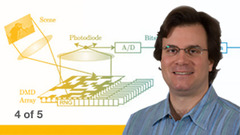
Introduction to Behavioral Imaging, a new research field which encompasses the measurement, modeling, analysis, and visualization of behaviors from multi-modal sensor data. It is tailored for undergraduate and graduate students who are interested in this emerging field.

Advanced Cardiac Life Support (ACLS) will prepare you to respond to life-threatening emergencies in the adult population with advanced interventions.
This health and safety course will teach participants how to perform advanced emergency interventions as well as review foundation theories including:
- Basic Life Support
- Anatomy and Physiology of the Heart
- Resuscitation Team
- Systematic Approach,
- Life-Threatening Issues
- Medical Devices
- Bradycardia
- Tachycardia
The course package includes:
- ACLS Self-Assessments and Review Questions
- ACLS Lectures and Video Presentations
- ACLS Provider Manual
Who should take this course?
- Healthcare Professionals
- Medical Students
- Nurses
- Doctors
- Emergency Responders
Whether you are applying for certification for the first time, or renewing your current certification, this course prepares you for Advanced Cardiac Life Support certification. When you have completed the course, you will be directed to take the certification exam, through National Health Care Provider Solutions.

Knowing the process of Basic Life Support (BLS) is critical in responding to life-threatening emergencies. The newest BLS course guidelines focus on doing several tasks simultaneously with a group process that promotes efficiency and minimization of errors.
This healthy and safety course will teach learners how to perform life support techniques including chest compressions, basic airway management, rescue breathing, AED use for defibrillation, and more.
The course package includes:
- An online BLS study guide
- A BLS instructional presentation
Who should take this course?
- Medical Assistants
- Nurses
- Medical Students
- Doctors
- EMS
Whether you are applying for certification for the first time, or renewing your current certification, this course prepares you for Basic Life Support certification. When you have completed the course, you will be directed to take the certification exam, through National Health Care Provider Solutions.

This health and safety course will prepare you to perform CPR (Cardiopulmonary Resuscitation), First Aid, and use an Automated External Defibrillator (AED) in accordance with the latest guidelines. You will learn how to provide care for simple and complex injuries, respond to common medical problems, perform high quality CPR, basic airway management, and safety and prevention. This course includes infants, children, and adults. This course uses basic medical terminology that is typically understood and recognized by everyone from laypersons to medical professionals.
The course includes:
- CPR, AED & First Aid Lectures and Video Presentations
- CPR, AED & First Aid Knowledge Assessments and Review Questions
- CPR, AED & First Aid Provider Manual
Who should take this course?
- Teachers
- Students
- Business Professionals
- Caregivers
- Medical Assistants
This health and safety course is self-paced. The course is set up in a similar fashion as the provided course manual, starting with the basics, and ending with more advanced and age-specific CPR interventions.
Whether you are applying for certification for the first time, or renewing your current certification, this course prepares you for CPR, AED, and First Aid certification. When you have completed the course, you will be directed to take the certification exam, through National Health Care Provider Solutions.

Pediatric Advanced Life Support (PALS) will prepare you to respond to life-threatening emergencies in the pediatric population with advanced interventions.
You will learn how to perform advanced emergency interventions as well as review foundation theories including:
- Basic life support
- Anatomy and physiology of the heart
- Resuscitation team
- Systematic Approach,
- Life-Threatening Issues
- Medical Devices,
- Bradycardia
- Tachycardia
Who should take this course?
- Nurses
- Paramedics
- Physicians
- Medical Students
- Physician Assistants
The course package includes:
- PALS Self-Assessments and Review Questions
- Numerous PALS Lectures and Video Presentations
- PALS Provider Manual
Whether you are applying for certification for the first time, or renewing your current certification, this course prepares you for Pediatric Advanced Life Support certification. When you have completed the course, you will be directed to take the certification exam, through National Health Care Provider Solutions.

Introductory virology course that covers the interplay between viruses and their host organisms, with with the goal of understanding viral diseases and their prevention.

How is the human body structured? How are the different body systems interconnected with each other? If you are interested but layman to Human Anatomy, if you find the Human Anatomy textbooks are too difficult to read, or if you want to freshen up quickly your anatomy knowledge, this is the course for you.
Human Anatomy is fundamental to every medical and healthcare professional. However, the science of anatomy and effects of stroke are also extremely useful to anyone interested in understanding more about the human body. In this course, you’ll gain an understanding of the basic concepts of anatomy and learn to ‘dissect’ the human body with a logical approach through a typical clinical case of stroke.
Case-based study:
A real-life severe stroke case is adopted in this MOOC to articulate the application of Human Anatomy knowledge. This case scenario is presented by using a micro movie together with an interactive case summary and interview to arouse learners’ interest.
Module-based design:
In addition to the presentation of a stroke case scenario in Module ONE, two more modules are included. In Module TWO, general knowledge of human anatomy related to the stroke case, including organs of important body systems, anatomical orientation, skeletal and muscular system, nervous system and special senses, and cardiovascular and pulmonary system. And Module THREE is specific for healthcare professionals or learners who want to know more about the health services being provided to stroke patients. It rounds up the course with six healthcare-discipline specific role play videos and lectures given by visiting professors.

Explore the psychophysiological underpinnings of human performance and strategies for optimization on individual and team levels.

La presencia de las TIC en la vida de las familias es un tema en construcción, dada la permanente movilidad de la era de la información y los constantes cambios que esta plantea en un mundo que está en permanente transformación.
En esta medida, y reconociendo que desde distintas profesiones estamos en contacto con familias en diversos escenarios, resulta pertinente que tengamos claridad conceptual y también herramientas de acompañamiento necesarias para apoyar las familiar: sus necesidades y las formas como están siendo impactadas por la presencia de las TIC.
Es conveniente tener dominio del tema dada la realidad que nos desborda frente a la presencia de las TIC, las nuevas problemáticas que surgen alrededor de ellas o las que se exacerban ante su presencia como también la consideración por supuesto de sus aportes y posibilidades.
Es indudable que nosotros como sociedad tenemos muchas preguntas por resolver y este MOOC es un avance frente a ellas.

We are at a critical inflection point in global health. We have seen improvements in access to care, but struggle to improve human health. A key component of this equation is quality of care.
Improving access to healthcare is only as useful as the quality of care provided. Many agree that quality is important – but what is it? How do we define it? How do we measure it? And most importantly, how might we make it better?
The course is designed for those who care about health and healthcare and wish to learn more about how to measure and improve that care – for themselves, for their institutions, or for their countries. Each session will be interactive and provide concrete tools that students can use. We will empower you to raise questions, propose concrete solutions, and promote change.
We have assembled leading thinkers from around the globe – not only people who are experts – but people with real, hands-on experience running organizations, hospitals, and ministries of health. So join us – whether you are a physician, nurse, or other healthcare provider, if you are a student of medicine, public health, or health policy, or a patient who simply cares about getting good care – this course is for you.
Honor Code
HarvardX requires individuals who enroll in its courses on edX to abide by the terms of the edX honor code. HarvardX will take appropriate corrective action in response to violations of the edX honor code, which may include dismissal from the HarvardX course; revocation of any certificates received for the HarvardX course; or other remedies as circumstances warrant. No refunds will be issued in the case of corrective action for such violations. Enrollees who are taking HarvardX courses as part of another program will also be governed by the academic policies of those programs.
Research statement
HarvardX pursues the science of learning. By registering as an online learner in an HX course, you will also participate in research about learning. Read our research statement to learn more.
Nondiscrimination/anti-harassment statement
Harvard University and HarvardX are committed to maintaining a safe and healthy educational and work environment in which no member of the community is excluded from participation in, denied the benefits of, or subjected to discrimination or harassment in our program. All members of the HarvardX community are expected to abide by Harvard policies on nondiscrimination, including sexual harassment, and the edX Terms of Service. If you have any questions or concerns, please contact harvardx@harvard.edu and/or report your experience through the edX contact form.

This course provides those involved in educating members of the health professions an asynchronous, interdisciplinary, and interactive way to obtain, expand, and improve their teaching skills. These skills can then be applied within their own professional context, with a variety of learners, extending across many stages.
Add to calendar

Trusted paper writing service WriteMyPaper.Today will write the papers of any difficulty.