

Courses tagged with "Multiplying+and+factoring+expressions" (233)

Imaging technologies form a significant component of the health budgets of all developed economies, and most people need advanced imaging such as MRIs, X-Rays and CT Scans (or CAT Scans) during their life. Many of us are aware of the misinformation sometimes offered in TV dramas, which either exaggerates the benefits or overemphasizes the risks.
This medical imaging course provides an introduction to biomedical imaging and modern imaging modalities. The course also covers the basic scientific principals behind each modality, and introduces some of the key applications, from neurological diseases to cancers. This course includes modules specially designed for the general public, whilst also providing some advanced modules which could contribute to professional development in health, engineering and IT industries.
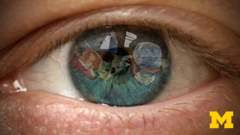
This comprehensive course will give you the fundamental knowledge needed to begin performing cataract surgery by phacoemulsification and extracapsular removal. Each step from preoperative evaluation to postoperative care will be covered to help prepare you for the operating room.

An overview of the relevant aspects of the epidemiology, clinical presentation, basic disease mechanisms, diagnostic approaches and treatment options of the most common neurological diseases.
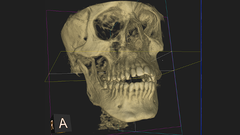
The mouth is the window into human health. This course provides an overview of dental medicine to engage, educate, excite and assist you in improving the oral health of your patients and members of your community.

This course is a survey of the profession of pharmacy including its history, evolving scope of practice, ethical foundations, regulation, educational and career opportunities, and more. We will also explore topics relating to medication use and drug development.

This data course is a primer to statistical genetics and covers an approach called linkage disequilibrium mapping, which analyzes non-familial data and has been successfully used to identify genetic variants associated with common and complex genetic traits.
We hope many students find this introductory course interesting and are motivated to study further topics in statistical genetics to understand biological variation from statistical standpoints.
Previous knowledge of molecular genetics and basic statistical concepts, such as statistical tests and estimation, is required. Basic knowledge on genetic variations is offered at the start of the course.

Learn to assess data from clinical trials by performing systematic reviews and meta-analyses.
Cancer strikes individuals, affects families and causes economic hardship. The burden of cancer will rise globally in coming years due to a growing, aging world population. This open course is designed for people who may be unfamiliar with science but are interested in developing a sound understanding of cancer and how it is diagnosed, treated, prevented and studied.

Urology is the clinical science of diseases within the genitourinary system of males and females. Anatomically it includes diseases in the upper urinary tract like the kidneys and ureters, the lower urinary tract like the urinary bladder and urethra, and the male inner and outer genitals like the prostate, testicles and the epididymis.
Many of the symptoms from these organs belong to the top 100 most common symptoms for which patients seek help. This course will set you on a path to a basic understanding of the most common symptoms from the genitourinary system.
You might think that urology merely is a surgical specialty but that opinion couldn’t be more wrong. Today urology is a speciality including numerous new and common non-surgical and pharmacotherapeutic alternatives. Our goal for participants taking this course is to gain knowledge and instill confidence in basic clinical reasoning within the urological field.
The course will include clinically relevant cases.
Please follow us using #KIUrologyX

In this course, students learn to recognize and to apply the basic concepts that govern integrated body function (as an intact organism) in the body's nine organ systems.

Ce cours présente, de façon simple et compréhensible par tous, la maladie d’Alzheimer et les maladies apparentées. Sont abordés les données actuelles sur leur physiopathologie, les signes de ces maladies, la démarche médicale qui conduit à leur diagnostic, ainsi que leur prise en charge. De plus, le retentissement sur la société, l’état de la recherche et les pistes pour la prévention sont aussi abordés.
Ce cours s’adresse à toute personne intéressée par ces maladies et aussi aux professionnels de santé intéressés. Il ne concerne pas les spécialistes des maladies de la mémoire ou les experts de ces maladies.
Ce cours est formé de 10 parties comportant chacune un exposé, des interviews d’experts des sujets abordés et un questionnaire d’autoévaluation.

Se satisfará la curiosidad del alumno sobre la estructura molecular de sustancias, tanto naturales como otras creadas por el Químico Orgánico. Percibirá su importancia sobre la preservación de la vida, el control de enfermedades y la producción eficiente de alimentos, así como las limitaciones que tenemos en la producción de energía y nuestra incidencia sobre el medio ambiente. Se introducirá en el apasionante arte de la separación, purificación y determinación de estructuras.

Whether you are an outstanding or a struggling student, "Learning How to Learn" will give you powerful mental tools that will help you learn more effectively in tough-to-master subjects. You will discover practical, immediately useful insights that will help you to more deeply master your studies.

Like no other event in recent history, the 2014 Ebola outbreak has made clear the fragility of existing health systems. While responding to the current epidemic is critical, we also have an opportunity to learn lessons to prevent the next global health catastrophe, forge partnerships across borders and disciplines, and demonstrate our commitment to value all human lives.
This four-week course provides the context in which to understand the Ebola outbreak -- why now, and why did so many people suffer and die? The course lays out the global governance structure -- what was the global response supposed to look like, and where did it fail?
The course will feature practitioners, experts, and scholars who will focus on cultivating a better understanding of the Ebola epidemic and implications for future health systems to ensure that the world is more effective in preventing the next pandemic.

This course focuses on providing skills and resources for you and your family to manage life with diabetes.
You will learn what diabetes is, the difference between type 1, type 2 and gestational diabetes as well as how they are treated and why management is so important.
You will learn about recommended food choices and eating habits for those living with diabetes as well as the best types of exercise to help manage blood glucose levels. Lastly, we will discuss overall strategies for keeping well and managing your condition including sick day management, hypoglycaemia management and travel.

Health professionals and students, family caregivers, friends of and affected individuals, and others interested in learning about dementia and quality care will benefit from completing the course. Led by Drs. Nancy Hodgson and Laura Gitlin, participants will acquire foundational knowledge in the care of persons with Alzheimer’s Disease and other neurocognitive disorders in this 5-week course.

The major objective of this sequence is for the students to gain an understanding of the structure and function of the cardiovascular and respiratory systems through lectures, laboratory exercises, patient presentation and small group conferences. Level: First Year Medical Students Unless otherwise noted, this Work, Cardiovascular / Respiratory, by Louis D'Alecy is licensed under a Creative Commons Attribution-NonCommercial-ShareAlike license.
This sequence provides an overview of the biochemical basis of cellular structure and function; the anabolic and catabolic processes involved in energy utilization; and cellular communication. The hierarchical organization of cellular components are discussed in terms of the structure and function of the four macromolecules: protein, lipid, carbohydrate, and nucleic acids. Level: First Year Medical Students Unless otherwise noted, this Work, Cells and Tissues, by Audrey Seasholtz, Ph.D. is licensed under a Creative Commons Attribution-NonCommercial-ShareAlike license.
The neuroscience sequence is foundational in nature and stresses the organizational principles and structure/function relationships in the central nervous system. The course emphasizes the relationship between the gross organization of the Central Nervous System (CNS), its subdivision into specialized regions and the corresponding perceptions of sensory information and the nervous system control of behavior. The cell biology of the neuron, neurotransmitter systems and neuronal injury and repair are also emphasized. Level: First Year Medical Students Unless otherwise noted this Work, Central Nervous System / Head & Neck, by Peter Hitchcock is licensed under a Creative Commons Attribution-NonCommercial-ShareAlike license.
The major objective of this sequence is to present the structure and function of the digestive system. The sequence will cover three topic areas related to digestion: 1) the actual process of digestive function and its regulations, 2) metabolic interactions, and 3) pharmacology and pharmacokinetics of drug absorption and metabolism. Level: First Year Medical Students Unless otherwise noted this Work, Gastrointestinal & Liver, by Matthew Velkey is licensed under a Creative Commons Attribution-NonCommercial-ShareAlike license.
Add to calendar

Trusted paper writing service WriteMyPaper.Today will write the papers of any difficulty.