

Courses tagged with "Multiplying+and+factoring+expressions" (233)

Diabetes is a growing health problem in rich and poor countries alike. With this course you will get updated on cutting-edge diabetes research including biological, genetic and clinical aspects as well as prevention and epidemiology of diabetes. All provided by high-profile scientists from one the world's leading universities in diabetes research.

This multidisciplinary course will emphasize the diagnosis and treatment of diabetes. Topics will include patient self-management, appropriate use of technologies, nutrition, behavior modification and pharmacotherapy in the management of this disease. The course will conclude by summarizing new basic science research regarding the pathophysiology and treatment of diabetes.

During this course, students will gain an understanding of the Disaster Cycle, concentrating on the Mitigation Phase. They will examine disaster planning on a personal level developing a disaster plan and examine Awareness and Attitude during disasters and daily life.

Are you ready for the next inevitable disaster or public health emergency? Whether you're an EMS responder, physician, nurse, social worker, health care student, or other health care provider, you will acquire foundational knowledge in preparedness, management, and response for disasters and large-scale public health emergencies in this 6-week course.

Students will learn the process of drug discovery and development through specific examples of case studies to better understand the issues facing the challenges of delivering a new drug on the market. At the completion of this course you will be able to have a better understanding of how a small or large molecule becomes a pharmaceutical drug.

The neuroscience of drugs for therapy, for prevention, and for recreation. Drug addiction and drug abuse. You’ll learn the prospects for new generations of medications in neurology, psychiatry, aging, and treatment of substance abuse.
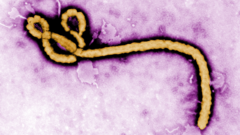
Learn about the evolving Ebola epidemic and its various aspects including disease prevention, management and treatment, response to the epidemic, ethical considerations, and the post-Ebola global health landscape.

March 2014 marked the starting point of the largest outbreak of Ebola virus disease in history. Although the disease seems to be on a decrease, we are not there yet and new outbreaks will surely emerge. New efforts to combat the outbreak are necessary. This is why we developed this online course about Ebola, targeted at health professionals across the world.

This course is for anyone interested in learning more about Veterinary Medicine, giving a “taster” of courses covered in the first year of a veterinary degree and an idea of what it is like to study Veterinary Medicine.

Learn how to make effective decisions about your future career and how to take control of your professional development by honing your critical thinking and employability skills. Suitable for anyone undertaking some form of study, regardless of academic discipline, interests or employment background.

“If history is our guide, we can assume that the battle between the intellect and will of the human species and the extraordinary adaptability of microbes will be never-ending.” (1)
Despite all the remarkable technological breakthroughs that we have made over the past few decades, the threat from infectious diseases has significantly accelerated. In this course, we will learn why this is the case by looking at the fundamental scientific principles underlying epidemics and the public health actions behind their prevention and control in the 21st century.
This course covers these four topics:
- origins of novel pathogens;
- analysis of the spread of infectious diseases;
- medical and public health countermeasures to prevent and control epidemics;
- panel discussions involving leading public health experts with deep frontline experiences to share their views on risk communication, crisis management, ethics and public trust in the context of infectious disease control.
(1) Fauci AS, Touchette NA, Folkers GK. Emerging Infectious Diseases: a 10-Year Perspective from the National Institute of Allergy and Infectious Diseases. Emerg Infect Dis 2005 Apr; 11(4):519-25.
如果历史是我们的向导,我们可以认为人类的智慧和意志与微生物种惊人的适应性之间的斗争将永远持续下去。”(1) 尽管过去的几十年间我们在科技领域取得了令人瞩目的突破,可是传染病对人类的威胁却显著增加。本课程将通过学习流行病学的基础科学原理以及预防与控制流行病的公共卫生措施,对上述现象予以阐释。 课程包括下列四个主题: • 新型病原体如何产生 • 分析传染病的传播方式 • 预防和控制流行病的医学与公共卫生措施 • 专题讨论:具有丰富一线经验的公共卫生专家将针对控制传染病的风险沟通、危机管理、伦理学、公众信任等方面的问题予以讨论。
如果歷史是我們的向導,我們可以認為人類的智慧和意誌與微生物種驚人的適應性之間的鬥爭將永遠持續下去”(1) 盡管過去的幾十年間我們在科技領域取得了令人矚目的突破,可是傳染病对人類的威脅卻顯著增加。本課程將通過學習流行病學的基礎科學原理以及預防與控制流行病的公共衛生措施,對上述現象予以闡釋。 課程包括下列四個主題: • 新型病原體如何產生 • 分析傳染病的傳播方式 • 預防和控制流行病的醫學與公共衛生措施 專題討論:具有豐富一線經驗的公共衛生專家將針對控制傳染病的風險溝通、危機管理、倫理學、公眾信任等方面的問題予以討論

What can we do to prevent outbreaks of infectious diseases from becoming epidemics or pandemic? In this course, you’ll learn the facts about infectious diseases and medical responses. We'll focus on the public health laws and policies that provide the framework for effective prevention, like quarantine laws, drug development policies, and bioterrorism and biodefense.

Each mammalian cell has the same genes, yet performs distinct functions. This is achieved by epigenetic control of gene expression; the switching on and switching off of genes. This course will cover the principles of epigenetic control of gene expression, how epigenetic control contributes to cellular differentiation and development, and how it goes wrong in disease.

This course will cover many aspects of equine nutrition ranging from anatomy and physiology of the gastrointestinal tract to dietary management of horses/ponies affected with nutrition-related disorders. This is course is designed for self-directed study with minimal tutor input, and as such emphasis is placed upon peer discussions of the topics presented in each section of the course. This course is not designed to have a large amount of tutor input as this is an open access course that attracts tens of thousands of participants. However, tutors will endeavour to answer the main queries relating to the understanding of the lecture materials and to provide a summary of the key questions raised in each of the weekly topics and clarification of any misunderstandings.

Are you preparing for a health-related career, or planning to study in the health sciences? Perhaps you're just keen to learn more about the wonders of the human body? Our bodies are amazing but complex biological machines. This course will provide you with an outstanding foundation of knowledge in human anatomy and physiology.
You will gain a broad understanding of the relationships between normal structure and function in human cells and tissues, both in health and disease. The properties of the four main types of tissue in the body - epithelial, connective, muscular and nervous - will also be clearly explained.
The course employs a variety of engaging learning methods, including short videos, animations, interactive activities and integrated quizzes to guide you through key concepts, and make learning relevant.
Knowledge linking genomics to health and disease is rapidly expanding. Translation of this knowledge into clinical and public health practice offers promising opportunities but also raises a host of ethical, legal, social, and policy questions. Using case examples, this inter-disciplinary course will explore the challenges of genomic and precision medicine.

Is it okay to take pills to help you ace exams? Should you be able to choose the sex of your child? Is abortion murder?
These controversial questions will be explored through Manga in this bioethics course. Bioethics is an interdisciplinary field of study that looks into ethical, legal, and social implications of life sciences and health care.
This course will help you understand key ethical issues surrounding crucial problems that profoundly impact your life from birth to death.
Topics include:
- Reproductive technology such as surrogacy and sex-selection of the baby
- Abortion
- Informed consent
- Euthanasia
- The use of medical technology for the purpose of enhancement
You will also learn about ethical arguments and regulations in Japan and other countries concerning life sciences and healthcare. Our hope is, through this course, you will better understand and formulate your own opinions on these important issues.
DISCLAIMER: The intention of this course is to present different arguments and perspectives on a number of different topics on bioethics. In other words this course DOES NOT aim to instill in its audience any particular perspective, religious or otherwise, on each topic.
No previous knowledge of bioethics is needed.

Is it permissible to create human clones? Would you really want to live forever? Is brain death the death of a human being?
These controversial questions will be explored through stories in Manga in this bioethics course. Bioethics is an interdisciplinary field of study that looks into ethical, legal, and social implications of life sciences and health care.
This course will help you understand key ethical issues surrounding crucial problems that literally impact your life from birth to death.
Topics include:
- Living Donor Organ Transplantation
- Cloning Technology
- ES Cells and iPS Cells
- Lifespan and Eternal Life
- Brain Death and Organ Transplants
You will also learn about ethical arguments and regulations in Japan and other countries concerning life sciences and healthcare through Lectures and the Discussion forum. Our hope is, through this course, you will better understand and formulate your own opinions on these important issues.
DISCLAIMER: The intention of this course is to present different arguments and perspectives on a number of different topics on bioethics. In other words this course DOES NOT aim to instill in its audience any particular perspective, religious or otherwise, on each topic.
This course is Part 2 of a two-part series, but can be taken as a stand-alone course. You do not need to have completed Part 1. No previous knowledge of bioethics is needed.

Learn about the physiological responses to acute and chronic exercise and their relevance for athletic performance.

Alguna vez te preguntaste: ¿por qué se hinchan los pies después de una boda?, ¿Cuánta agua hay que beber al día?, ¿cuánta agua es demasiada?, ¿Por qué beber agua era una forma de tortura en la edad media?, ¿Cómo terminar un maratón sin deshidratarte?, ¿Por qué los médicos pueden llegar a prescribir dietas pobres en frutas y verduras?, ¿Debes tomar suplementos de fósforo para la memoria?, ¿Cómo retrasar el envejecimiento?, y, sobre todo… ¿por qué murió el campeón del concurso de bebedores de cerveza?
Este curso es una introducción a la fisiología (funcionamiento normal) y patología (enfermedades) de los riñones: Comenzando con los mecanismos que mantienen el equilibrio del agua, de la sal, del potasio, del fósforo, de la vitamina D, de la eritropoietina (si, esa, ¡la EPO de los escándalos del deporte!) y, sobre todo, de la hormona antienvejecimiento Klotho, el curso te permitirá conocer mejor el funcionamiento de los riñones y aplicar estos conocimientos a tu vida cotidiana.
No son necesarios conocimientos previos de Medicina. Acompáñanos en este viaje a la fisiología renal y su impacto sobre la salud y la enfermedad.
Add to calendar

Trusted paper writing service WriteMyPaper.Today will write the papers of any difficulty.