

Courses tagged with "Multiplying+and+factoring+expressions" (233)

Isn’t it time to end the loss of life from preventable medical errors? Each year 100,000 patients die from preventable errors in the U.S. How can you help to change this intractable problem? Knowledge is power, and this course will provide you with a deep understanding of the problems and the solutions. You can become part of the solution.
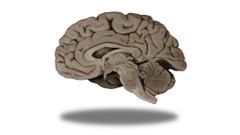
Learn the basic structure and function of the human nervous system, how nerve cells generate electrical signals and communicate, how they reshape their connections with use, and how neural systems integrate external and internal sensory signals to orchestrate action.
This course is intended as a self-study course for those interested in exploring a career as a Home Health Aide or Personal Care Aide.

As the world grows more socially and economically interdependent, Global Health has developed from an ethical dimension to an issue that now dominates global security. A diverse team of experts has designed an introductory course to give you a primer of the field and a dazzling view of one of the emerging disciplines of the 21st century. This course also serves as a prerequisite to the hands-on 'Global Health Responder' certification from the CU School of Medicine.

This course will provide an introduction to the scientific, statistical, and ethical aspects of clinical trials research. Topics include the design, implementation, and analysis of trials, including first-in-human studies (dose-finding, safety, proof of concept, and Phase I), Phase II, Phase III, and Phase IV studies. All aspects of the development of a study protocol will be addressed, including criteria for the selection of participants, treatments, and endpoints, randomization procedures, sample size determination, data analysis, and study interpretation. The ethical issues that arise at each phase of therapy development will be explored.
This course contains 12 modules. The modules will be released Monday of each week, with the exception of some holiday weeks. Most students should plan to spend 4 – 6 hours on each module. Students will have until February 14, 2014 to earn a HarvardX certificate.
Before your course starts, try the new edX Demo where you can explore the fun, interactive learning environment and virtual labs. Learn more.
HarvardX requires individuals who enroll in its courses on edX to abide by the terms of the edX honor code : https://www.edx.org/edx-terms-service. HarvardX will take appropriate corrective action in response to violations of the edX honor code, which may include dismissal from the HarvardX course; revocation of any certificates received for the HarvardX course; or other remedies as circumstances warrant. No refunds will be issued in the case of corrective action for such violations. Enrollees who are taking HarvardX courses as part of another program will also be governed by the academic policies of those programs.
HarvardX pursues the science of learning. By registering as an online learner in an HX course, you will also participate in research about learning. Read our research statement : http://harvardx.harvard.edu/research-statement to learn more.
Harvard University and HarvardX are committed to maintaining a safe and healthy educational and work environment in which no member of the community is excluded from participation in, denied the benefits of, or subjected to discrimination or harassment in our program. All members of the HarvardX community are expected to abide by Harvard policies on nondiscrimination, including sexual harassment, and the edX Terms of Service. If you have any questions or concerns, please contact harvardx@harvard.edu and/or report your experience through the edX contact form : https://www.edx.org/contact-us.

The immune system plays a fascinating and vital role in the human body, recognizing outside threats and protecting our bodies against disease. This introductory immunology courses will help you understand the interactions of the immune system, and the jargon scientists use to describe immune function.
This is the second of a two-part course. In the first part we learned about innate immunity and B cell function. This second part covers T cell function and coordination of the immune response.
This immunology course surveys the cells of the immune system and describes how they talk to each other, receive information from the rest of the body and coordinate your defenses.
By presenting complex concepts in innovative, easy-to-understand ways, this course provides a solid introduction to how our immune system keeps us healthy.

In this class you will learn how drugs affect the body, how they alter disease processes and how they might produce toxicity. We will discuss how new drugs are tested and developed prior to them being used for patient care. We will describe how personalization of medicine will become a common day reality in patient care.

Think that a prescription medication must be safer than a “street drug”? Think again. Investigate the epidemic rise of prescription drug abuse and use science to debunk commonly held misconceptions regarding this phenomenon.

To acquire an understanding of the fundamental concepts of genomics and biotechnology, and their implications for human biology, evolution, medicine, social policy and individual life path choices in the 21st century.

A critical, unbiased introduction to using new genomic tools for diagnosing and managing disease.

While the advances in genomics promise to usher a new era in medical practice and create a major paradigm shift in patient care, the ethical, legal and social impact of genomic medicine will be equally significant. The information and potential use of genomic discoveries are no longer issues left for scientists and medical professionals to handle, but have become ones for the public at large. Rarely a day passes without a genomics-related story reported in the media. By the end of this course, students will be able to better understand the field of genomics; be familiar with various online databases and resources; and understand and appreciate the medical, social, ethical, and legal issues associated with the availability of personal genomic information.
Given the diversity of the topics and the specific expertise required to cover each, this is a unique cross-disciplinary course where faculty from different disciplines including genetics, computational sciences, bioinformatics, genetic counseling, bioethics, law, and business will participate in lecturing. We have assembled a team of experts from various departments at Georgetown University and other institutions, to teach this comprehensive online genomics course.
For a detailed description of the weekly topics, see the course outline.

This course will explore the dynamic factors affecting the health and wellbeing of young people around the world, and how important it is for individuals, communities and nations that we improve the health and life chances of this important population group.

Disease has no respect for country borders and increased global travel has fueled the spread of infectious disease, as evidenced by the Ebola virus epidemic. Chronic diseases such as diabetes and heart disease, initially confined to the developed world, now exist side by side with malnutrition in low- and middle-income countries (LMIC). Global warming is widening the endemicity of vector-borne diseases.
In this course, we will explore ways to leverage information technology to combat disease and promote health, especially in resource-constrained settings. Technology is a driving force that sweeps across nations even faster than disease and with the spread of mobile phones, which bring computational power and data to our fingertips, new paradigms in tracking and battling disease have been discovered.
This course will explore innovations in information systems in developing countries, and focus not only on the importance of technology, but also on broader issues necessary for its success, such as quality improvement, project management, and leadership skills. Ultimately, health care delivery systems require fundamental and sound operations, such as physical infrastructure and supply-chain management, to deliver high-quality care. Technology is simply a tool to help facilitate this process.
The quality of care theme is critical to this course. The first step stakeholders in health systems should focus on prior to introducing an innovation is to establish a culture of quality improvement and patient safety. An information system can then play a facilitative role by enabling care coordination, tracking processes and outcomes, informing decision making, and fostering learning through data analysis.
An information system without an accompanying organizational transformation risks reinforcing the same failed processes. Using technology to improve access to care without any other quality improvement elements will yield the same and not necessarily better results, but more of them. Innovations need to address gaps in quality and demonstrate improvement in health outcomes, otherwise they won’t sustain or scale.
Lastly, we will discuss our attempts to leverage troves of data to define best practice and how we must keep the patient perspective and health at the center of everything we do.
This course is targeted toward individuals interested in designing or implementing a health information and communication technology (ICT) solution in the developing world. Implementing a health information technology project requires multidisciplinary teams. Thus, with this course, we hope to bring together individuals from a variety of disciplines—computer science, medicine, engineering, public health, policy, and business.

This course proposes an overview of current global health challenges drawing on the insights of several academic disciplines including medicine, public health, law, economics, social sciences and humanities. This interdisciplinary approach will guide the student into seven critical topics in global health.

Questions related to sexuality and reproduction are intimately linked to health, well-being and human rights. In this course, you will gain a unique opportunity to explore the field of SRHR together with participants from around the world, and to reflect upon themes and issues that are of global relevance.

Health Care Workers and Health Professions Students can prepare to plan and deliver TB care in their communities by applying the latest clinical and research data presented in this nine-week course focusing on TB/HIV Co-Infection.

Anatomy lab isn’t just for first year medical students anymore. With this online anatomy course, anyone can learn about the upper limb, without the cadaver.
This course will serve as your introduction to the anatomy of the upper limb. We’ll start with basic human anatomical terminology and apply that knowledge to examining the bones of the upper limb and how they articulate at joints. You will also learn about the muscles that produce movement at those joints in addition to the innervation and blood supply of the upper limb.

This course explores musculoskeletal anatomy of the Upper Limb, and common injuries that affect its function. We discuss parts of the upper limb, the anatomy of bones, joints and muscles, nerve injuries and common pathologies.

The world is ageing – people are older and societies are facing hard realities. What are we to make our lives in this time of global ageing? In six weeks, we analyze critical questions about age and ageing around the world.
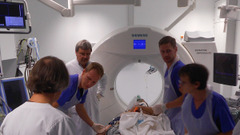
Dieser Kurs vermittelt ein weites Feld an Grundlagen und Fertigkeiten im Bereich der unfallchirurgischen und orthopädischen Traumaversorgung. Dazu verwendet der Kurs ein komplett neues Konzept des Informationstransfers. Wir folgen einem wissenschaftlichen Ansatz und einer ausgeklügelten Kombination aus modernsten Lehrmethoden, um die Inhalte plastisch zu vermitteln. Dazu verwenden wir fallbasiertes Lernen, umfassendes Faktenwissen gefolgt von Quizfragen, die helfen, das Gelernte im Gedächtnis zu behalten und später im unfallchirurgischen Alltag abrufen zu können.
Add to calendar

Trusted paper writing service WriteMyPaper.Today will write the papers of any difficulty.