

Courses tagged with "Nutrition" (6413)

The Experimental Project Lab in the Department of Aeronautics and Astronautics is a two-semester course sequence: 16.621 Experimental Projects I and 16.622 Experimental Projects II (this course). Students in 16.622 gain practical insight and improved understanding of engineering experimentation through design and execution of "project" experiments. Building upon work in course 16.621, students construct and test equipment, make systematic experimental measurements of phenomena, analyze data, and compare theoretical predictions with results. Deliverables comprise a written final project report and formal oral presentations. Instructions on oral presentations and multi-section reporting are given. Experimental Projects I and II provide a valuable link between theory (16.621) and practice (16.622).
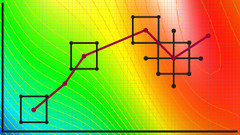
We are constantly using experiments to tweak and find improvements in our personal lives, our communities, and in our work. But are you doing it efficiently? Or are you changing one thing at a time and hoping for the best? In this course, you'll learn how to plan efficient experiments using statistical methods - enabling you to test for many variables that lead to better results.
Explore the world of Confucianism, its foundational teachings, the ways in which it continues to shape Chinese culture and society, and how it may respond to today’s global challenges.

Learn the essential exploratory techniques for summarizing data. This is the fourth course in the Johns Hopkins Data Science Specialization.

Do you want to learn how to harvest health science data from the Internet? Or learn to understand the world through data analysis? Start by learning R Statistics!
Skilled professionals who can process and analyze data are in great demand today. In this course you will explore concepts in statistics to make sense out of data. You will learn the practical skills necessary to find, import, analyze and visualize data. We will take a look under the hood of statistics and equip you with broad tools for understanding statistical inference and statistical methods. You will also perform some really complicated calculations and visualizations, following in the footsteps of Karolinska Institute’s researchers.
Statistical programming is an essential skill in our golden age of data abundance. Health science has become a field of big data, just like so many other fields of study. New techniques make it possible and affordable to generate massive data sets in biology. Researchers and clinicians can measure the activity for each of 30000 genes of a patient. They can read the complete genome sequence of a patient. Thanks to another trend of the decade, open access publishing, the results of such large scale health science are very often published for you to read free of charge. You can even access the raw data from open databases such as the gene expression database of the NCBI, National Center for Biotechnology Information.
We will dive into this data together. Learn how to use R, a powerful open source statistical programming language, and see why it has become the tool of choice in many industries in this introductory R statistics course.

Comment définir et comprendre la notion d’espace? Comment l’urbanisation, la mobilité, Internet et la mondialisation ont-ils influencé notre perception du temps et de l’espace? Ce cours a pour objectif de définir la notion d’espace en apportant des clés de lecture pour comprendre les sociétés qui nous entourent.
À la fois théorique et pratique, ce cours privilégie les compétences sur les « contenus » factuels et valorise une approche par l’intelligence collective. Ce cours propose de saisir la notion d’espace à partir de vos expériences quotidiennes, de vos perceptions et de vos pratiques.
Dans EspaceX, nous explorons ensemble la ville, l’urbanisation, l’urbanité, et l’urbanisme, l’acteur individuel au sein d’un Monde mondialisé, les spatialités numériques, le couple espace-temps et la relation complexe entre les sociétés et les mondes bio-physiques. Une large part sera accordée à la cartographie. À l’issue de ce cours, vous serez capable non seulement de lire, mais aussi de dessiner vos propres cartes. Enfin, les problématiques de l’agir spatial et de la justice spatiale seront abordées. Un(e) specialiste reconnu(e) interviendra à chacune des 9 séances sous la forme d’un entretien filmé mettant en lumière la relation de ce chercheur à l’espace.

Explore the anatomy of the human abdomen and appreciate its clinical importance.

A series of lectures on one of the greatest bodies of music ever composed, from the point of view of a performer. Each lecture will explore a different facet of the music; all will attempt to locate the source of the tremendous psychological power of Beethoven’s music.

Study of physical effects in the vicinity of a black hole as a basis for understanding general relativity, astrophysics, and elements of cosmology. Extension to current developments in theory and observation. Energy and momentum in flat spacetime; the metric; curvature of spacetime near rotating and nonrotating centers of attraction; trajectories and orbits of particles and light; elementary models of the Cosmos. Weekly meetings include an evening seminar and recitation. The last third of the semester is reserved for collaborative research projects on topics such as the Global Positioning System, solar system tests of relativity, descending into a black hole, gravitational lensing, gravitational waves, Gravity Probe B, and more advanced models of the Cosmos.

Are you considering a career in engineering? Are you fascinated by what engineers do? In this pre-college course, you will gain an understanding of the various fields of engineering and explore the engineering design process, from conceptual design and optimal choice evaluation to project construction.

This course for learners of English looks at British culture and examines English in use to help you improve your language skills.
Exploring geographic information systems (GIS) is a self-paced course where participants will learn about GIS and how the technology is being used in the real world to support problem-solving and decision-making. Participants will create and manage spatial databases, produce well-designed maps, and undertake spatial data analysis using free online software tools. These activities require proficiency in fundamental computer and Internet skills. Participants will have the opportunity to obtain digital badges throughout the course. This course is offered through Canvas Network as a non-credit course created by Simon Fraser University. Students enrolled in only this course are not considered students of Simon Fraser University.

How do we understand the notion of space? How have urbanisation, mobility, digital spaces, and globalization changed the way we perceive it? This course aims to help you feel comfortable with the notion of space. The simplest way to understand it is to connect your daily life, your perceptions and your practices to the concepts of contact and remoteness. In SpaceX, we will explore together the city, urbanisation, urbanity, and urbanism, the individual actor in a globalising World, the emerging digital spatialities, the space-time couple, and the complex relation between societies and bio-physical worlds. Moreover, we will see that cartography is a powerful tool. By the end of the course, we will enable you to not only read but also draw your own maps. Finally, the issues of action on space through spatial agency and spatial justice will be addressed. In each of the nine sessions, a recognised specialist will be filmed in a particular place—a ‘thinking place’—throughout the World, to help us simultaneously inhabit and understand space.

This is an Exploratorium Teacher Institute professional development course open to any science teacher (particularly middle or high school level) and light enthusiast. Participants will engage in hands-on STEM activities that allow them to directly experience natural phenomena and gain an understanding of how the Exploratorium helps people learn.

Try your hand at understanding the brain by learning to analyze neural data yourself! Working with real neural data sets from neuroscience research labs, you’ll learn data analysis techniques so you can discover for yourself how the brain works.

Explore the half of our world covered by deep ocean, and how our lives affect the hidden face of our planet.

From Abilify to Zyrtec, the world is full of interesting drugs. Such substances have cured diseases, started wars, and ended careers. This seminar will explain how drugs can elicit a range of medicinal and recreational effects. Planned topics include over-the-counter drugs and "dietary supplements," drugs of abuse, treatments for neurological disorders, psychiatric medications, and many more. Prior experience is neither expected nor required, but student participation is essential.

Understanding the nature and value of play through the course of our lives, across cultures and communities.

An introduction to quantum physics with emphasis on topics at the frontiers of research, and developing understanding through exercise.

Student teams formulate and complete space/earth/ocean exploration-based design projects with weekly milestones. This course introduces core engineering themes, principles, and modes of thinking, and includes exercises in written and oral communication and team building. Specialized learning modules enable teams to focus on the knowledge required to complete their projects, such as machine elements, electronics, design process, visualization and communication. Examples of projects include surveying a lake for millfoil from a remote controlled aircraft, then sending out robotic harvesters to clear the invasive growth; and exploration to search for the evidence of life on a moon of Jupiter, with scientists participating through teleoperation and supervisory control of robots.
Add to calendar

Trusted paper writing service WriteMyPaper.Today will write the papers of any difficulty.