

Courses tagged with "Nutrition" (6413)

Quantitative Methods in Clinical and Public Health Research is the online adaptation of material from the Harvard T.H. Chan School of Public Health's classes in epidemiology and biostatistics. Principled investigations to monitor and thus improve the health of individuals are firmly based on a sound understanding of modern quantitative methods. This involves the ability to discover patterns and extract knowledge from health data on a sample of individuals and then to infer, with measured uncertainty, the unobserved population characteristics. This course will address this need by covering the principles of biostatistics and epidemiology used for public health and clinical research. These include outcomes measurement, measures of associations between outcomes and their determinants, study design options, bias and confounding, probability and diagnostic tests, confidence intervals and hypothesis testing, power and sample size determinations, life tables and survival methods, regression methods (both, linear and logistic), and sample survey techniques. Students will analyze sample data sets to acquire knowledge of appropriate computer software. By the end of the course the successful student should have attained a sound understanding of these methods and a solid foundation for further study.
FAQ
How much does it cost to take the course?
Nothing! The course is free.
When will assignments be due?
The course is organized into weeks, and each week will have its own set of assignments. Students will be expected to complete their homework each week.
Do I need any other materials to take the course?
Nope, as long as you’ve got a Mac or PC, you’ll be ready to take the course.
Will the course use any textbooks or software?
Yes! We'll have free access to the book "Principles of Biostatistics" written by Marcello Pagano (one of the Professors) and Kimberlee Gauvreau.
In addition to the textbook, we'll use Stata (a piece of software for doing statistical analysis).
Thanks to our friends at Statacorp, we'll have free copies of Stata available for all students to use for the duration of the course (Mac and PC only).
Do I need to watch the lectures live?
No. You can watch the lectures at your leisure.
Will certificates be awarded?
Yes. Online learners who achieve a passing grade in a course can earn a certificate of achievement. These certificates will indicate you have successfully completed the course, but will not include a specific grade. Certificates will be issued by edX under the name of either HarvardX, MITx or BerkeleyX, designating the institution from which the course originated. For the courses in Fall 2012, honor code certificates will be free.
HarvardX requires individuals who enroll in its courses on edX to abide by the terms of the edX honor code : https://www.edx.org/edx-terms-service. HarvardX will take appropriate corrective action in response to violations of the edX honor code, which may include dismissal from the HarvardX course; revocation of any certificates received for the HarvardX course; or other remedies as circumstances warrant. No refunds will be issued in the case of corrective action for such violations. Enrollees who are taking HarvardX courses as part of another program will also be governed by the academic policies of those programs.
HarvardX pursues the science of learning. By registering as an online learner in an HX course, you will also participate in research about learning. Read our research statement : http://harvardx.harvard.edu/research-statement to learn more.
Harvard University and HarvardX are committed to maintaining a safe and healthy educational and work environment in which no member of the community is excluded from participation in, denied the benefits of, or subjected to discrimination or harassment in our program. All members of the HarvardX community are expected to abide by Harvard policies on nondiscrimination, including sexual harassment, and the edX Terms of Service. If you have any questions or concerns, please contact harvardx@harvard.edu and/or report your experience through the edX contact form : https://www.edx.org/contact-us.

A non-technical introduction to the contemporary application of computing to healthcare delivery, public health and community-based clinical research.

This class is offered as CS6440 at Georgia Tech where it is a part of the [Online Masters Degree (OMS)](http://www.omscs.gatech.edu/). Taking this course here will not earn credit towards the OMS degree. This is a survey course designed to provide a broad, forward-facing overview of contemporary health informatics, a specialized field of computing that seeks to improve the quality and efficiency of healthcare delivery. To understand health informatics (HIT) you also need to have at least a basic understanding of the complex and highly regulated US healthcare industry. The course is designed for students from diverse backgrounds and who have not been previously exposed to HIT. It is divided into three sections: The US healthcare delivery and the key role of the federal government in promoting HIT adoption The core technologies that drive all contemporary HIT systems and tools The real world applications of HIT from electronic medical and personal health records to exploiting digital data aggregated from them for research and other purposes

This course is a collaborative offering of Sana, Partners in Health, and the Institute for Healthcare Improvement (IHI). The goal of this course is the development of innovations in information systems for developing countries that will (1) translate into improvement in health outcomes, (2) strengthen the existing organizational infrastructure, and (3) create a collaborative ecosystem to maximize the value of these innovations. The course will be taught by guest speakers who are internationally recognized experts in the field and who, with their operational experiences, will outline the challenges they faced and detail how these were addressed.
This OCW site combines resources from the initial Spring 2011 offering of the course (numbered HST.184) and the Spring 2012 offering (numbered HST.S14).

In this course, we explore what it means to be a leader in the context of healthcare. How is it different to leadership in other industries? What are the particular skills and attitudes leaders need to have to navigate the complexity of healthcare leadership?

In the United States, two-thirds of the population read at an eight-grade level or below. When it comes to health information, most Americans have the ability to read and write at the fifth-grade level. This inter-professional course aims to give health professionals the tools needed to improve upon their health literacy and communication skills.

This course will explore the many problems of the American health care system and discuss the specific ways that the Affordable Care Act will impact access, quality, costs, as well as medical innovation.

Faculty Development is a broad range of activities that institutions use to renew or assist faculty, supervisors, preceptors, field instructors, clinical educators, and status appointees in their roles. These activities are designed to improve an individual's knowledge and skills in teaching, education, administration, leadership and research.
This education and teacher training course highlights foundational areas of teaching and learning for health professional teachers that can be applied directly to their teaching context and practice. Core topics such as orienting the learner and delivering feedback are addressed through videos and applied activities.
View Health Professional Teaching Skills – Level 2 – Strategies
View Health Professional Teaching Skills – Level 3 - Professionalism

This education and teacher training course provides teaching strategies for health professional teachers that can be applied directly and immediately to their teaching context and practice.
Clinical teaching tools will be discussed through videos and helpful resources will be provided. Participants will also learn about asking effective questions in order to help promote active learning.
View Health Professional Teaching Skills – Level 1 – Foundational
View Health Professional Teaching Skills – Level 3 - Professionalism

This course focuses on professionalism for health professions teachers. It addresses the issues clinical teachers face in a digital world by looking at implications of social media accounts and online profiles. Professionalism will also be discussed in the context of role-modeling along with looking at the value of role-modeling in clinical education.
View Health Professional Teaching Skills – Level 1 – Foundational
View Health Professional Teaching Skills – Level 2 – Strategies
An overview to the state of the art of interactive data visualization in healthcare. The course will cover data visualization principles, methods, and techniques.

The Indian healthcare sector is garnering global attention. Be it the evolution of Indian pharmaceutical firms, low-cost hospitals or disruptive start-ups, the sector is a laboratory of myriad market forces impacting innovation, choices and societal welfare. At the same time, India continues to battle with an inadequate healthcare infrastructure and a rising disease burden.
This business course applies a strategic lens to the sector’s submarkets including hospitals, pharmaceutical firms and diagnostic equipment providers. You will examine the role of disruptive innovation and the ways in which public policy shapes the evolution of healthcare markets. With this framework, you will be able to evaluate which employer to join, which healthcare stocks to invest in, where the exciting business opportunities lie, and what are the unmet needs in this sector that can be addressed by a startup.
If you are a healthcare enthusiast, a part of the industry, a policy maker, an investor or an entrepreneur, this is the course for you.

This interdisciplinary course focuses on sustainable innovation, introducing entrepreneurial students to the realities of problem identification and solution design within the complex world of healthcare.
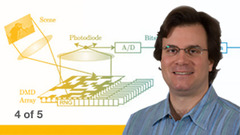
Introduction to Behavioral Imaging, a new research field which encompasses the measurement, modeling, analysis, and visualization of behaviors from multi-modal sensor data. It is tailored for undergraduate and graduate students who are interested in this emerging field.

Many health complaints, such as cardiovascular disease, diabetes or joint problems seem inescapable diseases of old-age, but originate mostly from our lifestyle. A lifestyle that is largely dictated by our environment. The mismatch between our 'old' genes - our evolutionary heritage - and the 'modern' environment is the reason that we cannot resist the constant stimuli that seduce us to make unhealthy choices. Do's and don'ts cannot help us.
This health course will take a radically different approach to showing you how to secure a lifestyle, which will keep you healthy throughout the lifespan. We have to let the environment do the work for us. By making small changes at our home, work, school or neighbourhood, healthier choices can become easier and automated.
Practical assignments will give you the skills to re-design your daily environments to promote healthy, longer lives for you and your family, colleagues and neighbours with whom you share your re-designed environments. You will learn how to create your own healthy living zone!
We will take you on excursions to Copenhagen, Denmark and to Ghent, Belgium to show you hands-on how the environment can help you live longer, healthier and happier lives!
This course is brought to you by:


Video image ©Tijs Koelemeijer / info@tijskoelemeijer.com

This class examines the built, psychosocial, economic, and natural environment factors that affect health behaviors and outcomes. Students will be introduced to tools designed to integrate public health considerations into policy making and planning, and will be given hands-on training on the application of Health Impact Assessment (HIA) methodology. This class is designed to prepare graduate students from planning and policy fields to interface with public health organizations, agencies, or advocacy groups in professional contexts.

Learn more about how your heart works, the causes of heart disease and what you can do to keep your heart healthy.

As an adult trainer, are you sick of the “Death by Powerpoint” style? Are you thinking of using different ways to engage your learners? Do you toss and turn at night wondering if your materials have been effective and useful for your learners? Enroll in this short course to pick up some tips on using a range of instructional methods to engage your adult learners and make their learning relevant and meaningful.

This course introduces concepts, languages, techniques, and patterns for programming heterogeneous, massively parallel processors. Its contents and structure have been significantly revised based on the experience gained from its initial offering in 2012. It covers heterogeneous computing architectures, data-parallel programming models, techniques for memory bandwidth management, and parallel algorithm patterns.

This class is offered as CS6290 at Georgia Tech where it is a part of the [Online Masters Degree (OMS)](http://www.omscs.gatech.edu/). Taking this course here will not earn credit towards the OMS degree. The course begins with a lesson on performance measurement, which leads to a discussion on the necessity of performance improvement. Pipelining, the first level of performance refinement, is reviewed. The weaknesses of pipelining will be exposed and explored, and various solutions to these issues will be studied. The student will learn hardware, software, and compiler based solutions to these issues.
Add to calendar

Trusted paper writing service WriteMyPaper.Today will write the papers of any difficulty.