

Courses tagged with "Nutrition" (6413)

This course studies representative twentieth and twenty-first-century texts and films from Hispanic America and Spain. Emphasis is on developing strategies for analyzing the genres of the novel, the short story, the poem, the fictional film, and the theatrical script. The novels read this semester are Magali García Ramis's Felices días, Tío Sergio (1986, Puerto Rico) and Javier Cercas's Soldados de Salamina (2001, Spain). We will study Lorca's play "La casa de Bernarda Alba" (1936, Spain), films from Spain, México, and Cuba, poems by Darío (Nicaragua), Machado (Spain), Lorca (Spain), Hernández (Spain), Vallejo (Perú), Cernuda (Spain), and Luis Palés Matos (Puerto Rico), and short stories from México (by an exiled Spanish writer), Chile, Argentina, and Cuba. Thematic emphasis is on the Spanish Civil War, changing attitudes toward gender, the Spanish-speaking Caribbean, and the history of race in the Americas.

If you want to learn the basic physics of solids, fluids, heat and mass transport, this is the course you have been looking for. It combines the power and beauty of mathematics with physical intuition for a comprehensive understanding of continuum physics.
The course begins with an overview of vectors and tensors. It then proceeds through fundamental concepts of motion, balance laws, constitutive relations and thermodynamics. This introductory course addresses mainly solid and fluid mechanics, but approaches them in a unified manner. The follow-up, advanced course extends this treatment to thermomechanics, variational principles and mass transport.
Finally, a word on the treatment of the subject: it is mathematical. We know of no other way to do continuum physics. While the course is rigorous, it is neither abstract nor formal. In every segment connections are made with the physics of the subject. Simple but instructive props such as a deformable plastic bottle, water and food coloring are used throughout the course. Finally, the time-honored continuum potato has been supplanted by an icon of American life: the continuum football.

Have you wondered about the design strategies behind temperature controllers, quad-copters, or self-balancing scooters? Are you interested in robotics, and have heard of, or tried, “line-following" or “PID control” and want to understand more?
Feedback control is a remarkably pervasive engineering principle. Feedback control uses sensor data (e.g. brightness, temperature, or velocity) to adjust or correct actuation (e.g. steering angle, motor acceleration, or heater output), and you use it all the time, like when you steer a bicycle, catch a ball, or stand upright. But even though applications of feedback are very common, the subject is an uncommonly compelling example of mathematical theory guiding practical design. In this engineering course we will introduce you to the theory and practice of feedback control and provide a glimpse into this rich and beautiful subject.
Each week we will begin with a mathematical description of a fundamental feedback concept, combined with on-line exercises to test your understanding, and will finish with you designing, implementing, measuring, and analyzing a hardware system, that you build, for controlling a propeller-levitated-arm feedback system.
You will not need a background in calculus or software engineering to succeed in this class but you should be familiar with algebra and mechanical forces, have some exposure to complex numbers, and be comfortable with modifying mathematical formulas in short computer programs.
This is a lab course, and in order to complete the weekly assignments, you will need to purchase/acquire a list of parts. To make sure you receive your parts before the class begins, you should register promptly, so that you can access the lists of parts and international vendors.

This course aims to give students the tools and training to recognize convex optimization problems that arise in scientific and engineering applications, presenting the basic theory, and concentrating on modeling aspects and results that are useful in applications. Topics include convex sets, convex functions, optimization problems, least-squares, linear and quadratic programs, semidefinite programming, optimality conditions, and duality theory. Applications to signal processing, control, machine learning, finance, digital and analog circuit design, computational geometry, statistics, and mechanical engineering are presented. Students complete hands-on exercises using high-level numerical software.
Acknowledgements
The course materials were developed jointly by Prof. Stephen Boyd (Stanford), who was a visiting professor at MIT when this course was taught, and Prof. Lieven Vanderberghe (UCLA).
This course aims to give students the tools and training to recognize convex optimization problems that arise in scientific and engineering applications, presenting the basic theory, and concentrating on modeling aspects and results that are useful in applications. Topics include convex sets, convex functions, optimization problems, least-squares, linear and quadratic programs, semidefinite programming, optimality conditions, and duality theory. Applications to signal processing, control, machine learning, finance, digital and analog circuit design, computational geometry, statistics, and mechanical engineering are presented. Students complete hands-on exercises using high-level numerical software.
Acknowledgements
The course materials were developed jointly by Prof. Stephen Boyd (Stanford), who was a visiting professor at MIT when this course was taught, and Prof. Lieven Vanderberghe (UCLA).

This course is an introduction to copyright law and American law in general. Topics covered include: structure of federal law; basics of legal research; legal citations; how to use LexisNexis®; the 1976 Copyright Act; copyright as applied to music, computers, broadcasting, and education; fair use; Napster®, Grokster®, and Peer-to-Peer file-sharing; Library Access to Music Project; The 1998 Digital Millennium Copyright Act; DVDs and encryption; software licensing; the GNU® General Public License and free software.

This course provides a brief introduction to the fundamentals of finance, emphasizing their application to a wide variety of real-world situations spanning personal finance, corporate decision-making, and financial intermediation. Key concepts and applications include: time value of money, risk-return tradeoff, cost of capital, interest rates, retirement savings, mortgage financing, auto leasing, capital budgeting, asset valuation, discounted cash flow (DCF) analysis, net present value, internal rate of return, hurdle rate, payback period.

In this course, you will gain an understanding of time-honored financial concepts and rules, and how these can be applied to value firms, bonds, and stocks.
We will cover the time value of money, cost of capital and capital budgeting. You will be using Excel for many process including valuing bonds and stocks, computing NPV and finding IRR.
An introductory finance course that is required for all first-year MBA students at Columbia Business School, the course is taught by a world-class instructor, actively training the next generation of market leaders on Wall Street.
Participants from all backgrounds will be prepared to participate on the ever-evolving financial playing field.
This course provides an overview of the evolving field of cybersecurity, with an introduction to cybersecurity standards and law. Students will learn about common cyber attacks and the techniques for identifying, detecting, and defending against cybersecurity threats. They will also gain a basic understanding of personal, physical, network, web, and wireless security, as well as a foundation for more advanced study of cybersecurity.

This course serves as an introduction to the exciting field of cybersecurity.
As our daily lives become more and more dependent on Internet-based tools and services, and as those platforms accumulate more of our most sensitive data, the demand grows for experts in the field of cybersecurity.
In this course, you will gain an overview of the cybersecurity landscape as well as national (USA) and international perspectives on the field. We will cover the legal environment that impacts cybersecurity as well as predominant threat actors.

The ability to analyze data is a powerful skill that helps you make better decisions. Microsoft Excel is one of the top tools for data analysis and the built-in pivot tables are arguably the most popular analytic tool.
In this course, you will learn how to perform data analysis using Excel’s most popular features. You will learn how to create pivot tables from a range with rows and columns in Excel. You will see the power of Excel pivots in action and their ability to summarize data in flexible ways, enabling quick exploration of data and producing valuable insights from the accumulated data.
Pivots are used in many different industries by millions of users who share the goal of reporting the performance of companies and organizations. In addition, Excel formulas can be used to aggregate data to create meaningful reports. To complement, pivot charts and slicers can be used together to visualize data and create easy to use dashboards.
You should have a basic understanding of creating formulas and how cells are referenced by rows and columns within Excel to take this course. If required, you can can find many help topics on Excel at the Microsoft Office Support Site. You are welcome to use any supported version of Excel you have installed in your computer, however, the instructions are based on Excel 2016. You may not be able to complete all exercises as demonstrated in the lectures but workarounds are provided in the lab instructions or Discussion forum. Please note that Excel for Mac does not support many of the features demonstrated in this course.
After taking this course you’ll be ready to continue to our more advanced Excel course, Analyzing and Visualizing Data with Excel.

Through a combination of lectures, business case studies, and hands-on learning this course provides an introduction to data analytics techniques and their application in business.
The case studies explored will illustrate how companies are leveraging different sources of data, including “big data,” with different analytical techniques, to improve performance. You will receive hands-on learning through a free web-based graphical development environment that will allow you to practice using some of these tools themselves. You will also gain an understanding of the many possibilities for applying data science in business, and will be able to consider additional learning opportunities to gain further depth.
This course is an excellent resource for managers who see the opportunity to use data analytics in business but do not have the skills and background to engage with data analytics themselves.

Join the data revolution. Companies are searching for data scientists. This specialized field demands multiple skills not easy to obtain through conventional curricula. Introduce yourself to the basics of data science and leave armed with practical experience extracting value from big data. #uwdatasci

Technology trends such as shared-service infrastructures, cloud computing, Big Data, and the Internet of Things are all changing the way data is processed, stored, and used in enterprises. There is an increasing need for skilled enterprise storage architects and administrators. IT students and professionals seeking a career in the storage industry need to gain knowledge and skills to manage massive amounts of data in enterprise and cloud environments.
This computer science course seeks to provide learners with a basic understanding of enterprise data storage and management technologies. You will learn about different types of storage systems, storage networking technologies as well as concepts related to business continuity, storage security, and storage management.
This course will also cover key concepts related to cloud computing, and some of the new trends in the storage industry. The basic concepts covered in this course will enable learners to later explore each concept in greater detail.

Well organised data structures allow for quick and efficient retrieval of information and are essential for modern computing. Organised data can be easily sorted, ordered, and searched to retrieve information that meets certain requirements.
In Introduction to Data Structures, you’ll learn the fundamentals of creating data structures, and gain exposure to coding and visualising data structures. You’ll explore the importance and impact of well organised data.
You’ll learn how to build a program from small pieces and understand why organisational approaches make such a difference to some very common approaches to solutions.
The course identifies the most important and useful data structures in use in modern programming and each will be presented with exercises for building, visualising, and manipulating that structure. Each exercise embeds a simple and intuitive application for the particular organisation of data that we present. Through the course you will be given a concrete understanding of data structures by writing your own programs to interact with the data structures.
You’ll get the most from this course if you have some understanding of simple programming, and the Foundation week of the course will allow you to test the level of knowledge you require. Learners that have completed the Think. Create. Code. course will have sufficient coding skills to take this course.

Educators have an ever-increasing stream of data at their fingertips, but knowing how to use this data to improve learning and teaching — how to make it less overwhelming, more useful, and part of an effective collaborative process — can be challenging.
Based on the book Data Wise: A Step-by-Step Guide to Using Assessment Results to Improve Teaching and Learning, this course describes a clear, 8-step process for using a wide range of data sources to improve instruction. You will see what this disciplined way of working with colleagues can look and feel like in a school setting. You will also have the opportunity to share insights and experiences about school improvement with educators from around the world.
In this course, you will:
- Understand what the Data Wise Improvement Process is and how it can help you improve teaching and learning.
- Build skills in looking at a wide range of data sources, including test scores, student work, and teaching practice.
- Identify next steps in supporting a culture of collaborative data inquiry in your setting.
Introduction to Data Wise is open to all, but is especially valuable for teachers and school and district leaders, as well as policymakers, and educational entrepreneurs who are dedicated to improving outcomes for students. There are several ways you could take this course:
- Participate on your own.
- Enroll with a few colleagues as part of a study group.
- Formally integrate it into professional development in your workplace.
It is a self-paced course. You can go through the essential materials in a day or take several weeks to allow for reflection. There will be one month of active course facilitation, which will include discussion board moderation, office hours, and other live events.
This course provides an introduction to a rich portfolio of books, resources, training, and support developed by the Data Wise Project at the Harvard Graduate School of Education. The Data Wise Project works in partnership with teachers and school and system leaders to develop and field-test resources that support collaborative school improvement. We encourage you to explore these resources as you chart a course for using data to improve learning and teaching for all students.
HarvardX requires individuals who enroll in its courses on edX to abide by the terms of the edX honor code. HarvardX will take appropriate corrective action in response to violations of the edX honor code, which may include dismissal from the HarvardX course; revocation of any certificates received for the HarvardX course; or other remedies as circumstances warrant. No refunds will be issued in the case of corrective action for such violations. Enrollees who are taking HarvardX courses as part of another program will also be governed by the academic policies of those programs.
HarvardX pursues the science of learning. By registering as an online learner in an HX course, you will also participate in research about learning. Read our research statement to learn more.
Harvard University and HarvardX are committed to maintaining a safe and healthy educational and work environment in which no member of the community is excluded from participation in, denied the benefits of, or subjected to discrimination or harassment in our program. All members of the HarvardX community are expected to abide by Harvard policies on nondiscrimination, including sexual harassment, and the edX Terms of Service. If you have any questions or concerns, please contact harvardx@harvard.edu and/or report your experience through the edX contact form.

This course covers database design and the use of database management systems for applications.

Have you ever imagined what is deep under the ground? What is happening deep inside the earth? How has the earth evolved into its present state? This course is an introduction to earth science, focusing on the deep earth. We will learn how temperature and chemical compositions inside the Earth are inferred from limited observations combined with laboratory experiments. We will also explore the fate of water on the early Earth related to advanced research questions. Upon finishing this course, you will learn how scientists interpret the unknown and use the scientific method to address immeasurable research challenges.
No specific knowledge is needed. Join this course and let’s imagine the inside of the Earth together.
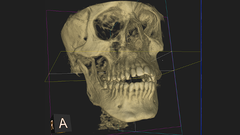
The mouth is the window into human health. This course provides an overview of dental medicine to engage, educate, excite and assist you in improving the oral health of your patients and members of your community.

This course will introduce students to architectural design and computation through the use of computer modeling, rendering and digital fabrication. The course focuses on teaching architectural design with CAD drawing, 3-D modeling, rendering and rapid prototyping. Students will be required to build computer models that will lead to a full package of architectural explorations with computers. Each semester we will explore the design process of a particular building type and building material.
The course also investigates a few design processes of selected architects. The course is critical of design principles and building production methods. Student assignments are graded based on the quality of design, representation and constructability. Great design input is always encouraged.
Add to calendar

Trusted paper writing service WriteMyPaper.Today will write the papers of any difficulty.