

Courses tagged with "Nutrition" (6413)
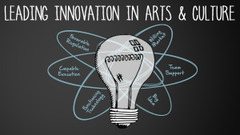
Developed by David Owens at Vanderbilt University and customized for the cultural sector with National Arts Strategies, this course will help arts and culture leaders create an environment where new ideas are constantly created, shared, evaluated and the best ones are successfully put to work.

Through lectures, discussions, and class exercises, 15.322 analyzes the human processes underlying organizational behavior and change. The class makes students aware of the challenge of organizational change and equips them to better handle it. There are many psychological and sociological phenomena that regularly occur in organizations, though many of these forces are difficult to see. The aim is to increase the students' understanding of these forces – in themselves and in others – so they become more visible and manageable. The prerequisite for this course is 15.321, Leading Organizations I.

Improve your ability to manage creativity and to lead an innovation strategy in businesses, schools, hospitals, governments, and other complex organizations and institutions, by diagnosing likely innovation failures before they occur.

What does it take to inspire others, promote a novel idea, or even have a difficult conversation? How can you position yourself as a leader through inclusive communication? How do you know that the message you are intending to send is what is being received? Join Catalyst experts to explore this topic and the important role communication plays in inclusive leadership.
All too often, we struggle to communicate effectively—particularly with others who are different from us in some way. This course will show you how the most effective communication utilizes the inclusive leadership mindset of Empowerment, Accountability, Courage, and Humility and guide you on how to use that mindset yourself. Through research and real-world examples, you will learn strategies to enhance your communication skills and approach. Topics will include understanding dialogue processes, debunking everyday communication myths, testing assumptions, listening, expressing yourself authentically, and communicating across differences. With short quizzes, compelling case studies, and engaging videos, you will develop knowledge in each section and share your experience with other learners.
Throughout the course, you will create a plan of action to help apply the strategies learned in this course to your work and other parts of your life.

Este curso contiene un subconjunto de material en español del curso 16.660J (en Inglés). Para la versión en Inglés, por favor vea 16.660J Introduction to Lean Six Sigma Methods January IAP 2012.
El programa presenta los fundamentos del pensamiento Lean a través de conceptos y herramientas prácticas y aplicables. Este curso cubre los principios fundamentales, prácticas y herramientas de una empresa Lean, incluyendo Lean Six Sigma y otros métodos de enfoques modernos para la productividad organizacional. El curso incluye ejemplos y ejercicios aplicados en la industria aeroespacial, automotriz, servicios de salud y otros sectores. La metodología es altamente interactiva con simulaciones y ejercicios orientados hacia el aprendizaje de conceptos aplicados en experiencias grupales, incluyendo una simulación Lego®, tour virtual a fábricas, charlas de expertos entre otros. Este curso fue ofrecido en la Pontificia Universidad Católica de Chile a través del Centro de Excelencia en Gestión de Producción (GEPUC) de 17 a 19 abril, 2013.
 | MIT Professional EducationConecta A Los Profesionales Con Conocimiento Y Expertise Avanzado A Traves De Entrenamiento Y Capacitacion Los cursos y programas ofrecidos por MIT Professional Education son diseñados por expertos de MIT para conectar a profesionales de la industria con los últimos avances tecnológicos y de conocimiento. La inmersión en un intenso ambiente de aprendizaje permite a profesionales alrededor del mundo la oportunidad de acceder a información crucial para nutrir sus carreras, generar un mayor desarrollo empresarial e impactar al mundo. Nuestros programas le entregan a los participantes acceso inigualable a los mayores expertos de cada área. Esta experiencia de aprendizaje altamente focalizada les permite acceder a tópicos de interés vital y compartir con expertos reconocidos a nivel mundial además de incorporarse a una red internacional de colegas talentosos. Para mayor información acerca de los programas de MIT Professional Education favor visitar: http://professionaleducation.mit.edu. |

By Sasha Dichter and Bob Dorf

Learn about lean management, a customer-centric methodology that improves processes by eliminating waste and focusing on value-added tasks.
This course will introduce the main tenets of the Toyota Production System, which includes Just-in-Time manufacturing, quality management tools, and the critical concept of Kaizen, the Japanese practice of continuous improvement. You will also learn about key organisation and managerial approaches that are used in Lean.
You will learn how to analyse process flows in order to establish process capacity and identify the process bottleneck. You will then calculate resource utilisation and cycle time to evaluate the impact of set up times, batching, defects and reworks on key process performance measures, including inventory, flow rate and flow time.
We will also discuss the impact of key concepts of Lean, including Heijunka, Kanban, Jidoka, Andon, Poka Yoke, and 5S, which help achieve increased productivity and quality.
Upon successful completion of this series, learners will earn the Technical University of Munich Lean Six Sigma Yellow Belt Certification, confirming mastery of the fundamentals of Lean Six Sigma to a Yellow Belt level, based on the American Society of Quality's Body of Knowledge for the Certified Six Sigma Yellow Belt.

Students of this course will develop a broad understanding of Lean/Six Sigma principles and practices, build capability to implement Lean/Six Sigma initiatives in manufacturing operations, and learn to operate with awareness of Lean/Six Sigma at the enterprise level. All course materials are organized around a common "single-point lesson" (SPL) format, with some of the SPLs provided by the instructor and guests and with some developed and delivered by student teams.

This course is a collection of resources designed to introduce you to Backbone, a common organizational library for front-end web applications. By the end of this course, you’ll know how to write well organized web applications using the Backbone framework. You’ll also make use of the Local Storage API or a service like Firebase to support persistent data storage across user sessions.

Swift is a language created by Apple specifically for iOS and OS X development. It’s fast, concise, and comes with tools which make it easier than ever to visualize one's code. This course focuses on the syntax of the Swift programming language. By the end of the course, students should be able to apply Swift essentials to building iOS apps and employ Swift's more unique elements, like optional types and switch statements, with confidence.

Ready to start your programming journey? Being a software engineer is much more than simply writing code—it requires a strong conceptual understanding of computer science. In this course, which was developed through a combination of academic and industry perspectives, learn not only how to code in Java but also how to break down problems and implement their solutions using some of the most fundamental computer science tools.
Get plenty of hands-on Java coding experience with methods, logic, loops, variables, parameters, returns, and recursion. And write your code using industry-standard tools and practices to help you build strong habits as you grow your development skill set.
Whether you are preparing for advanced university computer science courses, an entry-level software engineering position, or the Advanced Placement Computer Science A exam, get the tools you need to succeed in this practical, self-paced Java course.

Interested in learning a computer programming language but unsure of how and where to begin? This course, Learn to Program Using Python, is a great place to start.
Python is an easy and fun language to learn, and it is now one of the most popular programming languages, suitable for almost any task from developing graphical user interfaces to building web applications.
This course is an introduction to the Python programming language. This course is open to all learners who wish to gain an understanding of the basic components of computer programming. You will learn basic computer programming concepts and terminologies such as variables, constants, operators, expressions, conditional statements, loops, and functions. This Python course includes hands-on exercises to help you understand the components of Python programming while incrementally developing more significant programs. The exercises in this course will be based on small assignments which will relate to real-world problems.
No previous programming knowledge needed.

Not all programs are created equal. In this course, we'll focus on writing quality code that runs correctly and efficiently. We'll design, code and validate our programs and learn how to compare programs that are addressing the same task.

Behind every mouse click and touch-screen tap, there is a computer program that makes things happen. This course introduces the fundamental building blocks of programming and teaches you how to write fun and useful programs using the Python language.
Why do so many schools use letter grades? Where did they come from? What do they tell us and fail to tell us about the learners? What is the relationship between letter grades, student learning, and assessment? This six-week course will allow participants to carefully consider the history, benefits, limitations, and alternatives to using letter grades in learning environments. It will include reflection about the role of formative and summative assessment, strategies for leveraging technology for assessment, as well as exploration of authentic and alternative assessments. Other topics will include peer assessment, badges, self-assessment, and a variety of feedback sources in learning environments. As a way to develop a deeper understanding of the subject, participants will experiment with different forms of assessment and examine a variety of real world examples of learning organizations that do not use letter grades. This course is designed for individuals who aspire to work in a variety of learning organizations. Prior knowledge about curriculum development and designing lessons or learning experiences is helpful, but not required. Students will have an opportunity to earn digital badges in this course.

We all have our own understandings of ‘sustainability', of its significance as an environmental, social, economic and moral concept, and as a principle for individual, collective or corporate behaviour. This course begins from your starting point and explores how we might make positive differences to the future of our planet, and encourage others to do so.

This introductory computer science course in machine learning will cover basic theory, algorithms, and applications. Machine learning is a key technology in Big Data, and in many financial, medical, commercial, and scientific applications. It enables computational systems to automatically learn how to perform a desired task based on information extracted from the data. Machine learning has become one of the hottest fields of study today and the demand for jobs is only expected to increase. Gaining skills in this field will get you one step closer to becoming a data scientist or quantitative analyst.
This course balances theory and practice, and covers the mathematical as well as the heuristic aspects. The lectures follow each other in a story-like fashion:
- What is learning?
- Can a machine learn?
- How to do it?
- How to do it well?
- Take-home lessons.

This class explores the creation (and creativity) of the modern scientific and cultural world through study of western Europe in the 17th century, the age of Descartes and Newton, Shakespeare, Milton and Ford. It compares period thinking to present-day debates about the scientific method, art, religion, and society. This team-taught, interdisciplinary subject draws on a wide range of literary, dramatic, historical, and scientific texts and images, and involves theatrical experimentation as well as reading, writing, researching and conversing.
The primary theme of the class is to explore how England in the mid-seventeenth century became "a world turned upside down" by the new ideas and upheavals in religion, politics, and philosophy, ideas that would shape our modern world. Paying special attention to the "theatricality" of the new models and perspectives afforded by scientific experimentation, the class will read plays by Shakespeare, Tate, Brecht, Ford, Churchill, and Kushner, as well as primary and secondary texts from a wide range of disciplines. Students will also compose and perform in scenes based on that material.

By Sara Rutherford-Quach, Jeff Zwiers and Kenji Hakuta

Whether you are an outstanding or a struggling student, "Learning How to Learn" will give you powerful mental tools that will help you learn more effectively in tough-to-master subjects. You will discover practical, immediately useful insights that will help you to more deeply master your studies.
Add to calendar

Trusted paper writing service WriteMyPaper.Today will write the papers of any difficulty.