

Courses tagged with "Nutrition" (6413)

The course will examine the psychological thought of the modern mystical traditions in Europe. We shall focus on two topics with wider cultural implications – the soul and the heart.

Tradition and innovation in representative fiction of the early modern period. Recurring themes include the role of the artist in the modern period; the representation of psychological and sexual experience; and the virtues (and defects) of the aggressively experimental character. Works by Conrad, Kipling, Babel, Kafka, James, Lawrence, Mann, Ford Madox Ford, Joyce, Woolf, Faulkner, and Nabokov.

הקורס מציע מיפוי של השירה העברית החדשה למן תנועת ההשכלה דרך תקופת "התחייה" והמודרניזם שבא בעקבותיה, ועד לימינו. הקורס מציג באופן חי ונושם את המפנים הפואטיים ואת ההתפתחויות הסגנוניות והתמטיות בתחום השירה העברית, מראשיתה, באמצעות קריאות קרובות של טקסטים מן התקופות השונות, ומעמיד מאגר גדול ושופע של ידע תיאורטי, ספרותי והיסטורי, לצד פרשנויות עמוקות, מאתגרות ומפתיעות.

Examine how architecture reflects Japan’s history, starting with its emergence as a new nation in the 19th century and the building of the Western-style capital city of Tokyo on the foundations of Edo. New building materials and construction methods reflected changing times, and the radical contrast between tradition and modernism in the nation was clearly visible in Japan’s architecture and politics.
While experiencing intense Westernization pressures, Japan developed rapidly to rival the world’s great powers, we will look at how Japanese architects developed their own version of Modernism. Initially, Japanese wanted to pursue the discoveries of the Franco-Swiss Le Corbusier and of Walter Gropius at the German Bauhaus. But soon, Japan also began to produce its own 20th-century architects and develop its own style. Following World War II, Kenzo Tange became the first Japanese architect in history to achieve international fame.
In the last section of the course, we will present an interview-based case study titled “Exploring Tokyo Tech’s Twenty-First Century O-okayama Campus.” Tokyo Institute of Technology (aka Tokyo Tech) possesses its own unique and unbroken succession of practicing architects/professors, who design campus buildings. We will learn about Professor Kazuo Shinohara, one of the most prominent Japanese designers of the second half of the 20th century, and several of his renowned disciples from Tokyo Tech.
This course aims to illustrate the present state of Japanese Modernist and postmodern building, as well as the distance covered over the past 150 years, including the 130-year history of Tokyo Tech itself. Join us on this journey through time as we examine and admire Japan’s architecture to better understand Japanese history and politics.

This class is a selective survey of Latin American history from the beginning of the twentieth century to the present. Issues studied include Latin America in the global economy, relations between Latin America and the U.S., dictatorships and democracies in the twentieth century, African and Indigenous cultures, feminism and gender, cultural politics, revolution in Mexico, Cuba, and Central America, and Latin American identity.

Perhaps more than any other city, Alexandria has achieved a legendary literary status, and, in the twentieth-century in particular, has had writers of different nationalities immortalize it in literature.
In this course, we will explore the works of some writers whose names are associated with Alexandria, regardless of whether they were Alexandrians themselves or not. The writers we will discuss are C. P. Cavafy, E. M. Forster, Lawrence Durrell, Edwar al Kharrat, Ibrahim Abdel Meguid, Jaqueline Carol and Harry Tzalas.
The aim is to look at writers who bore different relations to the city: Alexandrians of foreign origins (Greek and Lebanese), Egyptian Alexandrians (an Orthodox Christian Copt and a Muslim) and foreigners who were only passing through (British), to explore how he or she represented the city in their works, or how Alexandria influenced their writing.

The goal of this course is to offer a general introduction to 20th and 21st century literature and cultural production about Modern Mexico. Emphasis will be placed on the way intellectuals and artists have presented the changes in Mexico City's urban life, and how these representations question themes and trends in national identity, state control, globalization, and immigration.

This subject covers a specific branch of music history: Western concert music of first sixty years of the twentieth century. Although we will be listening to and studying many pieces (most of the highest caliber) the goal of the course is not solely to build up a repertory of works in our memory (though that is indeed a goal). We will be most concerned with larger questions of continuity and change in music. We will also consider questions of reception, or historiography - that is, the creation of history and our perception of it. Why do we perceive much of this music, so much closer in time to us than Mozart or Beethoven, to be so foreign? Is this music aloof and separate from popular music of the twentieth century or is there a real connection (perhaps hidden)? The subject will continue to follow some topics of central interest to music before 1960, such as serialism and aleatory, beyond the 1960 cutoff. Conversely a few topics which get their start just before 1960 but which flourish later (minimalism, computer music) will be covered only in 21M.263.
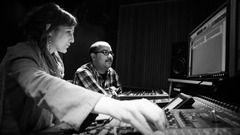
Develop a song from initial idea to polished production in this capstone experience, using the knowledge and experience gained from Developing Your Musicianship, Introduction to Music Production, and Songwriting.

This course introduces the concepts and applications of navigation techniques using celestial bodies and satellite positioning systems such as the Global Positioning System (GPS). Topics include astronomical observations, radio navigation systems, the relationship between conventional navigation results and those obtained from GPS, and the effects of the security systems, Selective Availability, and anti-spoofing on GPS results. Laboratory sessions cover the use of sextants, astronomical telescopes, and field use of GPS. Application areas covered include ship, automobile, and aircraft navigation and positioning, including very precise positioning applications.

6.161 offers an introduction to laboratory optics, optical principles, and optical devices and systems. This course covers a wide range of topics, including: polarization properties of light, reflection and refraction, coherence and interference, Fraunhofer and Fresnel diffraction, holography, imaging and transforming properties of lenses, spatial filtering, two-lens coherent optical processor, optical properties of materials, lasers, electro-optic, acousto-optic and liquid-crystal light modulators, optical detectors, optical waveguides and fiber-optic communication systems. Students engage in extensive oral and written communication exercises. There are 12 engineering design points associated with this subject.

This course considers some of the substantial early twentieth-century poetic voices in America. Authors vary, but may include Moore, Frost, Eliot, Stevens, and Pound.
We'll read the major poems by the most important poets in English in the 20th century, emphazinig especially the period between post-WWI disillusionment and early WW II internationalism (ca. 1918-1940). Our special focus this term will be how the concept of "the Image" evolved during this period. The War had undercut beliefs in master-narratives of nationalism and empire, and the language-systems that supported them (religious transcendence, rationalism and formalism). Retrieving energies from the Symbolist movements of the preceding century, early 20th century poets began to rethink how images carry information, and in what ways the visual, visionary, and verbal image can take the place of transcendent beliefs. New theories of linguistics and anthropology helped to advance this interest in the artistic/religious image. So did Freud. So did Charlie Chaplin films.
We'll read poems that pay attention both to this disillusionment and to the compensatory joyous attention to the image: to ideas of the poet-as-language-priest, aesthetic-experience-as-displaced-religious impulse, to poetry as faith, ritual, and form.

This course focuses on the fundamentals of tissue and organ response to injury from a molecular and cellular perspective. There is a special emphasis on disease states that bridge infection, inflammation, immunity, and cancer. The systems approach to pathophysiology includes lectures, critical evaluation of recent scientific papers, and student projects and presentations.
This term, we focus on hepatocellular carcinoma (HCC), chronic-active hepatitis, and hepatitis virus infections. In addition to lectures, students work in teams to critically evaluate and present primary scientific papers.

This class covers molecular-level engineering and analysis of chemical processes. The use of chemical bonding, reactivity, and other key concepts in the design and tailoring of organic systems are discussed in this class. Specific class topics include application and development of structure-property relationships, and descriptions of the chemical forces and structural factors that govern supramolecular and interfacial phenomena for molecular and polymeric systems.
This class covers molecular-level engineering and analysis of chemical processes. The use of chemical bonding, reactivity, and other key concepts in the design and tailoring of organic systems are discussed in this class. Specific class topics include application and development of structure-property relationships, and descriptions of the chemical forces and structural factors that govern supramolecular and interfacial phenomena for molecular and polymeric systems.

This course covers all aspects of molecular biosignatures, such as their pathways of lipid biosynthesis, the distribution patterns of lipid biosynthetic pathways with regard to phylogeny and physiology, isotopic contents, occurrence in modern organisms and environments, diagenetic pathways, analytical techniques and the occurrence of molecular fossils through the geological record. Students analyze in depth the recent literature on chemical fossils. Lectures provide background on the subject matter. Basic knowledge of organic chemistry required. Students taking graduate version complete additional assignments.
This course covers all aspects of molecular biosignatures, such as their pathways of lipid biosynthesis, the distribution patterns of lipid biosynthetic pathways with regard to phylogeny and physiology, isotopic contents, occurrence in modern organisms and environments, diagenetic pathways, analytical techniques and the occurrence of molecular fossils through the geological record. Students analyze in depth the recent literature on chemical fossils. Lectures provide background on the subject matter. Basic knowledge of organic chemistry required. Students taking graduate version complete additional assignments.

This course covers a detailed analysis of the biochemical mechanisms that control the maintenance, expression, and evolution of prokaryotic and eukaryotic genomes. The topics covered in lectures and readings of relevant literature include gene regulation, DNA replication, genetic recombination, and mRNA translation. In particular, the logic of experimental design and data analysis is emphasized.
This course covers a detailed analysis of the biochemical mechanisms that control the maintenance, expression, and evolution of prokaryotic and eukaryotic genomes. The topics covered in lectures and readings of relevant literature include gene regulation, DNA replication, genetic recombination, and mRNA translation. In particular, the logic of experimental design and data analysis is emphasized.

You’re acquainted with your DNA, but did you know that your cells synthesize enough DNA during your lifetime to stretch a lightyear in length? How does the cellular machinery accomplish such a feat without making more mistakes than you can survive? Why isn’t the incidence of cancer even higher than it is? And, if the DNA in each and every cell is two meters long, how is this genetic material compacted to fit inside the cell nucleus without becoming a tangled mess?
Are you ready to go beyond the “what" of scientific information presented in textbooks and explore how scientists deduce the details of these molecular models?
Take a behind-the-scenes look at modern molecular genetics, from the classic experimental events that identified the proteins involved in DNA replication and repair to cutting-edge assays that apply the power of genome sequencing. Do you feel confident in your ability to design molecular biology experiments and interpret data from them? We've designed the problems in this course to build your experimental design and data analysis skills.
Let’s explore the limits of our current knowledge about the replication machinery and pathways that protect the fidelity of DNA synthesis. If you are up for the challenge, join us in 7.28.1x Molecular Biology: DNA Replication and Repair.
Add to calendar

Trusted paper writing service WriteMyPaper.Today will write the papers of any difficulty.