

Courses tagged with "Nutrition" (6413)

The nuts and bolts of preparing a New Venture Plan and launching the venture will be explored in this twenty-fifth annual course offering. The course is open to members of the MIT Community and to others interested in entrepreneurship. It is particularly recommended for persons who are interested in starting or are involved in a new business or venture. Because some of the speakers will be judges of the MIT $100K Entrepreneurship Competition, persons who are planning to enter the Competition should find the course particularly useful. In the past approximately 50% of the class has been from the Engineering / Science / Architecture Schools and 50% from the Sloan School of Management.
The course is offered during the Independent Activities Period (IAP), which is a special 4-week term at MIT that runs from the first week of January until the end of the month.
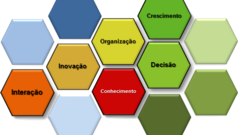
Os estudantes terão a oportunidade de compreender quais são as habilidades e competências que o empreendedor deve criar e desenvolver para empreender um novo negócio tecnológico. Empreendedores convidados participarão das aulas, contando e discutindo suas experiências empreendedoras, articuladas aos conceitos e práticas do curso.

Como está caracterizada Previdência Social no Brasil? Qual sua relevância para o entendimento das finanças públicas e para as decisões individuais dos trabalhadores?

Obesity is a global epidemic. As the world gets fatter, we begin to see its impact across many aspects of day-to-day life.

Provides a comprehensive introduction to key issues and findings in object recognition in experimental, neural, computational, and applied domains. Emphasizes the problem of representation, exploring the issue of how 3-D objects should be encoded so as to efficiently recognize them from 2-D images. Second half focuses on face recognition, an ecologically important instance of the general object recognition problem. Describes experimental studies of human face recognition performance and recent attempts to mimic this ability in artificial computational systems.

What do hiring managers look for in entry-level developers? According to a recent survey, one of the most requested job skills is "strong object oriented design". Yet traditional computer science programs rarely focus on this area.
In this Java course, examine the role of objects in code, explore how to use them, and see how to design them for optimal code reuse and structure. Get tons of hands-on coding experience using popular Java objects, like Arrays and Lists, and then leverage those learnings to design your own object hierarchies. Plus, practice using inheritance, interfaces, abstract classes, and encapsulation techniques to help you manage large code bases.
Get comfortable employing industry standards in designing and managing complex relationships within a code base, as you add to your computer science skill set.

Have you been dabbling with JavaScript but find your files keep turning into a mess of spaghetti code? Do you find yourself copying and pasting lines of code over and over throughout your application? Surely there’s a better way, right? Yes, there is a better way -- object-oriented programming will allow you to build websites using reusable blocks of code known as libraries, similar to using bricks to build a house. This course is designed to teach web developers how to utilize the various object-oriented programming features within JavaScript, and more importantly, how to write reusable and maintainable libraries that will make your life easier.

Go beyond the basics of programming to understand object-oriented methodology, the approach to modular and reusable software systems.
Topics Include:
- Introduction to Object Oriented Programming
- Classes and Methods
- Polymorphism
- Inheritance
- Standard Library of C++
This course is part of the Fundamentals of Computer Science XSeries Program:

This course is designed to teach students how to understand and identify the differences between the Objective-C and Swift programming languages, and especially, how to rewrite from the former to the latter. Understanding communications between the two languages—called "interoperability"—is becoming more and more important for developers, particularly as we prepare for the arrival of Swift 3.0. In the course, students will write classes and add functionality to classes by writing and calling methods. After learning some basic Objective-C syntax, students will examine and break down an app written in Objective-C and rewrite it in Swift. The course will conclude with a review of and practice with the most common challenges for interoperability between Objective-C and Swift.

Are you an engineer, scientist or technician? Are you dealing with measurements or big data, but are you unsure about how to proceed? This is the course that teaches you how to find the best estimates of the unknown parameters from noisy observations. You will also learn how to assess the quality of your results.
TU Delft’s approach to observation theory is world leading and based on decades of experience in research and teaching in geodesy and the wider geosciences. The theory, however, can be applied to all the engineering sciences where measurements are used to estimate unknown parameters.
The course introduces a standardized approach for parameter estimation, using a functional model (relating the observations to the unknown parameters) and a stochastic model (describing the quality of the observations). Using the concepts of least squares and best linear unbiased estimation (BLUE), parameters are estimated and analyzed in terms of precision and significance.
The course ends with the concept of overall model test, to check the validity of the parameter estimation results using hypothesis testing. Emphasis is given to develop a standardized way to deal with estimation problems. Most of the course effort will be on examples and exercises from different engineering disciplines, especially in the domain of Earth Sciences.
This course is aimed towards Engineering and Earth Sciences students at Bachelor’s, Master’s and postgraduate level.
LICENSE
The course materials of this course are Copyright Delft University of Technology and are licensed under a Creative Commons Attribution-NonCommercial-ShareAlike (CC-BY-NC-SA) 4.0 International License.

Understanding the ocean is paramount to protecting the Earth. Learn the seven principles of ocean literacy to heighten your awareness, build on your understanding, and take action to protect our most important resource.

This course will look at how intelligent and innovative use of the ocean can sustainably deliver the key resources necessary to help meet some of the great challenges faced by humanity.

The subject introduces the principles of ocean surface waves and their interactions with ships, offshore platforms and advanced marine vehicles. Surface wave theory is developed for linear and nonlinear deterministic and random waves excited by the environment, ships, or floating structures.
Following the development of the physics and mathematics of surface waves, several applications from the field of naval architecture and offshore engineering are addressed. They include the ship Kelvin wave pattern and wave resistance, the interaction of surface waves with floating bodies, the seakeeping of ships high-speed vessels and offshore platforms, the evaluation of the drift forces and other nonlinear wave effects responsible for the slow-drift responses of compliant offshore platforms and their mooring systems designed for hydrocarbon recovery from large water depths.
This course was originally offered in Course 13 (Department of Ocean Engineering) as 13.022. In 2005, ocean engineering subjects became part of Course 2 (Department of Mechanical Engineering), and this course was renumbered 2.24.

This course is taught in Catalan. En aquest curs, l'estudiant aprendrà les bases de la ciència. Com es classifica i s'ha format el fons marí, com funcionen els actuals sistemes d'anàlisi del mar per satèl·lit, la química de l'oceà i els processos que han portat a la seva formació.

This course is taught in Spanish. En este curso, el estudiante aprenderá las bases de la ciencia oceanográfica. Cómo se clasifica y se ha formado el fondo marino, cómo funcionan los actuales sistemas de análisis del mar por satélite, la química del océano y los procesos que han llevado a su formación.

In this course, learn about the foundations of the science of oceanography, the classification and formation of the ocean floor, how current sea satellite analysis systems work, the chemistry of the oceans, and the processes that led to its formation. ALSO OFFERED IN SPANISH AND CATALAN.

भारत सहित विश्व के सभी देशों में एक आकांक्षा है कि सीखने की प्रक्रिया में विद्यार्थियो की सक्रिय भूमिका हो। इसके लिये अत्यधिक कुशल शिक्षक और गुणवत्तापूर्ण अध्यापक-शिक्षा का होना आवश्यक है।
यह कोर्स शिक्षक-प्रशिक्षकों को मुक्त शैक्षिक संसाधनों (Open Educational Resources) से परिचित कराता है – जो कि मुक्त (निःशुल्क एवं आसानी से उपलब्ध) अधिगम सामग्रियाँ है और जिन्हें विशेष संदर्भों में उपयोग के अनुकूल बनाया जा सकता है। यह कोर्स जानकारी देता है कि अध्यापक-शिक्षा कार्यक्रमों की रूपरेखा बनाने और उनके क्रियान्वयन में आप किस प्रकार OER का उपयोग कर सकते हैं ताकि आप कक्षा-कक्ष के सीखने-सिखाने की प्रक्रिया में परिवर्तन ला सके। इस कोर्स में TESS-India द्वारा तैयार किये गये OER पर विशेष रूप से ध्यान केन्द्रित किया गया है। इन नवाचारी, बहु-भाषायी, पाठ और वीडियो OER (www.tess-india.edu.in) का लक्ष्य है शिक्षकों को सहभागितापूर्ण दृष्टिकोण विकसित करने के लिए समर्थन देना जिससे वे कक्षा-कक्ष की गतिविधियों में सिद्धान्त एवं अभ्यास के बीच संबंध का प्रतिरूपण (Modelling) कर सकें। इस कोर्स में आप TESS-India और अध्यापक-शिक्षा के अन्य OER में निहित मूल्यों और शिक्षण-शास्त्र को समझ पायेंगे और सीखेंगे कि किस प्रकार आप इन OER को अपने स्वयं के तथा अपने विद्यार्थियों के संदर्भ में अनुकूलित और समावेशित कर सकते हैं।
इस कोर्स में भाग लेते हुए, आप OER को खोजने, चुनने, उनका मूल्यांकन करने और उनको अनुकूलित करने का कौशल विकसित करेंगे। इस कोर्स में सहकार्यता और अध्यापक-शिक्षा में OER के साथ कार्य करना प्रमुख विषयवस्तु हैं। आप कार्य करने के तरीकों और सुलभ अभ्यासों से परिचित हो पाएंगे जिन्हें आप अपने कार्यों में आगे ले जा सकते हैं। इस कोर्स के माध्यम से आप अपने साथी शिक्षक-प्रशिक्षकों का प्रोफेशनल सपोर्ट नेटवर्क भी बना पायेंगे और उसे सुदृढ़ कर पायेंगे।
यह कोर्स मुख्य रूप से, भारतीय संदर्भ में सेवा-पूर्व तथा सेवाकालीन, औपचारिक एवं अनौपचारिक कार्यक्रमों में प्राथमिक तथा माध्यमिक विद्यालयों के शिक्षकों के साथ कार्य कर रहे शिक्षक-प्रशिक्षकों के लिये बनाया गया है। हालांकि वैश्विक स्तर पर भी शिक्षक-प्रशिक्षकों के लिये इसका महत्वपूर्ण उपयोग है।
इस कोर्स की संपूर्ण सामग्री Creative Commons Attribution Share Alike लाइसेन्स के तहत मुक्त लाइसेन्स प्राप्त है। TESS-India प्रॉजेक्ट को अभिस्वीकृति देते हुये और इसी लाइसेन्स के तहत साझा करते हुये, आप इन कोर्स सामग्रियों का अनुवाद करने, रूपांतरण करने और अन्य उद्देश्यों के लिए उपयोग करने के लिए स्वतंत्र हैं। Creative Commons लाइसेन्स के बारे में अधिक जानकारी के लिये कृपया http://creativecommons.org/about/license/ साइट देखें।

This self-paced Office 365 course provides an intensive, in-depth look at how to manage services Office 365, and in particular, how to manage identities, both in the cloud and in situations where Office 365 is synchronized with on-premises Active Directory, or where additional single-sign on (SSO) has been deployed. The course starts with simpler configuration topics before moving on to more complex areas, such as Exchange Online migration, directory synchronization, and single-sign on (SSO) with Active Directory Federation Services (AD FS). This course provides an assortment of review activities to test your knowledge as you work through the course content. You can also view demonstrations covering a variety of Office 365 configuration and implementation tasks.
What sets this course apart is that you perform actual hands-on labs in a live lab environment. In fact, you will perform the same lab activities that students perform in Microsoft’s classroom training equivalent of this course, including:
- Manage users, groups, licenses, and administrator roles
- Configure password management
- Administer rights management
- Manage Office 365 clients
- Perform a live Exchange migration to a live Office 365 tenant
- Configure SharePoint Online and Lync Online in a live environment
- Manage Active Directory Users and Groups with DirSync
- Implement Active Directory Federation Services
- Monitor Office 365 service health
If you are interested in this course, then register today as Office 365: Managing Identifies and Services with Hands-on Labs is limited to 60 students!

This course is focused squarely on user experience, and seeks to show developers how thinking offline-first is the best way to ensure that applications perform their best in all scenarios, not just ideal ones. You'll learn to recognize the differences between good, poor, intermittent, and missing connectivity for your users , and master how to make applications that navigate these conditions with ease. Using the skills you master in this course, you'll conclude by building an app that that works both online and offline, and loads in new data when it can. You'll be a master of the cache! Your web apps will interact with the network just like native apps do. This will lead to better user experiences even in traditionally challenging connection scenarios like being stuck in a train tunnel, having to rely on over-crowded conference Wi-Fi, or traveling through a cellular “dead zone!”

Retail customers are omnichannel. They increasingly expect to interact with retailers in a seamless way, combining aspects of different channels at different stages of their purchase journey. They want to place an order online and pick it up an hour later on their way to work, or return at the store an order they had placed online. We have been studying for many years how traditional retailers can become omnichannel retailers. It is not an easy transition and requires a fundamental change in the retailer’s processes, systems and strategy. This transformation is not about small adjustments but a complete redesign of the retailer’s business model.
In this course, part of the Retail Management Professional Certificate program, you will learn from retailers that are successfully navigating this transformation. You will explore how to attract omnichannel customers, what fulfillment options these customers expect, how retailers can leverage their online and brick and mortar presence, and what retailers need to support an omnichannel strategy. By the end of the course, you won’t be thinking about separated retail channels but one integrated retailer that is aligned to best serve today customer’s needs.
We have designed this course based on our own work in omnichannel retail. The course will suit a variety of participants from retail owners and undergraduate business majors, to retail specialists.
Add to calendar

Trusted paper writing service WriteMyPaper.Today will write the papers of any difficulty.