

Courses tagged with "Nutrition" (6413)

Subject combines practical instruction, readings, lectures, field trips, visiting artists, group discussions, and individual reviews. Fosters a critical awareness of how images in our culture are produced and constructed. Student-initiated term project at the core of exploration. Special consideration given to the relationship of space and the photographic image. Practical instruction in basic black and white techniques, digital imaging, fundamentals of camera operation, lighting, film exposure, development, and printing. Open to beginning and advanced students. Lab fee. Enrollment limited with preference given to current Master of Architecture students.

Still photography, a practice and form of expression that has worked its way into every facet of social life and every culture in the world, is considered here from the perspectives of history and social science. We will discuss the uses and functions of pictures; how they are to be understood and interpreted; whether they have clear-cut content and meanings; how they shape and are shaped by politics, economics, and social life.
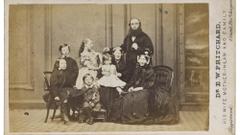
Explore the Victorian craze for photography, examine its history, from the earliest images in 1839 and how it has influenced the way we capture and share images today as photography moved from being a niche concern of the few, to one of the most important cultural forms of the modern world.

The purpose of this course is to discuss modern techniques of generation of x-ray photons and neutrons and then follow with selected applications of newly developed photon and neutron scattering spectroscopic techniques to investigations of properties of condensed matter which are of interest to nuclear engineers.

This course covers the theory, design, fabrication and applications of photonic materials and devices. After a survey of optical materials design for semiconductors, dielectrics and polymers, the course examines ray optics, electromagnetic optics and guided wave optics; physics of light-matter interactions; and device design principles of LEDs, lasers, photodetectors, modulators, fiber and waveguide interconnects, optical filters, and photonic crystals. Device processing topics include crystal growth, substrate engineering, thin film deposition, etching and process integration for dielectric, silicon and compound semiconductor materials. The course also covers microphotonic integrated circuits and applications in telecom/datacom systems. Course assignments include four design projects that emphasize materials, devices and systems applications.

This class will study the behavior of photovoltaic solar energy systems, focusing on the behavior of "stand-alone" systems. The design of stand-alone photovoltaic systems will be covered. This will include estimation of costs and benefits, taking into account any available government subsidies. Introduction to the hardware elements and their behavior will be included.

This class will study the behavior of photovoltaic solar energy systems, focusing on the behavior of "stand-alone" systems. The design of stand-alone photovoltaic systems will be covered. This will include estimation of costs and benefits, taking into account any available government subsidies. Introduction to the hardware elements and their behavior will be included.

Physics 101 is the first course in the Introduction to Physics sequence. In general, the quest of physics is to develop descriptions of the natural world that correspond closely to actual observations. Given this definition, the story behind everything in the universe, from rocks falling to stars shining, is one of physics. In principle, the events of the natural world represent no more than the interactions of the elementary particles that comprise the material universe. In practice, however, it turns out to be more complicated than that. As the system under study becomes more and more complex, it becomes less and less clear how the basic laws of physics account for the observations. Other branches of science, such as chemistry or biology, are needed. In principle, biology is based on the laws of chemistry, and chemistry is based on the laws of physics, but our ability to understand something as complex as life in terms of the laws of physics is well beyond our present knowledge. Physics is, however, the…
The physics of the universe appears to be dominated by the effects of four fundamental forces: gravity, electromagnetism, weak nuclear forces, and strong nuclear forces. These forces control how matter, energy, space, and time interact to produce our physical world. All other forces, such as the force you exert in standing up, are ultimately derived from these fundamental forces. We have direct daily experience with two of these forces: gravity and electromagnetism. Consider, for example, the everyday sight of a person sitting on a chair. The force holding the person on the chair is gravitational, and that gravitational force balances with material forces that “push up” to keep the individual in place. These forces are the direct result of electromagnetic forces on the nanoscale. On a larger stage, gravity holds the celestial bodies in their orbits, while we see the universe by the electromagnetic radiation (light, for example) with which it is filled. The electromagnetic force also makes…

PHYS 102x serves as an introduction to electromagnetism, including charge, electric and magnetic forces, induction, current, and resistance.

This course presents an introduction to quantum mechanics. It begins with an examination of the historical development of quantum theory, properties of particles and waves, wave mechanics and applications to simple systems—the particle in a box, the harmonic oscillator, the rigid rotor and the hydrogen atom. The lectures continue with a discussion of atomic structure and the Periodic Table. The final lectures cover applications to chemical bonding including valence bond and molecular orbital theory, molecular structure, and spectroscopy.
Acknowledgements
The material for 5.61 has evolved over a period of many years, and, accordingly, several faculty members have contributed to the development of the course contents. The original version of the lecture notes that are available on OCW was prepared in the early 1990's by Prof. Sylvia T. Ceyer. These were revised and transcribed to electronic form primarily by Prof. Keith A. Nelson. The current version includes additional contributions by Professors Moungi G. Bawendi, Robert G. Griffin, Robert J. Silbey, and John S. Waugh, all of whom have taught the course in the recent past.

This course covers elementary statistical mechanics, transport properties, kinetic theory, solid state, reaction rate theory, and chemical reaction dynamics.
Acknowledgements
The staff for this course would like to acknowledge that these course materials include contributions from past instructors, textbooks, and other members of the MIT Chemistry Department affiliated with course #5.62. Since the following works have evolved over a period of many years, no single source can be attributed.

For all of the bodies attached to the many great minds that walk the Institute's halls, in the work that goes on at MIT the body is present as an object of study, but is all but unrecognized as an important dimension of our intelligence and experience. Yet the body is the basis of our experience in the world; it is the very foundation on which cognitive intelligence is built. Using the MIT gymnastics gym as our laboratory, the Physical Intelligence activity will take an innovative, hands-on approach to explore the kinesthetic intelligence of the body as applicable to a wide range of disciplines. Via exercises, activities, readings and discussions designed to excavate our physical experience, we will not only develop balance, agility, flexibility and strength, but a deep appreciation for the inherent unity of mind and body that suggests physical intelligence as a powerful complement to cognitive intelligence.

The central point of this course is to provide a physical basis that links the structure of materials with their properties, focusing primarily on metals. With this understanding in hand, the concepts of alloy design and microstructural engineering are also discussed, linking processing and thermodynamics to the structure and properties of metals.
The central point of this course is to provide a physical basis that links the structure of materials with their properties, focusing primarily on metals. With this understanding in hand, the concepts of alloy design and microstructural engineering are also discussed, linking processing and thermodynamics to the structure and properties of metals.
The central point of this course is to provide a physical basis that links the structure of materials with their properties, focusing primarily on metals. With this understanding in hand, the concepts of alloy design and microstructural engineering are also discussed, linking processing and thermodynamics to the structure and properties of metals.

This is a 12 week course, currently scheduled to start on Monday, April 14, 2014 and finishing on Friday, July 11. This introductory physics course is intended for physical science majors and others desiring a rigorous introduction to physics. It closely parallels the brick-and-mortar course given to the freshmen at the University of Colorado at Boulder. The course covers classical mechanics, including kinematics, dynamics, conservation laws, and applications.

This course introduces the structure, composition, and physical processes governing the terrestrial planets, including their formation and basic orbital properties. Topics include plate tectonics, earthquakes, seismic waves, rheology, impact cratering, gravity and magnetic fields, heat flux, thermal structure, mantle convection, deep interiors, planetary magnetism, and core dynamics. Suitable for majors and non-majors seeking general background in geophysics and planetary structure.

Whether you're a traditional, CG, or stop-motion animator, to create realistic motion, it's helpful to know some physics. This course presents the concepts that are most useful to character animation artists

This course examines classical and quantum models of electrons and lattice vibrations in solids, emphasizing physical models for elastic properties, electronic transport, and heat capacity. Topics covered include: crystal lattices, electronic energy band structures, phonon dispersion relatons, effective mass theorem, semiclassical equations of motion, and impurity states in semiconductors, band structure and transport properties of selected semiconductors, and connection of quantum theory of solids with quasifermi levels and Boltzmann transport used in device modeling.
Add to calendar

Trusted paper writing service WriteMyPaper.Today will write the papers of any difficulty.