Courses tagged with "Nutrition" (6413)

More and more organizations are taking on the challenge of analyzing big data. This course teaches you how to use the Hadoop technologies in Microsoft Azure HDInsight to build batch processing solutions that cleanse and reshape data for analysis. In this five-week course, you’ll learn how to use technologies like Hive, Pig, Oozie, and Sqoop with Hadoop in HDInsight; and how to work with HDInsight clusters from Windows, Linux, and Mac OSX client computers.
NOTE: To complete the hands-on elements in this course, you will require an Azure subscription and a Windows, Linux, or Mac OS X client computer. You can sign up for a free Azure trial subscription (a valid credit card is required for verification, but you will not be charged for Azure services). Note that the free trial is not available in all regions. It is possible to complete the course and earn a certificate without completing the hands-on practices.

This course is part of the Microsoft Professional Program Certificate in Big Data.
Want to capture and process real-time data in the cloud?
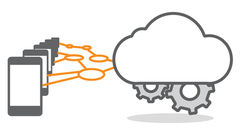
This data analysis course teaches you how to use Microsoft Azure technologies like Event Hubs, IoT Hubs, and Stream Analytics to build real-time Internet-of-Things (IoT) solutions at scale.
Note: To complete this course, you will need a Microsoft Azure subscription. You can sign up for a free trial subscription at http://azure.microsoft.com, or you can use your existing subscription. The labs have been designed to minimize the resource costs required to complete the hands-on activities.

Production of Educational Videos is an introduction to technical communication that is situated in the production of educational videos; the assignments are all focused on the production of videos that teach some aspect of MIT's first-year core curriculum. The objective of these assignments is improvement in both communication ability and communication habits; these improvements are effected by providing participants with instruction, practice, feedback, and the opportunity for reflection. In addition to improvements in communication skills, improvement is expected in students' attitude towards writing, oral presentations, and collaboration; as the semester progresses, students should feel confident of their ability to write, present, and collaborate.

There is nothing more powerful than an idea whose time has come. This course is designed to help you materialize your game-changing idea and transform it into a product that you can build a business around. Product Design blends theory and practice to teach you product validation, UI/UX practices, Google’s Design Sprint and the process for setting and tracking actionable metrics.

Product Design and Development is a project-based course that covers modern tools and methods for product design and development. The cornerstone is a project in which teams of management, engineering, and industrial design students conceive, design and prototype a physical product. Class sessions are conducted in workshop mode and employ cases and hands-on exercises to reinforce the key ideas. Topics include identifying customer needs, concept generation, product architecture, industrial design, and design-for-manufacturing.

Do you want to learn how to design? Using the Delft Design Approach, you will learn how to use a number of key design methods to create meaningful products and services.
This course is an introduction to the Delft Design Approach offering a model and a set of signature methods from Delft to teach you how to get from understanding the user in context to defining a meaningful design challenge and – in the end – deliver a great design! The course challenges you to experience the design process yourself and reflect on your work with the help of students and excellent teaching staff from Delft, and industrial experts.
No previous knowledge of design methods is required, yet some experience with designing (something) is helpful.

Want to be the “CEO” of the digital product, but unsure which types of skillsets you may need? This course is for you.
Product management drives the implementation of business models in startups and digital enterprises. Learn about the key decisions, underlying tradeoffs, and implementation decisions needed for each phase of the product life and master business and organizational logic to ensure product success in the marketplace.
In this course, part of the Digital Product Management MicroMasters program, you will be introduced to frameworks for decision-making based on both economic and organizational considerations. These frameworks inform a rising product manager on how to:
(i) understand customer co-creation, needs and become “a champion” for user centric development in the digital technologies.
(ii) set up and manage specific work flows (e.g. either lean, agile or stage gate development tasks) that result in timely launch and upgrades of products.
(iii) take a data and metrics driven approach to make product life cycle decisions including pricing, versioning, maintenance, helpdesks and end of life.
(iv) shape the direction of the product based on experimentation and system design thinking by learning from product roadmaps, competitive considerations, and allied evolution of demand in digital markets.
Caveat: This is not a course on software development or architecture or on product marketing. The role of a product manager is to work with these functions effectively, such that the interests of a product (e.g. its profitability) and its customers are best served. Thus, the perspectives and skills covered in this course are integrative, and allied with decision-making, in their orientation.

Learn mobile application development on the Android platform by acquiring strong knowledge of Android SDK and different versions of Android. You will gain familiarity with RESTful APIs to connect Android applications to back-end services and will practice with Genymotion emulator.
As a part of this course, you will create widgets, customize list views and create 5 applications using Facebook, Twitter, maps & location based services. You will test Android-based mobile applications using Android testing tools such as Mockito.
This Android course is taught by a group of Google Developer Experts and other industry professionals, who develop innovative mobile apps .
This course is part of the GalileoX Android Developer MicroMasters Program that is specifically designed to teach the critical skills needed to be successful in this exciting field and to prepare you to take the Google Associate Android Developer Certification exam. In order to qualify for the MicroMasters Credential you will need to earn a Verified Certificate in each of the four courses as well as Final Project.

Sustainability challenges organizations to address the implications – and responses – in their own operations and supply chain, products/services/markets, and community responsibilities. This course exposes students to professionals and organizations who are actively working toward making their organizations and industries sustainable.