

Courses tagged with "Nutrition" (6413)

Science plays a crucial role in your decisions as you go about your daily life. The representatives you elect and the legislation you vote on influences science legislation, limits and funding. This class will teach you fundamentals of modern biology to help you make more informed voting decisions.
As you learn the fundamentals of Biology, we'll explore the scientific issues sparking political debate:
- Evolution vs. creationism
- Reactions to pandemic disease
- The risks and benefits of vaccination
- How extinctions impact the planet
- Space exploration and the search for extraterrestrial life
- Sexual behavior
We look forward to engaging course discussions about how each vote in a democracy affects the way biology functions in your everyday life.

Science plays a crucial role in your decisions as you go about your daily life. The representatives you elect and the legislation you vote on influences science legislation, limits and funding. This class will teach you fundamentals of modern biology to help you make more informed voting decisions.
As you learn the fundamentals of Biology, we'll explore the scientific issues sparking political debate:
- Genetically modified food and genetically modified crops
- Genetically modified organisms
- Obesity and health care costs
- Cancer research funding
- Aging
We look forward to engaging course discussions about how each vote in a democracy affects the way biology functions in your everyday life.

This class develops the abilities of students to communicate science effectively in a variety of real-world contexts. It covers strategies for dealing with complex areas like theoretical physics, genomics and neuroscience, and addresses challenges in communicating about topics such as climate change and evolution. Projects focus on speaking and writing, being an expert witness, preparing briefings for policy-makers, writing blogs, and giving live interviews for broadcast, as well as the creation of an interactive exhibit for display in the MIT Museum.

Does math frustrate you and discourage you from reading scientific reports? Learn how scientists use math to measure changes over time. In this course, you will be exposed to some basic math concepts that will help you understand what you are reading when it comes to the sciences.

What do scientists actually do? How do they join forces with other scientists? In this short course, you will learn what it means to follow the scientific process. Get ready to jump into data collection and actual experimentation and walk away with an understanding of what it means to be a scientist in today’s world.

Superheroes! In this course, discover how superpowers are both good and bad examples of physics, chemistry and biology at work.

Explore how science works and what constitutes "good" science through case studies drawn from a wide spectrum of people's experience, for example superheros, movies, and real world issues such as global warming.

How do artists create visual effects? In order to create an artistic impression, artists select materials that allow image formation, and that lend color, emphasis, shape, and size to the object created.
A scientist might follow up by asking, why those materials? What characteristics do they have that allow them to embody the artist’s intent? How durable are they? Will they maintain the same qualities, both physical and aesthetic, they had when the work left the studio?
Conservation science further notes that all materials deteriorate over time, and then asks a follow-up question: What physical interventions are possible to maintain, preserve and protect the work as the artist intended? Whatever is done to the art object, the result must be to make the work recognizable as the artist’s work or the result is a failure.
That is a key goal of this course: to understand, from a chemical point of view, how conservation protocols and the material aspects of an art work allow a better appreciation of an artwork and its creation, as well as confidence that it is the artist’s work.
These are not new problems. According to Leonardo da Vinci, the study of art should include the following topics:
- A knowledge of materials
- The chemistry of colors
- The mathematics of composition
- The laws of perspective
- The illusions of chiaroscuro
As the briefest study of Leonardo's life shows, he was clearly ahead of his time in wanting to understand the reasons for a vast array of natural and artificial phenomena. Even so, a thorough understanding of those subjects listed above still escapes us today – but, progress has been made and that progress is at once the subject matter and the goal of this course.
Course banner painting: Unknown (previously attributed to Vincent van Gogh), Poppies, c.1886-c.1887, oil on canvas, Wadsworth Atheneum Museum of Art, Bequest of Anne Parrish Titzell, 1957.617

Free relationship advice: Who couldn't use that, right? And from an expert with a scientific perspective no less! Have you ever wondered what makes your significant other tick? Why you're attracted to the people you are? How to best nurture a relationship? Or how to get through a breakup?

This course introduces writing, graphics, meetings, oral presentation, collaboration, and design as tools for product development. The communication instruction is embedded in design projects that require students to work in teams to conceive, design, prototype and evaluate energy related products. The communication instruction focuses on the communication tasks that are integral to this design process, ranging, across design notebooks, email communications, informal oral presentations, meeting etiquette, literature searches, white papers reports, and formal presentations. In addition to the assignments specific to product development, a few assignments, especially reading and reflection, will address the cultural situation of engineers and engineering in the world at large.
Acknowledgment
The instructors would like to thank Prof. Alex Slocum and Mark Graham for their contributions to this course.

This course introduces writing, graphics, meetings, oral presentation, collaboration, and design as tools for product development. The communication instruction is embedded in design projects that require students to work in teams to conceive, design, prototype and evaluate energy related products. The communication instruction focuses on the communication tasks that are integral to this design process, ranging, across design notebooks, email communications, informal oral presentations, meeting etiquette, literature searches, white papers reports, and formal presentations. In addition to the assignments specific to product development, a few assignments, especially reading and reflection, will address the cultural situation of engineers and engineering in the world at large.
Acknowledgment
The instructors would like to thank Prof. Alex Slocum and Mark Graham for their contributions to this course.

This course provides an introduction to writing about science (including medicine, technology, and engineering) for general readers. With a strong emphasis in background research, this course will help students build a foundation for strong science writing. Students will read works by accomplished science writers. Each assignment will focus on a different popular form, such as news articles, interviews, essays, and short features.

Like other scientists, medical researchers and clinicians must be capable of presenting their work to an audience of professional peers. Unlike many scientists, however, physicians must routinely translate their sophisticated knowledge into lay terms for their own patients and for the education of the public at large. A surprising number of physicians write for less utilitarian reasons as well, choosing the narrative essay as a means of exploring the non-technical issues that emerge in their clinical practice. Over the course of the semester, we will explore the full range of writings by physicians and other health practitioners.

This class examines the role of science in the US environmental policy-making process. It investigates the methods scientists use to learn about the natural world, the way scientific knowledge accumulates, the treatment of science by advocates and the media, and the role of science in legislative, administrative and judicial decision making. It also considers how other political systems use science in an effort to put the US approach in comparative perspective.

This class is an introduction to studies in science, technology, and society (STS), through examining a series of issues, events, conflicts, and problems as illuminated by STS approaches. This iteration includes units on the Aaron Swartz case, photography, and utopia / dystopia. There are regular guest speakers, and several field trips to encourage hands on learning.

What are science, technology, and innovation? How do science, technology, and innovation inform our understanding of developments in the social sphere? How have these domains evolved in the Chinese context? In this course, we will examine these issues and attempt answering these and many other questions!

This course is the second in a trilogy of short courses. In this part, we apply some of the concepts we covered in Part I to study the development of science and technology in Chinese society, particularly in light of the influence the Industrial Revolution in the West has had on China’s technological development.

This course is the third in a trilogy of short courses. In this final part, we integrate what we have learned in the previous two parts to investigate the evolution and implications of Chinese government policies designed to promote scientific and technological progress. Based on this, we will attempt to sketch a picture of the future of science and technology in China.

Investigate the flexibility and power of project-oriented computational analysis, and enhance communication of information by creating visual representations of scientific data.
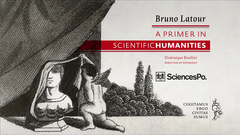
« Scientific humanities » means the extension of interpretative skills to the discoveries made by science and to technical innovations. The course will equip future citizens with the means to be at ease with many issues that straddle the distinctions between science, morality, politics and society.
Add to calendar

Trusted paper writing service WriteMyPaper.Today will write the papers of any difficulty.