

Courses tagged with "Nutrition" (6413)
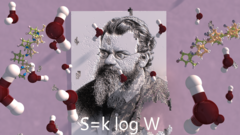
Thermodynamics explains phenomena we observe in the natural world and is the cornerstone of all of engineering. You're going to learn about thermodynamics from a molecular picture where we'll combine theory with a wide range of practical applications and examples. The principles you'll learn in this class will help you understand energy systems such as batteries, semiconductors, catalysts from a molecular perspective. But be warned: this is a fast-paced, challenging course. Everyone is welcome, but hold on to your hat!

This course is an introduction to statistical data analysis. Topics are chosen from applied probability, sampling, estimation, hypothesis testing, linear regression, analysis of variance, categorical data analysis, and nonparametric statistics.

We live in a time of unprecedented access to information. You'll learn how to use statistics to interpret that information and make decisions. San Jose State University

The job of a data scientist is to glean knowledge from complex and noisy datasets.
Reasoning about uncertainty is inherent in the analysis of noisy data. Probability and Statistics provide the mathematical foundation for such reasoning.
In this course, part of the Data Science MicroMasters program, you will learn the foundations of probability and statistics. You will learn both the mathematical theory, and get a hands-on experience of applying this theory to actual data using Jupyter notebooks.
Concepts covered included: random variables, dependence, correlation, regression, PCA, entropy and MDL.

We will learn the basics of statistical inference in order to understand and compute p-values and confidence intervals, all while analyzing data with R. We provide R programming examples in a way that will help make the connection between concepts and implementation. Problem sets requiring R programming will be used to test understanding and ability to implement basic data analyses. We will use visualization techniques to explore new data sets and determine the most appropriate approach. We will describe robust statistical techniques as alternatives when data do not fit assumptions required by the standard approaches. By using R scripts to analyze data, you will learn the basics of conducting reproducible research.
Given the diversity in educational background of our students we have divided the series into seven parts. You can take the entire series or individual courses that interest you. If you are a statistician you should consider skipping the first two or three courses, similarly, if you are biologists you should consider skipping some of the introductory biology lectures. Note that the statistics and programming aspects of the class ramp up in difficulty relatively quickly across the first three courses. By the third course will be teaching advanced statistical concepts such as hierarchical models and by the fourth advanced software engineering skills, such as parallel computing and reproducible research concepts.
These courses make up 2 XSeries and are self-paced:
PH525.1x: Statistics and R for the Life Sciences
PH525.2x: Introduction to Linear Models and Matrix Algebra
PH525.3x: Statistical Inference and Modeling for High-throughput Experiments
PH525.4x: High-Dimensional Data Analysis
PH525.5x: Introduction to Bioconductor: annotation and analysis of genomes and genomic assays
PH525.6x: High-performance computing for reproducible genomics
PH525.7x: Case studies in functional genomics
This class was supported in part by NIH grant R25GM114818.
HarvardX requires individuals who enroll in its courses on edX to abide by the terms of the edX honor code. HarvardX will take appropriate corrective action in response to violations of the edX honor code, which may include dismissal from the HarvardX course; revocation of any certificates received for the HarvardX course; or other remedies as circumstances warrant. No refunds will be issued in the case of corrective action for such violations. Enrollees who are taking HarvardX courses as part of another program will also be governed by the academic policies of those programs.
HarvardX pursues the science of learning. By registering as an online learner in an HX course, you will also participate in research about learning. Read our research statement to learn more.
Harvard University and HarvardX are committed to maintaining a safe and healthy educational and work environment in which no member of the community is excluded from participation in, denied the benefits of, or subjected to discrimination or harassment in our program. All members of the HarvardX community are expected to abide by Harvard policies on nondiscrimination, including sexual harassment, and the edX Terms of Service. If you have any questions or concerns, please contact harvardx@harvard.edu and/or report your experience through the edX contact form.

This course is a broad treatment of statistics, concentrating on specific statistical techniques used in science and industry. Topics include: hypothesis testing and estimation, confidence intervals, chi-square tests, nonparametric statistics, analysis of variance, regression, correlation, decision theory, and Bayesian statistics.

This course offers an in-depth the theoretical foundations for statistical methods that are useful in many applications. The goal is to understand the role of mathematics in the research and development of efficient statistical methods.

Statistics is a versatile discipline that has revolutionized the fields of business, engineering, medicine and pure sciences. This course is Part 2 of a 4-part series on Business Statistics, and is ideal for learners who wish to enroll in business programs. The first two parts cover topics in Descriptive Statistics, whereas the next two focus on Inferential Statistics.
Spreadsheets containing real data from diverse areas such as economics, finance and HR drive much of our discussions.
In Part 2, we use the language of probability to examine the underlying distributions of random variables. We model real-life phenomena using known variables such as Binomial, Poisson and Normal. We learn how to simulate data that are distributed according to these variables.
We shall take up datasets that have over a million rows, which makes it difficult to analyze using a spreadsheet. This is a natural setting for R, an advanced statistical programming platform. We incorporate helpful tutorials to get learners acquainted with the platform.

Statistics is a versatile discipline that has revolutionized the fields of business, engineering, medicine and pure sciences. This course is Part 1 of a 4-part series on Business Statistics, and is ideal for learners who wish to enroll in business programs. The first two courses cover topics in Descriptive Statistics, whereas the next two courses focus on Inferential Statistics.
Spreadsheets containing real data from diverse areas such as economics, finance and HR drive much of our discussions.
In Part 1, we shall be exploring multiple ways to describe these datasets, numerically as well as visually. Throughout, we shall embrace a problem-based approach to understanding the material: the primary reason to pick up a tool or a technique will be to solve a problem. Our course makes judicious use of tools.
In Part 2, we shall take up a few datasets that have over a million rows, which makes it impossible to analyze using a spreadsheet. This is a natural setting for R, an advanced statistical programming platform. The courses incorporate helpful tutorials to get learners acquainted with both the mechanisms. Parts 3 and 4 are dedicated to Inferential Statistics. In Part 3, we begin by exploring the benefits of random sampling, and apply the Central Limit Theorem to arrive at confidence intervals for important population parameters. We also learn how to formulate hypotheses for business data, and resolve them with the testing framework that we establish. Along the way, we shall compare two or more populations and draw inferences with a set of statistical tests.
You will learn all these concepts with the help of various demonstrations, which show real-life application of the concepts related to business situations.

An introduction to the statistics behind the most popular genomic data science projects. This is the sixth course in the Genomic Big Data Science Specialization from Johns Hopkins University.
Statistics One is a comprehensive yet friendly introduction to statistics.

This course is an introduction to the key ideas and principles of the collection, display, and analysis of data to guide you in making valid and appropriate conclusions about the world.

Data is everywhere, from the media to the health sciences, and from financial forecasting to engineering design. It drives our decisions, and shapes our views and beliefs. But how can we make sense of it?
This course introduces some of the key ideas and concepts of statistics, the discipline that allows us to analyse and interpret the data that underpins modern society.
In this course, you will explore the key principles of statistics for yourself, using interactive applets, and you will learn to interpret and evaluate the data you encounter in everyday life.
No previous knowledge of statistics is required, although familiarity with secondary school mathematics is advisable.
Logo image: © The University of Edinburgh 2016 CC BY, derived from Waverley Bridge, by Manuel Farnlack on Flickr, 2010 CC BY
This MOOC is designed for teachers who may be interested in creating their own STEAM CAMP based upon a proven model created by Jennifer Miller and Sandra Wozniak. Their STEAM CAMP incorporated NASA MMS Challenge curriculum, authored by Jennifer Miller, Sandra Wozniak, and Tom Chambers, along with other NASA MMS fabrication resources. To be successful in this course, participants should plan to spend approximately 3 hours per week completing activities and interacting with others. The primary audience for this course are those who wish to conduct their own STEAM Camp or after school STEAM program. This MOOC consists of five one-week modules full of NASA MMS student resources that can be used during STEAM related educational experiences. Join the conversation on Twitter, too! #STEAMMOOC

Have you ever considered going to a pharmacy to order some new cardiomyocytes (heart muscle cells) for your ailing heart? It might sound crazy, but recent developments in stem cell science have made this concept not so futuristic. In this course, we will explore the underlying biology behind the idea of using stem cells to treat disease, specifically analyzing the mechanisms that enable a single genome to encode multiple cell states ranging from neurons to fibroblasts to T cells. Overall, we hope to provide a comprehensive overview of this exciting new field of research and its clinical relevance.
This course is one of many Advanced Undergraduate Seminars offered by the Biology Department at MIT. These seminars are tailored for students with an interest in using primary research literature to discuss and learn about current biological research in a highly interactive setting. Many instructors of the Advanced Undergraduate Seminars are postdoctoral scientists with a strong interest in teaching.

The major themes of this course are estimation and control of dynamic systems. Preliminary topics begin with reviews of probability and random variables. Next, classical and state-space descriptions of random processes and their propagation through linear systems are introduced, followed by frequency domain design of filters and compensators. From there, the Kalman filter is employed to estimate the states of dynamic systems. Concluding topics include conditions for stability of the filter equations.

This course examines the fundamentals of detection and estimation for signal processing, communications, and control. Topics covered include: vector spaces of random variables; Bayesian and Neyman-Pearson hypothesis testing; Bayesian and nonrandom parameter estimation; minimum-variance unbiased estimators and the Cramer-Rao bounds; representations for stochastic processes, shaping and whitening filters, and Karhunen-Loeve expansions; and detection and estimation from waveform observations. Advanced topics include: linear prediction and spectral estimation, and Wiener and Kalman filters.

The motion of falling leaves or small particles diffusing in a fluid is highly stochastic in nature. Therefore, such motions must be modeled as stochastic processes, for which exact predictions are no longer possible. This is in stark contrast to the deterministic motion of planets and stars, which can be perfectly predicted using celestial mechanics.
This course is an introduction to stochastic processes through numerical simulations, with a focus on the proper data analysis needed to interpret the results. We will use the Jupyter (iPython) notebook as our programming environment. It is freely available for Windows, Mac, and Linux through the Anaconda Python Distribution.
The students will first learn the basic theories of stochastic processes. Then, they will use these theories to develop their own python codes to perform numerical simulations of small particles diffusing in a fluid. Finally, they will analyze the simulation data according to the theories presented at the beginning of course.
At the end of the course, we will analyze the dynamical data of more complicated systems, such as financial markets or meteorological data, using the basic theory of stochastic processes.

The transition from high school and home to college and a new living environment can be a fascinating and interesting time, made all the more challenging and interesting by being at MIT. More than recording the first semester through a series of snapshots, this freshman seminar will attempt to teach photography as a method of seeing and a tool for better understanding new surroundings. Over the course of the semester, students will develop a body of work through a series of assignments, and then attempt to describe the conditions and emotions of their new environment in a cohesive final presentation.

By Greta Cowan
Add to calendar

Trusted paper writing service WriteMyPaper.Today will write the papers of any difficulty.