

Courses tagged with "Nutrition" (6413)

This participatory seminar focuses on the knowledge and skills necessary for teaching science and engineering in higher education. This course is designed for graduate students interested in an academic career, and anyone else interested in teaching. Readings and discussions include: teaching equations for understanding, designing exam and homework questions, incorporating histories of science, creating absorbing lectures, teaching for transfer, the evils of PowerPoint, and planning a course. The subject is appropriate for both novices and those with teaching experience.

This participatory seminar focuses on the knowledge and skills necessary for teaching science and engineering in higher education. This course is designed for graduate students interested in an academic career, and anyone else interested in teaching. Topics include theories of adult learning; course development; promoting active learning, problem-solving, and critical thinking in students; communicating with a diverse student body; using educational technology to further learning; lecturing; creating effective tests and assignments; and assessment and evaluation. Students research and present a relevant topic of particular interest. The subject is appropriate for both novices and those with teaching experience.

This participatory seminar focuses on the knowledge and skills necessary for teaching science and engineering in higher education. It is designed for graduate students interested in an academic career, and anyone else interested in teaching. Students research and present a relevant topic of particular interest. The subject is appropriate for both novices and those with teaching experience.
This participatory seminar focuses on the knowledge and skills necessary for teaching science and engineering in higher education. This course is designed for graduate students interested in an academic career, and anyone else interested in teaching. Topics include theories of adult learning; course development; promoting active learning, problem-solving, and critical thinking in students; communicating with a diverse student body; using educational technology to further learning; lecturing; creating effective tests and assignments; and assessment and evaluation. Students research and present a relevant topic of particular interest. The subject is appropriate for both novices and those with teaching experience.

This two-part course is for primary and secondary school teachers who are preparing to tackle the new computing curriculum.

This two-part course is for primary and secondary school teachers who are preparing to tackle the new computing curriculum.

This seven-week course was designed for any lecturer/instructor/teacher who wants to learn how to run an EAP (English for Academic Purposes) course.

Ignite the passion of STEM inquiry and interest with elementary and middle school girls through after school programs, STEM integration, Makerspace, and STEAM camp programs through a project based learning Girls Going Green challenge.

The course offers a review of (at least) the business, legal, pedagogical and technical aspects of MOOCs, destined to higher education professionals who might feel threatened by them in terms of job security.

How can you help your students to see history as a living, breathing record of the past? How can you motivate students to ask probing questions and seek complex answers? How can you bridge their historical knowledge with a lifelong commitment to civic action?
With this self-paced course, middle and high school teachers will find new ways to engage students in and out of the classroom. Co-taught by Dr. Kathy Swan, Professor of Education at the University of Kentucky, and Naomi Coquillon, Manager of Youth and Teacher Programs at the Smithsonian’s National Museum of American History, this self-paced course will offer teachers useful and readily applicable strategies and tactics to incorporate inquiry-based learning methods into their existing history lessons.
The self-paced course brings together the new College, Career and Civic Life (C3) Framework for Social Studies with the Smithsonian’s hands-on, museum-based educational techniques that bring historical artifacts to life for millions of visitors each year. Through explanation, demonstration, and dynamic examples, the course offers teachers practical ideas for how to entice students to craft complex and incisive questions; think critically about primary and secondary historical sources; form and support their opinions with evidence; and communicate their conclusions in ways that will prepare them to be engaged citizens of the world. Demonstrations will feature the Smithsonian National Museum of American History’s exhibitions and vast collection of historical artifacts and will offer ideas and resources to help teachers everywhere incorporate object- and inquiry-based teaching techniques and Smithsonian online resources into their own classrooms.

In this course, an experienced academic librarian will share his strategies for getting students engaged in the art of library research.

This course provides current and aspiring K–12 teachers with research-based practical guidelines and strategies to effectively teach mathematics to English language learners (ELLs).

This course invites your critical reflection on the methods of online instruction; beliefs and potential bias of the online learner; policies and rules and how they align with course objectives; tone and the purpose of communication.

This education and teacher training course will help you blend secondary math instruction with real-world discussion topics such as inequity, poverty, and privilege. Throughout this course, we will also have the opportunity to explore multiple math activities and resources including how to leverage real-world data for classroom instruction.

This course is for all K-12 teachers in all subjects looking to add effective speaking and listening lessons to their repertoire.
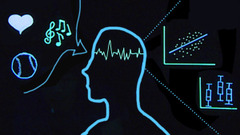
We prepare high school teachers for teaching descriptive statistics. Teachers will learn basic principles for summarizing data in meaningful ways. Satellite videos will discuss pedagogy and teach statistical software via examples spanning pop culture, sports, health and other topics suitable for high school classrooms.

In a practical 10-session format, Creating a Healthy Foundation presents a holistic approach to beginning violin and viola pedagogy, offering both new and seasoned string teachers a step-by-step exercise guide and repertoire that will have students looking and sounding terrific.

Teaching with Davidson Next explains the purpose and mission of Davidson Next: to help improve teaching and learning in AP courses with digital materials on edX.org. To help inspire you, we share real-life examples of ways that AP® teachers have leveraged Davidson Next and best practices for blended learning. Our Davidson Next modules are designed to support you as a form of co-teaching.
We know that as AP® teachers you are highly committed to your students and creating a great experience in your classroom. To that end, we want to help you effectively use the Davidson Next modules in your AP® classes. When you’re armed with AP®-aligned content and know ways to integrate it into what you are already doing, you can expand your options as a teacher and help your students learn and master concepts in new ways!
Join fellow AP® teachers from around the country in this course! You will have plenty of opportunities to collaborate and discuss with one another on ways to implement Davidson Next in your classes.
Advanced Placement® and AP® are trademarks registered and/or owned by the College Board, which was not involved in the production of, and does not endorse, these offerings.

INQ101x is designed with K-12 teachers in mind. Teacher candidates, higher education instructors, and other educators may also find it relevant. In six weeks, we discuss some of the major themes and challenges of integrating inquiry and technology as a community of practitioners. We collect and share resources and exchange ideas about what works for specific topics and age groups.

The Team Project has the goals of (1) developing teamwork and leadership skills and (2) learning from the analysis of a change initiative in a real-world company using concepts from other core courses. This class has no regular class schedule or weekly readings. Almost everything is oriented around your team and your project, with only a few deadlines. Each team is responsible for analyzing a recent, ongoing, or anticipated initiative at a real company. Examples might be a strategic reorientation, organizational restructuring, introduction of a new technology, or worker participation program.
This course is closely integrated with other MBA core classes: readings are assigned through Organizational Processes (15.311) and oral presentations are given in Communication for Managers (15.280).
Add to calendar

Trusted paper writing service WriteMyPaper.Today will write the papers of any difficulty.