

Courses tagged with "Nutrition" (6413)
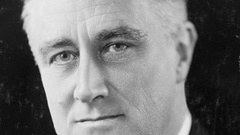
Who were Franklin, Eleanor, and Theodor Roosevelt? What values did they stand for? This course explores twentieth century US history through these three unique leaders. The 3Rs propelled the United States into a superpower. They changed the way we think about security, equality, and freedom. The Roosevelt Century takes you through their time, and connects it with our own

This course is an an exploration of British culture and politics, focusing on the changing role of the monarchy from the accession of the House of Hanover (later Windsor) in 1714 to the present. The dynasty has encountered a series of crises, in which the personal and the political have been inextricably combined: for example, George III's mental illness; the scandalous behavior of his son, George IV; Victoria's withdrawal from public life after the death of Prince Albert; the abdication of Edward VIII; and the public antagonism sparked by sympathy for Diana, Princess of Wales.

What exactly are genetically modified organisms (GMOs) and why do scientists develop them? Studying the science of GMOs helps us understand biotechnology’s potential role in addressing challenges in agriculture.
In this introductory Food and Nutrition course, you will learn the basics of genetic engineering, explore the political debate around the GMO and review the arguments for and against their use.
We will study the politics surrounding the GMO and its impact at both an individual level and to society as a whole; including the problems, perceptions, benefits, and risks associated with GMOs. Important to understanding the complexities around this topic we will not only be looking at the science behind how the GMO works, but also to the limitations of this science. We will also discuss the importance of information literacy as a tool for effectively identifying and evaluating issues.
Our goal is that this MOOC will impact people's understanding of science, what it can and can't do, and how information is transmitted. The intent is not to influence how people feel about GMOs, but to give them the critical thinking and scientific literacy tools necessary to make informed decisions — and to understand the broader impacts of those decisions.

This course introduces the origin and key concepts of sustainability and how to apply those to sustainable development practice.
Sustainable development will be explored through theories and case studies from a range of Disciplines. You also will learn about planetary boundaries, urbanisation and growing inequality, to show how integral sustainable development is to our everyday existence.
This course will attempt to provide key content knowledge to bridge the science and the practice of the application and enhancement of sustainable development. The course draws on contemporary examples from both The University of Queensland (UQ) and the Sustainable Development Solutions Network (SDSN) to address the world’s most urgent challenges, with emphasis on the linkages between science and policy.

Concerned about how the digital age is impacting your well-being? Looking for ways to find balance? This course takes the ancient practice of yoga and translates it into modern day science with practical applications.
You will learn how to practice yoga on the mat as well as in your everyday life using aspects of yoga that are immediately applicable to you. Having taught yoga to thousands of people just like you, we have reduced the practice down to the nectar of what really works.
Your team of instructors brings a dynamic blend of science and practice to the course. Stacy and Dave Dockins own four yoga studios in Texas and have trained hundreds of instructors to teach yoga as a life-transforming practice rooted in mindfulness. Dr. Catherine Spann and Dr. George Siemens are researching what it means to be human in a digital age at the University of Texas at Arlington’s LINK Research Lab. With years of experience in online education and psychological research, they bring expertise in learning and well-being in the digital age.
This course is for anyone interested in learning the science and practice of yoga. No previous yoga experience is needed! We welcome those who are interested in learning the basics of yoga postures as well as experienced yoga practitioners or instructors looking to deepen their practice.
By signing up for this course, you will have the opportunity to meet and discuss yoga and meditation with people from across the world. Encourage friends, family, and colleagues to sign up with you!

The science essay uses science to think about the human condition; it uses humanistic thinking to reflect on the possibilities and limits of science and technology. In this class we read and practice writing science essays of varied lengths and purposes. We will read a wide variety of science essays, ranging across disciplines, both to learn more about this genre and to inspire your own writing. This semester's reading centers on "The Dark Side," with essays ranging from Alan Lightman's "Prisoner of the Wired World" through Robin Marantz Henig's cautionary account of nano-technology ("Our Silver-Coated Future") to David Quammen's investigation of diseases that jump from animals to humans ("Deadly Contact").

We will explore the psychology of our everyday thinking: why people believe weird things, how we form and change our opinions, why our expectations skew our judgments, and how we can make better decisions. We’ll discuss and debate topics such as placebos, the paranormal, medicine, miracles, and more.
You will use the scientific method to evaluate claims, make sense of evidence, and understand why we so often make irrational choices. You will begin to rely on slow, effortful, deliberative, analytic, and logical thinking rather than fast, automatic, instinctive, emotional, and stereotypical thinking.
We will provide tools for how to think independently, how to be skeptical, and how to value data over personal experience. We will examine the mental shortcuts that people use and misuse, and apply this knowledge to help make better decisions, and improve critical thinking.

This course will introduce you to some of the science behind food preparation, cooking methods, and generally, the enjoyment of food. The ultimate goal is to inspire you to apply scientific principles in your everyday cooking, including the principles of manipulating the human perception of food.

"A free eight-week Science of Happiness course that will offer practical, research-backed tips on living a happy and meaningful life." - The Huffington Post
We all want to be happy, and there are countless ideas about what happiness is and how we can get some. But not many of those ideas are based on science. That’s where this course comes in.
“The Science of Happiness” is the first MOOC to teach the ground-breaking science of positive psychology, which explores the roots of a happy and meaningful life. Students will engage with some of the most provocative and practical lessons from this science, discovering how cutting-edge research can be applied to their own lives. Created by UC Berkeley’s Greater Good Science Center, the course will zero in on a fundamental finding from positive psychology: that happiness is inextricably linked to having strong social connections and contributing to something bigger than yourself—the greater good. Students will learn about the cross-disciplinary research supporting this view, spanning the fields of psychology, neuroscience, evolutionary biology, and beyond.
What’s more, “The Science of Happiness” offers students practical strategies for tapping into and nurturing their own happiness, including trying several research-backed activities that foster social and emotional well-being, and exploring how their own happiness changes along the way.
The course’s co-instructors, Dacher Keltner and Emiliana Simon-Thomas, are not only leading authorities on positive psychology but also gifted teachers skilled at making science fun and personal. They’ll be joined by world-renowned experts discussing themes like empathy, mindfulness, and gratitude—experts including Barbara Fredrickson, Paul Ekman, Sonja Lyubomirsky, and Jon Kabat-Zinn. Health professionals who register can earn continuing education units for their participation.
Consider signing up for this course with a friend or group - tweet about your registration, share it on Facebook, and use the buddy system to stay on track. Join the conversation on The Greater Good Science Center Facebook page, or in the BerkeleyX: GG101x The Science of Happiness Facebook group.

This education course will show you, through current research, how we learn — the way our brain makes, stores, and retrieves memories.
You will examine common misconceptions and misunderstandings about learning that can prevent students from learning at their fullest capacity. Along the way you will explore the practical implications of cognitive science for classroom teaching in terms of choosing effective instructional strategies, developing useful assessments, motivating student effort, and designing learner-centered curricular units.
This course is aimed to enhance the practice of K-12 teachers.

Learn the science behind how and why medicines work, and what can improve the patient treatment experience.

Everyone has an opinion on parenting – where babies should sleep, what they should eat, and whether parents should spank, scold, or praise. What’s more, the media often offers support for whichever opinions appear most popular at any given time. This leaves those of us who like to base our decisions on firm, provable facts feeling dizzy.
“The Science of Parenting” addresses this confusion by moving beyond the chatter and opinion surrounding parenting, and by looking directly at the science. Parenting itself is far from a science. Nevertheless, scientists have conducted thousands of studies that can help parents – or future parents – make sensible, informed decisions.
One goal of this course will be to provide a survey of important scientific findings spanning a range of topics that are central to the lives of parents:
- diet;
- sleep;
- discipline;
- learning;
- screen time;
- impulse control;
- vaccination.
We’ll also explore ongoing mysteries, like what causes autism, and why so many children are allergic to peanuts.
Perhaps more important, this course will not only dig into existing science, but will also explore the underlying nature of parenting science itself. Often, scientists measure correlations: they ask how different parenting practices are related to different behaviors in children. But the claims they make from correlational data are often much, much stronger. For example, from correlational data, scientists often claim that parents cause the behaviors of their kids. This course will show how this type of error – common in the scientific literature – can explain a significant amount of the confusion present in the media and general public. We will discuss how to avoid the same error when evaluating science, and how to use the sum of available evidence to inform decision making.
The course’s instructor, David Barner, is a leading authority on cognitive development. He is joined by leading experts on behavior genetics, vaccination, autism, lying, and spanking, as well as by real live parents who try to use science to inform their decisions. This class is suitable not only for parents, future parents, and grandparents, but also for professionals interested in health care, social work, and early childhood education who want to increase their knowledge and analysis skills.

Drawing on new scientific advances, this religion course examines foundational questions about the nature of religious belief and practice.
The course is based on the idea that religion is a naturalistic phenomenon — meaning it can be studied and better understood using the tools of science. Religious belief and practice emerge naturally from the structure of human psychology, and have an important impact on the structure of societies, the way groups relate to each other, and the ability of human beings to cooperate effectively.
Topics to be covered will include traditional and contemporary theories of religion, with a special emphasis on cultural evolutionary models.

Production of this MOOC was partially funded by a Social Sciences and Humanities Research Council (SSHRC) of Canada Partnership Grant on ‘The Evolution of Religion and Morality’ (PI: Edward Slingerland), and represents one of this grant’s major knowledge mobilization and research dissemination initiatives.

Health professionals and students and health consumers interested in learning about patient safety will acquire foundational knowledge of the principles of the science and culture of safety in healthcare in this five-week course.

Explore the solar system using concepts from physics, chemistry, biology, and geology. Learn the latest from Mars, explore the outer solar system, ponder planets outside our solar system, and search for habitability in the universe.

Whether you are trying to lose weight yourself, or are supporting others, this food and nutrition course will dispel common myths about weight loss and teach you the science behind healthy eating for a healthy weight.
This course is not a diet plan – there are plenty of diet plans out there to choose from. Rather, we will take you through the science behind weight loss and arm you with the knowledge and tools to make the right decisions.
Based on the latest research, you’ll learn to develop a healthy eating plan to achieve a healthy weight. You’ll also discover more about the definition of a healthy weight, the nutritional composition of foods, how to cut calories or kilojoules, proper portion sizes, and how to identify and avoid fad diets.

If you are unable to access Youtube, the introductory video is available via XuetangX. Connect with the course team and fellow learners on Facebook at https://www.facebook.com/HKUxArchitecture
This 5-week introductory course is for those who would like to explore and be fascinated by vernacular architecture – the subject and study of everyday buildings, landscapes and sites which are not designed by professional architects but “ordinary” practitioners. It explores vernacular architecture as an expression of local identity, indigenous traditions, and assimilation of different cultures.
This course covers topics such as native building materials, the interaction between people, culture and the vernacular, as well as the vernacular landscape. It has a special emphasis on the built heritage of Asia, which allows students to take a closer look at examples in diverse locales, such as the leather yurts in Mongolia, timber houses in Japan, brick, mud and straw houses in India, reinforced concrete fortified towers and grey brick courtyard houses in Southern China including Macau and Hong Kong.
Designed to promote discussion and dialogue while contributing to the discourse surrounding the concept of the vernacular, this course challenges the perception of tradition and stimulates a deeper analysis of one’s local environment. Indeed, we are keen to hear about how you link your new understanding to vernacular architecture in your neighborhood.
Those who wish to extend their experience and exploration please also join our subsequent 5-week course The Search for Vernacular Architecture of Asia, Part 2 in Summer 2015.
本入门课程为期5周,适合本土建筑爱好者。本土建筑的研究对象是普通日常建筑、景观以及场所。它们并非出自建筑师之手,而是由普通人自己建造。在本课程中,我们将民居建筑视作不同地区的“社区认同”和“本地传统”以及不同文化融合的一种表达方式。
课程内容包括建筑技术和建筑材料、人与文化和传统、 以及本土建筑与景观。本课程以亚洲建筑文化遗产为实例,供学生深入学习,其中包括蒙古地区的蒙古包、日本的木结构房屋、印度的土屋、中国南方澳门与香港一带以钢筋混凝土为建筑材料的塔楼和灰砖庭院。
本课程旨在以讨论和对话的方式研究亚洲的本土建筑,推动本土概念的发展。在此之上,本课程反思了“传统”这个概念,使我们能够更加深入地分析自身所处的环境。我们期待能够听到一些您对本土建筑的新理解。
感兴趣的学生可以参加《探索亚洲地区的民居建筑,第2部分》。

Get under the skin of brands as we reveal the secret powers behind the most potent commercial and cultural force on the planet.

Learn how social factors promote mental health, influence the onset and course of mental illness, and affect how mental illnesses are diagnosed and treated.

This course is an introduction to the theory that tries to explain how minds are made from collections of simpler processes. It treats such aspects of thinking as vision, language, learning, reasoning, memory, consciousness, ideals, emotions, and personality. It incorporates ideas from psychology, artificial intelligence, and computer science to resolve theoretical issues such as wholes vs. parts, structural vs. functional descriptions, declarative vs. procedural representations, symbolic vs. connectionist models, and logical vs. common-sense theories of learning.
Add to calendar

Trusted paper writing service WriteMyPaper.Today will write the papers of any difficulty.