

Courses tagged with "USMx" (65)

SQL is the language of all databases, this course offers an easy way to master the SQL fundamentals

PostgreSQL Tutorial: What you need to know to get started with relational databases in PostgreSQL
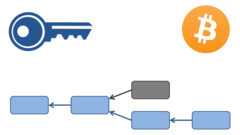
There’s a lot of excitement about Bitcoin, but also a lot of confusion about what Bitcoin is and how it works. We’re offering this course focusing on the computer science behind Bitcoin to help cut through the hype and get to the core of what makes Bitcoin unique.

In this course, you will explore several structured, risk management approaches that guide information security decision-making.

Learn how to use the cloud and write programs for data analytics.

The network is what makes the cloud. The cloud’s key capabilities—the ability to share infrastructure, the ability to move and scale applications across servers, massive parallelism, virtualization, and worldwide connectivity—are all rooted in the network. Learn how it all works!

This course will discuss the major ideas used today in the implementation of programming language compilers. You will learn how a program written in a high-level language designed for humans is systematically translated into a program written in low-level assembly more suited to machines!

In this course, you will learn to design the computer architecture of complex modern microprocessors.

The Internet is a computer network that millions of people use every day. Understand the design strategies used to solve computer networking problems while you learn how the Internet works.

Lecture Series on Computer Architecture by Prof. Anshul Kumar, Department of Computer Science & Engineering ,IIT Del

Lecture Series on Computer Networks by Prof. S.Ghosh,Department of Computer Science & Engineering, I.I.T.,Kharagpur.

Learn how to design secure systems and write secure code.

Let’s make history together - again! 让我们再一次创造历史!

This course will introduce you to the foundations of modern cryptography, with an eye toward practical applications.

Learn about the inner workings of cryptographic primitives and how to apply this knowledge in real-world applications!

Learn about the inner workings of cryptographic primitives and protocols and how to apply this knowledge in real-world applications.

Modern computer technology requires an understanding of both hardware and software, as the interaction between the two offers a framework for mastering the fundamentals of computing. The purpose of this course is to cultivate an understanding of modern computing technology through an in-depth study of the interface between hardware and software. In this course, you will study the history of modern computing technology before learning about modern computer architecture and a number of its important features, including instruction sets, processor arithmetic and control, the Von Neumann architecture, pipelining, memory management, storage, and other input/output topics. The course will conclude with a look at the recent switch from sequential processing to parallel processing by looking at the parallel computing models and their programming implications.
Because we have compiler programs, software developers often take the process of compilation for granted. However, as a software developer, you should cultivate a solid understanding of how compilers work in order to develop the strongest code possible and fully understand its underlying language. In addition, the compilation process comprises techniques that are applicable to the development of many software applications. As such, this course will introduce you to the compilation process, present foundational topics on formal languages and outline each of the essential compiler steps: scanning, parsing, translation and semantic analysis, code generation, and optimization. By the end of the class, you will have a strong understanding of what it means to compile a program, what happens in the process of translating a higher-level language into a lower-level language, and the applicability of the steps of the compilation process to other applications.
Though we may not recognize them in our everyday activities, databases are everywhere. They are hidden behind your online banking profile, airline reservation systems, medical records, and even employment records. This course will provide students with a general overview of databases, introducing you to database history, modern database systems, the different models used to design a database, and Structured Query Language (SQL), which is the standard language used to access and manipulate databases. Many of the principles of database systems carry to other areas in computer science, especially operating systems. Databases are often thought of as one of the core computer science topics, since many other areas in the discipline have been derived from this area.

Learn about the ten domains of cybersecurity through the lens of subject area experts from companies such as Coca Cola, SAP, and Macy's.
Add to calendar

Trusted paper writing service WriteMyPaper.Today will write the papers of any difficulty.