

Courses tagged with "Web Design" (101)

Learn the basic concepts of data mining and dive deep into pattern discovery methods and their applications.

Everyone in education has questions – Practical Learning Analytics is about answering them. To be practical, we’ll focus on data every university records; to keep things interesting, we’ll examine questions raised by many audiences; to ensure impact, we’ll provide realistic data and example code.

Learn the basic components of building and applying prediction functions with an emphasis on practical applications. This is the eighth course in the Johns Hopkins Data Science Specialization.

This course is designed for high school students preparing to take the AP* Statistics Exam. * AP Statistics is a registered trademark of the College Board, which was not involved in the production of, and does not endorse, this product.
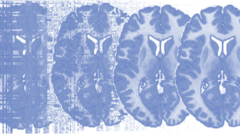
This course covers the design, acquisition, and analysis of Functional Magnetic Resonance Imaging (fMRI) data.
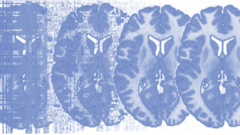
This course covers the analysis of Functional Magnetic Resonance Imaging (fMRI) data. It is a continuation of the course “Principles of fMRI, Part 1”

How should we interpret chance around us? Watch beautiful mathematical ideas emerge in a glorious historical tapestry as we discover key concepts in probability, perhaps as they might first have been unearthed, and illustrate their sway with vibrant applications taken from history and the world around.

Process mining is the missing link between model-based process analysis and data-oriented analysis techniques. Through concrete data sets and easy to use software the course provides data science knowledge that can be applied directly to analyze and improve processes in a variety of domains.

The level of popularity you experienced in childhood and adolescence is still affecting you today in ways that you may not even realize. Learn about how psychologists study popularity and how these same concepts can be used in adulthood to be more successful at work, become better parents, and have a happier life.
This class provides an introduction to the Python programming language and the iPython notebook. This is the third course in the Genomic Big Data Science Specialization from Johns Hopkins University.

Learn about the qualitative approach to the social and behavioral sciences, using qualitative methods of inquiry and analysis. Learn to evaluate qualitative research and how to collect qualitative data and perform qualitative analyses yourself.

This course will cover the basic elements of designing and evaluating questionnaires. We will review the process of responding to questions, challenges and options for asking questions about behavioral frequencies, practical techniques for evaluating questions, mode specific questionnaire characteristics, and review methods of standardized and conversational interviewing.
Learn how to program in R and how to use R for effective data analysis. This is the second course in the Johns Hopkins Data Science Specialization.

In this final project course, students will take a position on a controversial topic, research the topic, and present arguments based on data analysis in the form of a 1,500-2,000 word essay.

Learn how to use regression models, the most important statistical analysis tool in the data scientist's toolkit. This is the seventh course in the Johns Hopkins Data Science Specialization.

Learn the concepts and tools behind reporting modern data analyses in a reproducible manner. This is the fifth course in the Johns Hopkins Data Science Specialization.
Over the past several decades, operations strategy has played an increasingly important role in business’ success. In this course, we will equip you with concepts and tools to build operations in a way that not only supports your competitive strategy, but also allows you to create new opportunities in the market place.

Investigate the flexibility and power of project-oriented computational analysis, and enhance communication of information by creating visual representations of scientific data.

Learn how to model social and economic networks and their impact on human behavior. How do networks form, why do they exhibit certain patterns, and how does their structure impact diffusion, learning, and other behaviors? We will bring together models and techniques from economics, sociology, math, physics, statistics and computer science to answer these questions.

Discover the principles of solid scientific methods in the behavioral and social sciences. Join us and learn to separate sloppy science from solid research!
Add to calendar

Trusted paper writing service WriteMyPaper.Today will write the papers of any difficulty.