

Online courses directory (10358)
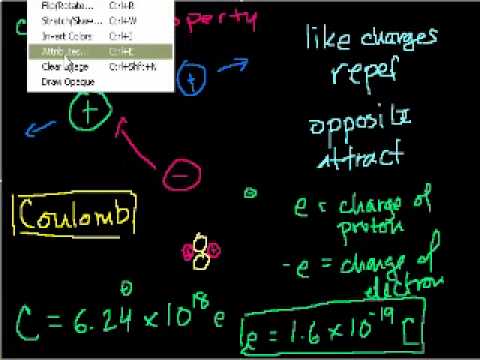
Electrostatics (part 1): Introduction to Charge and Coulomb's Law. Electrostatics (part 2). Proof (Advanced): Field from infinite plate (part 1). Proof (Advanced): Field from infinite plate (part 2). Electric Potential Energy. Electric Potential Energy (part 2-- involves calculus). Voltage. Capacitance. Circuits (part 1). Circuits (part 2). Circuits (part 3). Circuits (part 4). Cross product 1. Cross Product 2. Cross Product and Torque. Introduction to Magnetism. Magnetism 2. Magnetism 3. Magnetism 4. Magnetism 5. Magnetism 6: Magnetic field due to current. Magnetism 7. Magnetism 8. Magnetism 9: Electric Motors. Magnetism 10: Electric Motors. Magnetism 11: Electric Motors. Magnetism 12: Induced Current in a Wire. The dot product. Dot vs. Cross Product. Calculating dot and cross products with unit vector notation. Electrostatics (part 1): Introduction to Charge and Coulomb's Law. Electrostatics (part 2). Proof (Advanced): Field from infinite plate (part 1). Proof (Advanced): Field from infinite plate (part 2). Electric Potential Energy. Electric Potential Energy (part 2-- involves calculus). Voltage. Capacitance. Circuits (part 1). Circuits (part 2). Circuits (part 3). Circuits (part 4). Cross product 1. Cross Product 2. Cross Product and Torque. Introduction to Magnetism. Magnetism 2. Magnetism 3. Magnetism 4. Magnetism 5. Magnetism 6: Magnetic field due to current. Magnetism 7. Magnetism 8. Magnetism 9: Electric Motors. Magnetism 10: Electric Motors. Magnetism 11: Electric Motors. Magnetism 12: Induced Current in a Wire. The dot product. Dot vs. Cross Product. Calculating dot and cross products with unit vector notation.
Fluids (part 1). Fluids (part 2). Fluids (part 3). Fluids (part 4). Fluids (part 5). Fluids (part 6). Fluids (part 7). Fluids (part 8). Fluids (part 9). Fluids (part 10). Fluids (part 11). Fluids (part 12). Fluids (part 1). Fluids (part 2). Fluids (part 3). Fluids (part 4). Fluids (part 5). Fluids (part 6). Fluids (part 7). Fluids (part 8). Fluids (part 9). Fluids (part 10). Fluids (part 11). Fluids (part 12).
This tutorial is the meat of much of classical physics. We think about what a force is and how Newton changed the world's (and possibly your) view of how reality works. Newton's First Law of Motion. Newton's First Law of Motion Concepts. Newton's First Law of Motion. Newton's First Law. Newton's Second Law of Motion. Newton's Third Law of Motion. Newton's Third Law of Motion. All of Newton's Laws of Motion. Normal Force and Contact Force. Normal Force in an Elevator. Balanced and Unbalanced Forces. Unbalanced Forces and Motion. Slow Sock on Lubricon VI. Normal Forces on Lubricon VI. Inclined Plane Force Components. Ice Accelerating Down an Incline. Force of Friction Keeping the Block Stationary. Correction to Force of Friction Keeping the Block Stationary. Force of Friction Keeping Velocity Constant. Intuition on Static and Kinetic Friction Comparisons. Static and Kinetic Friction Example. Introduction to Tension. Introduction to Tension (Part 2). Tension in an accelerating system and pie in the face. Newton's First Law of Motion. Newton's First Law of Motion Concepts. Newton's First Law of Motion. Newton's First Law. Newton's Second Law of Motion. Newton's Third Law of Motion. Newton's Third Law of Motion. All of Newton's Laws of Motion. Normal Force and Contact Force. Normal Force in an Elevator. Balanced and Unbalanced Forces. Unbalanced Forces and Motion. Slow Sock on Lubricon VI. Normal Forces on Lubricon VI. Inclined Plane Force Components. Ice Accelerating Down an Incline. Force of Friction Keeping the Block Stationary. Correction to Force of Friction Keeping the Block Stationary. Force of Friction Keeping Velocity Constant. Intuition on Static and Kinetic Friction Comparisons. Static and Kinetic Friction Example. Introduction to Tension. Introduction to Tension (Part 2). Tension in an accelerating system and pie in the face.

Classical gravity. How masses attract each other (according to Newton). Introduction to Gravity. Mass and Weight Clarification. Gravity for Astronauts in Orbit. Would a Brick or Feather Fall Faster. Acceleration Due to Gravity at the Space Station. Space Station Speed in Orbit. Introduction to Newton's Law of Gravitation. Gravitation (part 2). Introduction to Gravity. Mass and Weight Clarification. Gravity for Astronauts in Orbit. Would a Brick or Feather Fall Faster. Acceleration Due to Gravity at the Space Station. Space Station Speed in Orbit. Introduction to Newton's Law of Gravitation. Gravitation (part 2).

Build your earth science vocabulary and learn about cycles of matter and types of sedimentary rocks through the Education Portal course Earth Science 101: Earth Science. Our series of video lessons and accompanying self-assessment quizzes can help you boost your scientific knowledge ahead of the Excelsior Earth Science exam . This course was designed by experienced educators and examines both science basics, like experimental design and systems of measurement, and more advanced topics, such as analysis of rock deformation and theories of continental drift.

Linear momentum. Conservation of momentum. Elastic collisions. Introduction to Momentum. Momentum: Ice skater throws a ball. 2-dimensional momentum problem. 2-dimensional momentum problem (part 2). Introduction to Momentum. Momentum: Ice skater throws a ball. 2-dimensional momentum problem. 2-dimensional momentum problem (part 2).
Relationship between angular velocity and speed. Why Distance is Area under Velocity-Time Line. Introduction to Vectors and Scalars. Calculating Average Velocity or Speed. Solving for Time. Displacement from Time and Velocity Example. Acceleration. Balanced and Unbalanced Forces. Unbalanced Forces and Motion. Newton's First Law of Motion. Newton's First Law of Motion Concepts. Newton's First Law of Motion. Newton's Second Law of Motion. Newton's Third Law of Motion. Airbus A380 Take-off Time. Airbus A380 Take-off Distance. Average Velocity for Constant Acceleration. Acceleration of Aircraft Carrier Takeoff. Race Cars with Constant Speed Around Curve. Introduction to Gravity. Mass and Weight Clarification. Gravity for Astronauts in Orbit. Would a Brick or Feather Fall Faster. Deriving Displacement as a Function of Time, Acceleration and Initial Velocity. Plotting Projectile Displacement, Acceleration, and Velocity. Projectile Height Given Time. Deriving Max Projectile Displacement Given Time. Impact Velocity From Given Height. Visualizing Vectors in 2 Dimensions. Projectile at an Angle. Different Way to Determine Time in Air. Launching and Landing on Different Elevations. Total Displacement for Projectile. Total Final Velocity for Projectile. Correction to Total Final Velocity for Projectile. Projectile on an Incline. Unit Vectors and Engineering Notation. Clearing the Green Monster at Fenway. Green Monster at Fenway Part 2. Optimal angle for a projectile part 1. Optimal angle for a projectile part 2 - Hangtime. Optimal angle for a projectile part 3 - Horizontal distance as a function of angle (and speed). Optimal angle for a projectile part 4 Finding the optimal angle and distance with a bit of calculus. Slow Sock on Lubricon VI. Normal Forces on Lubricon VI. Normal Force and Contact Force. Normal Force in an Elevator. Inclined Plane Force Components. Ice Accelerating Down an Incline. Force of Friction Keeping the Block Stationary. Correction to Force of Friction Keeping the Block Stationary. Force of Friction Keeping Velocity Constant. Intuition on Static and Kinetic Friction Comparisons. Static and Kinetic Friction Example. Introduction to Tension. Introduction to Tension (Part 2). Tension in an accelerating system and pie in the face. Introduction to Momentum. Momentum: Ice skater throws a ball. 2-dimensional momentum problem. 2-dimensional momentum problem (part 2). Introduction to work and energy. Work and Energy (part 2). Conservation of Energy. Work/Energy problem with Friction. Introduction to mechanical advantage. Mechanical Advantage (part 2). Mechanical Advantage (part 3). Center of Mass. Introduction to Torque. Moments. Moments (part 2). Unit Vector Notation. Unit Vector Notation (part 2). Projectile Motion with Ordered Set Notation. Projectile motion (part 1). Projectile motion (part 2). Projectile motion (part 3). Projectile motion (part 4). Projectile motion (part 5). Centripetal Force and Acceleration Intuition. Visual Understanding of Centripetal Acceleration Formula. Calculus proof of centripetal acceleration formula. Loop De Loop Question. Loop De Loop Answer part 1. Loop De Loop Answer part 2. Acceleration Due to Gravity at the Space Station. Space Station Speed in Orbit. Conservation of angular momentum. Introduction to Newton's Law of Gravitation. Gravitation (part 2). Viewing g as the value of Earth's Gravitational Field Near the Surface. Intro to springs and Hooke's Law. Potential energy stored in a spring. Spring potential energy example (mistake in math). Introduction to Harmonic Motion. Harmonic Motion Part 2 (calculus). Harmonic Motion Part 3 (no calculus).
Thinking about making things rotate. Center of mass, torque, moments and angular velocity. Center of Mass. Introduction to Torque. Moments. Moments (part 2). Relationship between angular velocity and speed. Conservation of angular momentum. Center of Mass. Introduction to Torque. Moments. Moments (part 2). Relationship between angular velocity and speed. Conservation of angular momentum.
In this tutorial we begin to explore ideas of velocity and acceleration. We do exciting things like throw things off of cliffs (far safer on paper than in real life) and see how high a ball will fly in the air. Introduction to Vectors and Scalars. Calculating Average Velocity or Speed. Solving for Time. Displacement from Time and Velocity Example. Acceleration. Airbus A380 Take-off Time. Airbus A380 Take-off Distance. Why Distance is Area under Velocity-Time Line. Average Velocity for Constant Acceleration. Acceleration of Aircraft Carrier Takeoff. Deriving Displacement as a Function of Time, Acceleration and Initial Velocity. Plotting Projectile Displacement, Acceleration, and Velocity. Projectile Height Given Time. Deriving Max Projectile Displacement Given Time. Impact Velocity From Given Height. Viewing g as the value of Earth's Gravitational Field Near the Surface. Projectile motion (part 1). Projectile motion (part 2). Projectile motion (part 3). Projectile motion (part 4). Projectile motion (part 5). Introduction to Vectors and Scalars. Calculating Average Velocity or Speed. Solving for Time. Displacement from Time and Velocity Example. Acceleration. Airbus A380 Take-off Time. Airbus A380 Take-off Distance. Why Distance is Area under Velocity-Time Line. Average Velocity for Constant Acceleration. Acceleration of Aircraft Carrier Takeoff. Deriving Displacement as a Function of Time, Acceleration and Initial Velocity. Plotting Projectile Displacement, Acceleration, and Velocity. Projectile Height Given Time. Deriving Max Projectile Displacement Given Time. Impact Velocity From Given Height. Viewing g as the value of Earth's Gravitational Field Near the Surface. Projectile motion (part 1). Projectile motion (part 2). Projectile motion (part 3). Projectile motion (part 4). Projectile motion (part 5).
Pendulums. Slinkies. You when you have to use the bathroom but it is occupied. These all go back and forth over and over and over again. This tutorial explores this type of motion. Introduction to Harmonic Motion. Harmonic Motion Part 2 (calculus). Harmonic Motion Part 3 (no calculus). Introduction to Harmonic Motion. Harmonic Motion Part 2 (calculus). Harmonic Motion Part 3 (no calculus).

Thermodynamics (part 1). Thermodynamics (part 2). Thermodynamics (part 3). Thermodynamics (part 4). Thermodynamics (part 5). Macrostates and Microstates. Quasistatic and Reversible Processes. First Law of Thermodynamics/ Internal Energy. More on Internal Energy. Work from Expansion. PV-diagrams and Expansion Work. Proof: U=(3/2)PV or U=(3/2)nRT. Work Done by Isothermic Process. Carnot Cycle and Carnot Engine. Proof: Volume Ratios in a Carnot Cycle. Proof: S (or Entropy) is a valid state variable. Thermodynamic Entropy Definition Clarification. Reconciling Thermodynamic and State Definitions of Entropy. Entropy Intuition. Maxwell's Demon. More on Entropy. Efficiency of a Carnot Engine. Carnot Efficiency 2: Reversing the Cycle. Carnot Efficiency 3: Proving that it is the most efficient. Enthalpy. Heat of Formation. Hess's Law and Reaction Enthalpy Change. Gibbs Free Energy and Spontaneity. Gibbs Free Energy Example. More rigorous Gibbs Free Energy/ Spontaneity Relationship. A look at a seductive but wrong Gibbs/Spontaneity Proof. Stoichiometry Example Problem 1. Stoichiometry Example Problem 2. Limiting Reactant Example Problem 1. Empirical and Molecular Formulas from Stoichiometry. Example of Finding Reactant Empirical Formula. Stoichiometry of a Reaction in Solution. Another Stoichiometry Example in a Solution. Molecular and Empirical Forumlas from Percent Composition. Hess's Law Example. Thermodynamics (part 1). Thermodynamics (part 2). Thermodynamics (part 3). Thermodynamics (part 4). Thermodynamics (part 5). Macrostates and Microstates. Quasistatic and Reversible Processes. First Law of Thermodynamics/ Internal Energy. More on Internal Energy. Work from Expansion. PV-diagrams and Expansion Work. Proof: U=(3/2)PV or U=(3/2)nRT. Work Done by Isothermic Process. Carnot Cycle and Carnot Engine. Proof: Volume Ratios in a Carnot Cycle. Proof: S (or Entropy) is a valid state variable. Thermodynamic Entropy Definition Clarification. Reconciling Thermodynamic and State Definitions of Entropy. Entropy Intuition. Maxwell's Demon. More on Entropy. Efficiency of a Carnot Engine. Carnot Efficiency 2: Reversing the Cycle. Carnot Efficiency 3: Proving that it is the most efficient. Enthalpy. Heat of Formation. Hess's Law and Reaction Enthalpy Change. Gibbs Free Energy and Spontaneity. Gibbs Free Energy Example. More rigorous Gibbs Free Energy/ Spontaneity Relationship. A look at a seductive but wrong Gibbs/Spontaneity Proof. Stoichiometry Example Problem 1. Stoichiometry Example Problem 2. Limiting Reactant Example Problem 1. Empirical and Molecular Formulas from Stoichiometry. Example of Finding Reactant Empirical Formula. Stoichiometry of a Reaction in Solution. Another Stoichiometry Example in a Solution. Molecular and Empirical Forumlas from Percent Composition. Hess's Law Example.
You understand velocity and acceleration well in one-dimension. Now we can explore scenarios that are even more fun. With a little bit of trigonometry (you might want to review your basic trig, especially what sin and cos are), we can think about whether a baseball can clear the "green monster" at Fenway Park. Visualizing Vectors in 2 Dimensions. Projectile at an Angle. Different Way to Determine Time in Air. Launching and Landing on Different Elevations. Total Displacement for Projectile. Total Final Velocity for Projectile. Correction to Total Final Velocity for Projectile. Projectile on an Incline. Unit Vectors and Engineering Notation. Clearing the Green Monster at Fenway. Green Monster at Fenway Part 2. Unit Vector Notation. Unit Vector Notation (part 2). Projectile Motion with Ordered Set Notation. Optimal angle for a projectile part 1. Optimal angle for a projectile part 2 - Hangtime. Optimal angle for a projectile part 3 - Horizontal distance as a function of angle (and speed). Optimal angle for a projectile part 4 Finding the optimal angle and distance with a bit of calculus. Race Cars with Constant Speed Around Curve. Centripetal Force and Acceleration Intuition. Visual Understanding of Centripetal Acceleration Formula. Calculus proof of centripetal acceleration formula. Loop De Loop Question. Loop De Loop Answer part 1. Loop De Loop Answer part 2. Visualizing Vectors in 2 Dimensions. Projectile at an Angle. Different Way to Determine Time in Air. Launching and Landing on Different Elevations. Total Displacement for Projectile. Total Final Velocity for Projectile. Correction to Total Final Velocity for Projectile. Projectile on an Incline. Unit Vectors and Engineering Notation. Clearing the Green Monster at Fenway. Green Monster at Fenway Part 2. Unit Vector Notation. Unit Vector Notation (part 2). Projectile Motion with Ordered Set Notation. Optimal angle for a projectile part 1. Optimal angle for a projectile part 2 - Hangtime. Optimal angle for a projectile part 3 - Horizontal distance as a function of angle (and speed). Optimal angle for a projectile part 4 Finding the optimal angle and distance with a bit of calculus. Race Cars with Constant Speed Around Curve. Centripetal Force and Acceleration Intuition. Visual Understanding of Centripetal Acceleration Formula. Calculus proof of centripetal acceleration formula. Loop De Loop Question. Loop De Loop Answer part 1. Loop De Loop Answer part 2.

Introduction to Waves. Amplitude, Period, Frequency and Wavelength of Periodic Waves. Introduction to the Doppler Effect. Doppler effect formula when source is moving away. When the source and the wave move at the same velocity. Mach Numbers. Specular and Diffuse Reflection. Specular and Diffuse Reflection 2. Refraction and Snell's Law. Refraction in Water. Snell's Law Example 1. Snell's Law Example 2. Total Internal Reflection. Virtual Image. Parabolic Mirrors and Real Images. Parabolic Mirrors 2. Convex Parabolic Mirrors. Convex Lenses. Convex Lens Examples. Doppler effect formula for observed frequency. Concave Lenses. Object Image and Focal Distance Relationship (Proof of Formula). Object Image Height and Distance Relationship. Introduction to Waves. Amplitude, Period, Frequency and Wavelength of Periodic Waves. Introduction to the Doppler Effect. Doppler effect formula when source is moving away. When the source and the wave move at the same velocity. Mach Numbers. Specular and Diffuse Reflection. Specular and Diffuse Reflection 2. Refraction and Snell's Law. Refraction in Water. Snell's Law Example 1. Snell's Law Example 2. Total Internal Reflection. Virtual Image. Parabolic Mirrors and Real Images. Parabolic Mirrors 2. Convex Parabolic Mirrors. Convex Lenses. Convex Lens Examples. Doppler effect formula for observed frequency. Concave Lenses. Object Image and Focal Distance Relationship (Proof of Formula). Object Image Height and Distance Relationship.
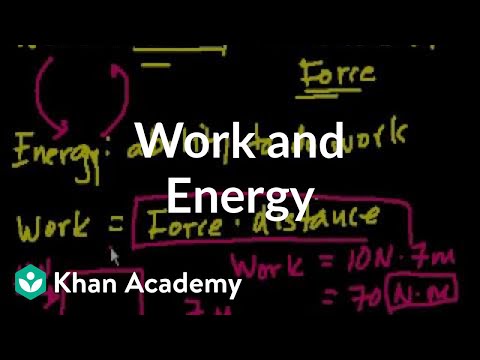
Work and energy. Potential energy. Kinetic energy. Mechanical advantage. Springs and Hooke's law. Introduction to work and energy. Work and Energy (part 2). Conservation of Energy. Work/Energy problem with Friction. Introduction to mechanical advantage. Mechanical Advantage (part 2). Mechanical Advantage (part 3). Intro to springs and Hooke's Law. Potential energy stored in a spring. Spring potential energy example (mistake in math). Introduction to work and energy. Work and Energy (part 2). Conservation of Energy. Work/Energy problem with Friction. Introduction to mechanical advantage. Mechanical Advantage (part 2). Mechanical Advantage (part 3). Intro to springs and Hooke's Law. Potential energy stored in a spring. Spring potential energy example (mistake in math).

Topics for this course are based primarily on reading and discussions of original research literature that cover the analysis as well as the underlying physical and physiological mechanisms of acoustic signals in the auditory periphery. Topics include the acoustics, mechanics, and hydrodynamics of sound transmission; the biophysical basis for cochlear amplification; the physiology of hair-cell transduction and synaptic transmission; efferent feedback control; the analysis and coding of simple and complex sounds by the inner ear; and the physiological bases for hearing disorders.

Le cours présente les cellules solaires à base de silicium, depuis la physique des semiconducteurs cristallins jusqu’au fonctionnement des modules photovoltaïques. Les semiconducteurs désordonnés utilisés dans les cellules en couche mince sont également traités. Les aspects socio-économiques et environnementaux du photovoltaïque sont abordés.

Fundamental topics in electromagnetism: electric charge, electric fields, currents, magnetic fields, and induction.

This course will go over a few grooves that can be played for personal entertainment or public display.

This course presents five sessions in which the student is introduced to playing the piano and reading music. Each session contains a video lecture presented by the Instructor, piano practice assignments and graded assignments that include a quiz about music terms, theory and/or ear training and a video assessment of the student playing selected piano technique and repertoire. The course also includes a graded assignment for two concert reviews, which can be completed at any time during the course, and a final exam in which the student will improvise a piece. This course presents five sessions in which the student is introduced to the fundamentals of piano playing and music reading. Each session contains a video lecture presented by the Instructor, piano practice assignments, and graded assignments that include a quiz about music terms, theory and/or ear training, and a video submitted by the student of playing selected piano technique and repertoire. The course also includes a graded assignment for a concert review and report, which can be completed at any time during the course.

This course presents six sessions in which the student continues to expand their knowledge of piano technique, repertoire and musical concepts, including eighth notes, treble C pentascale, G pentascales, sharps and flats and intervals of 4ths, 5ths and 6ths. Each session contains a video lecture presented by the Instructor, piano practice assignments and graded assignments that include a quiz about music terms, theory and/or ear training and a video assessment of the student playing selected piano technique and repertoire. The course also includes a graded assignment for two concert reviews, which can be completed at any time during the course, and a final exam in which the student will perform a memorized piece of music of the Instructor’s choice for an audience.
Add to calendar

Trusted paper writing service WriteMyPaper.Today will write the papers of any difficulty.