

Online courses directory (10358)

Like other scientists, medical researchers and clinicians must be capable of presenting their work to an audience of professional peers. Unlike many scientists, however, physicians must routinely translate their sophisticated knowledge into lay terms for their own patients and for the education of the public at large. A surprising number of physicians write for less utilitarian reasons as well, choosing the narrative essay as a means of exploring the non-technical issues that emerge in their clinical practice. Over the course of the semester, we will explore the full range of writings by physicians and other health practitioners.

This class examines the role of science in the US environmental policy-making process. It investigates the methods scientists use to learn about the natural world, the way scientific knowledge accumulates, the treatment of science by advocates and the media, and the role of science in legislative, administrative and judicial decision making. It also considers how other political systems use science in an effort to put the US approach in comparative perspective.

This class is an introduction to studies in science, technology, and society (STS), through examining a series of issues, events, conflicts, and problems as illuminated by STS approaches. This iteration includes units on the Aaron Swartz case, photography, and utopia / dystopia. There are regular guest speakers, and several field trips to encourage hands on learning.

What are science, technology, and innovation? How do science, technology, and innovation inform our understanding of developments in the social sphere? How have these domains evolved in the Chinese context? In this course, we will examine these issues and attempt answering these and many other questions!

This course is the second in a trilogy of short courses. In this part, we apply some of the concepts we covered in Part I to study the development of science and technology in Chinese society, particularly in light of the influence the Industrial Revolution in the West has had on China’s technological development.

This course is the third in a trilogy of short courses. In this final part, we integrate what we have learned in the previous two parts to investigate the evolution and implications of Chinese government policies designed to promote scientific and technological progress. Based on this, we will attempt to sketch a picture of the future of science and technology in China.

Investigate the flexibility and power of project-oriented computational analysis, and enhance communication of information by creating visual representations of scientific data.
« Scientific humanities » means the extension of interpretative skills to the discoveries made by science and to technical innovations. The course will equip future citizens with the means to be at ease with many issues that straddle the distinctions between science, morality, politics and society.

This subject exposes students to a variety of visualization techniques so that they learn to understand the work involved in producing them and to critically assess the power and limits of each. Students concentrate on areas where visualizations are crucial for meaning making and data production. Drawing on scholarship in science and technology studies on visualization, critical art theory, and core discussions in science and engineering, students work through a series of case studies in order to become better readers and producers of visualizations.

How can scientists become better writers? Topics include principles of good writing, tricks for writing faster and with less anxiety, and issues in publication and peer review.

How can scientists become better writers? Topics include principles of good writing, tricks for writing faster and with less anxiety, and issues in publication and peer review.

Want to improve your math skills so you can score higher on the GRE and SAT? This is the course for you!

Veja como o Videobserver transforma um registo de vídeo em relatórios, fichas de scouting, estatística e muito mais.

Data mining visually or programmatically, learn everything you need in a fast pace 30 minute course
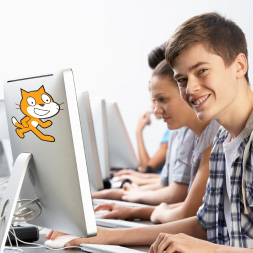
Scratch is a graphical programming language developed at the Massachusetts Institute of Technology (MIT) Media Lab. Scratch takes advantage of advances in computing power and interface design to make computer programming more engaging and accessible for children, teens, and others who are learning to program. The Scratch software application is freely available and makes it easy to create interactive stories, animations, games, music, and art, and share these creations on the Web. Scratch is used worldwide by teachers to teach the basics of computer programming and as young people create and share Scratch projects, they learn important mathematical and computational ideas, while also learning to think creatively, reason systematically, and work collaboratively. This free online course introduces you to Scratch and its advantages in an educational setting, reviews the features and functions of the Scratch interface, and how to program using the Scratch software application. This course will be of great interest to teachers and parents who want their children to become familiar with computer programming concepts. <br />

Programmeren is steeds belangrijker in onze wereld. En jong geleerd is oud gedaan. Deze MOOC bevat filmpjes en opdrachten waarmee kinderen zelf kunnen leren programmeren.
Iedere week maken we samen een game: een doolhof, een aquarium, een Flappy Bird spel en een soort Super Mario.
Iedere week leer je weer nieuwe programmeerblokken en denken we samen na over hoe je je programma’s het mooiste kunt maken.
Dit materiaal volgt de leerlijn programmeren in het basisonderwijs.
Docent of ouder? Lees hier alvast wat deze MOOC inhoudt en hoe je alles goed instelt voor je kind of leerling."
Wil je met meerdere kinderen mee doen? Maak voor ieder kind of leerling een account aan. Zo krijgen ze hun eigen puzzels en kunnen ze in hun eigen tempo werken. Als ze klaar zijn krijgen ze dan ook een mooi Scratch diploma met hun naam erop.
LICENTIE
Het materiaal van deze cursus is eigendom van de TU Delft en wordt aangeboden onder een Creative Commons licentie CC-BY-NC-SA 4.0 International Licence.

Screen capture techniques allow you record what is happening on your computer screen, accompanied by a voiceover if required. This free online course shows you in a step-by-step manner how to record your computer screen using JING. This Web-based application allow you to record your computer screen along with a voiceover and upload the resulting videos onto the Web for others to view.<br />

Learn the basics of screencasting in less than two hours: embrace a new technology for team building and communication.

This course focuses on reading a script theatrically with a view to mounting a coherent production. Through careful, intensive reading of a variety of plays from different periods and different aesthetics, a pattern emerges for discerning what options exist for interpretating a script.
The Fall 2005 version of this course contains alternate readings and assignments sections.

This course will thoroughly educate the successful student with the knowledge and skills necessary to be a certified beginning SCUBA diver. The prerequisite for the course is passing the MIT SCUBA swim test and demonstrating a "comfort level" in the water. At the end of the class, students will attempt to pass the certification exam to become certified divers. The class is taught in two parts each week: a classroom session and a pool session. The classroom sessions along with the reading material will provide the student with the knowledge necessary to pass the written exam. At the pool, the water skills are taught in progressions that build on the previous skills, making the difficult skills seem easy.
Add to calendar

Trusted paper writing service WriteMyPaper.Today will write the papers of any difficulty.