

Online courses directory (19947)

This course studies the transformation of childhood and youth since the 18th century in France, as well as the development of sentimentality within the family in a francophone context. Students will examine the personification of children, both as a source of inspiration for artistic creation and a political ideal aimed at protecting future generations, and consider various representations of childhood and youth in literature (e.g., Pagnol, Proust, Sarraute, Lave, Morgievre), movies (e.g., Truffaut), and songs (e.g., Brel, Barbara). This course is taught entirely in French.

This course addresses the place of contemporary queer identities in French discourse and discusses the new generation of queer authors and their principal concerns. Class discussions and readings will introduce students to the main classical references of queer subcultures, from Proust and Vivien to Hocquenghem and Wittig. Throughout the course, students will examines current debates on post-colonial and globalized queer identities through essays, songs, movies, and novels. Authors covered include Didier Eribon, Anne Garréta, Abdellah Taïa, Anne Scott, and Nina Bouraoui. This class is taught in French.

Dieser Kurs vermittelt die Grundzüge des Marketings und gibt einen Überblick von Konzepten, Strategien und Werkzeugen. Im Zentrum des Kurses stehen vier Themenbereiche: Produkt-, Kommunikations-, Preis- und Distributionspolitik.
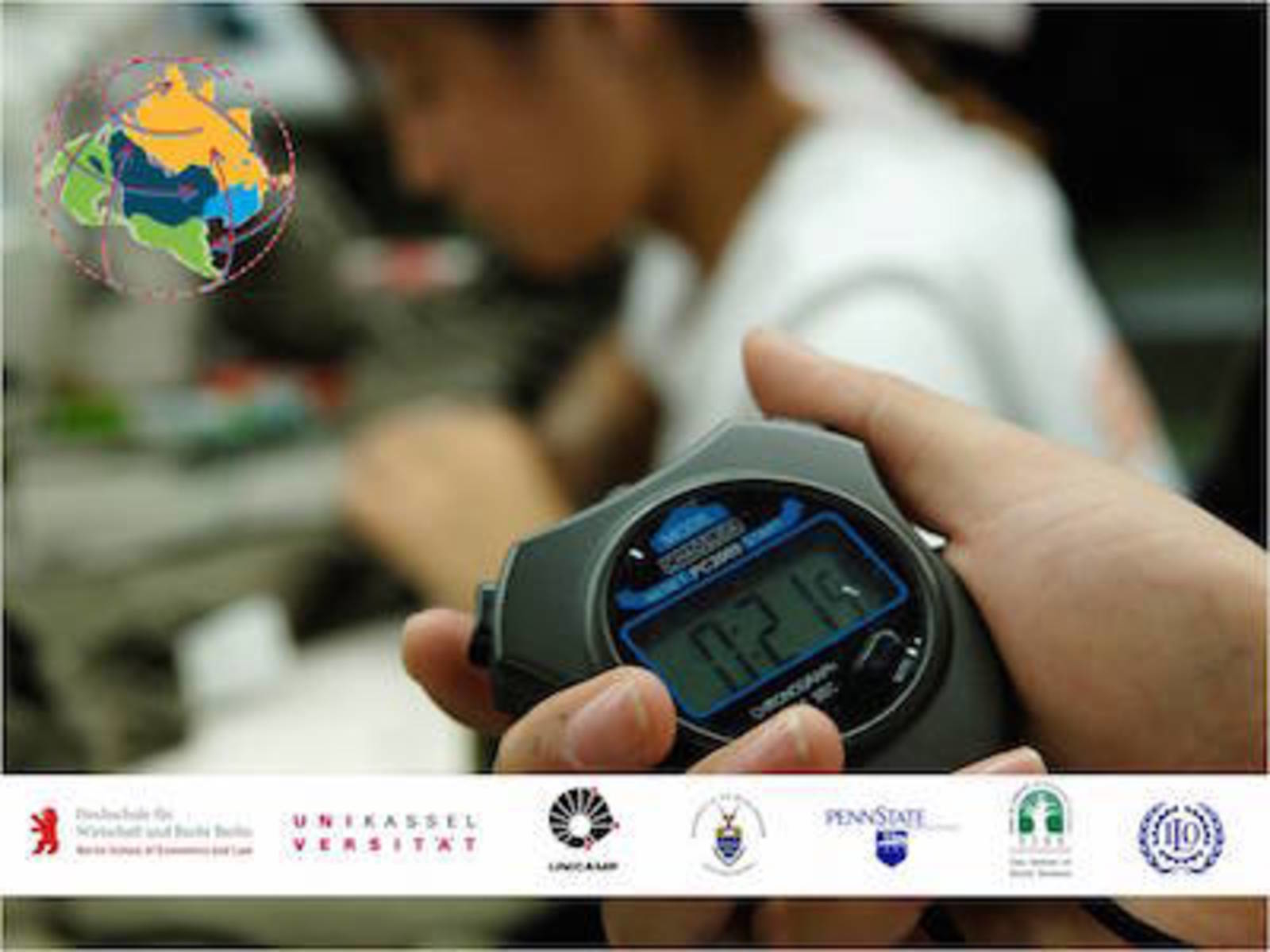
Rights and dignity at the workplace are fundamental human rights. However, workers’ rights continue to be violated every day - millions of people worldwide are facing exploitative working hours, poverty wages, humiliation and mistreatment at work. There are estimates that today’s world has a higher number of slaves than any other time in history.
This MOOC discusses what Global Workers’ Rights are and which instruments and strategies can be used to implement them. Based on a careful mix of video lectures, readings, online resources and interviews with activists and labour scholars from around the world, you will gain both knowledge and practical skills for furthering workers’ rights worldwide. In some countries, the online learning experience will be complemented with local workshops and the results of the local discussions will be uploaded into the MOOC for a truly global learning experience.
What will I learn
At the end of the course you will understand the history and concept of global workers’ rights and the institutional structure of the International Labour Organization (ILO) as the key player in setting International Labour Standards. You will be able to join the economic debate about labour standards and competitiveness, and understand the concepts behind the fundamental rights of Freedom of Association and Collective Bargaining. You will understand the different approaches for realizing decent work in the informal economy and gain an overview of instruments and initiatives beyond the ILO and trade union strategies in global supply chains. The course also allows you to apply this knowledge to a practical case from your country and gain skills and competencies for using the existing instruments and mechanisms for promoting workers’ rights worldwide.
What do I need to know?
The course requires a working level of English and draws on the fields of political science and law at the level of a Master's programme. However, theoretical concepts are explained in an accessible and well-illustrated way, so it is also possible to participate in the course based on skills and knowledge acquired outside formal education.
Course Structure
Chapter 1: The concept of Global Workers’ Rights
This chapter introduces the concept of Global Workers’ Rights and explains the history and functioning of the International Labour Organization (ILO) as the organization setting International Labour Standards (ILS). The prospects and challenges of the ILO approach to Global Workers’ Rights are debated, and you will learn about the mainstream economic arguments against ILS and how to assess them critically. Participants will be invited to share relevant material on labour rights issues in an interactive world map.
Chapter 2: Introduction to International Labour Standards (ILS)
Which types of International Labour Standards exist and how are they set? Which actors are involved and how are they interlinked? This chapter provides an overview on International Labour Standards and lays the foundation for understanding the standard setting mechanisms at the ILO. The role of trade unions in this process is illustrated through a concrete example of a recent and ground-breaking Convention for one of the most vulnerable groups of workers. In addition, an optional unit invites delegates to the International Labour Conference of the ILO to deepen their knowledge on the functioning of the Conference.
Chapter 3: Supervision of International Labour Standards (ILS)
This chapter aims at enabling you to understand and use the ILO supervisory mechanisms for the protection of workers’ rights. The elaborate process is illustrated in a concise and hands-on way, complemented by practical insights from insiders. At the end of the chapter, the mid-term assignment invites you to apply your newly acquired knowledge to a practical case from your country. The assignment is due at the end of chapter 4. This assignment will allow you to extend your knowledge on the labour rights situation in other countries and to learn from each other.
Chapter 4: Freedom of Association and Collective Bargaining
Freedom of Association and Collective Bargaining are ‘enabling rights’ at the heart of decent work. But what is the legal concept of Freedom of Association under Convention 87 and what makes it fundamental to the implementation of International Labour Standards? This chapter will also provide you with an overview on the current debate on the right to strike and show practical insights on Freedom of Association and Collective Bargaining.
Chapter 5: Access to rights for workers in informal and precarious employment
This chapter focuses on the challenge of realizing rights for workers in informal and precarious employment. We will explore the specific dynamics in the informal economy and innovative approaches for increasing workers’ protection in this challenging field, including examples of successful organising strategies in the informal economy from India, South Africa and Zimbabwe.
Chapter 6: Company responsibility to respect ILS: Norms, Standards, Principles
This chapter discusses key instruments and initiatives beyond the ILO in the struggle for global workers’ rights. What are the main instruments of Corporate Social Responsibility? How can the OECD Guidelines and the UN Guiding Principles on Business and Human Rights be used to promote workers’ rights? And what are legislative approaches to hold companies accountable for workers’ rights violations in global supply chains?
Chapter 7: Trade union strategies for promoting ILS in global supply chains
What are strategies of labour for realizing decent work in global supply chains? This concluding chapter looks at innovative trade union strategies in global supply chains and opens a space for discussion on the role of trade unions in the governance of workers’ rights in a global economy.
Final exam: Multiple-choice-test
Students choosing the certificate track will have one week study time before taking a multiple choice test on the course content.
If you complete the certificate track, you can apply for a GLU scholarship to participate in the 11th Global Labour University Conference, South Africa, 2016 on “The Just Transition and the Role of Labour: Our Ecological, Social, and Economic Future”, September 28 to 30, 2016, Johannesburg, South Africa. We will cast a lot among the applicants to select to MOOC certificate students for a GLU scholarship to participate in the conference (covering travel and accommodation at the Conference). For more information on the Conference keep an eye on http://www.global-labour-university.org.
Line-up of contributors
Prof. Paul Whitehead
- Professor of Practice in Labor Studies and Employment Relations at Penn State University, USA
- Main areas of interest: Trade unions, collective bargaining, labor and employment law, international labor law, international human resources, trade law, and programs for pensions, health care, and social security
Prof. Mark Anner, Ph.D.
- Associate Professor of Labor and Employment Relations, and Political Science at Penn State University, USA
- Main areas of interest: Global Apparel Industry, Labour movements in Latin America, Corporate Social Responsibility, Strikes in Vietnam
Esther Busser
- Deputy Director, Geneva Office of the International Trade Union Confederation (ITUC)
- Main areas of interest: social dialogue, training, research, employment, trade, migration, sectorial activities and policies, multinational enterprises, small and medium enterprises
Prof. Dr. Stefanie Lorenzen
- Professor of Employment and Labour Law at the Berlin School of Economics and Law, Department of Business and Economics, Germany
- Main areas of interest: employment law, co-determination, right to collective bargaining, international and European labour law
Fernando Lopes
- Assistant General Secretary of IndustriALL Global Union
- Main areas of interest: global labour movement, global framework agreements
Dr. Michael Fichter
- Senior Lecturer at the Global Labour University, Germany
- Main areas of interest: global labour relations, trade unions, political economy
Dr. Frank Hoffer
- Economist and Senior Research Officer, Bureau for Workers’ Activities, ILO.
- Main areas of interest: Wages Policies, Social Protection, International Research Cooperation
Victor Hugo Ricco
- Lawyer and Technical officer, Bureau for Workers’ Activities, ILO
- Main areas of interest: International Labour Standards, Informal Economy, Forced labour
Camilo Rubiano
- Trade union rights & national administration officer at Public Services International (PSI)
- Main areas of interest: international labour standards, freedom of association
Prof. Dr. Christoph Scherrer
- Professor for Globalization and Politics, Social Science Department of the University of Kassel, Germany
- Main areas of interest: International Political Economy: Governance of world markets, international labor standards, cross-national transfer of institutions, theories of the International Political Economy
Dr. Ben Scully
- Lecturer at the University of Witwatersrand, South Africa
- Main areas of interest: Precarious Work, Economic Development, Social Welfare in the Global South
Beatriz Vacotto
- Legal specialist and Coordinator of the Wages, Working Time, Maritime and Specific Workers Team, International Labour Standards Department, ILO
- Main areas of interest: Support to trade unions on issues related to International Labour Standards and the ILO supervisory mechanisms.
Jeffrey Vogt
- Legal Director, International Trade Union Confederation (ITUC)
- Main areas of interest: trade and labour standards, freedom of association, precarious work, comparative labour law
Further contributors:
Maria Helena André (Director of the Bureau for Workers’ Activities, ILO)
Zeynep Aklar (Trade union activist with DİSK/Sosyal-İs, Turkey)
Pratik Baviskar (Organiser at the trade union Learn Mahila Kaamgar Sangathan, India)
Magda Biavaschi, Ph.D. (Assistant Professor at University of Campinas, Brazil)
Karen Curtis (Chief of the Freedom of Association Branch, International Labour Standards Department, ILO)
Kirstine Drew (Senior policy advisor to the Trade Union Advisory Council to the OECD)
Eulogia Familia (Vice-President of the National Confederation of Trade Union Unity in the Dominican Republic)
Prof. Jayati Ghosh (Professor of Economics at the Jawaharlal Nehru University, India)
Tandiwe Gross (Associate Expert at the Bureau for Workers’ Activities, ILO)
Renana Jhabvala (National coordinator of the Self-employed Women’s Association, India)
Maité Llanos (Project coordinator at the Global Labour University)
Wisborn Malaya (Secretary General at Zimbabwe Chamber of Informal Economy Associations, Zimbabwe)
Luisa Nxumalo (Organiser at the Congress of South African Trade Unions, South Africa)
Isabel Ortiz (Director of the Social Protection Department, ILO)
Image Copyright (above): ILO/Crozet M

Did you know that three quarters of EU policies affect our everyday lives in our regions and cities? Did you know that regional and local governments in Europe manage two thirds of all public investments? Be it the economy, social affairs, territorial cohesion, education, youth or culture, energy, environment, transport, immigration – local government in Europe matters.
The importance of the regional and local dimension has continued to increase in Europe. Among the EU institutions in Brussels, the European Committee of the Regions stands up for the rights of citizens, ensuring that the local perspective is heard and giving communities a voice in Europe.
This introductory course aims to explain how the European Union works and what the European regions' place is within it. Join us to (re)define the role of regions in European policy making!
Who is this course for?
This course is for everybody interested in the EU and its regional affairs, particularly for officials of regional and local administrations involved in EU affairs and for teachers, students, and local journalists.
What do I need to know?
Recommended background: basic knowledge of European Union
What will I learn?
In this course you will learn about how the EU institutions function, how they work together and how this impacts policies and activities at the regional and local level.
Course Structure
Chapter 1: 19-23 October 2015: EU institutions and legislation
Live debate: Friday 23 October, 2015, 13:00-14:00
This chapter focuses on the European Union and its legal foundations, institutions and legislation. How did we come to the EU of today? What are the EU institutions and how do they work? Moreover it explains the basics of the EU's legislative process and the guiding principles of EU law.
With Professor Alberto Alemanno, HEC University, Paris
Chapter 2: 26-30 October 2015: The role of regions and cities in EU affairs
Live debate: Friday 30 October, 2015, 13:00-14:00
The level of decentralisation varies among EU Member States, but regardless of this, the EU matters to all regions and cities and vice versa. This chapter looks into the different levels of government in the EU and their cooperation and influence of regions and cities on EU policies. What are the trends in the development of regions and cities' roles in the EU’s political system? What does multilevel governance mean? What are the upcoming challenges for regions and cities and their “constitutional role” in the EU?
With Markku Markkula, President of the Committee of the Regions; Professor Michel Huysseune, Vrije Universiteit Brussel, Brussels; and Hella Dunger-Löper, State Secretary, Representative of the Land of Berlin to the Federal Government
Chapter 3: 2-6 November 2015: EU Cohesion Policy and Structural and Investment Funds
Live debate: Friday 6 November, 2015, 13:00-14:00
This chapter describes the development and current implementation of EU Cohesion Policy and the European Structural and Investment Funds in 2014-2020. Representing one third of the EU budget, EU Cohesion Policy and the European Structural and Investment Funds are an important source of funding regional and local projects, with management often at the sub-national level. What is the key rationale of EU Cohesion Policy? How has it developed over time? What will be the future of EU Cohesion Policy?
With Iskra Mihaylova, Chair of the Committee for Regional Development, European Parliament; Walter Deffaa, Director General for Regional and Urban Policy, European Commission; and Professor John Bachtler, European Policies Research Centre, University of Strathclyde, Glasgow
Chapter 4: 9-13 November 2015: EU Research and innovation policy and the regions
Live debate: Friday 13 November, 2015, 13:00-14:00
This chapter discusses the implementation of innovation policies and smart specialisation strategies, a priority for all member states and their regions. These strategies will help to tap into their regional innovation potential, thanks to EU support.
With Professor Dominique Foray, École Polytechnique Fédérale de Lausanne, Switzerland; Katja Reppel, DG Regional and Urban Policy, European Commission; and Manuel Palazuelos Martinez, Joint Research Centre, European Commission
Chapter 5: 16-20 November 2015: Environment, energy and sustainable development policies
Live debate: Friday 20 November, 2015, 13:00-14:00
Regions and cities are of key importance when it comes to implementing the EU’s environment legislation and its sustainable development targets. At the same time, regions and cities are unevenly affected by the effects of climate change and the challenges and possibilities of the Energy Union. This chapter focuses on the Paris Protocol: climate change, energy policy and the role of regions and cities: Which are the biggest challenges of the EU's policy on climate change? What role can the regions and cities play with regards to EU climate and energy policy?
With Jos Delbeke, Director General for Climate Action, European Commission
Chapter 6: 23-27 November 2015: Free movement and migration
Live debate: Friday 27 November, 2015, 13:00-14:00
Migration and the integration of migrant populations are of key political importance at the local level. The objective of this this chapter is to discuss the rationale, legislation and major challenges of related EU policies and the way in which regions and cities are involved in it. What is the role of regions and cities in addressing migration and how can the EU support them? Does increasing international migration require the reform of the welfare state and labour market institutions and if so, how would the EU be involved in it?
With Peter Scholten, Associate Professor Public Policy & Politics, Erasmus University Rotterdam
Chapter 7: 30 November-04 December 2015: EU competition policy and state aids
Live debate: Friday 4 December, 2015, 13:00-14:00
This chapter is an introduction to the main principles and sources of EU competition policy and state aid legislation. What is the scope, volume and impact of (regional) state aids in the EU? What links the regional state aids and EU Structural and Investment Funds?
With Fiona Wishlade, University of Strathclyde, Glasgow
Chapter 8: 7-11 December 2015: The EU budget 2014-2020 and its programmes
Live debate: Friday 11 December, 2015, 13:00-14:00
The objective of this chapter is to highlight the historical development and legal foundations of the EU budget, the way its revenue and expenditure is composed, how different EU programmes are managed and the key issues with regards to its future. Which are the main actors in setting up, implementing and controlling the EU budget? What are the main challenges when it comes to its implementation, in particular for (sub-) national authorities?
With Stefan Lehner, Director at DG Budget, European Commission and Jorge Nunez Ferrer, Associate Research Fellow, Centre of European Policy Studies
© European Union, 2015
Reproduction is authorised, provided the source is acknowledged, save where otherwise stated.
Where prior permission must be obtained for the reproduction or use of textual and multimedia information (sound, images, software, etc.), such permission shall cancel the above-mentioned general permission and shall clearly indicate any restrictions on use.
Коротко о курсе
В курсе рассматриваються вопросы, посвященные определению эфективности применения различных видов альтернативных топлив. Определенный интерес представляет обоснование целисообразностивыращивания сельскохозяйственных культур для производства биотоплива. В курсе рассматриваються следующие темы: введение в менеджмент альтернативных топлив в АПК; показатели эффективности использования энергетических ресурсов; эффективность использования альтернативных топливно-энергетических ресурсов; свойства и применение газообразных топлив; эффективное использование биотоплива растительного происхождения; расположение заводов по производству биотоплива.
Навыки приобретенные в ходе курса?
Целями данного курса являются:
1. Дать студентам основные понятия о менеджменте альтернативных топлив в сельском хозяйстве.
2. Познакомить студентов с экономическими и энергетическими методами сравнения и оценки альтернативных моторных топлив.
3. Показать возможность практического применения альтернативных топлив на конкретных примерах.
4. Показать методику определения целесообразности производства биотоплив из сельскохозяйственных культур и определения оптимального расположения заводов по производству биотоплива.
В конце этого курса, каждый студент должен уметь:
1. Пользоваться понятиями и терминологию, которые используются в менеджменте альтернативных топлив в сельском хозяйстве. Анализировать общую тенденцию рынка энергетических ресурсов, роль альтернативных видов топлива (в том числе возобновляемые).
2. Определять стоимость энергии топлив и сравнить различные виды моторных топлива.
3. Выполнять экономическую и энергетическую оценку эффективности использования сельскохозяйственных культур для производства биотоплива.
4. Проводить анализ экономической эффективности использования альтернативных видов топлива сельскохозяйственной техникой.
5. Определять оптимальное расположение заводов по производству биотоплива.
Предварительные знания
Базовые знания в области математики, экономики, мобильных энергетических средств.
Структура курса
Глава 1
1: Введение в менеджмент альтернативных топлив в АПК.
1.1. Предмет дисциплины.
1.2. Общая тенденция рынков энергетических ресурсов.
1.3. Общие тенденции рынка нефти.
1.4. Современное состояние использования энергетических ресурсов в сельском хозяйстве.
1.5. Задачи менеджмента альтернативных топлив
Глава 2
2: Показатели эффективности использования энергетических ресурсов.
2.1. Система показателей эффективности использования энергетических ресурсов.
2.2. Структура потребления топливно-энергетических ресурсов и классификация моторных топлив.
2.3. Показатели использования. Условное топливо, тепловые и технические топливные эквиваленты.
2.4. Показатели наличия
2.5. Показатели результативности.
Глава 3
3: Эффективность использования альтернативных топливно-энергетических ресурсов.
3.1. Методика оценки топлив. Эксплуатационно-потребительские показатели.
3.2. Производственно-технологические показатели.
3.3. Экологические показатели топлив.
3.4. Стоимость энергии топлив.
3.5. Определение целесообразности производства топлив растительного происхождения.
3.6. Оценка эффективности использования альтернативных моторных топлив.
Глава 4
4: Свойства и применение газообразных топлив.
4.1. Историческая справка.
4.2. Эксплуатационно-технические требования к газообразным топливам.
4.3. Физическо-химические свойства сжиженного нефтяного газа.
4.4. Основные свойства природного газа.
4.5. Основные свойства биогаза и тенденции его производства.
4.6. Оценка применения газообразных топлив.
4.7. Опыт использования биогаза как моторного топлива.
4.8. Оценка эффективности применения передвижных автомобильных газовых заправщиков.
4.9. Оценка эффективности применения автомобильных газонаполнительных компрессорных станций.
Глава 5
5: Эффективное использование биотоплива растительного происхождения.
5.1. Производство и использование биотоплива для дизельных двигателей.
5.2. Преимущества и недостатки использования биодизельного топлива.
5.3. Основные физические свойства биотоплив.
5.4. Основные эксплуатационные свойства.
5.5. Адаптация автотракторных двигателей для работы на биотопливах.
5.6. Производство и использование биоэтанола.
5.7. Биоэтанол как моторного топлива для двигателей с искровым воспламенением.
5.8. Применение спиртов в дизельных двигателях.
Глава 6
6: Расположение заводов по производству биотоплива.
6.1. Схемы производства биотоплива.
6.2. Необходимая площадь под энергетическое биосырье.
6.3. Средний радиус перевозок.
6.4. Оптимальное расположение предприятий по производству биотоплив с учетом урожайности растительного биосырья.
6.5. Алгоритм выбора схемы расположения заводов по производству биотоплива.
Как зарегистрироваться на курс:
Нажмите, пожалуйста, сверху на ссылку "ENROL FOR FREE" (на немецком "KOSTENLOS EINSCHREIBEN")

потом введите Ваше имя, фамилию, е-маил и простой пароль
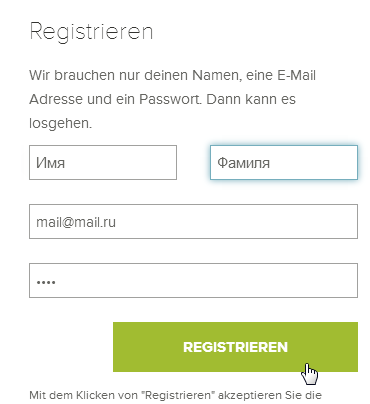
нажмите, пожалуйста, не зеленную кнопку, чтобы получить ссылку для активации

посмотрите, пожалуйста, Ваш почтовой ящик (или спам)

нажмите потом на ссылку "активировать"
Вы зарегистрированы!
Целью курса Международного Аграрного менеджмента является обеспечение теоретическими знаниями для принятия эффективных решений и объяснение изученного материала на конкретных практических примерах в области производства. В данном курсе обсуждаются возможности приобретения долгосрочных средств производства, например, трактора. При этом возникает вопрос о покупке или аренде этого средства производства, в связи с чем будут разъяснены теоретические основы для принятия экономически выгодного решения. Затем теория будет показана на конкретных практических примерах. В итоге полученные результаты будут разъяснены и оценены.
Курс состоит из 5 модулей.
Представленные примеры взяты из реальных сельскохозяйственных предприятий.
В каждом модуле курса отведено время для дискуссий и вопросов в виртуальном чате, к которому имеют доступ все пользователи.

This course covers issues in contemporary French society as expressed through movies made in the 2000s. Topics include France's national self-image, the women's movement, sexuality and gender, family life and class structure, post-colonialism and immigration, and American cultural imperialism. Films by Lelouch, Audiard, Doillon, Denis, Klapisch, Resnais, Rouan, Balasko, Collard, Dridi, Kassovitz, and others. Readings from French periodicals. Films shown with English subtitles. Taught in French.

Students in this course will examine short stories and short novels published in France during the past 20 years, with emphasis on texts related to the dominant social and cultural trends. Themes include the legacy of France's colonial experience, the re-examination of its wartime past, memory and the Holocaust, the specter of AIDS, changing gender relationships, new families, the quest for personal identity, and immigration narratives. This course is taught in French.

This course gives an introduction to German language and culture. The focus is on acquisition of vocabulary and grammatical concepts through active communication. Audio, video, and printed materials provide direct exposure to authentic German language and culture. A self-paced language lab program is fully coordinated with the textbook/workbook. The first semester covers the development of effective basic communication skills.

In this course students are exposed to history and culture of German-speaking countries through audio, video, and Web materials. It focuses on the expansion of basic communication skills and further development of linguistic competency, and includes the review and completion of basic grammar, building of vocabulary, and practice in writing short essays. Students will also read short literary texts.

This course expands skills in speaking, reading, listening, and writing. Students develop analytic and interpretative skills through the reading of a full-length drama as well as short prose and poetry (Biermann, Brecht, Dürrenmatt, Tawada and others) and through media selections on contemporary issues in German-speaking cultures. Coursework includes discussions and compositions based on these texts, and review of grammar and development of vocabulary-building strategies. It is recommended for students with two years of high school German.

Prepares students for working and living in German-speaking countries. Focus on current political, social, and cultural issues, using newspapers, journals, TV, radio broadcasts, and Web sources from Germany, Austria, and Switzerland. Emphasis on speaking, writing, and reading skills for professional contexts. Activities include: oral presentations, group discussions, guest lectures, and interviews with German speakers. No listeners.

In this course, we’ll discuss the topic of why human evolution is important to study and understand. This fully online course does not expect you to have any prior background in biological science, but a few foundational concepts in biology will be introduced early on in the course. During this course you will participate in online activities, watch online videos and custom animations, and interact with your peers in collaborative settings.

In this course, we'll discuss the topic of why human evolution is important to study and understand. This fully online course does not expect you to have any prior background in biological science, but a few foundational concepts in biology will be introduced early on in the course. During this course you will participate in online activities, watch online videos and custom animations, and interact with your peers in collaborative settings.

This course is intended for people who have no experience in computer science but would like to learn more about how computers work and how they can control them. It is designed to introduce learners to the power and elegance of computational thinking. You will learn basic computational principles and will have the opportunity to put them into practice. Computers and technology are driving phenomenal change in this world. This course will give you the power to help drive that change.

This course provides the opportunity to discuss, orally and in writing, cultural, ethical, and social issues on a stylistically sophisticated level. It explores representative and influential works from the nineteenth century to the present, through literary texts (prose, drama, poetry), radio plays, art, film, and architecture, as well as investigates topics such as the human and the machine, science and ethics, representation of memory, and issues of good and evil. Taught in German.

The topic for Fall 2006 is short film and radio plays. This course investigates current trends and topics in German literary, theater, film, television, radio, and other media arts productions. Students analyze media texts in the context of their production, reception, and distribution as well as the public debates initiated by these works. The topic for Fall 2006 is German Short Film, a popular format that represents most recent trends in film production, and German Radio Art, a striving genre that includes experimental radio plays, sound art, and audio installations. Special attention will be given to the representation of German minorities, contrasted by their own artistic expressions reflecting changes in identity and a new political voice. Students have the opportunity to discuss course topics with a writer, filmmaker, and/or media artist from Germany. The course is taught in German.

This course covers JSL (Japanese: the Spoken Language, Part 1, by Eleanor H. Jorden with Mari Noda, Yale University Press, 1987) Lessons 12 through 17, providing opportunities to acquire basic skills for conversation, reading, and writing. The program emphasizes ACTIVE command of Japanese, not passive knowledge. The goal is not simply to study the grammar and vocabulary, but to improve the ability to use Japanese accurately and appropriately with fluency, building on the basic skills gained in Japanese I and II. Students learn approximately 80 Kanji characters in this course.

This course covers Japanese: The Spoken Language lessons 17 through 22. It will further develop the four basic skills, speaking, listening, reading and writing, that students have acquired through Japanese I, II and III courses, with emphasis on oral communication skills in various practical situations. Students will learn approximately 100 Kanji characters in this course. Sessions in English cover grammar explanation, socio-cultural information and other important issues for using the language, while Japanese lessons focus on the actual use of the language, integrating students' prior knowledge with newly learned patterns, and communicating within the frame given in the class.

This course covers lessons 22 through 27 of Japanese: The Spoken Language by Eleanor H. Jordan with Mari Noda. The goal of the course is to continue to build oral proficiency by expanding your knowledge of vocabulary and grammar. Class hours will be devoted to developing speaking skills in a variety of circumstances; making requests, invitations, apologies, suggestions, dealing with problems, expressing your opinions, etc. Grammatical and social appropriateness on your utterances will be stressed. Keep in mind that daily tape-work is essential.
Add to calendar

Trusted paper writing service WriteMyPaper.Today will write the papers of any difficulty.