

Online courses directory (19947)

The course begins with the basics of compressible fluid dynamics, including governing equations, thermodynamic context and characteristic parameters. The next large block of lectures covers quasi-one-dimensional flow, followed by a discussion of disturbances and unsteady flows. The second half of the course comprises gas dynamic discontinuities, including shock waves and detonations, and concludes with another large block dealing with two-dimensional flows, both linear and non-linear.

In this course, students explore the engineering design of nuclear power plants using the basic principles of reactor physics, thermodynamics, fluid flow and heat transfer. Topics include reactor designs, thermal analysis of nuclear fuel, reactor coolant flow and heat transfer, power conversion cycles, nuclear safety, and reactor dynamic behavior.

This course addresses advanced structures, exterior envelopes and contemporary production technologies. It continues the exploration of structural elements and systems, and expands to include more complex determinate, indeterminate, long-span and high-rise systems. It covers topics such as reinforced concrete, steel and engineered wood design, and provides an introduction to tensile systems. Lectures also address the contemporary exterior envelope with an emphasis on their performance attributes and advanced manufacturing technologies. This course is required of MArch students.

This course introduces experimental biochemical and molecular techniques from a quantitative engineering perspective. Experimental design, data analysis, and scientific communication form the underpinnings of this subject. Three discovery-based experimental modules focus on RNA engineering, protein engineering, and cell-biomaterial engineering.
This OCW site is based on the source OpenWetWare class Wiki, 20.109(S10): Laboratory Fundamentals of Biological Engineering.

This course explores the foundations of policy making in developing countries. The goal is to spell out various policy options and to quantify the trade-offs between them. We will study the different facets of human development: education, health, gender, the family, land relations, risk, informal and formal norms and institutions. This is an empirical class. For each topic, we will study several concrete examples chosen from around the world. While studying each of these topics, we will ask: What determines the decisions of poor households in developing countries? What constraints are they subject to? Is there a scope for policy (by government, international organizations, or non-governmental organizations (NGOs))? What policies have been tried out? Have they been successful?

Reading Fiction is designed to sharpen your skills as a critical reader. As we explore both short stories and novels focusing on the theme of "the city in literature," we will learn about the various elements that shape the way we read texts - structure, narrative voice, character development, novelistic experimentation, historical and political contexts and reader response.

What is a "life" when it's written down? How does memory inform the present? Why are autobiographies and memoirs so popular? This course will address these questions among others, considering the relationship between biography, autobiography, and memoir and between personal and social themes. We will examine classic authors such as Mary Rowlandson, Benjamin Franklin, Frederick Douglass, Harriet Jacobs, and Mark Twain; then more recent examples like Tobias Wolff, Art Spiegelman, Sherman Alexie, Shirley Geok-lin Lim, Edwidge Danticat, and Alison Bechdel.

Taking as its starting point the works of one of Britain's most respected, prolific—and funny—living dramatists, this seminar will explore a wide range of knowledge in fields such as math, philosophy, politics, history and art. The careful reading and discussion of plays by (Sir) Tom Stoppard and some of his most compelling contemporaries (including Caryl Churchill, Anna Deveare Smith and Howard Barker) will allow us to time-travel and explore other cultures, and to think about the medium of drama as well as one writer's work in depth. Some seminar participants will report on earlier plays that influenced these writers, others will research everything from Lord Byron's poetry to the bridges of Konigsberg, from Dadaism to Charter 77. Employing a variety of critical approaches (both theoretical and theatrical), we will consider what postmodernity means, as applied to these plays. In the process, we will analyze how drama connects with both the culture it represents and that which it addresses in performance. We will also explore the wit and verbal energy of these contemporary dramatists…not to mention, how Fermat's theorem, classical translation, and chaos theory become the stuff of stage comedy.

This subject investigates the special relation of women to several musical folk traditions in the British Isles and North America. Throughout, we will be examining the implications of gender in the creation, transmission, and performance of music. Because virtually all societies operate to some extent on a gendered division of labor (and of expressive roles) the music of these societies is marked by the gendering of musical repertoires, traditions of instrumentation, performance settings, and styles. This seminar will examine the gendered dimensions of the music - the song texts, the performance styles, processes of dissemination (collection, literary representation) and issues of historiography - with respect to selected traditions within the folk musics of North America and the British Isles, with the aim of analyzing the special contributions of women to these traditions. In addition to telling stories about women's musical lives, and studying elements of female identity and subjectivity in song texts and music, we will investigate the ways in which women's work and women's cultural roles have affected the folk traditions of these several countries.
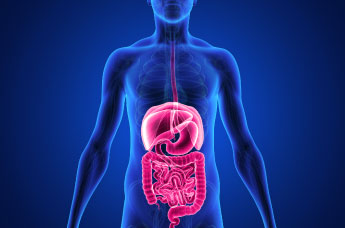
The human body cannot generate energy itself and so must obtain it from external sources. Energy from the sun is captured by plants, which in turn are eaten by animals. We humans use these plants and animals as food sources but, in order to obtain the energy we require from them, our food must be broken down into smaller molecules that the body can process. This is accomplished by a complex series of organs known as the digestive system. This free online human physiology course provides a clear introduction to the human digestive system. In this course you will learn how energy is obtained from food and be introduced to the different food types and vitamins. The course looks at the stages involved in ingestion and swallowing, describing how the stomach is designed for food storage and the initial processing of food. How the small and large intestines are structured to facilitate the digestion and absorption of nutrients is also examined. The course also provides an overview of the elimination of the waste products of digestion from the body. It outlines the special roles played by the liver and pancreas in the secretion of digestive enzymes. The mechanisms used by the digestive system to protect the body from infection are covered. This includes looking at the tonsils and other lymphoid tissue in the small and large intestine and explaining how the mammary gland protects the breastfeeding baby from infection. This free online human physiology course will be of great interest to healthcare professionals who would like a greater understanding of the human digestive system and its importance in human physiology, and to students of biology, medicine and nursing who would like to gain a greater knowledge and understanding of the structure and function of the human digestive system. <br />

Christine Benninger was president of the Humane Society Silicon Valley (HSSV) for 17 years. HSSV is an independent, non-profit animal shelter that provides high-quality adoptions, medical services, education programs and pet care services in Santa Clara County, California. When she joined the organisation it was in a dire state and this led to her quickly implementing a six-month plan to keep the organisation afloat. In this free online course she talks about fundraising which is a crucial component of a non-profit enterprise’s success. She also discusses how to find the right people, how to separate what she calls the missionaries from the mercenaries and how to deal with the overly passionate. She points out that it is important to find talented people who are both mission-driven and also able to work as part of a team. This course will be of great interest to social entrepreneurs and business people who would like to gain a greater knowledge and understanding of running a social enterprise from an experienced and practiced social entrepreneur.<br />

Sustainable development is a type of economic growth pattern where the use of resources meets the needs of the human population while conserving the environment at the same time. Sustainable development means resources are used in such a way that both current and future human needs can be met. This free online Diploma in Sustainable Development reviews a diverse range of topics including what exactly sustainability is and what systems of practice are most commonly used, and in particular, examines the importance of sustainable development in counteracting global climate change. Two very important issues in sustainable development are energy sources that meet current and future demands, and water conservation. The course reviews both non-renewable and renewable energy sources and examines how current and future demands for energy can be met for a growing global population. Water is a vital resource for all countries and the course reviews how supply and demand for water by industry, agriculture and people can be met. This course will be of great interest to all professionals interested in international development, and in the sustainability and environmental sectors who would like to learn more about global sustainable development. It will also be of interest to the general learner who is interested in how current and future demands for the earth's resources by a growing human population can be met.<br />

SnagIt is a piece of software that can be used for image and online video capture from your PC or laptop. To use SnagIt just select an area of the screen, take a snapshot of it or record a video, then you can edit and add effects to it. You can also upload the image or video to the cloud. In this free online course with SnagIt tutorials, you will be shown how to do both image and video screen capture and you will then learn what to do with the image and video files in SnagIt. You will be shown how to sort, export, share and embed these files. You will see why SnagIt is a great tool for recording screen activity to create software demonstrations and presentations. The more you use SnagIt, the more ways you’ll find to use it. This SnagIt tutorial course will be of great interest to teachers and trainers who want to show people how to perform an action on a computer such as how to use a piece of software and it is also useful for capturing a view of something on the computer such as a part of a website for adding to demonstrations.<br />


Grant Writing Classes on How to Write and Win a Federal Government Grant Award

Learn how speak with confidence about yourself and your work. It's time to turn hesitation into results!

Contains dozens of practical, low-cost branding techniques to catapult your brand and increase your revenues immediately

For the few of you willing to do it - You'll get dramatic results.

Returning to talk at Stanford after two years, John Thompson, chairman of the board of directors and chief executive off

How I made $100,000 in a year blogging. View the first lecture for free and see what this course is really like.
Add to calendar

Trusted paper writing service WriteMyPaper.Today will write the papers of any difficulty.