

Online courses directory (19947)

This course introduces students to the principles of computation. Upon completion of 6.001, students should be able to e

Learn advanced Excel 2010 features and get ready to take your Excel knowledge to the next level.

Learning by doing is the best policy for education. This course lead you step by step to use Objective-C & Xcode for fun

How to Stop Wasting Money on Clothes That Aren't Right, And Build A Wardrobe That ROCKS!

1) Different definitions of intelligence through the ages 2) Defining memory

Project-based lab course on advanced skills and strategies for integrating technology into the PreK-16 classroom. Optional credit offered.

This course focuses on general methods and strategies for the synthesis of complex organic molecules. Emphasis is on strategies for stereoselective synthesis, including stereocontrolled synthesis of complex acyclic compounds.

This course covers all aspects of molecular biosignatures, such as their pathways of lipid biosynthesis, the distribution patterns of lipid biosynthetic pathways with regard to phylogeny and physiology, isotopic contents, occurrence in modern organisms and environments, diagenetic pathways, analytical techniques and the occurrence of molecular fossils through the geological record. Students analyze in depth the recent literature on chemical fossils. Lectures provide background on the subject matter. Basic knowledge of organic chemistry required. Students taking graduate version complete additional assignments.

8.322 is the second semester of a two-semester subject on quantum theory, stressing principles. Topics covered include: time-dependent perturbation theory and applications to radiation, quantization of EM radiation field, adiabatic theorem and Berry's phase, symmetries in QM, many-particle systems, scattering theory, relativistic quantum mechanics, and Dirac equation.

This course explores electromagnetic phenomena in modern applications, including wireless communications, circuits, computer interconnects and peripherals, optical fiber links and components, microwave communications and radar, antennas, sensors, micro-electromechanical systems, motors, and power generation and transmission. Fundamentals covered include: quasistatic and dynamic solutions to Maxwell's equations; waves, radiation, and diffraction; coupling to media and structures; guided and unguided waves; resonance; and forces, power, and energy.
Acknowledgments
The instructors would like to thank Robert Haussman for transcribing into LaTeX the problem set and Quiz 2 solutions.

This course draws on a wide range of perspectives to explore the roots of long term competitive advantage in unusually successful firms. Using a combination of cases, simulations, readings and, most importantly, lively discussion, the course will explore the ways in which long term advantage is built from first mover advantage, increasing returns, and unique organizational competencies. We will focus particularly on the ways in which the actions of senior management build competitive advantage over time, and on the strategic implications of understanding the roots of a firm's success.

This course is a graduate seminar surveying recent work on self-knowledge. Some questions that will be explored and discussed are: What is the distinctive philosophical interest of self-knowledge? Is self-knowledge really an epistemic achievement? Is it plausible that there is a uniform explanation of all distinctively first-personal self-knowledge?

This course explores how identities, whether of individuals or groups, are produced, maintained, and transformed. Students will be introduced to various theoretical perspectives that deal with identity formation, including constructions of "the normal." We will explore the utility of these perspectives for understanding identity components such as gender, sexual orientation, race, ethnicity, religion, language, social class, and bodily difference. By semester's end students will understand better how an individual can be at once cause and consequence of society, a unique agent of social action as well as a social product.

This course explores a range of contemporary scholarship oriented to the study of 'cybercultures,' with a focus on research inspired by ethnographic and more broadly anthropological perspectives. Taking anthropology as a resource for cultural critique, the course will be organized through a set of readings chosen to illustrate central topics concerning the cultural and material practices that comprise digital technologies. We'll examine social histories of automata and automation; the trope of the 'cyber' and its origins in the emergence of cybernetics during the last century; cybergeographies and politics; robots, agents and humanlike machines; bioinformatics and artificial life; online sociality and the cyborg imaginary; ubiquitous and mobile computing; ethnographies of research and development; and geeks, gamers and hacktivists. We'll close by considering the implications for all of these topics of emerging reconceptualizations of sociomaterial relations, informed by feminist science and technology studies.

The goal of this course is to investigate with students backgrounds on some of the pivotal events that have shaped our understanding and approach to architecture. Emphasis of discussion will be primarily on buildings and works of individual architects. Canonical architects, buildings and movements that have exerted significant influences on the development of architecture will be studied in detail. We will visit some of these buildings for a first-hand look and to evaluate for ourselves their significance or lack thereof. As a final project, each student will analyze a building through drawings, text, bibliography and a physical model in a format ready for documentation and exhibition.

In this subject, we consider two basic topics in cellular biophysics, posed here as questions:
- Which molecules are transported across cellular membranes, and what are the mechanisms of transport? How do cells maintain their compositions, volume, and membrane potential?
- How are potentials generated across the membranes of cells? What do these potentials do?
Although the questions posed are fundamentally biological questions, the methods for answering these questions are inherently multidisciplinary. As we will see throughout the course, the role of mathematical models is to express concepts precisely enough that precise conclusions can be drawn. In connection with all the topics covered, we will consider both theory and experiment. For the student, the educational value of examining the interplay between theory and experiment transcends the value of the specific knowledge gained in the subject matter.
This course is jointly offered through four departments, available to both undergraduates and graduates.
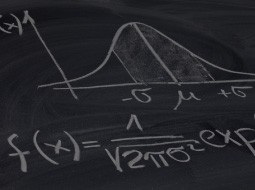
This free online course introduces you to the mathematics of probability, chance and the analysis of data. The course begins by introducing data collection and analysis, graphs and frequency distribution. The course examines chance in the context of gambling, odds and probability. The course is of interest to anybody who needs to analyse mathematical data and is particularly valuable to students studying for exams.

This course offers an introduction to the interdisciplinary study of videogames as texts through an examination of their cultural, educational, and social functions in contemporary settings. Students play and analyze videogames while reading current research and theory from a variety of sources in the sciences, social sciences, humanities, and industry. Assignments focus on game analysis in the context of the theories discussed in class. Class meetings involve regular reading, writing, and presentation exercises. No prior programming experience required. Students taking the graduate version complete additional assignments.

ALISON's free online Diploma in Business and Legal Studies course covers key topics in business and law such as corporate management, human resources, operations management, accounting, types of law, how laws are created, the adversary system, and legal procedures. <br /><br />This business online course offered by ALISON is ideal for those who want to gain comprehensive knowledge and understanding of business and legal systems. Having this knowledge will greatly improve your career prospects.<br />

This course aims to introduce students to the rich diversity of human culture from antiquity to the early 17th century. In this course, we will explore human culture in its myriad expressions, focusing on the study of literary, religious and philosophical texts as ways of narrating, symbolizing, and commenting on all aspects of human social and material life. We will work comparatively, reading texts from various cultures: Mesopotamian, Greek, Judeo-Christian, Chinese, Indian, and Muslim. Throughout the semester, we will be asking questions like: How have different cultures imagined themselves? What are the rules that they draw up for human behavior? How do they represent the role of the individual in society? How do they imagine 'universal' concepts like love, family, duty? How have their writers and artists dealt with encounters with other cultures and other civilizations?
Add to calendar

Trusted paper writing service WriteMyPaper.Today will write the papers of any difficulty.