

Online courses directory (19947)

This course will introduce students to architectural design and computation through the use of computer modeling, rendering and digital fabrication. The course focuses on teaching architectural design with CAD drawing, 3-D modeling, rendering and rapid prototyping. Students will be required to build computer models that will lead to a full package of architectural explorations with computers. Each semester we will explore the design process of a particular building type and building material.
The course also investigates a few design processes of selected architects. The course is critical of design principles and building production methods. Student assignments are graded based on the quality of design, representation and constructability. Great design input is always encouraged.

This course explores the properties of non-sequential, multi-linear, and interactive forms of narratives as they have evolved from print to digital media. Works covered in this course range from the Talmud, classics of non-linear novels, experimental literature, early sound and film experiments to recent multi-linear and interactive films and games. The study of the structural properties of narratives that experiment with digression, multiple points of view, disruptions of time, space, and of storyline is complemented by theoretical texts about authorship/readership, plot/story, properties of digital media and hypertext. Questions that will be addressed in this course include: How can we define ‘non-sequentiality/multi-linearity’, ‘interactivity’, ‘narrative’. To what extend are these aspects determined by the text, the reader, the digital format? What are the roles of the reader and the author? What kinds of narratives are especially suited for a non-linear/interactive format? Are there stories that can only be told in a digital format? What can we learn from early non-digital examples of non-linear and interactive story telling?

English is the most popular language to learn as a second language, as it is used extensively in international business, media and Web communications. This free online course from ALISON introduces Web resources that can be used as part of your learning process when studying the English language. The course reviews free Web applications that contain a wealth of English language resources and materials that are ideal for students learning English as a second language. <br />
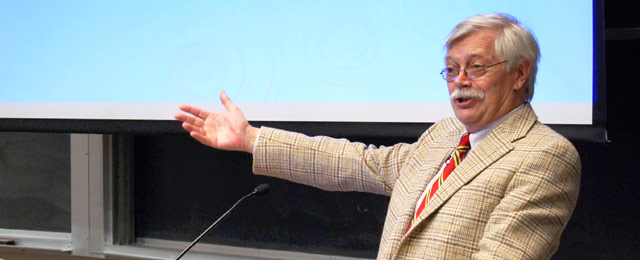
This course provides an overview of major works of social thought from the beginning of the modern era through the 1920s. Attention is paid to social and intellectual contexts, conceptual frameworks and methods, and contributions to contemporary social analysis. Writers include Hobbes, Locke, Rousseau, Montesquieu, Adam Smith, Marx, Weber, and Durkheim.

This course is offered to graduates and focuses on understanding the fundamental principles of the "front-end" processes used in the fabrication of devices for silicon integrated circuits. This includes advanced physical models and practical aspects of major processes, such as oxidation, diffusion, ion implantation, and epitaxy. Other topics covered include: high performance MOS and bipolar devices including ultra-thin gate oxides, implant-damage enhanced diffusion, advanced metrology, and new materials such as Silicon Germanium (SiGe).

This course is an introduction to the theory that tries to explain how minds are made from collections of simpler processes. It treats such aspects of thinking as vision, language, learning, reasoning, memory, consciousness, ideals, emotions, and personality. It incorporates ideas from psychology, artificial intelligence, and computer science to resolve theoretical issues such as wholes vs. parts, structural vs. functional descriptions, declarative vs. procedural representations, symbolic vs. connectionist models, and logical vs. common-sense theories of learning.

This sequence provides a comprehensive physiologic and pathologic overview of male and female reproduction, including normal human sexuality, normal human reproduction, abnormalities of sexual function, evaluation and management of infertility, parturition, and fertility control. Breast function and breast disease are also addressed. Level: Second Year Medical Students Unless otherwise noted this Work, Reproduction, by The Regents of the University of Michigan is licensed under a Creative Commons Attribution license.

hƿæt ƿe gardena in geardagum þeodcyninga þrym gefrunon hu ða æþelingas ellen fremedon…. Those are the first words of the Old English epic Beowulf, and in this class you will learn to read them.
Besides being the language of Rohan in the novels of Tolkien, Old English (also called Anglo-Saxon) is a language of long, cold, and lonely winters; of haunting beauty found in unexpected places; and of unshakable resolve in the face of insurmountable odds.
It is, in short, the perfect language for MIT students.
After learning the basics of grammar and vocabulary, we will read not just excerpts from the great Beowulf but also heartrending laments (The Wanderer, The Wife's Lament), an account of the Crucifixion as narrated by the Cross itself (The Dream of the Rood), and a host of riddles whose solutions range from the sacred to the obscene but are always ingenious. We will also try our hand at composing our own sentences—and maybe even poems—in Old English.

This course examines American constitutional law in historical and modern context. It focuses closely on the constitutional text and Supreme Court case law. It explores the allocation of decision-making authority among government institutions, including the distribution of power across the branches of the federal government and between the federal and state governments. The course also examines the guarantees of individual rights and liberties stemming from the due process, equal protection, and other clauses in the Bill of Rights and post Civil War amendments.
Acknowledgments
Professor Warshaw would like to acknowledge the training in Constitutional Law he received from Gary J. Jacobsohn, Kathleen Sullivan, and Norman Spaulding.
Other Versions
Other OCW Versions
Archived versions: 


