

Online courses directory (19947)

This course will cover the mathematical theory and analysis of simple games without chance moves.

Math is everywhere. In this class, you’ll gain an in-depth understanding of algebraic principles, many of which you may have seen before, and learn how to use them to solve problems that we encounter in everyday life. The online version of College Algebra will cover all of the topics that you would see in more traditional class formats, but it will present the material in a way that we hope you’ll find fresh and interesting. You will learn about functions, polynomials, graphing, complex numbers, exponential and logarithmic equations, and much more, all through exploring real-world scenarios.
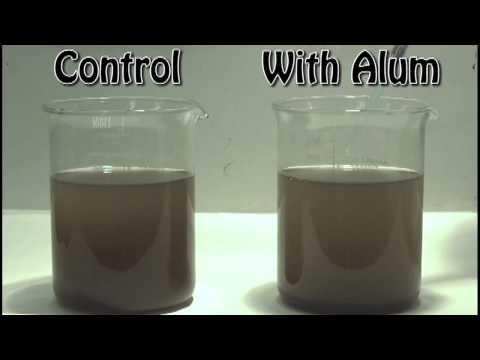
Watch fun, educational videos on all sorts of Materials, how they're created and what they can do. Flocculation: Making Clean Water.

Learn and practice the basic principles of running an effective music ensemble rehearsal. Techniques and strategies are applicable to a variety of ensembles, including bands, orchestras, choirs, and chamber groups.
Inflation and deflation. CPI-U. Real and nominal return. Phillips Curve. Introduction to Inflation. Actual CPI-U Basket of Goods. Inflation Data. Real and Nominal Return. Calculating Real Return in Last Year Dollars. Relation Between Nominal and Real Returns and Inflation. Deflation. Velocity of Money Rather than Quantity Driving Prices. Deflation Despite Increases in Money Supply. Moderate Inflation in a Good Economy. Stagflation. Deflationary Spiral. Hyperinflation. Unemployment Rate Primer. Phillips Curve. Introduction to Inflation. Actual CPI-U Basket of Goods. Inflation Data. Real and Nominal Return. Calculating Real Return in Last Year Dollars. Relation Between Nominal and Real Returns and Inflation. Deflation. Velocity of Money Rather than Quantity Driving Prices. Deflation Despite Increases in Money Supply. Moderate Inflation in a Good Economy. Stagflation. Deflationary Spiral. Hyperinflation. Unemployment Rate Primer. Phillips Curve.

This cross-disciplinary course deals with the undetermined, the unpredictable- or what appears to be such. Learn about the usefulness of randomness in communication and computation, the intrinsic randomness of quantum phenomena, the unpredictability of the weather, and the implications of the neural activity of the brain on our "free will".

The course is an introduction to switched-mode power converters. It provides a basic knowledge of circuitry for the control and conversion of electrical power with high efficiency.

This course explores the diversity of the foods we eat, the ways in which we grow, process, distribute, and prepare them, and the impacts they have upon our environment, health, and society. We will also examine the challenges and opportunities of creating a more sustainable global food system in the future.

Thermo Can.

Learn about how psychology has developed a body of knowledge about behavior and mind through the use of scientific methods. All areas of psychology will be covered.

Everything in the universe can be measured. Earth's Tilt 1: The Reason for the Seasons. Earth's Tilt 2: Land of the Midnight Sun. 2D Equilibrium -- Balancing Games.
Thermo Can. Thermo Can.

Metadata is an unsung hero of the modern world, the plumbing that makes the information age possible. This course describes how Metadata is used as an information tool for the Web, for databases, and for the software and computing applications around us.

This course will provide you with an overview of the most important health challenges facing the world today. You will gain insight into how challenges have changed over time, we will discuss the likely determinants of such changes and examine future projections. Successful international strategies and programs promoting human health will be highlighted and global health governance structures will be mapped and the role of the key actors explored.
Limit introduction, squeeze theorem, and epsilon-delta definition of limits. Introduction to limits. Limit at a point of discontinuity. Determining which limit statements are true. Limit properties. Limit example 1. Limits 1. One-sided limits from graphs. One-sided limits from graphs. Introduction to Limits. Limit Examples (part 1). Limit Examples (part 2). Limit Examples (part 3). Limit Examples w/ brain malfunction on first prob (part 4). More Limits. Limits 1. Limits and infinity. Limits at positive and negative infinity. More limits at infinity. Limits with two horizontal asymptotes. Limits 2. Squeeze Theorem. Proof: lim (sin x)/x. Limit intuition review. Building the idea of epsilon-delta definition. Epsilon-delta definition of limits. Proving a limit using epsilon-delta definition. Limits to define continuity. Continuity. Epsilon Delta Limit Definition 1. Epsilon Delta Limit Definition 2. Introduction to limits. Limit at a point of discontinuity. Determining which limit statements are true. Limit properties. Limit example 1. Limits 1. One-sided limits from graphs. One-sided limits from graphs. Introduction to Limits. Limit Examples (part 1). Limit Examples (part 2). Limit Examples (part 3). Limit Examples w/ brain malfunction on first prob (part 4). More Limits. Limits 1. Limits and infinity. Limits at positive and negative infinity. More limits at infinity. Limits with two horizontal asymptotes. Limits 2. Squeeze Theorem. Proof: lim (sin x)/x. Limit intuition review. Building the idea of epsilon-delta definition. Epsilon-delta definition of limits. Proving a limit using epsilon-delta definition. Limits to define continuity. Continuity. Epsilon Delta Limit Definition 1. Epsilon Delta Limit Definition 2.
Rediscover the most important observations in history. Discovery of Magnetism. Compass: which way is north?. Floating Magnet. Compass Build (stroke direction). Compass Build (magnet orientation). Neutralize a Compass. Compass Interactions. Magnetising materials. What's Next?. Magnet near Compass. Tracing a Magnetic Field. Tracing a magnetic field. Discovery of Magnetic Fields. Magnet and iron filings. Magnetic field. 3D magnet with field. Magnetic Permeability. Increase Strength of Magnet. What's Next?. Are 2 magnets stronger than 1?. Measure the Earth!. Earth's Magnetic Field (how to measure). Force over Distance. Inverse Square Law (deflection method). Inverse Square Relationship. Inverse Square Law (Method of Oscillation). Zinc Copper cell (reduction-oxidation). How to Measure?. Battery Meter (Galvanometer). How Many Turns?. Electrolyte Test (pure water vs. vinegar). Reverse Electrodes (polarity). Electrolyte (strong acid test). Electrolyte (salt test). Electrode (distance test). Electrolyte (temperature test). Electrode (surface area test). Standard Cell. How much electrolyte does a single cell need?. What's Next?. Discovery of Electromagnetism. Experiment: Electromangetism. Electromagnetic Field (above vs. below). Electromagnetic Field (forward vs. reverse). Electromagnetic Field (loop). Right-Hand Rule. Battery Meter (Galvanometer). Series Load. Pencil Resistor. Variable Resistor (Pencil). Listen to Variable Resistance. What's Next?. Electromagnet (construction tip). Electromagnet (penny powered). Understanding Force. Spinning Compass. Build your own motor. What's Next. Discovery of Triboelectric effect. Pith Ball Electroscope. Foil Leaf Electroscope. What's Next?. Discovery of Magnetism. Compass: which way is north?. Floating Magnet. Compass Build (stroke direction). Compass Build (magnet orientation). Neutralize a Compass. Compass Interactions. Magnetising materials. What's Next?. Magnet near Compass. Tracing a Magnetic Field. Tracing a magnetic field. Discovery of Magnetic Fields. Magnet and iron filings. Magnetic field. 3D magnet with field. Magnetic Permeability. Increase Strength of Magnet. What's Next?. Are 2 magnets stronger than 1?. Measure the Earth!. Earth's Magnetic Field (how to measure). Force over Distance. Inverse Square Law (deflection method). Inverse Square Relationship. Inverse Square Law (Method of Oscillation). Zinc Copper cell (reduction-oxidation). How to Measure?. Battery Meter (Galvanometer). How Many Turns?. Electrolyte Test (pure water vs. vinegar). Reverse Electrodes (polarity). Electrolyte (strong acid test). Electrolyte (salt test). Electrode (distance test). Electrolyte (temperature test). Electrode (surface area test). Standard Cell. How much electrolyte does a single cell need?. What's Next?. Discovery of Electromagnetism. Experiment: Electromangetism. Electromagnetic Field (above vs. below). Electromagnetic Field (forward vs. reverse). Electromagnetic Field (loop). Right-Hand Rule. Battery Meter (Galvanometer). Series Load. Pencil Resistor. Variable Resistor (Pencil). Listen to Variable Resistance. What's Next?. Electromagnet (construction tip). Electromagnet (penny powered). Understanding Force. Spinning Compass. Build your own motor. What's Next. Discovery of Triboelectric effect. Pith Ball Electroscope. Foil Leaf Electroscope. What's Next?.

Ce cours introduit le concept de Probabilité, dont la puissance permet de modéliser d'innombrables situations où le hasard intervient. Il est fondé sur le livre de Sylvie Méléard "Aléatoire : introduction à la théorie et au calcul des probabilités" qui résulte lui-même du cours de tronc commun de première année de l'École polytechnique.

The course will provide an overview of the knowledge acquired during the past 20 years in the domain of exoplanets. It will review the different detection methods, their limitations, and the information provided on the orbital system and the planet itself, and how this information is helping our understanding of planet formation.

An unconventional approach to management strategy! This class offers students the opportunity to explore today's management practices from unexpected perspectives in order to ask provocative questions about the modern business environment. This approach will allow us to interrogate key management concepts in order to explore the thinking that informs them and, as importantly, the form of capitalism they foster.

1. Bit-zee. 2. Bit-zee (long version). 3. Bit-zee Bot Introduction. 4. Bit-zee planning and propulsion. 5. Bit-zee's bits. 6. Bit-zee's chassis/frame. 7. Bit-zee's wheel mounts and fenders. 8. Bit-zee's component mounting holes. 9. Bit-zee's batteries. 10. Improving the battery wires. 11. Connecting Bit-zee's power wires and on-off switch. 12. Bit-zee's motors. 13. Why does Bit-zee need a motor controller?. 14. Bit-zee's motor controller. 15. Attaching and wiring Bit-zee's motor controller. 16. Attaching Bit-zee's Arduino. 17. How to hotwire a digital camera. 18. Attaching Bit-zee's digital camera. 19. Bit zee's 5 Volt power distribution board. 20. Hacking and attaching a digital recorder/player to Bit-zee. 21. Making a power connector for the Arduino. 22. Attaching Bit-zee's prototype board. 23. Connecting the motor controller to the Arduino. 24. Connecting Bit-zee's camera to the Arduino. 25. Bit-zee's bumper switches. 26. Bit-zee's eyes. 27. Bit-zee's IR sensor. 28. Bit-zee's shell. 29. Camera wiring update.
Add to calendar

Trusted paper writing service WriteMyPaper.Today will write the papers of any difficulty.