

Online courses directory (19947)

This course presents an overview of a variety of Web backend topics: handling user input, producing templated output, storing information in databases and data stores, and building systems with secure user accounts.

ECMAScript 6, or ES6, has brought about a ton of changes to the JavaScript programming language. In this course, you'll explore those changes to learn about the latest features and improvements to the language including new keywords, arrow functions, the Class syntax, Promises, and so much more. Discover how much cleaner and more concise your JavaScript code can be!

In this course you will learn how to make asynchronous requests with JavaScript (using jQuery’s AJAX functionality), and gain a better understanding of what’s actually happening when you do so. You will also learn how to use data APIs so you can take advantage of freely accessible data in your applications, including photo results, news articles and up-to-date data about the world around us. As part of the course, you’ll be building a web app that will help people learn about a place where they want to move! Your app will query the Google Streetview, Wikipedia and New York Times APIs! This course is also a part of our Front-End Web Developer Nanodegree.

jQuery is the most popular JavaScript library today, in use by over 60% of the top 100,000 most visited websites. This course will teach you how to use jQuery’s core features - DOM element selections, traversal and manipulation. You'll also learn how to read and make sense of jQuery's documentation, making it easy for you to go beyond the methods taught in this class and take advantage of jQuery's full array of features! This course is also a part of our Front-End Web Developer Nanodegree.

There is no higher form of user validation than having customers support your product with their wallets. However, the path to a profitable business is not necessarily an easy one. This course blends instruction with real life examples to help you effectively develop, implement, and measure your monetization strategy, iterating on the model as appropriate. This course is part of our Tech Entrepreneur Nanodegree Program, click [here to learn more](/course/nd007).

Reach your users while they're out and about by extending your Media or Messaging app to Android Auto! As you'll learn in this course, making your app available in the car is as easy as extending your existing code. This course explains how to get started and then covers Media and Messaging apps in detail. This course is part of the Ubiquitous Computing series. Designed as standalone short courses, you can take any course on its own, or take them all! * Android Wear Development * Android TV and Google Cast Development * **Android Auto Development** [this course]

The Creating an Analytical Dataset course provides students with foundational knowledge to input, clean, blend, and format data in preparation for analysis. You will learn:

Learn how to build web applications with Sinatra, an elegant and approachable web development micro-framework for Ruby.

Learn how to organize the code for your web apps, and why it's important. You’ll be using the MVC Design Pattern in the web application micro-framework, Sinatra.

This course will introduce you to web deployment platforms. You’ll begin by deploying your first web application to the Heroku platform, making it publicly available on the internet. In the process, you will learn about the underlying mechanics of web hosting. You will also learn how to configure your app, from accessing log output to configuring environment variables.
The A/B Testing course provides students with the foundational knowledge to design and analyze A/B tests to create business insights and support decision making. You will learn: * **The fundamental principles of experiment design** * **How to design and analyze randomized design experiments** * **How to design and analyze matched-pair design experiments** Throughout this course you’ll also learn the techniques to apply your knowledge in a data analytics program called Alteryx. This course is part of the Business Analyst Nanodegree.

The Classification Models course provides students with the foundational knowledge to use classification models to create business insights. You will learn:
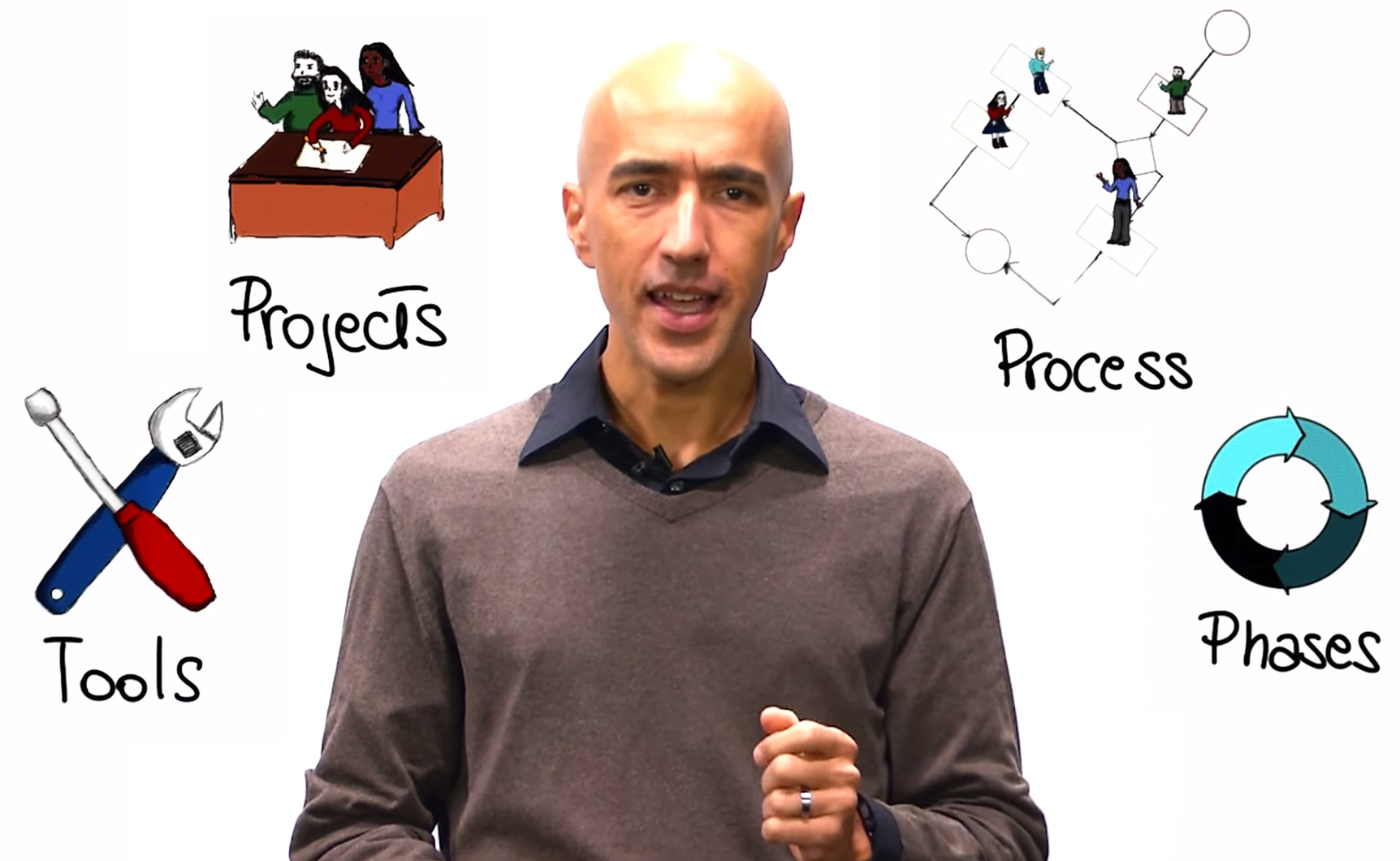
This class is offered as CS6300 at Georgia Tech where it is a part of the [Online Masters Degree (OMS)](http://www.omscs.gatech.edu/). Taking this course here will not earn credit towards the OMS degree. In SDP, you will learn how to select and implement the ideal software process for your development project. Through Professor Orso's engaging examples and interviews with industry insiders, you will learn both conceptual and practical aspects of software engineering. The course covers requirements engineering, architecture and design, testing and maintenance, and software quality in general. The goal of this class is to equip you with the skills necessary to define requirements, set up an integrated development environment (IDE), learn Git (and Github!) and use Unified Modeling Language (UML) to design and build an Android application. We will also examine several testing practices and refactoring techniques that are helpful before the launch of your software project. While everyone working with software should have these skills, they are particularly important for Software Engineers and Engineering Managers.

In the 21st century, embedded systems are the systems of future with cellular phones, smart-phones, tablets becoming the dominant platforms for computing and communication. The ubiquity of information and the associated need for the computation that accompanies it is driving this revolution only to be accelerated by the new paradigms such as the Internet-of-Things (IoT). These platforms are clearly very different in terms of their processing requirements which are very unique: real-time needs, high performance but at low energy, compact-code and data segments, and most importantly ever changing software stack. Such unique requirements have led to a complete redesign and reinvention of the both hardware and the software stack from ground up, for example, brand new processors such as ARM, DSPs, network processors were invented all the way up to new virtual machines such as Dalvik, new operating systems such as Android and new programming models and compiler optimizations.

This class is offered as CS6460 at Georgia Tech where it is a part of the [Online Masters Degree (OMS)](http://www.omscs.gatech.edu/). Credit for taking this course is conferred only on those that enroll in the degree. The text in the following sections comes from the syllabus for CS6460, located [here](https://www.udacity.com/wiki/ud915). This class is simultaneously an introductory course about educational technology and an advanced, project-oriented class on designing or researching technology's intersection with education. As such, the course provides information about a large number of topics within educational technology, including pedagogical strategies, research methodologies, current tools, open problems, and broader issues. The scope of the material provided goes beyond what any one person could reasonably learn in a semester. Instead, you will select those areas that appeal to you or that support your ultimate project ideas. For example, if you're interested in research, you may focus on the applicable research methodologies to your chosen area of investigation, relevant pedagogical strategies or theories, and the current state-of-the-art within that community. If you're interested in design, you may focus on the relevant pedagogical strategies or theories for your chosen domain, the current popular tools within that domain, and open problems that need to be addressed.
In this course, you’ll begin learning Swift, Apple's programming language for building iOS applications. You'll start with fundamentals and work your way towards understanding all the core principles necessary to get started creating your first app. At the end of the course, you'll complete a problem set of exercises designed to challenge your understanding of Swift and give you the opportunity to apply what you've learned.
This course offers a quick practical introduction to Swift basics, including types, variables, constants, and functions. It combines syntax exercises with hands-on iOS development in Xcode. By the end of the course students will build their first iOS app, an app that creates and displays song lyrics customized to user input.
In this course, you'll explore popular iOS design patterns — the practical and battle-tested solutions to common problems that are used everyday by professional developers. You'll take a look at architectures and mechanisms that are used for constructing large, complex apps. And, by the end of this course, you'll have accumulated a reliable toolset of patterns that you can apply to your own projects.

'2D Game Development with libGDX' explored the basics of the libGDX game framework, from simple drawing to user input. This course will use those skills to create a much more sophisticated platforming game called GigaGal. In creating GigaGal, you'll learn about sprite drawing, keeping track of complex game state, controlling interactions between game entities, and also how to load and manage level data.

This mini-course is intended for students who would like a refresher on the basics of linear algebra. The course attempts to provide the motivation for "why" linear algebra is important in addition to "what" linear algebra is. Students will learn concepts in linear algebra by applying them in computer programs. At the end of the course, you will have coded your own personal library of linear algebra functions that you can use to solve real-world problems.
Add to calendar

Trusted paper writing service WriteMyPaper.Today will write the papers of any difficulty.